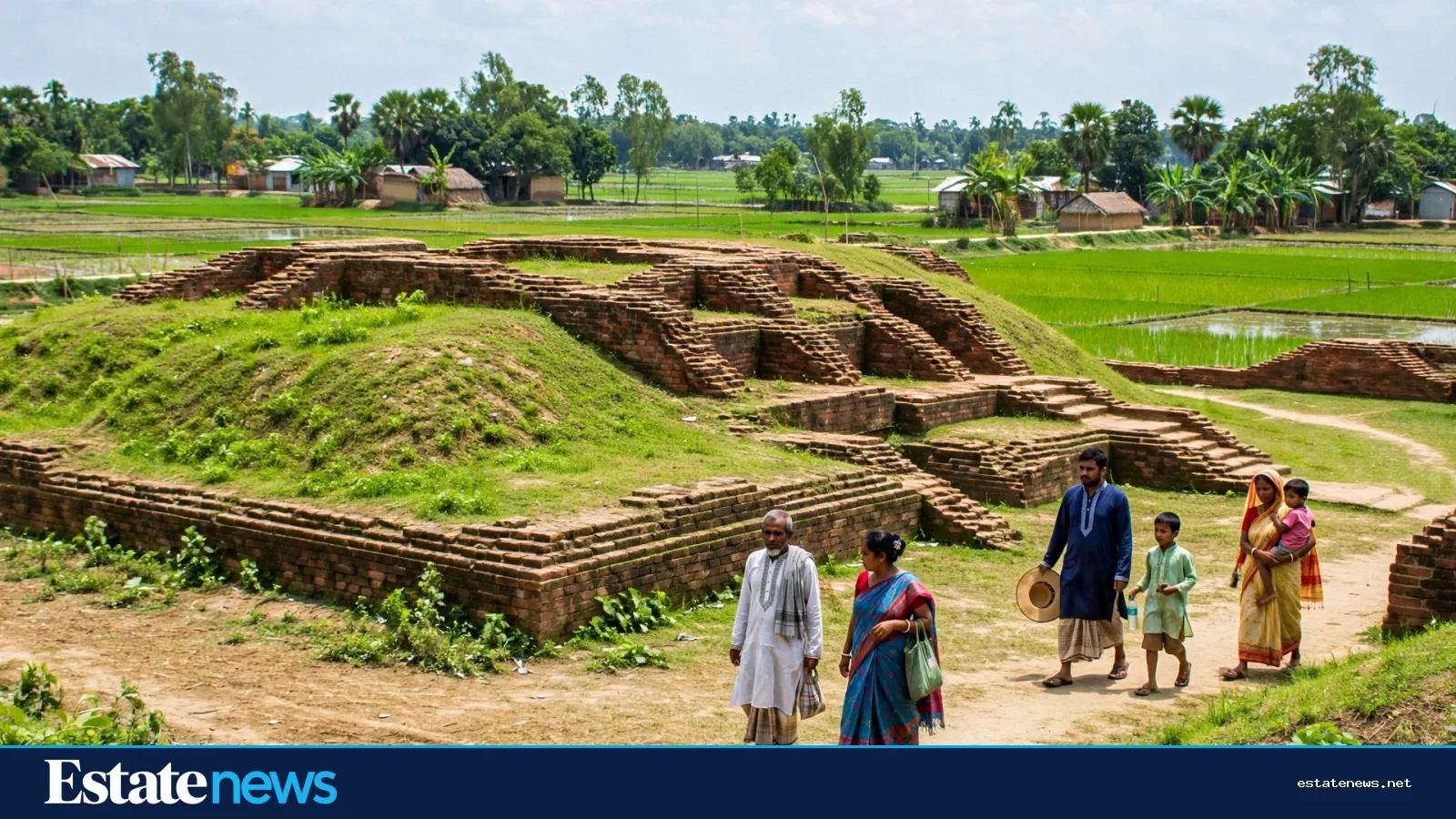
Walk out of Bogura town toward the Karatoya river and the ground starts to tell a different story. Low mounds rise out of the paddy, broken brick shows through the grass, and a wall line runs where a city wall once stood. This is Mahasthangarh, the site identified with Pundranagara, the ancient capital of the Pundra region.
Banglapedia and Department of Archaeology material describe the place in broad terms as one of the earliest urban centres in this part of Bengal, with origins in the Mauryan era. That framing matters for a reason. It places Mahasthangarh not as a single ruin, but as a city that was lived in, rebuilt and reworked over a very long stretch of time. Layers of brick, pottery and settlement debris found here speak to trade, craft and administration, rather than to one dramatic moment.
What a visitor sees today is quieter than that history suggests. There is no grand standing palace. The interest lies in the shape of the place: the citadel mound, the ditches and embankments around it, the scattered structures that archaeologists have opened up over the years, and the museum that holds finds from the site. A morning at Mahasthangarh moves at walking pace. People stop at the museum, cross open ground, look out over fields, and try to fit the low walls in front of them to the city described in the guidebooks.

A city built on the river
The Karatoya explains much of the site. Rivers gave ancient cities water, transport and a line of defence, and Pundranagara grew where those advantages met. In the countryside around the mound today, the same logic is visible in a different form. Paddy fields, ponds, village paths and small bazaars still follow water and high ground. The ancient city did not vanish into nowhere. Its surroundings kept being farmed, settled and crossed, even as the walls themselves sank back into the earth.
Local stories about the site are part of its life, and they should be heard for what they are: folklore passed down through generations, not documented history. They give the mound a place in village conversation, in school trips and in family outings. The documented record, from archaeology and historical writing, is the safer guide to who built what and when, and it is also the more interesting one, because it rests on material found in the ground.


What stands today, and who looks after it
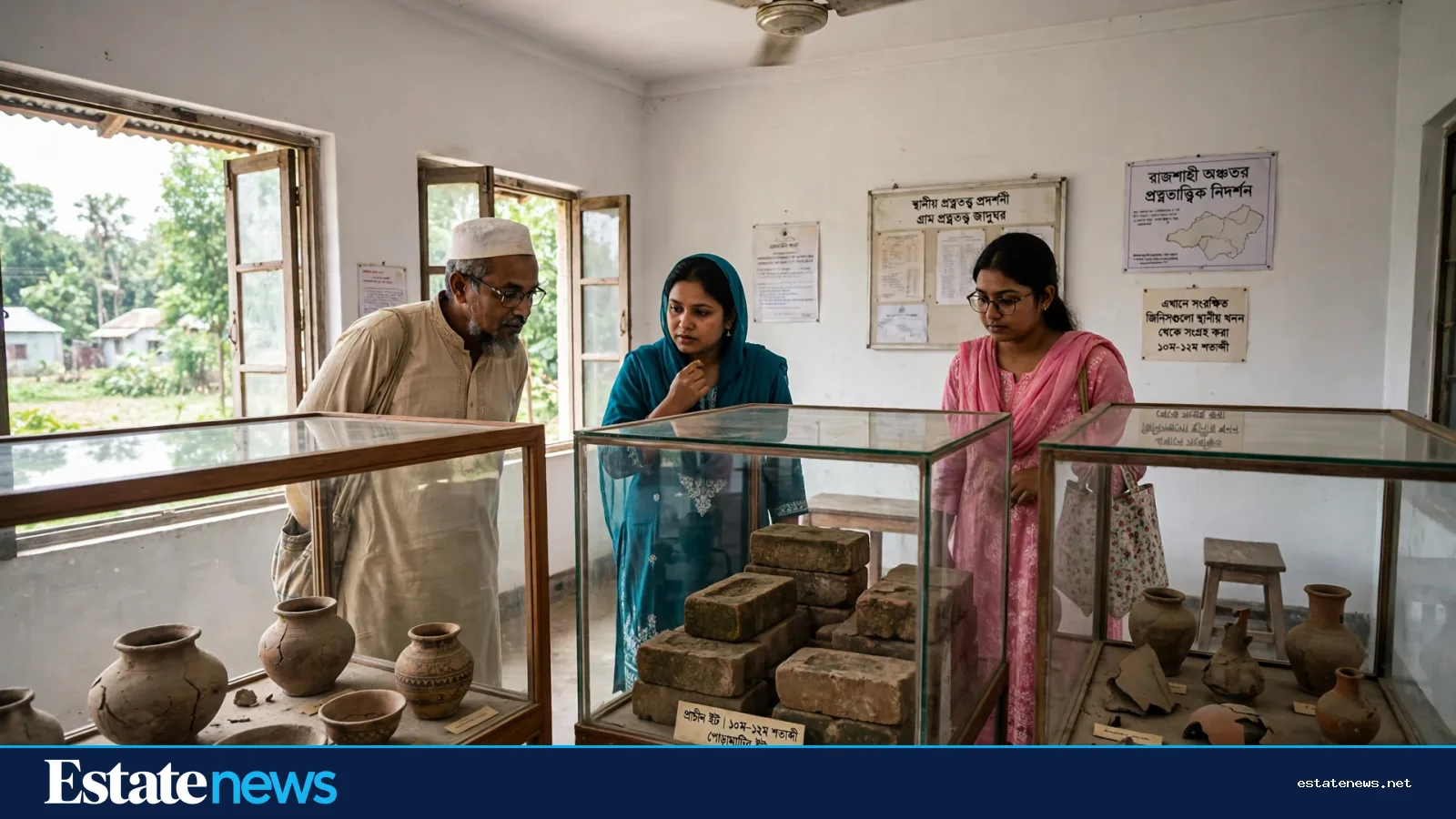
Care of the site falls to the Department of Archaeology, which oversees the protected area and the museum beside it. Excavation, conservation and display work goes on in stages, as it does at heritage sites across the country. Brickwork exposed to rain and sun needs steady attention, and a mound that is also a lived-in place, crossed by paths and edged by fields, needs boundaries that local people understand and respect.
That balance is the real story of Mahasthangarh now. It is not a fenced-off relic. Farmers work nearby, children walk to school past old brick, and visitors arrive from Bogura town and further afield. The museum helps turn a walk among mounds into something legible, by showing the pottery, ornaments and tools that came out of the soil. Without that context, a mound is only a mound. With it, the ground starts to read as streets, homes and workshops.
Why it still matters to Bogura
For Bogura, Mahasthangarh is more than a day-trip stop. It gives the district an identity that predates every modern claim about it, and it gives local schools, guides and small businesses a reason for visitors to stay a little longer. A tea stall near the site, a rickshaw ride from town, a guide who knows which mound is which: these small parts of the local economy depend on the site being cared for and understood.
The lesson for anyone interested in buildings and places is a plain one. Cities are not only built. They are also kept, or lost, by the generations that follow. Mahasthangarh survived because its bricks were strong, its position was useful, and later generations kept returning to it. Its future depends on the same things: careful conservation, honest interpretation, and a local community that still sees the old city as its own.