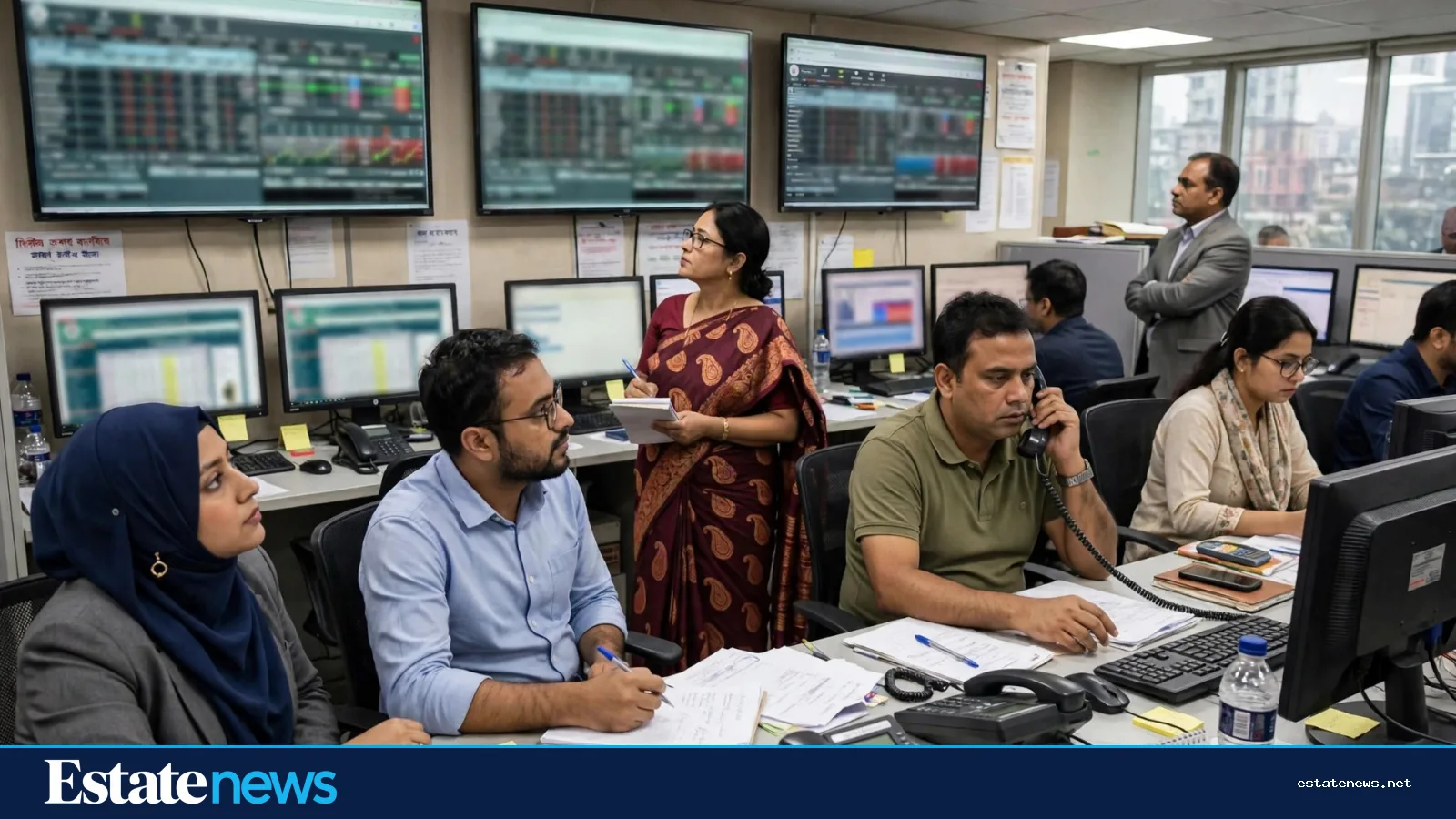
Read the fall plainly, because a wrap that softens it does its readers no favour. The Dhaka Stock Exchange benchmark DSEX closed at 5,333.58 points on Monday 2 November, down 51.57 points, or 0.96 per cent, according to The Business Standard and The Business of Bangladesh (tob.news) reports of the session. Both reports describe it as the lowest close since 1 June, a five-month low. The blue-chip DS30 fell 26.29 points, or 1.27 per cent, to 2,042.14, and the Shariah-based DSES declined 8.12 points, or 0.78 per cent, to 1,037.81.
Turnover eased with the index. The Business Standard reports turnover fell 13 per cent to Tk 418 crore from the previous session, a sign of thinner participation rather than a rush for the exits. Sector detail from the same coverage gives the shape of the day: food fell 3.8 per cent, mutual funds and paper each fell 2.4 per cent, and textiles, up 0.7 per cent, were the only sector to finish higher. EBL Securities, cited in the coverage, linked the weakness to uncertainty over domestic conditions, investor caution during the ongoing earnings season, and a lack of fresh positive triggers. That is a description of mood, not a forecast, and it fits a market where sellers found few buyers willing to pay up.
The steadier numbers arrived from outside the market

The same week brought stronger news from Bangladesh Bank data, reported by The Business Standard on 1 November. Merchandise exports rose 4.39 per cent year on year to $3.99 billion in October, a third straight month of growth. For July to October of fiscal year 2026-27, exports reached $17.04 billion, up 6 per cent, or around $960 million, from $16.08 billion a year earlier. Knitwear led at $7.71 billion, up 7 per cent, while woven garments reached $6 billion, up 4.8 per cent. Pharmaceuticals, jute and leather shipments also strengthened, the report says.
Remittances moved the same way. Expatriate Bangladeshis sent $2.87 billion in October, up 12.1 per cent from $2.56 billion in October last year, according to Bangladesh Bank data reported by The Business Standard and New Age. The July to October total reached $11.465 billion, up 13 per cent from $10.149 billion in the same period last year. September had brought $2.77 billion, so October was also an improvement on the previous month. Bangladesh Bank officials linked the growth to stronger action against informal hundi channels, more competitive bank rates and rising confidence in formal channels, New Age reports.
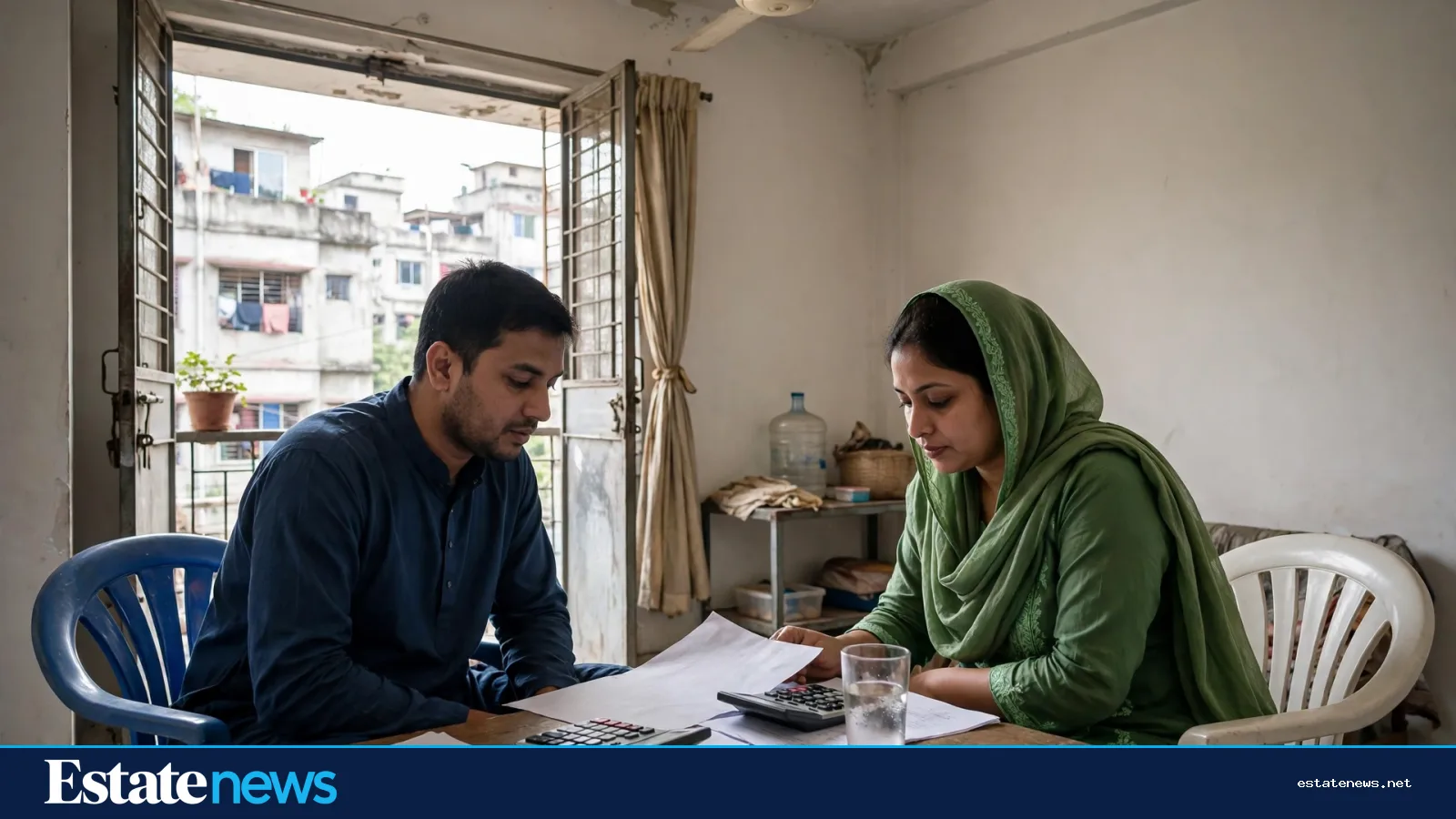
These figures matter to housing in a direct, unglamorous way. Export earnings pay factory wages and keep orders flowing through Gazipur, Narayanganj and Chattogram. Remittances pay school fees, clear debts and fund deposits on flats, and they keep construction going in districts where migrant families are building. A falling index can worry an investor. A remittance receipt landing in a family account can still decide whether a deposit is paid this month.
The taka, the reserves and the cost of borrowing


Foreign exchange gave the week its second tension. Bangladesh Bank data reported by tob.news put the weighted average interbank rate at Tk 124.30 per dollar on Sunday 1 November, up from Tk 123.99. The Daily Star, reporting the same pressure, noted Bangladesh Bank sold $122 million to eight banks in an auction to steady the market as import payments rose, and put gross reserves at $31.54 billion under the BPM6 measure on 19 October, up from $26.34 billion a year earlier. Later Bangladesh Bank figures reported on 1 November put reserves at $31.46 billion under BPM6 on 29 October, with gross reserves at $36.33 billion. The gap between the interbank rate and the open market, where money changers were reported selling dollars at Tk 128 to Tk 128.20 on 31 October, is worth noting for importers and builders, because imported steel, cement inputs and fittings do not arrive at the interbank rate alone.
Borrowing still sets the pace for property. Bangladesh Bank has held its policy rate at 9.50 per cent for the October to December quarter, with the standing lending facility at 11.00 per cent and the standing deposit facility at 7.50 per cent, according to its quarterly monetary policy statement of 30 September. September headline inflation, measured by the Bangladesh Bureau of Statistics, was 8.34 per cent. Expensive borrowing plus prices still rising at that pace is the combination every home buyer in Dhaka recognises: loans cost more, savings lose ground, and the monthly budget has less slack. This wrap is informational only and is not financial advice.
What the week means for a buyer or a builder
Start with the stock market, but do not stop there. A five-month low, thinner turnover and earnings worry argue for caution with fresh equity exposure, and for checking any dividend income counted on for a deposit. They do not argue for freezing every other decision. Export growth for a third month and remittance growth of more than 12 per cent in October argue that incomes supporting housing demand are still arriving, even if the market is not celebrating them yet.
For someone saving for a flat, the practical order stays the same. Protect the deposit in an account that will not be raided for everyday spending. Treat any remittance inflow as part of that plan, decided before the money arrives, not after. If comparing projects, ask how the developer is financing construction and what happens to the payment schedule if material or borrowing costs rise, because those answers matter more in a high-rate period than a brochure ever will. For a builder, the same week argues for watching the dollar cost of inputs and the pace of orders, not only the index.
The 3 November session will add its own numbers when it closes, and they may extend the fall or interrupt it. Either way, the picture from the last reported session is clear enough to act on: a market at a five-month low, an export sector still growing, remittance flows still strong, a taka under pressure, and borrowing still expensive. Households that plan around all of those, instead of reacting to any one of them, are the ones best placed for whatever the market does next.