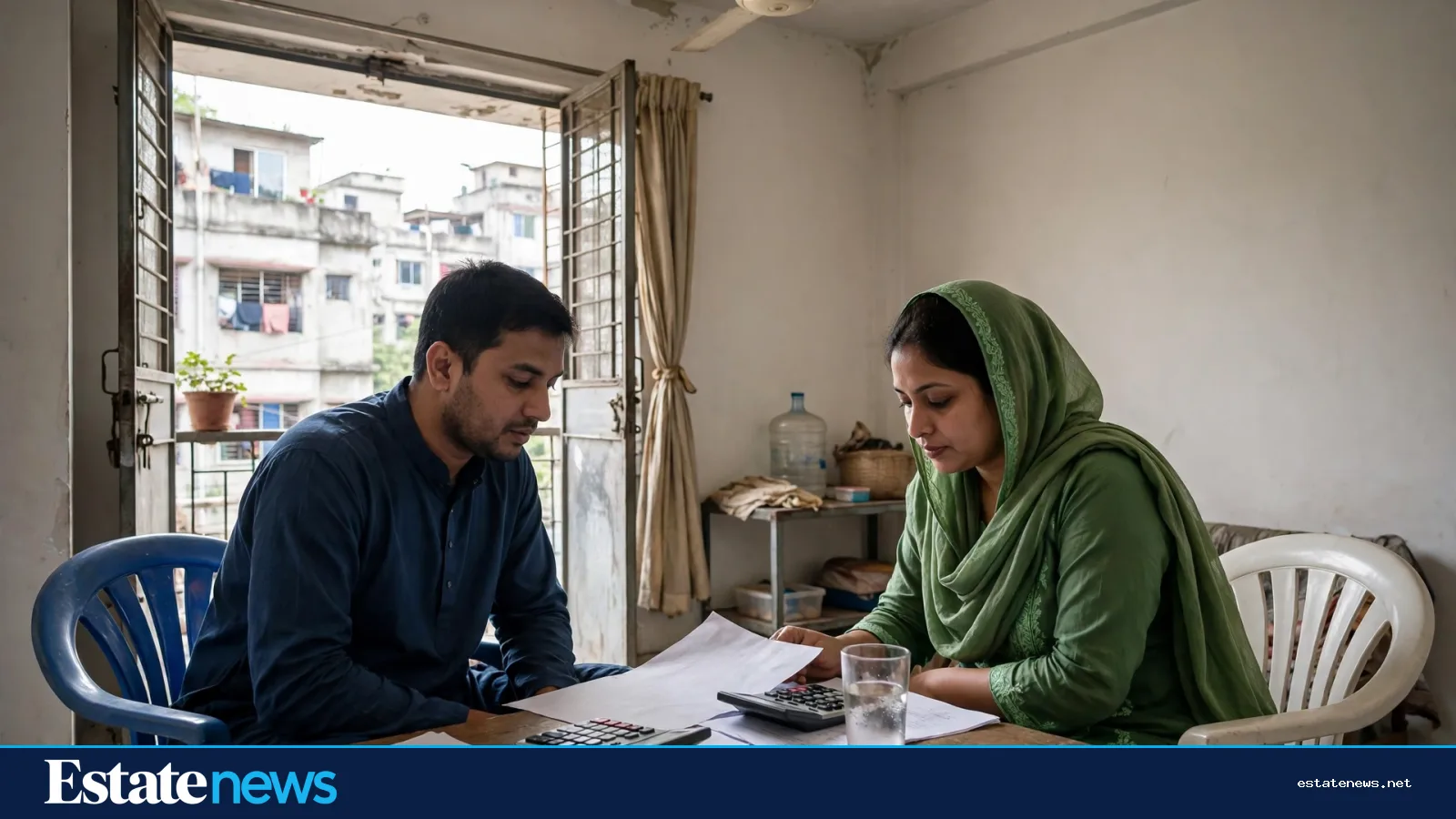
The most painful moment in a Dhaka flat purchase rarely happens at the negotiating table. It happens a week later, in a bank branch, when a buyer who has already pictured furniture in a flat learns that the loan will be smaller than expected, slower than promised, or tied to conditions nobody mentioned. A pre-approval file, built before the flat search gets serious, prevents most of that pain. It does not guarantee a loan. It tells the buyer, in writing, roughly how much a bank will lend, and on what terms, so the search stays inside reality.
This article is general information, not financial advice. Loan rules, rates and documents vary by bank and change over time. Any buyer should confirm the current terms with their own bank and take a lawyer's advice on property papers before committing.
What a bank actually assesses

Banks in Bangladesh assess home loans on income, employment, age and repayment capacity, and those four checks explain most approvals and most refusals. Salaried applicants are asked for salary certificates, bank statements showing salary credits, and tax records where applicable. Business owners face a longer paper trail: trade licence, business bank statements, and tax filings that match the income claimed. A bank is not doubting the applicant's character. It is testing whether the monthly instalment can be paid, month after month, from income it can verify.
Age matters because it sets the tenure. A younger borrower can stretch repayment over more years, which lowers the monthly instalment but raises the total interest paid. An older borrower faces a shorter tenure and a higher instalment for the same loan. Applicants nearing retirement should ask, early, how the bank treats retirement age in its tenure calculation, because that single answer can change the affordable flat by a whole size category.
The file, in the order a bank reads it
A tidy file speeds every conversation. Start with identity and address proof, then employment or business proof, then income proof covering at least the period the bank asks for, then bank statements that match the salary or business income claimed. Add existing loan statements, because a car loan or personal loan already eats into repayment capacity, and a bank will find it whether the applicant mentions it or not. Mentioning it first, with the balance and remaining tenure, builds trust and avoids a late surprise.


Then comes the property side, which many buyers leave too late. Banks lend against a property whose title they can accept, so the deed chain, mutation record and approval papers matter to the loan as much as to the buyer. A flat with a gap in its papers may be a fine home and still a poor loan security. Ask the bank, at pre-approval stage, which property documents it will require for final disbursement, and check those documents for the shortlisted flats before paying a booking amount. A booking amount paid on a flat the bank will not finance is a dispute waiting for a date.
Questions to ask before accepting the number
A pre-approval letter carries a figure, and buyers tend to read only that figure. Read the rest. Ask whether the rate is fixed for a period or floating from the start, and how often it can reset. Ask about processing fees, valuation fees, legal fees and any insurance the bank requires, because those sit on top of the loan. Ask about prepayment terms: can the borrower repay early without penalty, and after how long? Ask what happens if the property valuation comes in below the agreed price, because the bank lends against the lower of price and valuation, and the buyer covers the difference.
Ask, too, about disbursement timing. Some loans disburse in stages tied to construction progress, which suits under-construction flats. Others disburse on registration for ready flats. A buyer whose payment schedule to the developer does not match the bank's disbursement schedule will face a cash gap at the worst moment, even with an approval in hand. Matching those two schedules, in writing, is unglamorous work. It is also the work that prevents a signed deal from stalling.
A realistic timeline, and a buffer
Pre-approval does not happen in a day. Document collection, verification, valuation and internal approval take weeks, and property papers can add more. Buyers should start the file while still searching, not after finding a flat, and should keep a buffer beyond the deposit: registration costs, loan fees, moving costs and the first months of service charges. A family that spends every taka on the deposit and the booking amount has no room for the fees that follow, and fees do not wait for salary day.
The file itself is the point. A buyer who walks into a negotiation with a bank's written indication, a clear sense of affordable instalment, and property papers already checked, negotiates differently: calmly, within a number, and without the fear that the deal will collapse in a branch a week later. Banks say yes to files they can verify. Buyers should give them one, before they fall in love with a flat.