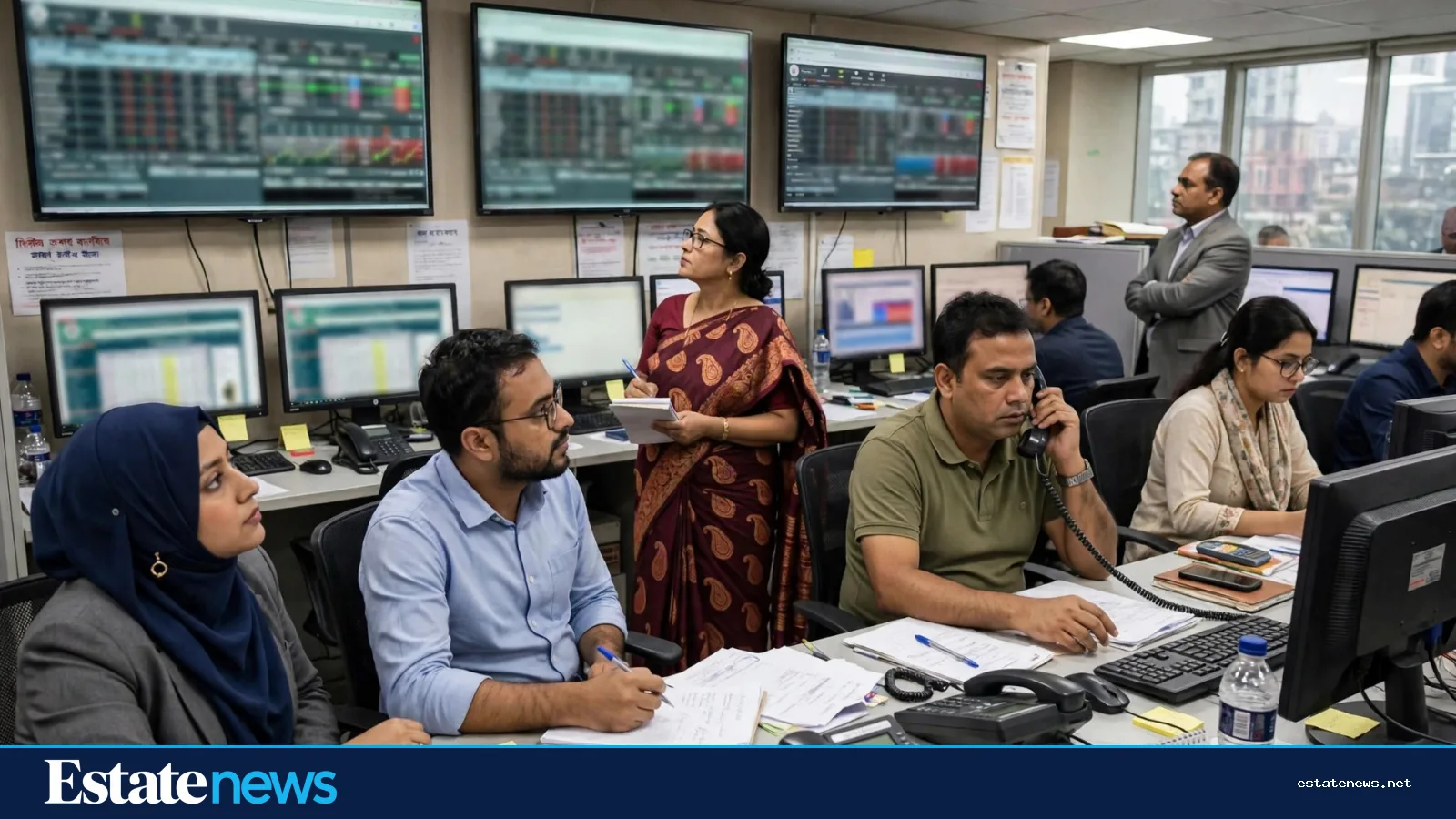
For most Dhaka households, the housing market is experienced as a monthly number: the instalment the bank will ask for, set against salary and rising prices. That is why interest rates and inflation matter more to homebuyers than almost any other indicator — together, they decide what a household can actually afford.
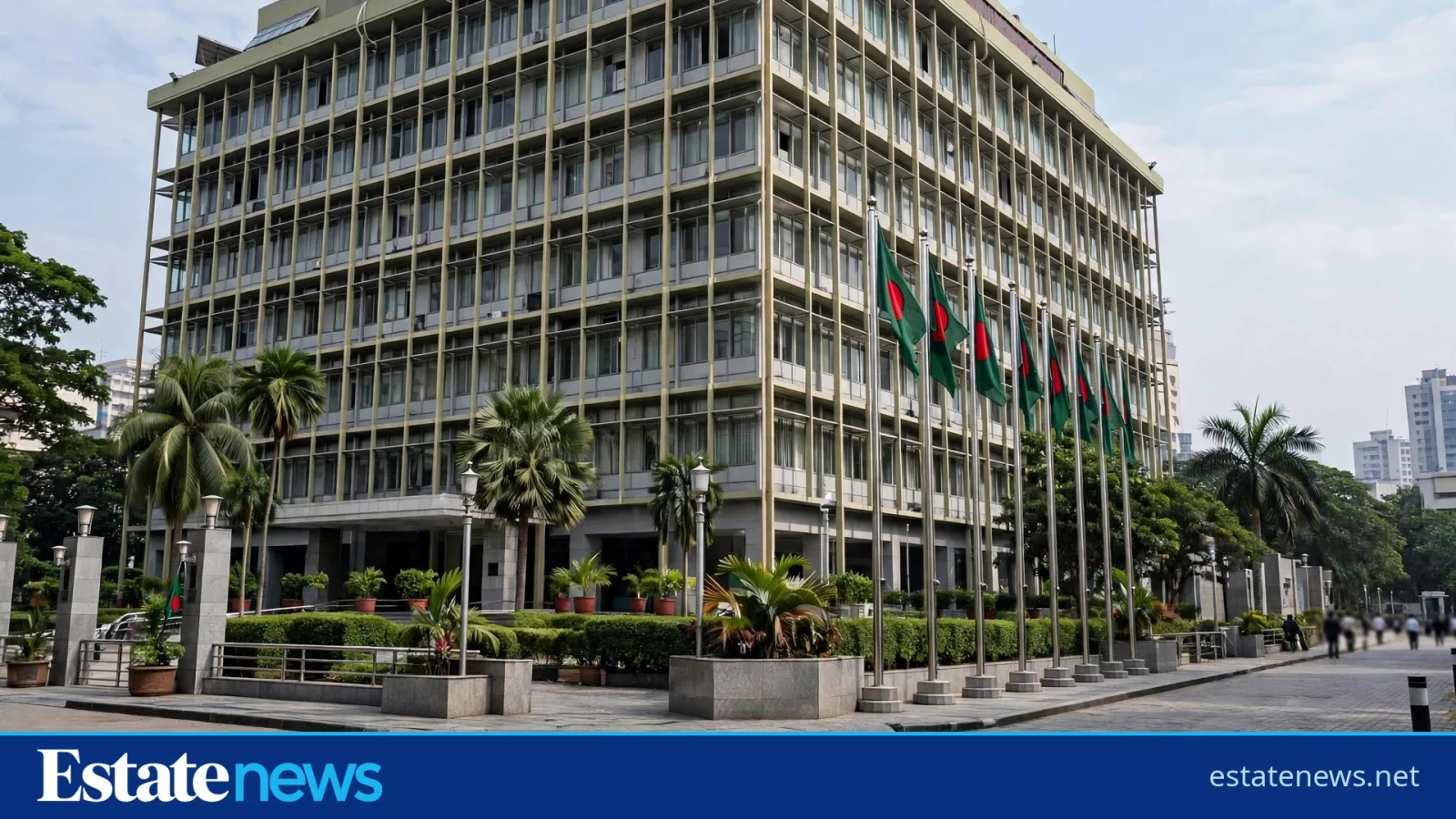
Bangladesh Bank has kept its policy rate unchanged at 9.5 per cent for the October–December 2026 quarter, according to its quarterly Monetary Policy Statement, with the Standing Lending Facility at 11 per cent and the Standing Deposit Facility at 7.5 per cent. It cut the rate by half a point in August 2026, then held it, citing inflation risks and a weak economy.
Inflation has eased but remains high. According to Bangladesh Bureau of Statistics data reported in the monetary policy coverage, headline inflation was 8.26 per cent in August 2026, down from 9.16 per cent in June, with food inflation at 7.02 per cent and non-food inflation elevated at 9.32 per cent. September data put headline inflation at 8.34 per cent. The direction is encouraging; the level is still hard for a household trying to save a deposit.

How the policy rate reaches a home loan
The policy rate is not the rate a homebuyer pays. It is the rate at which the central bank lends to banks; banks add their own costs, risk assessment and margin to set a home loan rate. In 2026, industry reporting has put typical home loan rates at roughly 11.5 to 13.5 per cent at many lenders, varying by borrower and property.
That gap is normal, and it is why a policy rate cut does not instantly transform affordability. Borrowers should compare the actual loan offer — rate, tenure, fees and whether it is fixed or variable — rather than assuming the policy rate is their rate.
Under Bangladesh Bank's housing finance framework, banks generally finance up to 70 per cent of a property's value, with the buyer providing 30 per cent. For a Tk 1 crore flat, that implies a loan of up to about Tk 70 lakh and equity of about Tk 30 lakh, before registration and loan charges — so upfront cash needed is materially higher than the deposit alone.
What high rates do to the monthly payment
The arithmetic of a long loan is unforgiving. At a higher rate, more of each early instalment goes to interest rather than principal. Extending tenure lowers the monthly payment but raises total interest; shortening it does the reverse. There is no version in which a high rate is painless — only a choice about where the pain falls.
An illustrative example makes the point without pretending to be a bank offer. On a Tk 70 lakh loan over 20 years, the instalment would be roughly Tk 72,000 at 11 per cent and roughly Tk 82,000 at 13 per cent, using a standard amortisation formula; actual offers will differ by bank, tenure and borrower profile. That gap of about Tk 10,000 a month is the difference between a budget that works and one that does not for many salaried households.
Inflation complicates the same calculation: when everyday prices rise at more than 8 per cent a year, saving for a deposit gets harder, even though inflation also erodes the real value of a fixed loan over time. For a household whose income has not kept pace with prices, both pressures bite at once.
The cost of waiting — in both directions
Waiting has a cost, and buying has a cost. Waiting may mean paying rent longer or losing a well-priced flat, but also time for a deposit to grow or rates to ease. Buying now locks in a home and a known instalment, but also a rate that could later fall and a long commitment that is expensive to reverse.
There is no rule that resolves this trade-off for every household. Test the household's own numbers rather than following a market slogan.
- Can the household pay the instalment, plus service charges and maintenance, without depending on overtime, bonuses or a second income that is not secure?
- Does the household still have an emergency reserve after paying the deposit and transaction costs, or would the purchase consume it entirely?
- If the loan rate rose by one or two percentage points — because a variable rate reset — would the instalment still be payable?
- If the household had to sell within five years, would the flat's location, building quality and documentation make a sale realistic?
If several answers are uncertain, waiting and strengthening the position — a larger deposit, a smaller loan — is usually more prudent. If the answers are strong, delaying purely in hope of a rate cut carries its own risk: rates may stay high longer than expected, as Bangladesh Bank's cautious October hold suggests.
The cost of waiting is not only the rent paid while you wait — it is also the strength of the position you build while you wait.
What to watch next
Three signals will matter most: the next inflation release — a sustained fall in non-food inflation would give the central bank more room to ease; the next monetary policy decision; and whether lenders actually pass any easing through to home loan rates.
Watch asking versus transaction prices in your target area: firm asking prices with slowing transactions may signal negotiation room, not a rising market. High rates reward buyers with a larger deposit, a realistic instalment budget and a clear view of total costs.
This article is informational only and is not financial advice. Loan rates, tenures and eligibility vary by bank and borrower; confirm the actual offer in writing before making any decision.
Follow Estate News on Facebook for daily property, market and money updates: https://www.facebook.com/profile.php?id=61593817347872