This article is general information, not financial advice. Commercial property carries its own risks, and any buyer should take advice from a lawyer and a tax adviser before committing, and should verify rent and lease claims against documents rather than brochures.
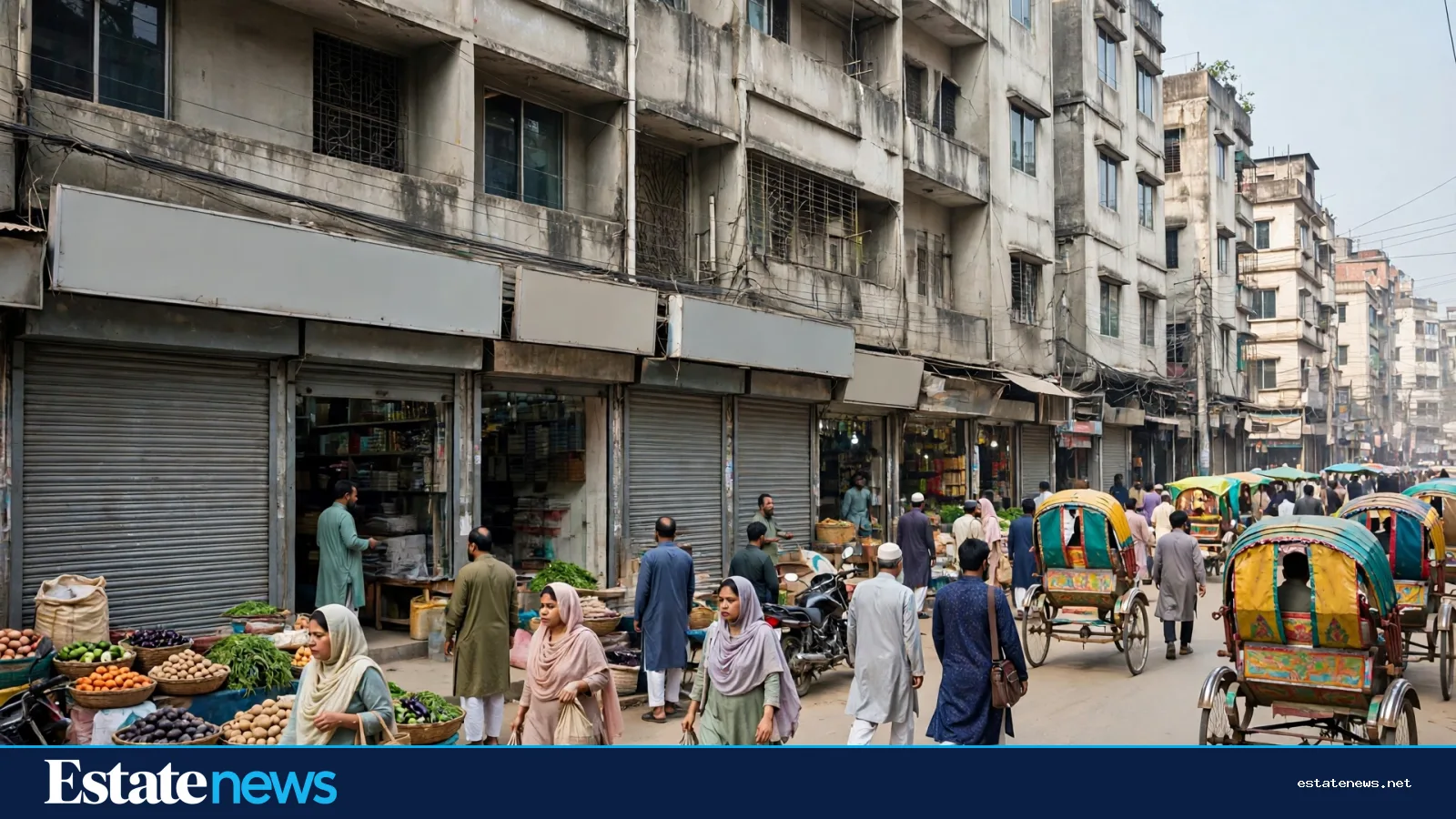
A shopkeeper in Karwan Bazar once described his rent with a shrug that every commercial investor should hear. The shop paid, he said, when the street was busy, and it did not pay when the street was dug up. Flats do not work like that. A family pays rent through roadworks, through monsoons, through slow months, because a home is not optional. A shop's rent follows trade, and trade follows footfall, seasons, road conditions and the shops next door. That single difference explains most of what goes right, and most of what goes wrong, when a Dhaka saver buys a shop or office unit as an investment.
Commercial asking rents in Dhaka split sharply by area, as listings coverage shows: Gulshan offices roughly Tk 100 to Tk 250 per square foot, Banani roughly Tk 100 to Tk 150, Motijheel roughly Tk 60 to Tk 100, and Karwan Bazar roughly Tk 50 to Tk 80, with The Daily Star reporting Motijheel's average in December 2024 at Tk 60 to Tk 90. Those are asking ranges, not agreed rents, and they move with building, floor and lease terms. A buyer who converts the top of a range into a promised yield has already made the first mistake. Yield should be calculated on rent actually agreed, after costs, and after allowing for empty months.

The tenant is the investment
A flat investor buys a home and hopes for a good tenant. A commercial investor buys a tenant's business, in effect, and hopes the business stays. Before buying, ask who would rent this unit, and why this unit rather than the one next door. A ground-floor shop with frontage on a busy road suits retail that lives on passing trade. An upper-floor office suits firms that need space, parking and power more than passing trade. A unit with poor frontage, awkward access or no parking will struggle in both markets, however cheap it looks per square foot.
Existing tenancy changes the picture in both directions. A unit with a sitting tenant on a clear, written lease, paying on time, gives immediate income and a known rent. A unit with a sitting tenant on a vague or disputed arrangement gives immediate trouble, and the buyer inherits it. Ask for the lease, the rent receipts, the service-charge payment record and the tenant's own view of the building. A tenant who is happy to stay is evidence. A tenant who is already looking to leave is a warning, however good the brochure yield looks.
The lease terms that decide the return
Commercial leases in Dhaka vary far more than residential ones, and the variation is where returns are made or lost. Rent escalation is the first term to pin down: how much the rent rises, when, and whether the rise is fixed or open to renegotiation. A lease that looks generous in year one and jumps sharply in year two is a different deal from one with steady, agreed rises, and tenants leave over jumps.


Fit-out, restoration and rent-free periods come next. Who pays for partitions, air conditioning, signage and cabling? What must be restored at exit, and who judges it? How long is the rent-free fit-out period, if any? A landlord who funds a heavy fit-out and then faces a short lease with an unclear renewal has bought risk, not income. Notice periods, renewal options, and the landlord's right to reclaim the space for redevelopment should be written plainly, as should responsibility for structural repairs, lift maintenance and generator fuel during outages.
Costs, vacancy and the exit nobody prices
Service charges on commercial buildings can be heavy, and they continue whether the unit is let or empty. Add building maintenance, property taxes where applicable, repairs between tenants, and the cost of finding the next tenant, and the gap between gross rent and money kept narrows fast. The honest yield calculation subtracts all of it, and then subtracts an allowance for vacancy. A shop that is empty for three months in every two years does not pay twelve months of rent a year. It pays roughly ten and a half, before costs.
The exit deserves the same honesty. Flats in Dhaka have a broad resale market: families, investors, buyers from abroad. A shop or office unit has a narrower one: investors and businesses that want that street, that floor, that frontage. A unit that is hard to let is usually hard to sell, and at a discount. Before buying, a buyer should ask how many comparable units in the same building or street have actually sold recently, and at what figures, rather than accepting a broker's assurance that commercial property always resells well.
A short checklist for the commercial buyer
A buyer who can answer these questions, with documents rather than assurances, is ready to consider a shop or office unit. A buyer who cannot should pause, not because commercial property is a bad investment, but because the answers are the investment.
- Demand: Who rents here, and why this unit over the neighbours?
- Rent: What rent is actually agreed, in writing, and for how long?
- Lease: Escalation, fit-out, restoration, notice and renewal, all in the lease?
- Costs: Service charges, taxes, repairs and letting costs, counted in full?
- Vacancy: What allowance for empty months is built into the yield?
- Papers: Title, mutation, approvals and any building dispute, checked by a lawyer?
- Exit: Comparable recent sales in the same building or street, at real figures?
A shop or office unit can be a sound part of a Dhaka saver's holdings, alongside a home, deposits and other assets. It earns that place not by promising a higher yield than a flat, but by paying a rent that survives a quiet season, a road closure and a tenant change, under a lease that was read before it was signed. In commercial property, the yield is the last number to trust, and the lease is the first document to read.