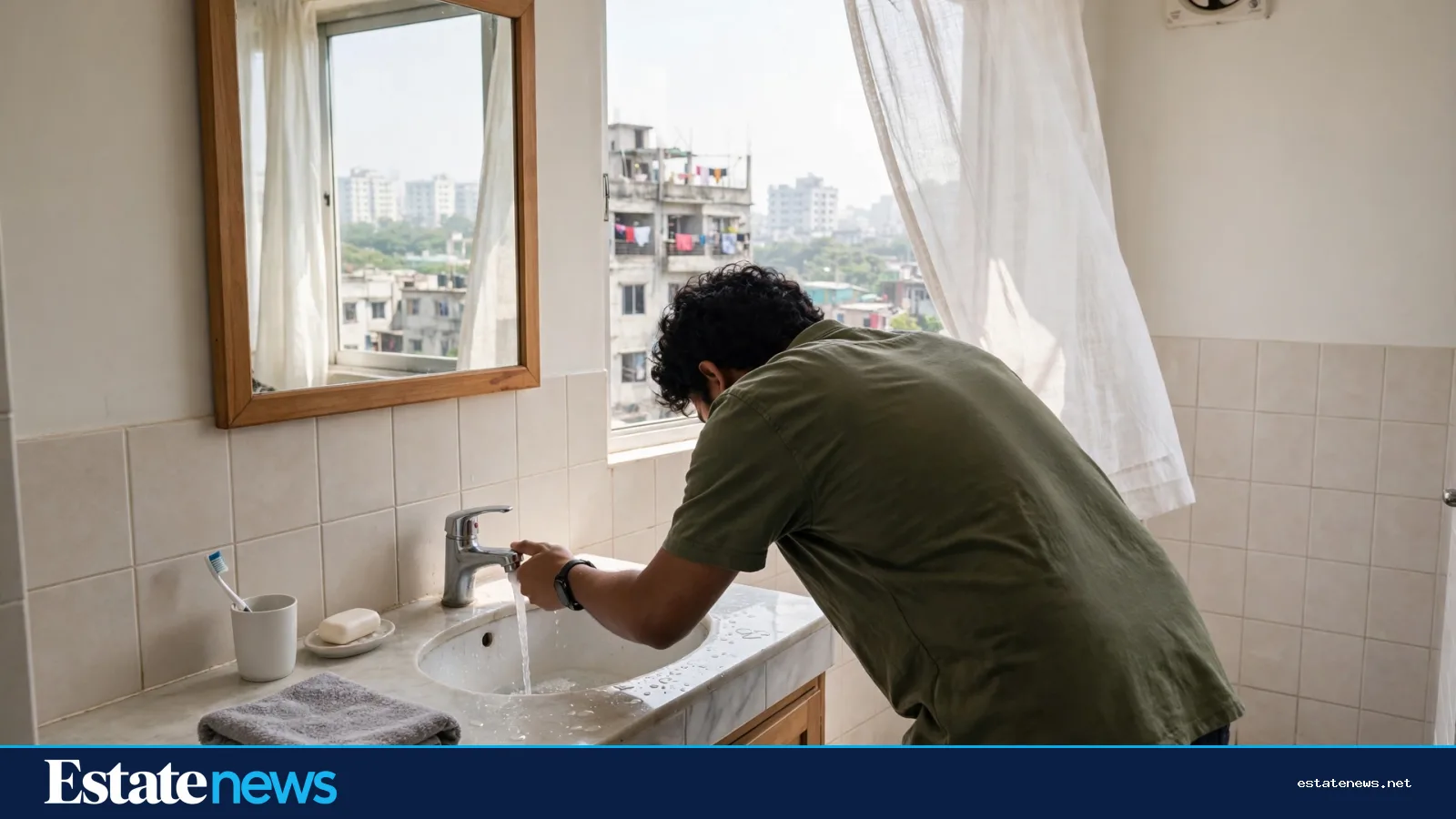
A question comes up often in Dhaka drawing rooms. A family owns one flat, has some savings, and wonders whether a second flat is the sensible place to put the money. The argument for it sounds reassuring. Rent arrives every month, the flat is a physical asset, and property in Dhaka has, over long stretches, held its value. The argument against it rarely gets the same hearing, because it is made of unglamorous details: an empty month, a leaking bathroom, a tenant who stops answering calls, a sale that takes a year. A second flat is not a savings account with walls. It is a small business with one customer at a time.
Yield is where the cold look should start. Gross yield divides annual rent by the purchase price. Net yield goes further and subtracts the year's real costs: service charges, repairs, repainting, broker fees, vacancy and management. An earlier Estate News explainer on rental yield made the central point well: the formula is simple, and the assumptions do all the work. A flat that lets for twelve months on paper but stands empty for one month in practice has lost a twelfth of its income before any other cost. A flat in a building with rising service charges loses a little more each year. Run the net figure on a bad year, not a good one, and see whether the investment still makes sense.
Vacancy, management and the tenant problem

Vacancy deserves its own line in any calculation, because it is the risk buyers most underestimate. A tenant's job moves, a family grows, a lease ends, and suddenly the flat is empty. In a strong rental area with many tenants looking, re-letting may take weeks. In a thinner area, or in a building with a poor reputation, it may take months. During that time the owner still pays service charges and any loan instalment. The rent that was supposed to cover those costs is absent. A buyer who cannot carry several empty months without strain is buying risk they cannot afford.
Management is the second underestimated cost, and it grows with distance. A landlord who lives in the same neighbourhood can visit, meet a plumber, and check the flat between tenants. A landlord who lives in another city, or abroad, needs someone trusted to do those things. Paying for that help reduces the return. Not paying for it, and managing from afar by phone, often reduces the return more, through slow repairs, weak tenant screening and flats that sit empty longer. Either way, management is a cost, and a second flat doubles it. One flat can be a hobby. Two flats are a workload.
Tenants themselves are a risk that no yield figure captures. A good tenant pays on time, reports leaks early and stays for years. A bad tenant pays late, damages fittings and leaves the flat needing major work. Screening helps: references, employment details, a written agreement with clear terms on rent, deposit, notice and repairs. Even good screening cannot remove the risk entirely. The buyer should ask a blunt question before purchasing. If this flat had a bad tenant year, with two empty months and a full repaint, would the household budget survive it? If the answer is no, the purchase is too large for the household's reserves, whatever the yield says.


Liquidity, concentration and the comparison that matters
Liquidity is the risk that matters most and gets talked about least. A bank deposit can be withdrawn in days. A flat cannot. Selling takes marketing, negotiation, paperwork, deed transfer and registration, and the price achieved depends on the market at that moment. A seller who must sell quickly, because of a medical bill or a business reversal, often accepts a discount. A second flat therefore concentrates a household's wealth in a single, slow-to-sell asset, in the same city and often the same market as the first flat. If Dhaka's market softens, both flats soften together. Diversification is not a slogan here. It is the difference between a setback and a crisis.
That makes the comparison with other uses of the same money essential. A second flat should be judged against what else the money could do: repay an existing home loan, hold a larger emergency fund, or invest in instruments that can be sold quickly. Each option has its own risk. Property's advantage is tangible income and a physical asset. Its disadvantage is concentration, illiquidity and hands-on cost. There is no universally right answer, only an answer that fits a particular household's income, reserves, age and appetite for hassle. A young household with rising income and no loan may tolerate a second flat's risks. A household near retirement, or one already carrying a large loan, may find the same flat reckless.
One more check before signing. Look at the building, not just the flat. A second flat in a building with a weak residents' association, deferred maintenance and rising charges will cost more every year. A second flat in a well-run building, with a repair fund and transparent accounts, protects the rent. Ask what major works are planned, how charges have moved in recent years, and how disputes are handled. The flat's yield is a snapshot. The building's management decides whether that snapshot survives contact with reality.
A second flat can be a sound investment. It can also be a trap dressed as safety. The difference is rarely the area or the brochure. It is the buyer's honesty about vacancy, management, liquidity and concentration, tested against a bad year rather than a good one. Anyone who runs those numbers and still wants the flat has made an investment decision. Anyone who has not run them has made a purchase and called it one.
This article is general information only, not financial advice. Property investment carries risk, including the risk that rents fall, costs rise, or a property cannot be sold quickly at the expected price. Take professional advice before committing capital.