
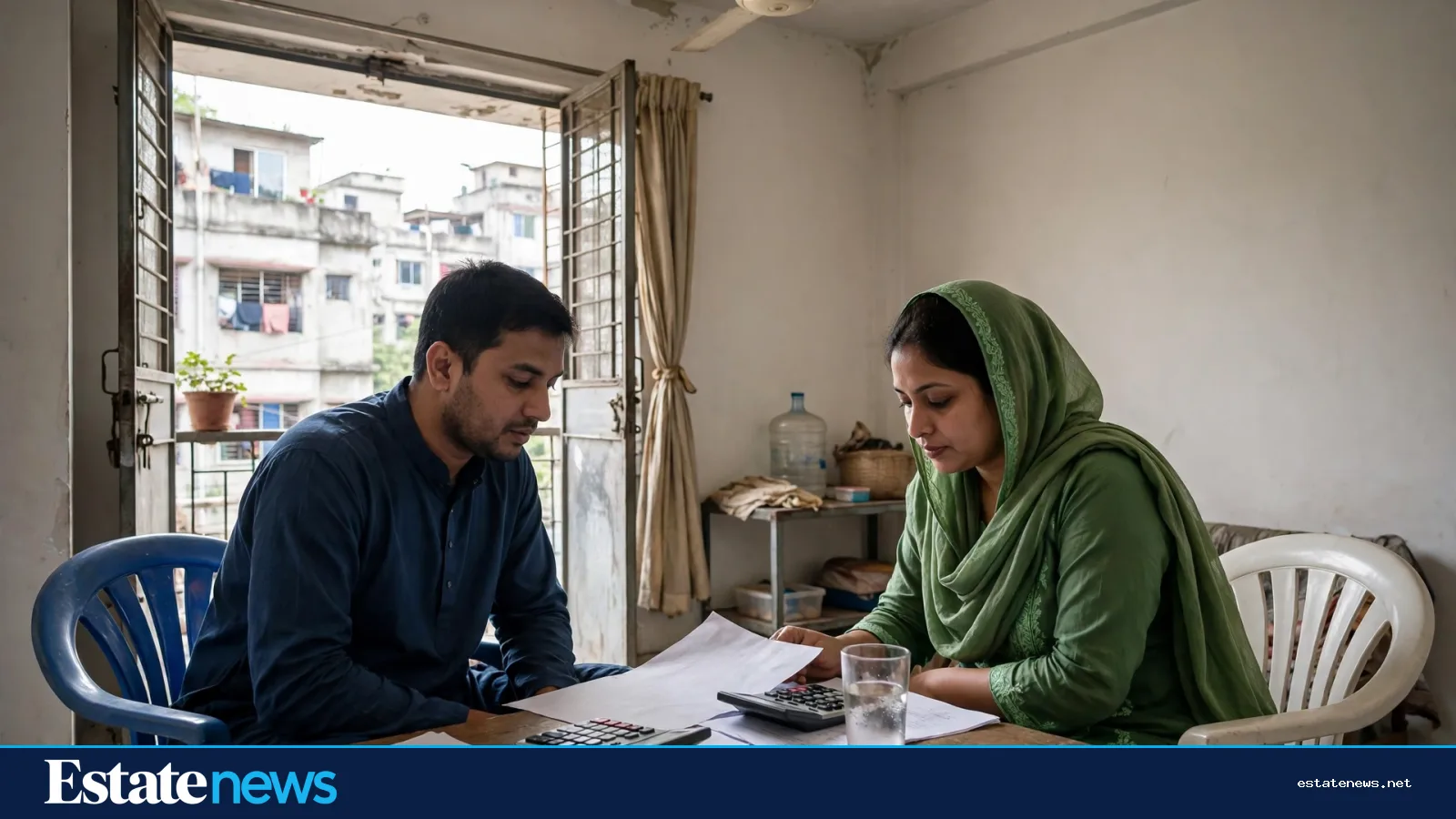
Monday's stock market close was the kind of number that travels fast in Dhaka drawing rooms. The DSEX, the Dhaka Stock Exchange benchmark, lost 51.57 points, or 0.96 per cent, to close at 5,333.58 on 2 November, its lowest level since 1 June, according to market reporting of the session. The blue-chip DS30 fell 26.29 points to 2,042.14, and the Shariah index slipped to 1,037.81. Turnover fell 13.27 per cent to Tk 418.22 crore, and 249 issues declined against 86 that advanced, with textiles the only sector to finish higher, gaining 0.7 per cent, while food fell 3.8 per cent. EBL Securities linked the weakness to uncertainty over domestic conditions, caution during the earnings season, and a lack of fresh positive triggers.
None of that, by itself, sets the price of a flat in Mirpur or Uttara. House prices move on land, construction cost, loan rates and the slow arithmetic of family incomes, not on one day's index. But a weak stock market still reaches homebuyers through three quieter channels, and November is a good month to name them plainly.
Confidence is a deposit, too

A home purchase begins long before the loan papers. It begins when a family feels safe enough to commit savings built over years. A falling market dents that feeling, even for families who own no shares at all. News of a five-month low travels through workplaces, family groups and broker conversations, and it makes buyers pause. A pause is not a crash. It is a delay, and delays have their own cost: a family that waits six months for confidence to return may face higher construction-linked prices, a different loan rate, or a flat in their lane already sold to someone who did not wait.
The sensible response to a confidence wobble is not to rush, and not to freeze. It is to separate the market mood from the family's own numbers. Is the deposit actually saved, or still partly hoped for? Is the monthly instalment affordable on one income if the other pauses for three months? Would the family still buy this flat if stocks stayed flat for a year? A family that can answer yes to those questions is buying a home, not a market call. A family that cannot should wait, and say so honestly, rather than borrowing confidence from a rising index that may not return on schedule.
Loans stay expensive while the policy rate stays put
Bangladesh Bank kept its policy rate at 9.5 per cent for the October to December quarter, with the standing lending facility at 11 per cent and the standing deposit facility at 7.5 per cent, in its first quarterly monetary policy statement. That rate is the background music for every home loan conversation in Dhaka this month. A weak stock market does not, by itself, cut loan rates. Banks price home loans on funding cost, risk and the borrower's profile, and a cautious market can make banks more careful, not more generous.


For buyers, the practical point is narrow. Do not assume a stock market fall will soon mean a cheaper home loan, and do not assume a stock market rise will either. Compare actual loan offers, in writing, from two or three banks: rate, tenure, fees, prepayment terms, and what happens if the rate moves. A loan that looks cheap in month one and resets sharply later is a different product from a loan with a steadier, slightly higher start. The policy rate gives the frame. The offer letter gives the price.
When a paper loss meets a real deposit
Some buyers do hold shares, and for them the link is direct. A portfolio that has fallen may have been part of the deposit plan, in whole or in part. Selling shares after a fall to fund a flat locks in the loss and shrinks the deposit at the worst moment. Holding the shares and delaying the flat keeps the loss on paper but risks losing the flat. There is no clever third option that avoids the trade. The honest way through is to rework the deposit arithmetic without the hoped-for share value: what can the family actually put down today, from savings and certain sources, and what flat does that deposit genuinely buy, after registration and moving costs?
That rework often leads to a smaller flat, a different lane, or a longer wait, and all three are better outcomes than a purchase funded by a loan stretched to cover a gap the market created. A home bought on stretched numbers turns every later shock, a job change, a medical bill, a rate rise, into a housing crisis. A home bought on numbers that survive a bad stock market month is a home the family can keep through the next bad month, too.
What to watch, without over-watching
A buyer does not need to follow the DSEX daily to buy well. Three markers, checked weekly at most, give enough signal: whether turnover recovers from the Tk 418 crore level, which suggests buyers returning; whether earnings season produces results that steady sentiment, as analysts cited caution around disclosures; and whether Bangladesh Bank's next quarterly decision shifts the rate frame that governs loans. Beyond that, the buyer's own markers matter more: deposit saved, instalment affordable, papers clean, building checked, lane visited twice.
Stock markets fall and recover in patterns no homebuyer can time reliably. Homes are bought once, lived in for years, and paid for month by month. Monday's five-month low is a useful reminder to check the family's own numbers before signing, and a poor reason, on its own, to either rush a purchase or abandon one. The families who buy best in a shaky month are the ones who let the market inform their timing, and never let it decide their deposit.