Dating note: there is no Dhaka Stock Exchange trading session on Friday 30 October, the weekly market holiday. This wrap therefore uses the latest verified trading session, Thursday 29 October 2026, for stock figures, and the latest Bangladesh Bank remittance update available at drafting time, covering 1–26 October 2026. Figures for 27–29 October remittances had not been published in the sources checked.
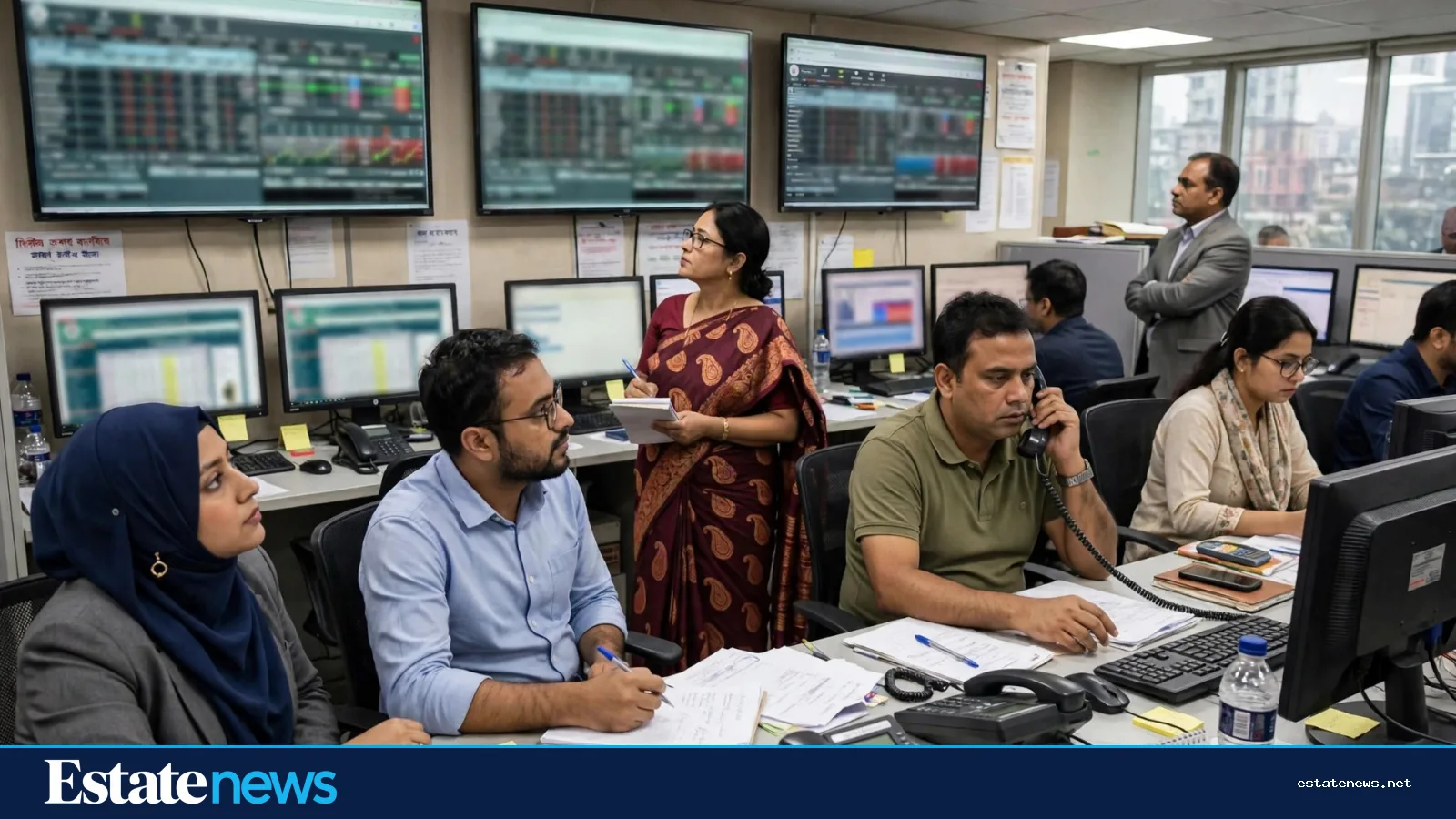
Dhaka's stock market ended its trading week on a soft note. The benchmark DSEX fell 15.8 points, or 0.3 per cent, on Thursday 29 October to close at 5,417, down from 5,433 in the previous session, according to market reporting of Dhaka Stock Exchange data. The blue-chip DS30 slipped 9.4 points, or 0.4 per cent, to 2,087, while the SME-focused DSMEX lost 18.3 points, or 1.9 per cent, to 971.
The fall came despite heavier trading. Turnover rose 28 per cent to Tk564.60 crore, from Tk441 crore on Wednesday, while trading volume jumped 68.9 per cent to 27.4 crore shares and units and the number of transactions rose 2 per cent to 1,56,936. In other words, more shares changed hands, but selling pressure in large-cap shares outweighed buying.

That pattern caps a choppy week. The DSEX had rebounded 46.7 points on Wednesday 28 October to 5,433, snapping a three-session losing streak, before giving back part of that gain on Thursday. For a household watching the market as a source of wealth — or as a signal of confidence — the message is caution, not direction: the index is moving sideways, with turnover rising faster than prices.
Remittances: the steady inflow
If equities were hesitant, remittances were not. Expatriate Bangladeshis sent $2,452 million between 1 and 26 October 2026, up 13.2 per cent from $2,166 million in the same period last year, according to Bangladesh Bank data reported by The Financial Express. On 26 October alone, inflows were $122 million.
Cumulatively, remittances from 1 July to 26 October reached $11,044 million, or $11.04 billion, up 13.3 per cent year on year from $9,752 million. Gross foreign-exchange reserves stood at $36,411.83 million on 26 October, or $31,600.40 million on the International Monetary Fund's BPM6 basis.
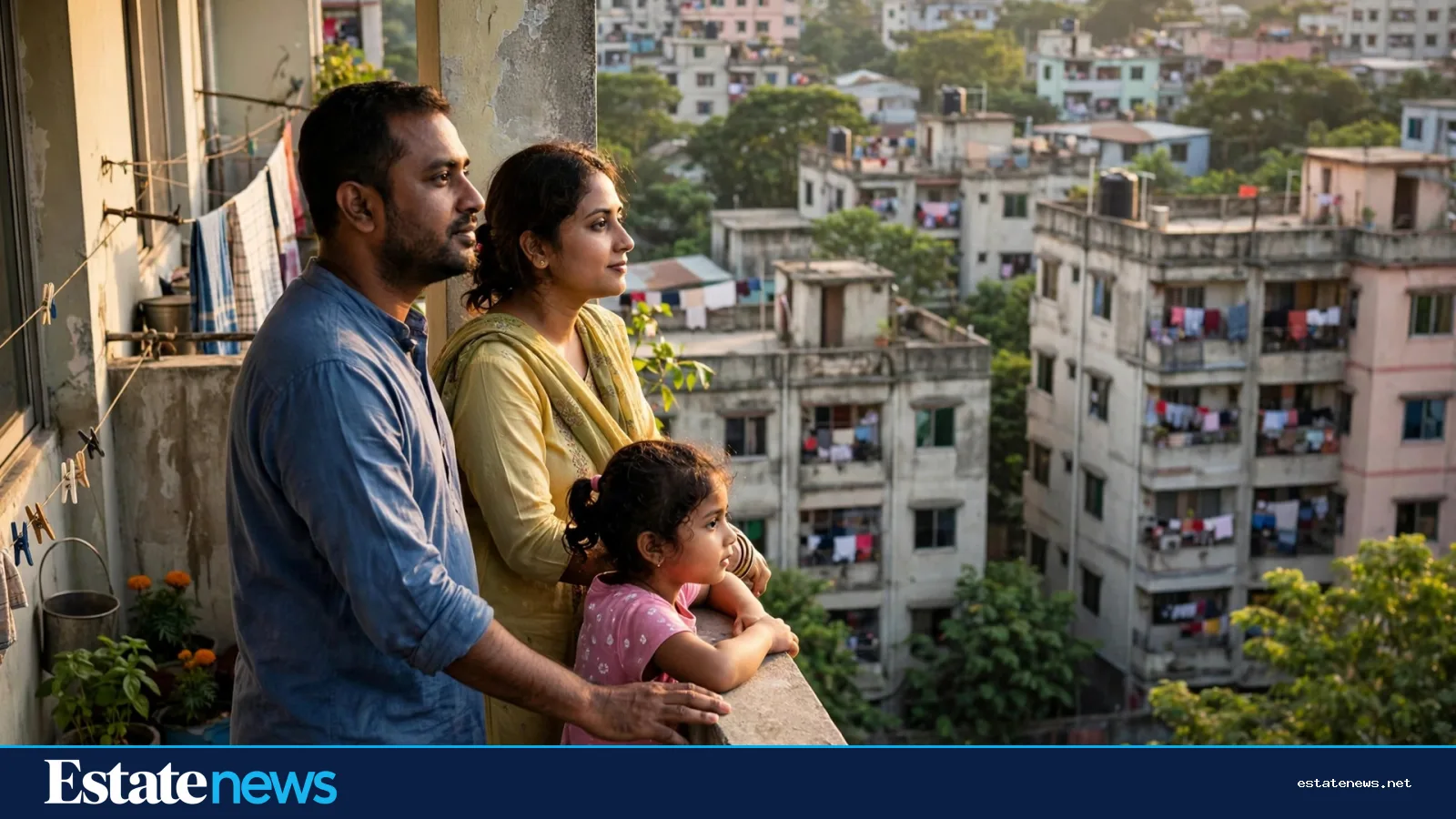
For property, remittances matter directly. A large share of Dhaka and Chattogram flat purchases, land purchases in district towns and home construction in villages is funded by family money sent from abroad. When inflows rise by double digits, the pool of potential buyers and builders grows, even if bank credit stays tight. The question for sellers is whether that money goes into homes, into savings, or into repaying debt — and the answer varies by family, not by headline.
Borrowing: still expensive
The cost of borrowing is the other half of the housing equation, and it has not eased. Bangladesh Bank kept its policy rate unchanged at 9.5 per cent for the October–December quarter in its first quarterly Monetary Policy Statement, with the Standing Lending Facility at 11 per cent and the Standing Deposit Facility at 7.5 per cent. The central bank had cut the rate by half a percentage point to 9.5 per cent on 2 August, after holding it at 10 per cent since October 2024.
Inflation remains the reason for caution. Headline inflation was 8.34 per cent in September, according to Bangladesh Bureau of Statistics data cited in Estate News' October numbers piece, after 8.26 per cent in August. Private-sector credit growth was only 4.75 per cent in August, far below earlier years, reflecting weak investment demand and stress in parts of the banking system.


For a homebuyer, the practical translation is straightforward:
- A home loan taken today will be priced off a high policy rate, so monthly instalments remain heavy even if a flat's asking price is unchanged.
- Developers face the same cost of money, which pressures construction finance and can slow new launches or stretch completion times.
- Households with savings earn more on deposits than they did in a low-rate era, which makes waiting — or buying in cash — relatively more attractive than borrowing heavily.
None of this means property is unaffordable for everyone. It means the margin for error is thinner: a buyer who stretches to the maximum loan at today's rates has less room if income falls or costs rise.
What this week means for property, construction and household finance
Taken together, the week's three signals point in different directions, and that tension is itself useful.
First, soft equities do not automatically mean soft property. Many Bangladeshi families treat a flat as a long-term store of value, not a tradeable asset, so a 0.3 per cent weekly fall in the DSEX will not by itself change asking prices. But prolonged equity weakness can dent confidence and delay discretionary purchases, including second flats and plots bought as investments.
Second, strong remittances support demand from below. Families receiving regular inflows are better placed to fund a down payment, finish a half-built house or buy land outright, without depending on a bank loan. Developers marketing to expatriate buyers and their families should expect interest to remain, even while domestic credit stays cautious.
Third, expensive borrowing rewards discipline. Buyers should compare the total cost of a loan — instalment, fees, insurance and the risk of rate changes — against renting for a longer period, and should check a developer's completion record before committing to a long payment plan. Sellers, in turn, should expect negotiation: in a high-rate market, a realistic asking price sells faster than an aspirational one.
Strong inflows, a hesitant stock market and costly credit do not cancel each other out. Together they describe a market where cash buyers have room, borrowers must be careful, and patience is priced in.
Looking ahead, the next data points to watch are the full-month October remittance total, any fresh Bangladesh Bank update on reserves and credit, and whether the DSEX can hold above the 5,400 level in the new trading week. Until then, the prudent reading of this wrap is the one the numbers already give: family money is flowing in, financial markets are waiting, and borrowing remains expensive. For anyone planning a property decision, that is a reason to verify prices, check documents and run the loan maths twice — not a reason to rush, and not a reason to panic. This article is informational only and is not financial advice.
Follow Estate News on Facebook for daily property, market and money updates: https://www.facebook.com/profile.php?id=61593817347872