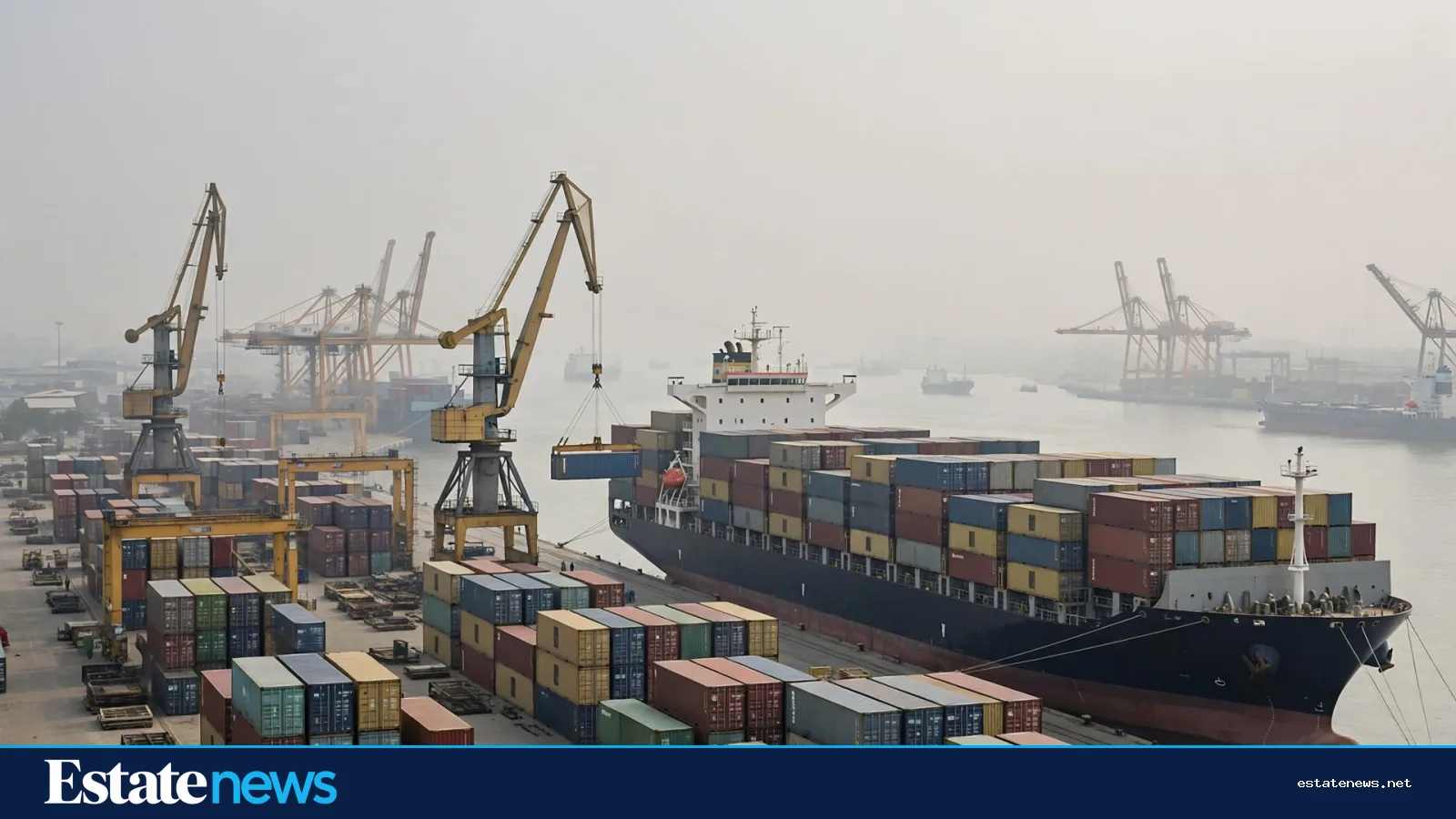
Ask a builder in Dhaka why rod or cement prices moved this month, and the answer will rarely begin in Dhaka. It will begin with a ship, a commodity market, or a currency rate — with costs set in dollars, shipped across oceans, and converted into taka before they ever reach a construction site. That global chain is why building-material prices in Bangladesh stay vulnerable to shocks that have nothing to do with local demand.
No new figure is introduced in this article beyond those already published and attributed below. The aim is to explain the mechanism: how a distant shock becomes a local price.
Clinker: the imported heart of cement

Cement production in Bangladesh depends heavily on imported clinker, the intermediate product that is ground with gypsum and other materials to make cement. When clinker prices rise, or when its supply is disrupted, the effect reaches Bangladeshi cement makers quickly, because the input cannot simply be replaced from local sources at short notice.
The scale of that exposure was visible in 2026 reporting. According to The Business Standard's analysis in May 2026, clinker prices rose from about $45 to about $53 a tonne amid freight and supply disruption. That is a published, attributed movement — not a forecast — and it illustrates the point: an $8 move in an imported input, multiplied across the volume a cement plant consumes, becomes a material cost pressure that producers must either absorb or pass on.
The major cement makers operating in this market — including Shah Cement, Bashundhara Cement, Crown Cement, Premier Cement, LafargeHolcim Bangladesh and Heidelberg Materials, among others — all face the same imported-input exposure in varying degrees. Competition among them can soften the pass-through, but it cannot remove the underlying cost. When clinker is dearer, the industry's cost floor rises for everyone.
Scrap: the other imported input
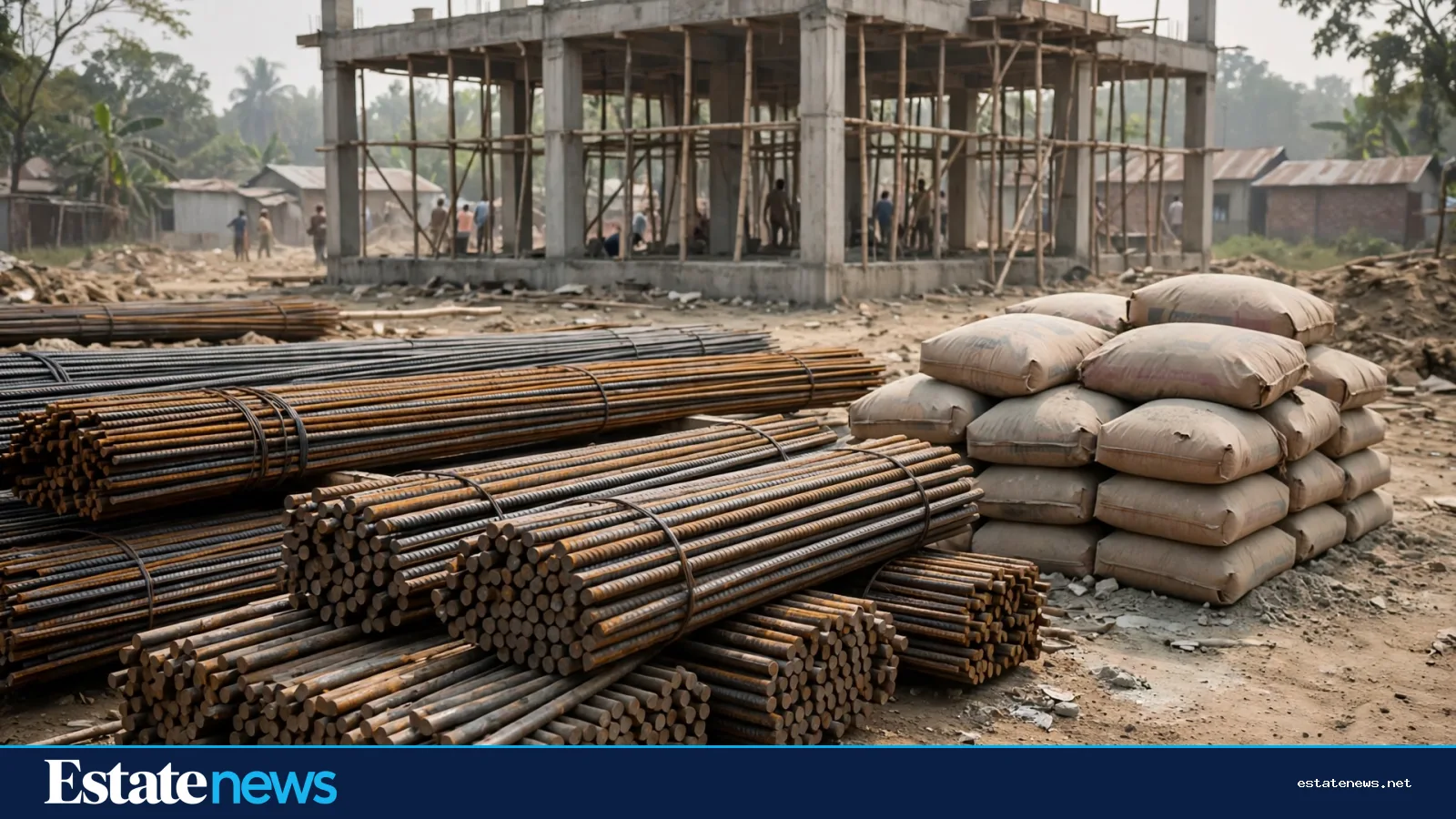
Steelmaking in Bangladesh similarly depends on imported inputs, notably scrap, which is melted in re-rolling and steel mills to produce rod and other products. Scrap prices are set in global markets, driven by demand in large steel-producing economies, by shipping availability and by the same freight costs that affect clinker.
The implication for buyers is straightforward. A steel market participant such as BSRM, KSRM, GPH Ispat or RSRM does not set its costs in isolation; it buys in a global market and sells in a taka market. When scrap prices rise in dollars, the taka cost of producing a tonne of rod rises with them, even if nothing has changed in Dhaka's construction demand. The same logic applies in reverse: a fall in global scrap prices can ease pressure, though the benefit may arrive with a lag as existing stocks are worked through.
Freight and the exchange rate: the two multipliers
Freight is the first multiplier. A disruption to shipping — congestion, route changes, fuel costs or capacity shortages — raises the delivered cost of both clinker and scrap, whatever their factory-gate prices. The May 2026 clinker movement cited above was explicitly linked in that reporting to freight and supply disruption, a reminder that transport is not a minor add-on but a major component of the landed cost.


The exchange rate is the second multiplier. Because clinker and scrap are bought in dollars and sold in taka, any weakening of the taka raises the local-currency cost of every imported tonne, even if the dollar price is unchanged. Conversely, a stable or stronger taka softens the blow of a dollar price rise. Builders and buyers who watch only the dollar price, or only the local retail price, miss half the story: the conversion between them is itself a moving cost.
Together, freight and the exchange rate explain why local material prices can feel volatile even in a calm local market. Two multipliers, both outside local control, sit between a global commodity price and a Dhaka retail price.
What this means for builders and buyers
For builders and developers, the constructive response is planning, not panic. Material budgets should carry a contingency for input-price movement, procurement should be phased where cash flow allows, and contracts should state clearly how a material-price change is handled — who bears it, within what limit, and on what evidence. A contract that is silent on this point invites a dispute when prices move.
For homebuilders, the same logic applies at household scale. Before starting construction, obtain current local prices from more than one supplier, budget across a range rather than a single price, and agree the material specification and brand type in writing with the contractor. The Estate News tracker's published-range midpoints — rod Tk97,000 a tonne and cement Tk505 a bag, labelled as midpoints — are a planning reference, not a quotation; the actual price on the day of purchase is what matters.
For flat buyers, global material costs are a background signal, not a buying rule. Rising input costs can pressure developers' margins, schedules or specifications, which is one more reason to check a developer's handover record and building quality rather than relying on a brochure. Falling input costs, equally, do not guarantee a lower flat price, because land, finance and labour costs move on their own paths.
A Dhaka building site is the end of a global supply chain. Its prices will always carry a little of the world's weather.
Bangladesh's building-materials industry — its steelmakers, cement makers and the many suppliers around them — has kept construction going through repeated global shocks, and that resilience is itself a positive story. But resilience is not immunity. As long as clinker and scrap are imported, freight is priced globally and the taka converts every dollar cost, local prices will remain sensitive to the world. Builders and buyers who understand that chain can plan for it, rather than be surprised by it.
This article is informational only and is not financial advice. Material prices should be confirmed with local suppliers at the time of purchase.
Follow Estate News on Facebook for daily property, market and money updates: https://www.facebook.com/profile.php?id=61593817347872