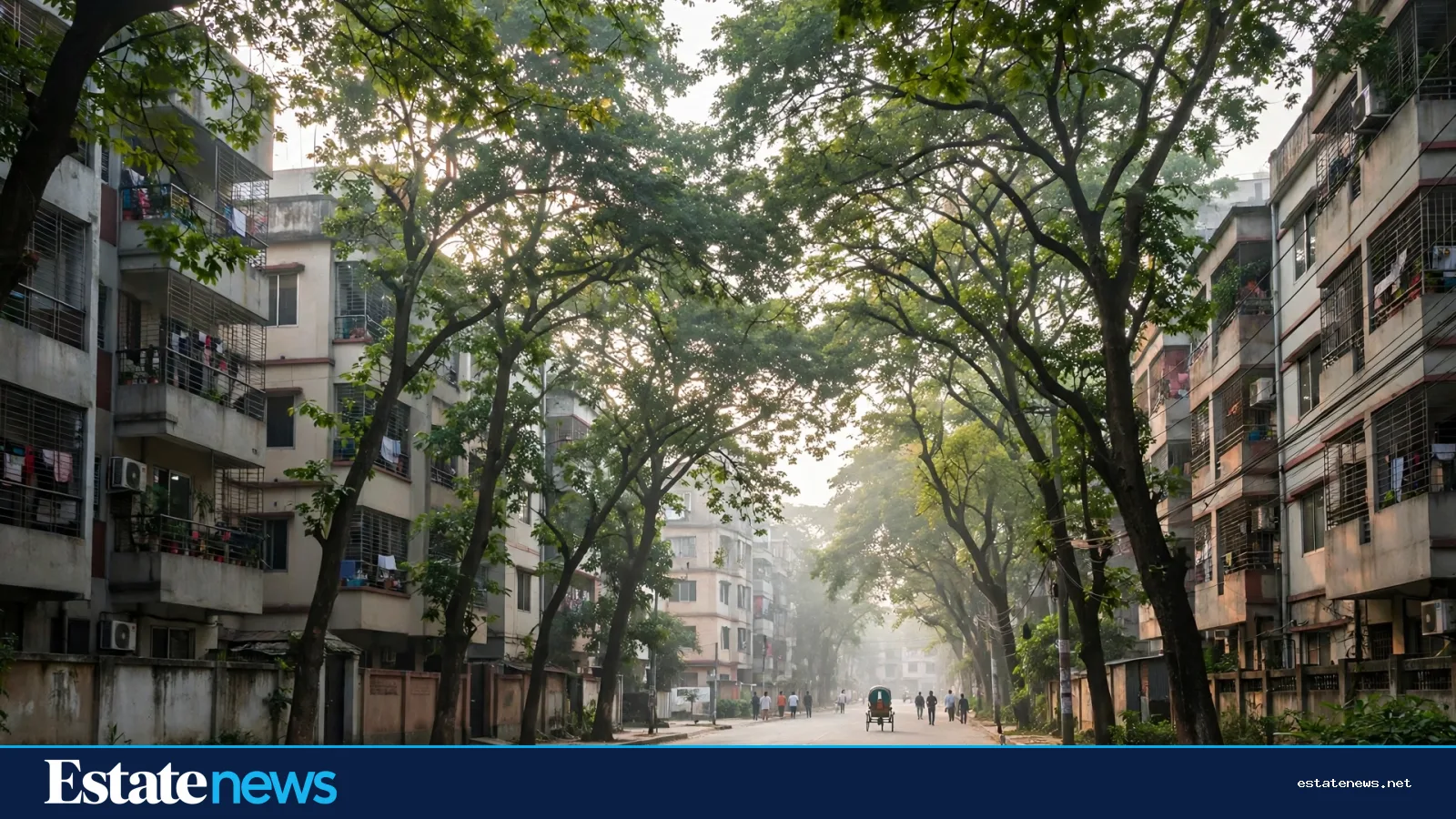
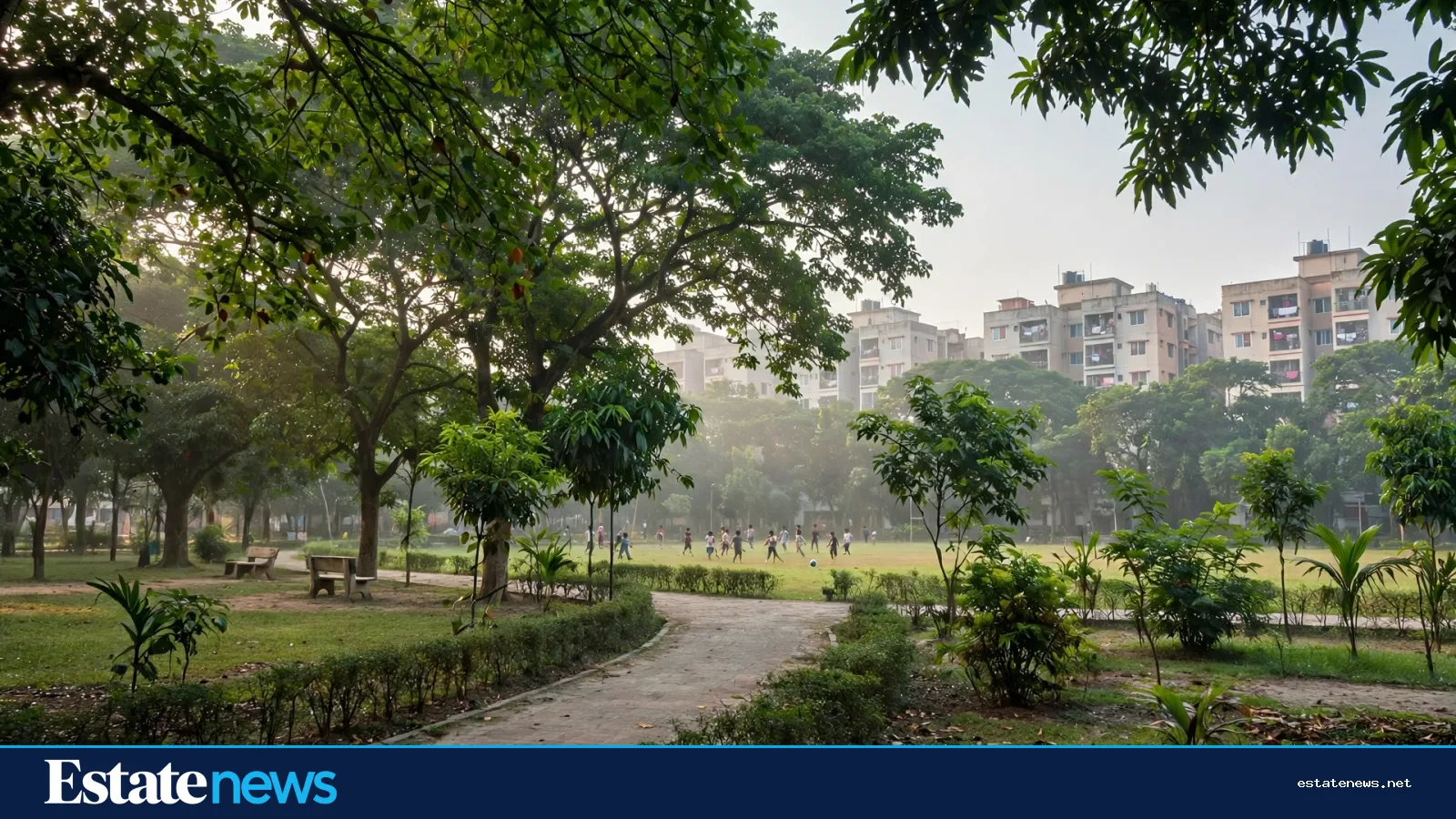
On a weekday morning in Bashundhara Residential Area, the neighbourhood announces itself before any flat is viewed. The roads are wider than in much of Dhaka. Schoolchildren walk with parents towards gates that open onto the same streets each day. Vans and rickshaws move in an order that feels, if not calm, at least legible. By evening the pattern reverses: walkers return to the parks and lakeside edges, shops light up along the main roads, and the blocks settle into the low hum of a place where many thousands of households live, work, study and shop within a few square kilometres.
That daily rhythm is the real subject of this feature. Bashundhara Residential Area is often discussed as a price point or a pin on a map. It is better understood as an experiment in planned living — and like every experiment, it reveals both the value of planning and the problems planning alone cannot solve.
This is the nut graf, and it is worth stating plainly: a neighbourhood that was laid out before it was lived in gives families something much of Dhaka cannot offer — predictable roads, separated residential blocks, and services gathered in reachable places. Whether that advantage survives rising density, traffic at its gates and the sheer scale of daily movement in and out is the question that now decides whether Bashundhara feels like a planned neighbourhood or simply a large one.

A planned layout is a daily convenience, not just a map
The first thing planning changes is ordinary movement. In older parts of Dhaka, a residential street can narrow without warning, a commercial use can appear beside a home, and a shortcut can become a traffic route. In Bashundhara, the broad structure — main roads, internal roads, residential blocks and commercial stretches — was set out in advance. That structure makes movement more legible: residents learn which roads carry through-traffic and which streets stay quiet.
That legibility matters most to families with children and elderly members. A predictable street is a street a child can learn, a street a parent can cross with more confidence, and a street where a morning routine — school, work, market — can be repeated without a new negotiation every day. Planning, in this sense, is not an aesthetic luxury. It is a daily convenience, repeated hundreds of times a month, and it is the quiet reason many families accept the area's prices.
But a plan is also a promise that must be maintained. Roads need repair, drainage needs clearing, footpaths need to stay walkable, and commercial growth needs to be kept where it belongs. A planned neighbourhood that stops maintaining its plan slowly becomes an unplanned one with wider roads. The test of Bashundhara is therefore not the original drawing but the daily upkeep — and residents judge that upkeep every time they walk a pavement, wait at a gate or drive out in the rain.
Schools and hospitals shape the family routine
The second argument for the area is proximity of services. Educational institutions and healthcare facilities in and around Bashundhara mean that for many families, the school run and the doctor's visit are local journeys rather than cross-city expeditions. That changes the shape of a day: less time in traffic, more time at home, and a neighbourhood life that is lived locally rather than merely slept in.
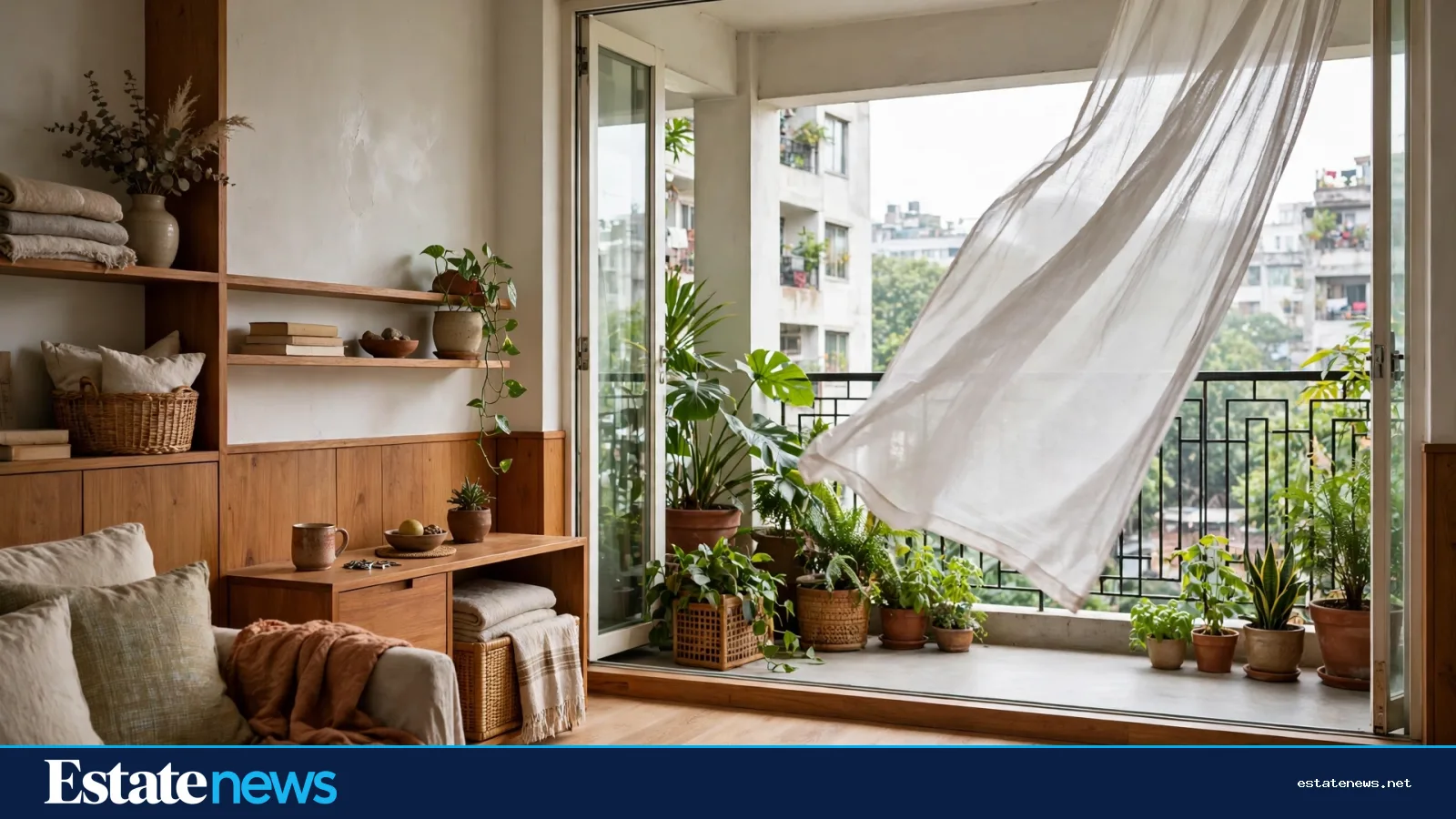
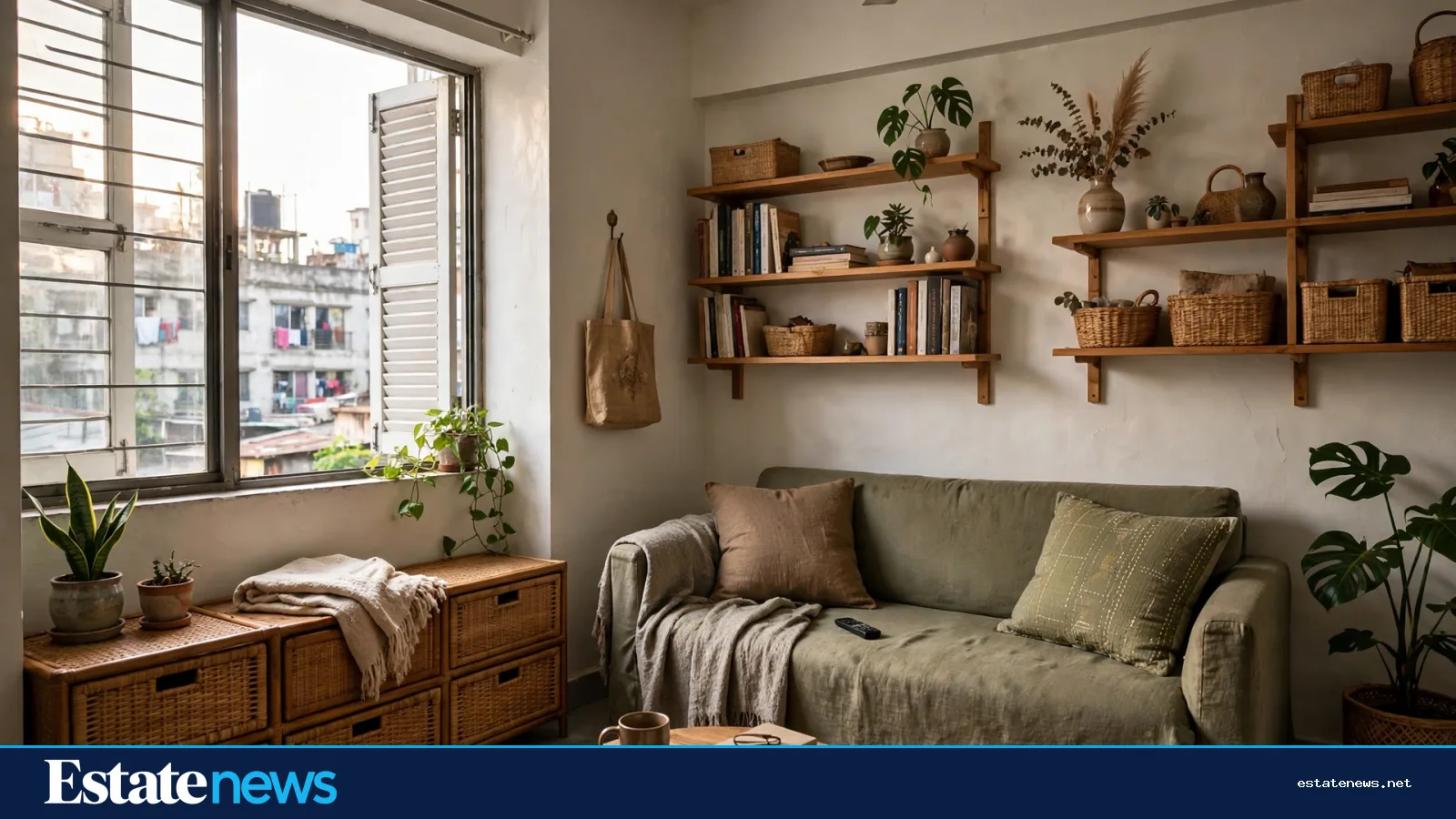
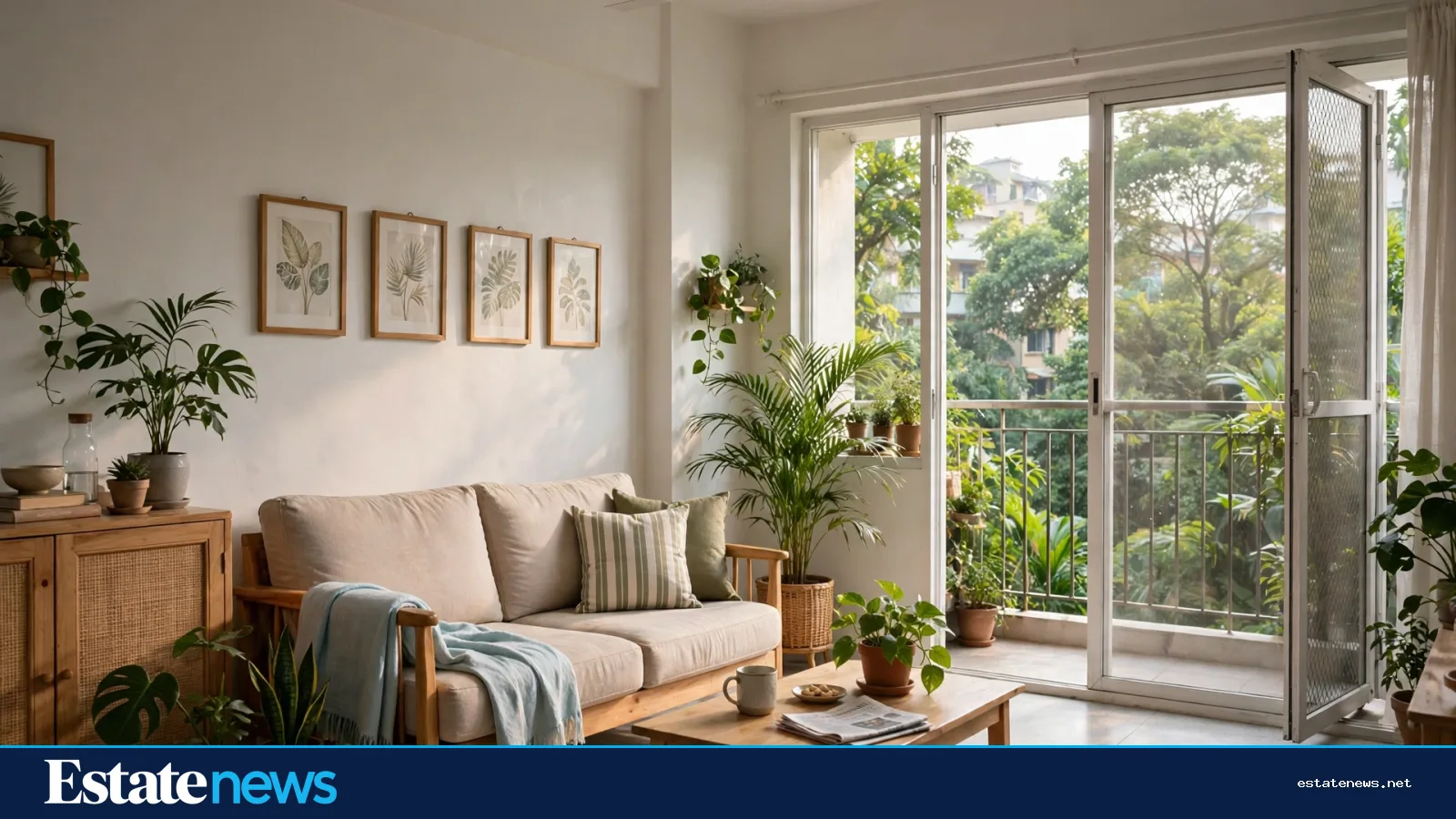
It also changes who the neighbourhood serves. Areas built around schools and hospitals attract families at a particular stage of life — parents with school-age children, households caring for elderly relatives, professionals who want work, schooling and healthcare within a manageable radius. The result is a visible family character: parks used in the evening, tuition and coaching activity after school hours, and a demand for flats with an extra room, a study corner or a balcony that can serve as a small outdoor space.
Proximity, however, is not the same as capacity. A school or hospital being nearby does not guarantee a seat, a short wait or an affordable fee. Families considering a move should check the specific institutions they need, at the ages and stages their children are actually at, rather than assuming that a neighbourhood known for services will serve every need equally. The area's strength is real, but it is general; each family's needs are specific.
The commute is the real test of a neighbourhood


Every planned neighbourhood in Dhaka eventually faces the same test: the gates. Bashundhara's internal roads may be orderly, but its residents still travel to offices, universities and businesses across the city, and the journey beyond the gates is governed by Dhaka's wider traffic, not by the neighbourhood's plan.
That makes the commute the honest measure of living here. A flat that looks well located on a map can still mean a long daily journey if the main exit clogs at peak hours, and a flat deeper inside the area can mean a quieter street at the cost of a longer trip out. Prospective residents should therefore test the journey they will actually make — at the hour they will actually make it, on a working day — before judging a location by its internal roads alone.
There is a second, quieter commute too: the movement within the area. Shopping, schooling, prayer, parks and clinics all generate local trips, and a neighbourhood that handles those trips on foot or by short rickshaw ride gives its residents back hours each week. Bashundhara's scale makes that possible in a way smaller neighbourhoods cannot match, but only where footpaths, crossings and local transport keep pace with the number of people using them.
An asking median is a starting point, not a verdict
No neighbourhood feature is complete without its price, and here precision matters. The Estate News area-price tracker records an asking median of Tk 9,865 per sq ft for Bashundhara R/A. That figure is an asking median only: it summarises the prices sellers are asking in listings, not the prices buyers actually paid in completed transactions. Asking and transaction prices differ, sometimes materially, and a buyer who treats an asking median as a settled market price will misread the market.
Used properly, the figure is still useful. It gives a sense of the area's pricing level relative to other neighbourhoods, and it helps a buyer judge whether an individual asking price sits near, above or below the middle of what is currently being asked. It does not, by itself, say what a particular flat is worth. That depends on the building, the floor, the facing, the condition, the documentation and the urgency of the seller — all the factors a visit, a lawyer's check and a comparison with similar flats must establish.
The broader lesson is that Bashundhara's prices reflect its planning premium: wider roads, gathered services and a family character that many buyers want. Premiums are not permanent guarantees. They hold where maintenance, services and access hold, and they soften where any of those slip. A buyer is therefore not only buying a flat, but buying into the upkeep of a neighbourhood.
What Bashundhara points towards
Looked at from its streets in the morning and the evening, Bashundhara Residential Area offers Dhaka a useful lesson. Planned neighbourhoods can work: they can give families legible roads, local services and routines that do not depend on crossing the city for every need. But planning is a beginning, not a finished achievement. Its value is renewed daily, in maintenance, in traffic management at the gates, in footpaths kept clear and in services that keep pace with the people who use them.
For Dhaka, that is a hopeful direction. If the city's future neighbourhoods learn from Bashundhara — plan first, maintain always, and judge a place by the daily life it allows rather than by the drawing it started from — then the experiment will have been worth more than its own streets. For families already living there, the test remains the same each morning: whether the plan still works underfoot and on the road.
This article is informational only and is not financial advice. Buyers should confirm prices, documents and building details with their lawyer and bank before committing.
Follow Estate News on Facebook for daily property, market and money updates: https://www.facebook.com/profile.php?id=61593817347872