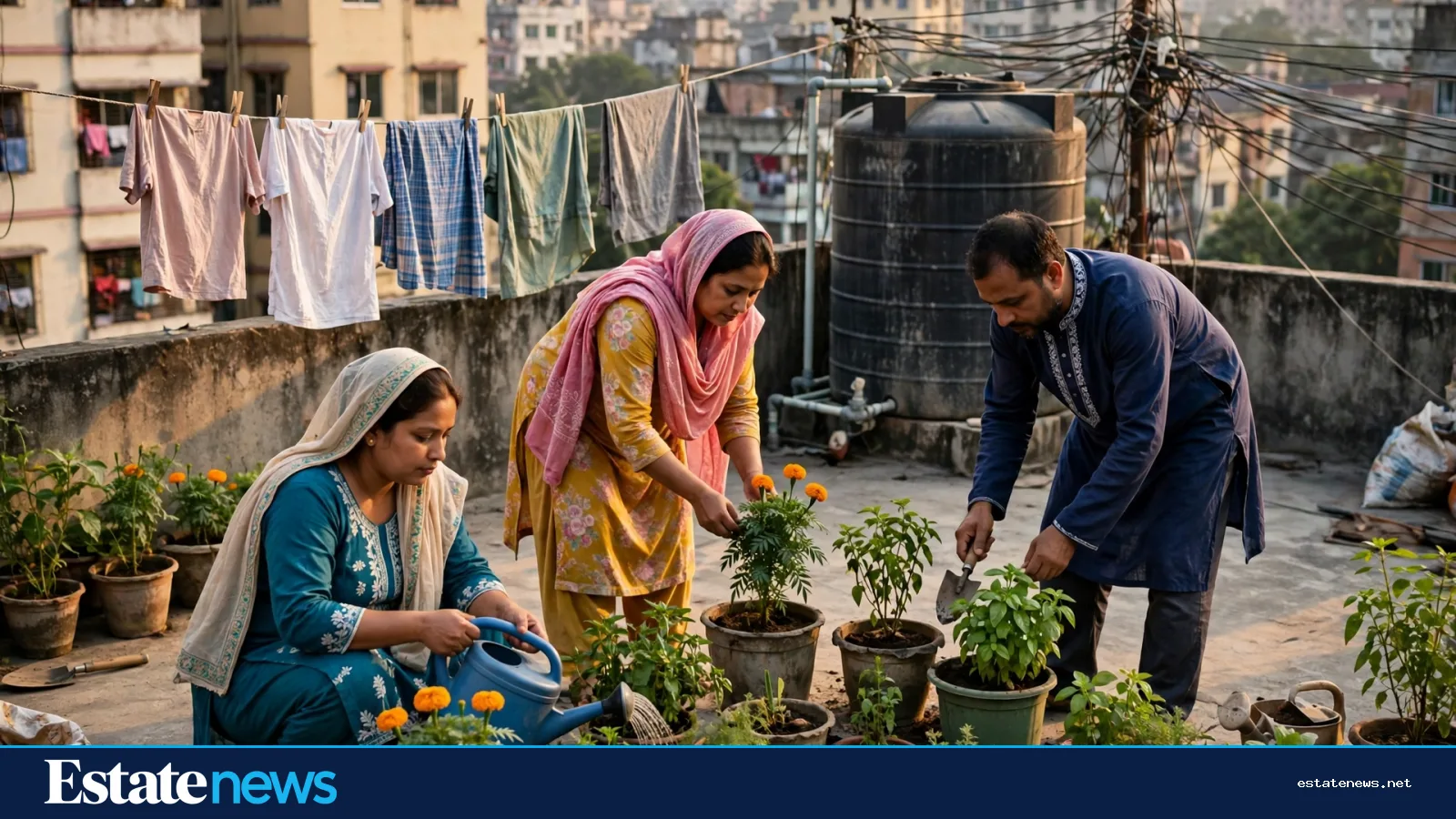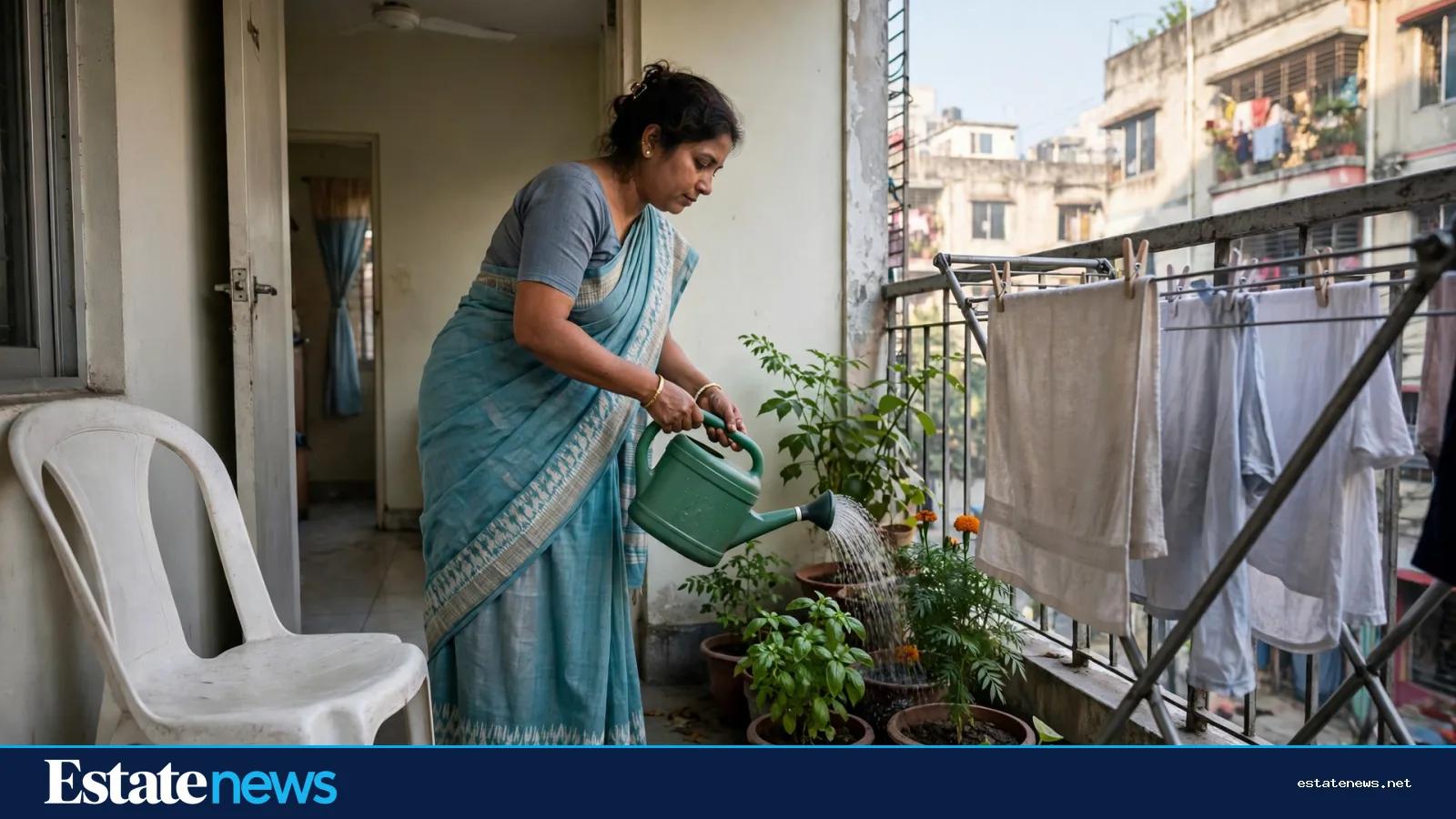
Every Dhaka flat has a balcony story, and most of them end the same way: a grill, a few pots, a drying rack, and a chair that nobody sits in because the space feels too exposed, too hot or too cluttered. The balcony is the smallest room in the home, and the only one that has to handle weather. Treating it like a spare corner is why it fails. Treating it like a room with jobs, each with its own place, is how it starts to work.
Start with the sun, because the sun decides everything else. A south or west-facing balcony in Dhaka takes hard afternoon light for much of the year, and a north-facing one stays cooler and dimmer. Watch the balcony for a day before buying anything for it: where the light falls at eight in the morning, where it falls at four in the afternoon, and where rain drives in during a monsoon shower. A plant that thrives in morning light will scorch in western sun. A chair placed in the afternoon glare will stay empty. A drying rack placed where rain blows in will hold damp clothes for a day longer than it should.
Give each job a corner

A balcony that works usually has three zones, even when it is only a few feet wide. The first is the green corner, nearest the wall, where pots sit on a raised stand or a low shelf so water drains away from the floor and the wall stays dry. Clay pots breathe better than plastic in Dhaka's heat, but they are heavier and they dry out faster, so check them in summer the way you would check a tap. The second is the drying corner, nearest the grill, where a folding rack or a line can be put up and taken down, rather than a permanent frame that blocks light all year. The third is the sitting corner, a single plastic chair and a small stool, placed where the breeze comes through and where a neighbour's window does not stare straight back.
Grills deserve a straight look before any of this. A balcony grill is a safety fitting before it is a decoration. Check that it is fixed firmly, that its gaps are narrow enough for a small child, and that nothing heavy hangs from it. Pots on a grill ledge, air-conditioner brackets and drying lines all add weight and wind load. A grill that holds a plant today and a child leaning on it tomorrow needs to be sound for both. If the building committee has rules about what can hang outside the grill, follow them: a balcony that annoys the neighbours below, with dripping pots or falling cloth, is a balcony that gets complained about, whatever its plants look like.
Plants, rain and the November reset


November is a good month to reset a balcony, because the monsoon has eased and the air is drier. Clear out dead pots, wash the floor, and check the drain point so the next heavy rain does not pool against the door. Plants that survived the wet months, money plants, marigolds in season, tulsi, chillies and leafy herbs in pots, will do better with a little less water now, not more. A common Dhaka mistake is watering on a fixed routine rather than by soil: push a finger into the soil, and water only when the top layer is dry. Overwatering kills more balcony plants than sun does, and it stains the wall below.
Rain still needs a plan. A balcony without a roof edge that sheds water will soak its sitting corner in a sudden shower. A light, removable shade, a bamboo screen or a cloth cover that can be rolled back, gives afternoon shade without turning the balcony into a dark box. Anything fixed to the building, a tin shade or a heavy frame, needs the building's permission and a check that it does not send water onto the flat below. The best balcony shade in Dhaka is often the simplest: a screen that can be moved with the season, up in the hot months, down when winter light is welcome.
A small space that pays rent in daily life
The test of a balcony is not how it photographs. It is how often someone steps out onto it without a reason. Morning tea on a plastic chair, a child watching rickshaws below, clothes drying in a breeze, a pot of chillies picked for dinner: those are the uses that make a balcony feel like part of the home rather than an attachment to it. None of them needs expensive furniture. A plastic chair, a low stool, a few pots and a rack that folds away will do, provided each has its place and the floor stays clear enough to walk on.
That is the whole argument, really. A Dhaka balcony is too small to be everything at once, and large enough to be one thing well at a time: a morning seat, a drying space, a small garden, a place to stand and watch the lane. Arrange it by job, respect the sun and the rain, keep the grill sound, and it stops being the flat's neglected edge. It becomes the room where the home meets the city, in a few square feet, every day.