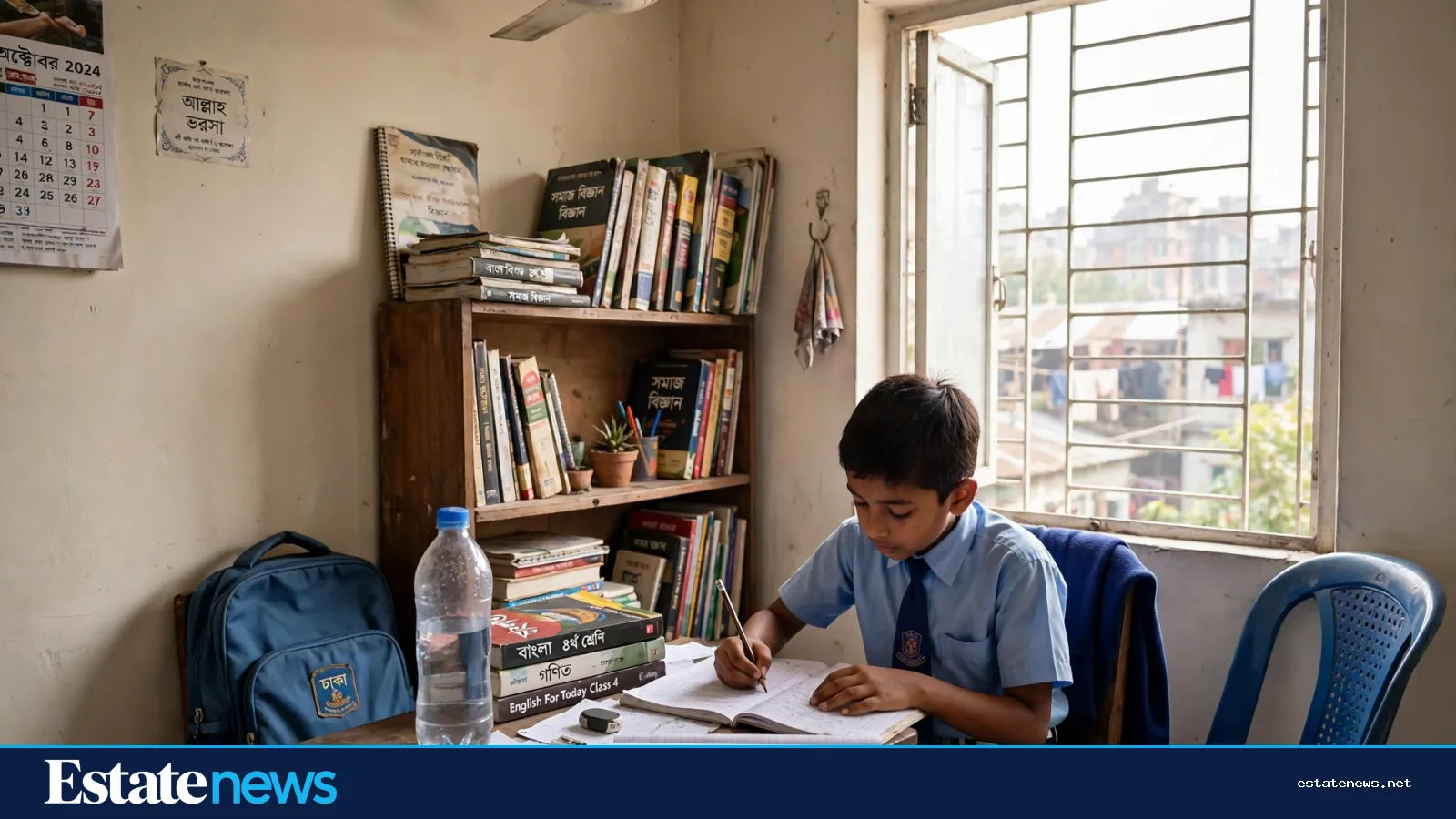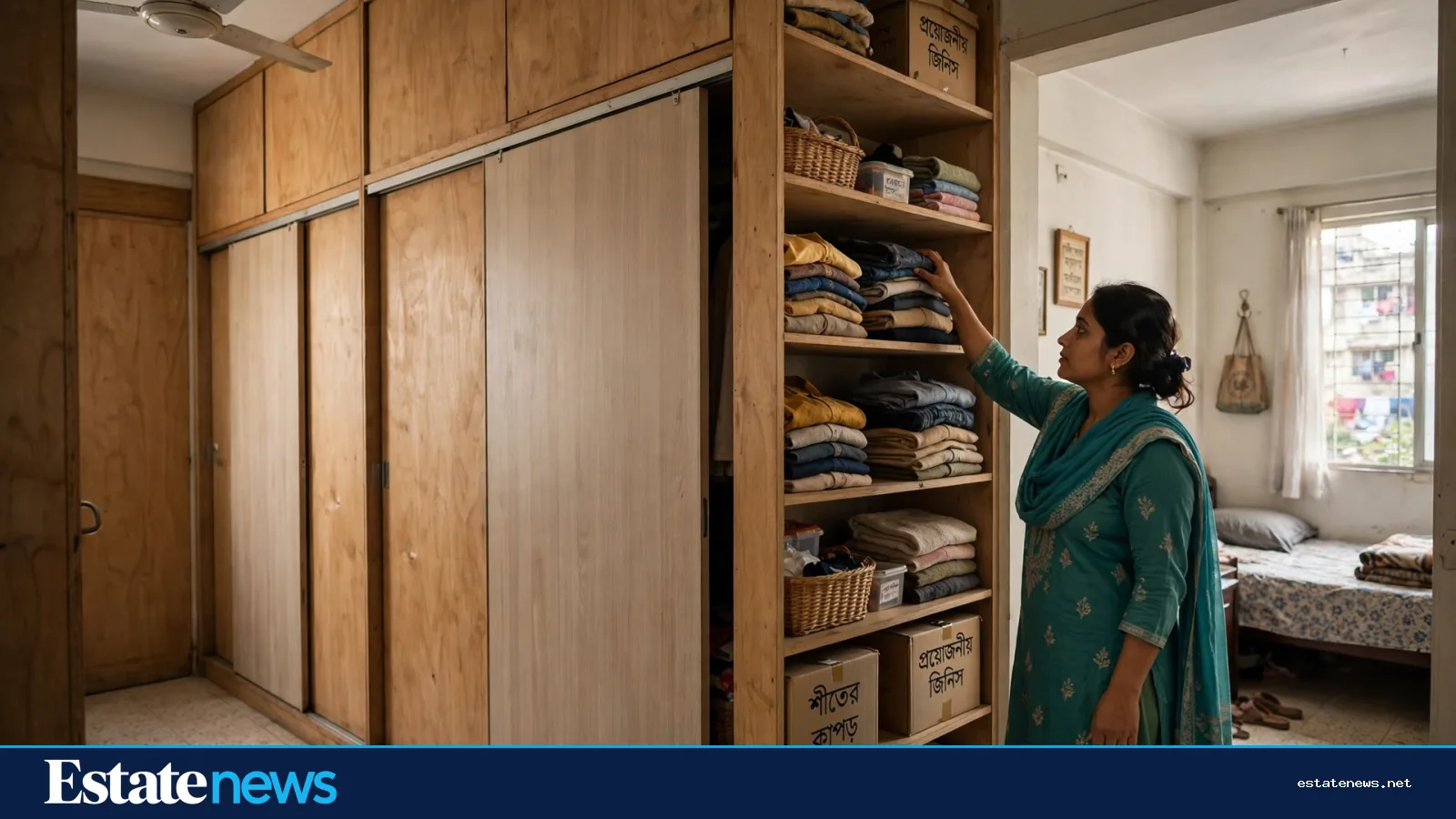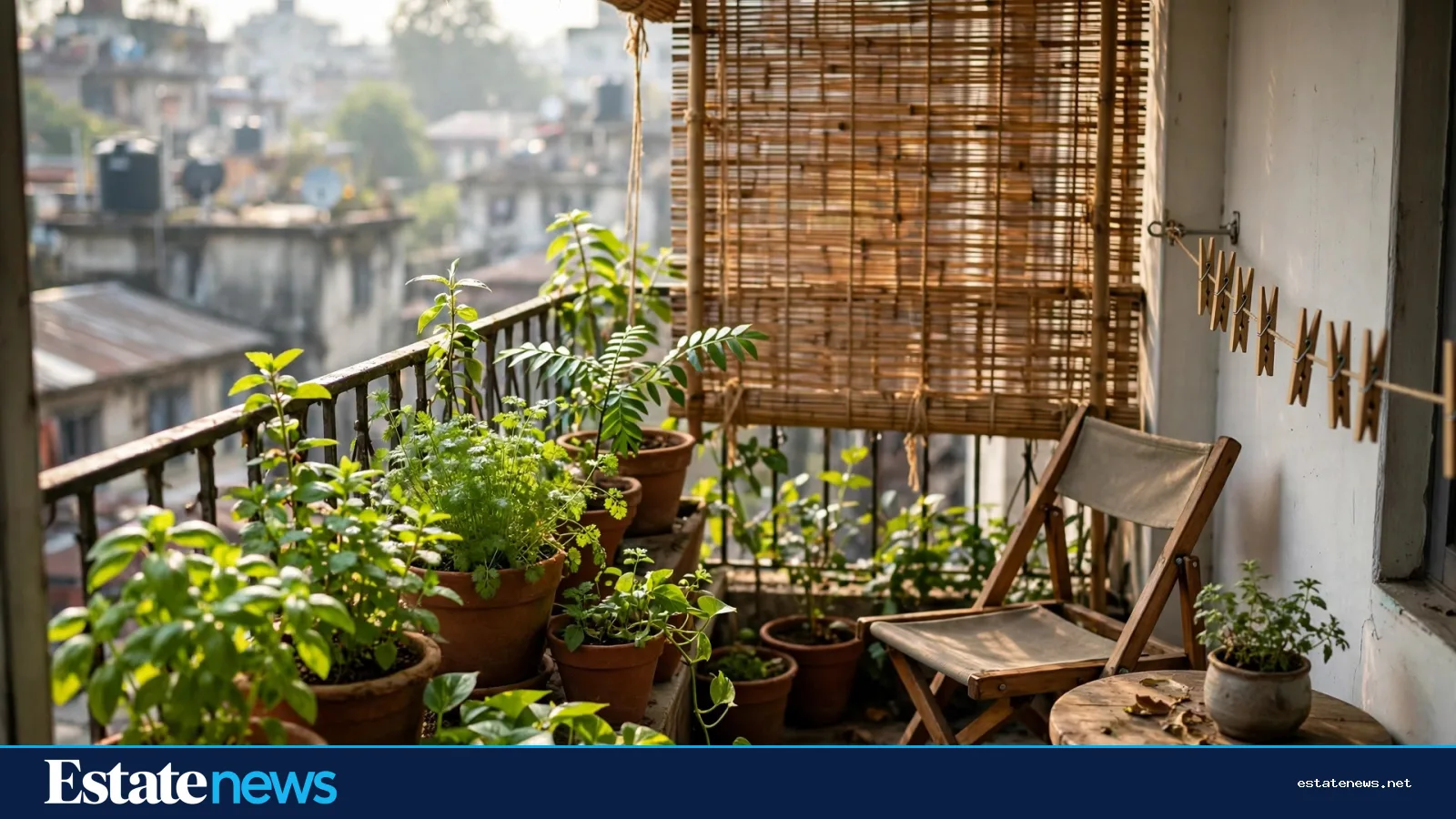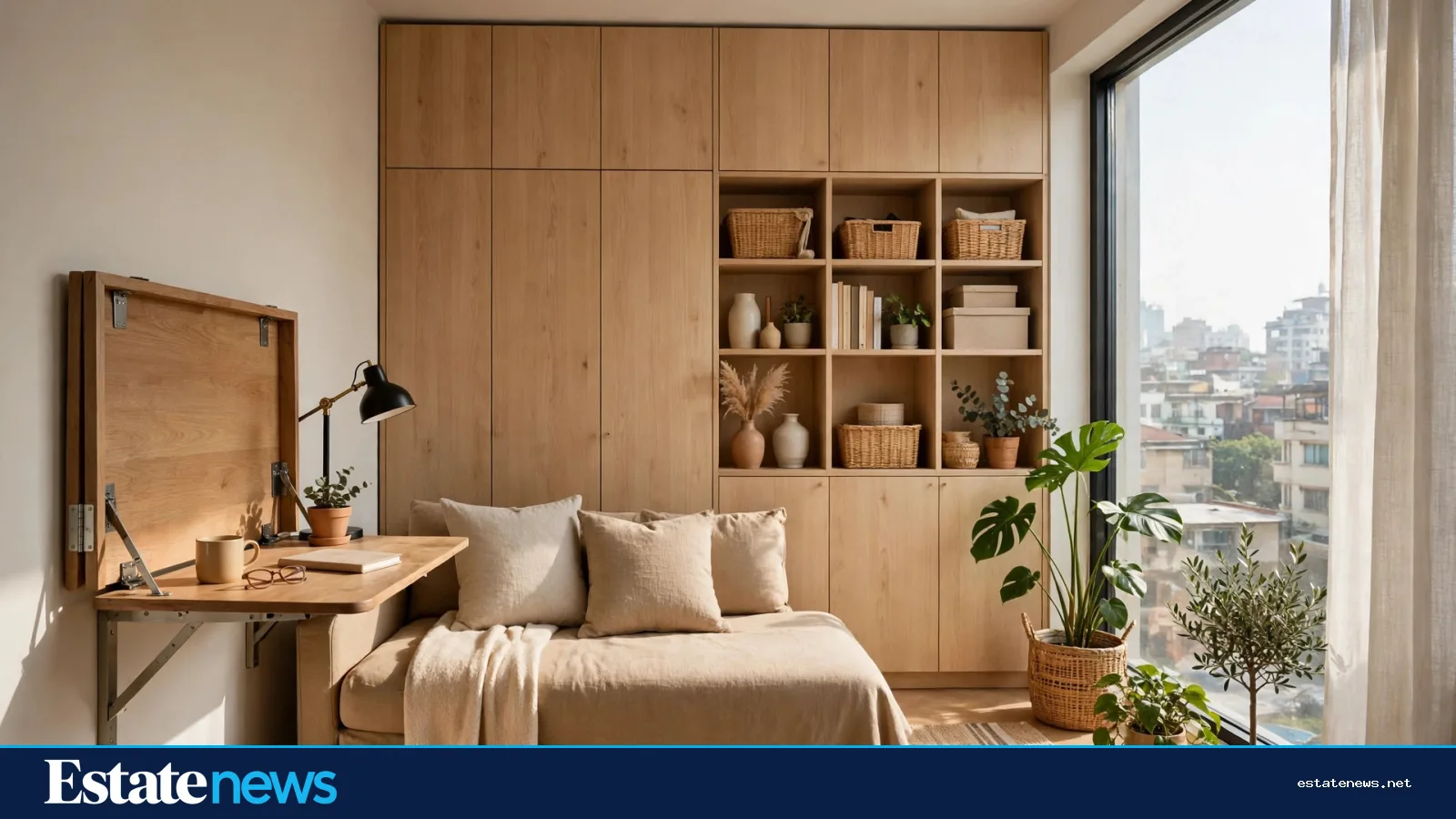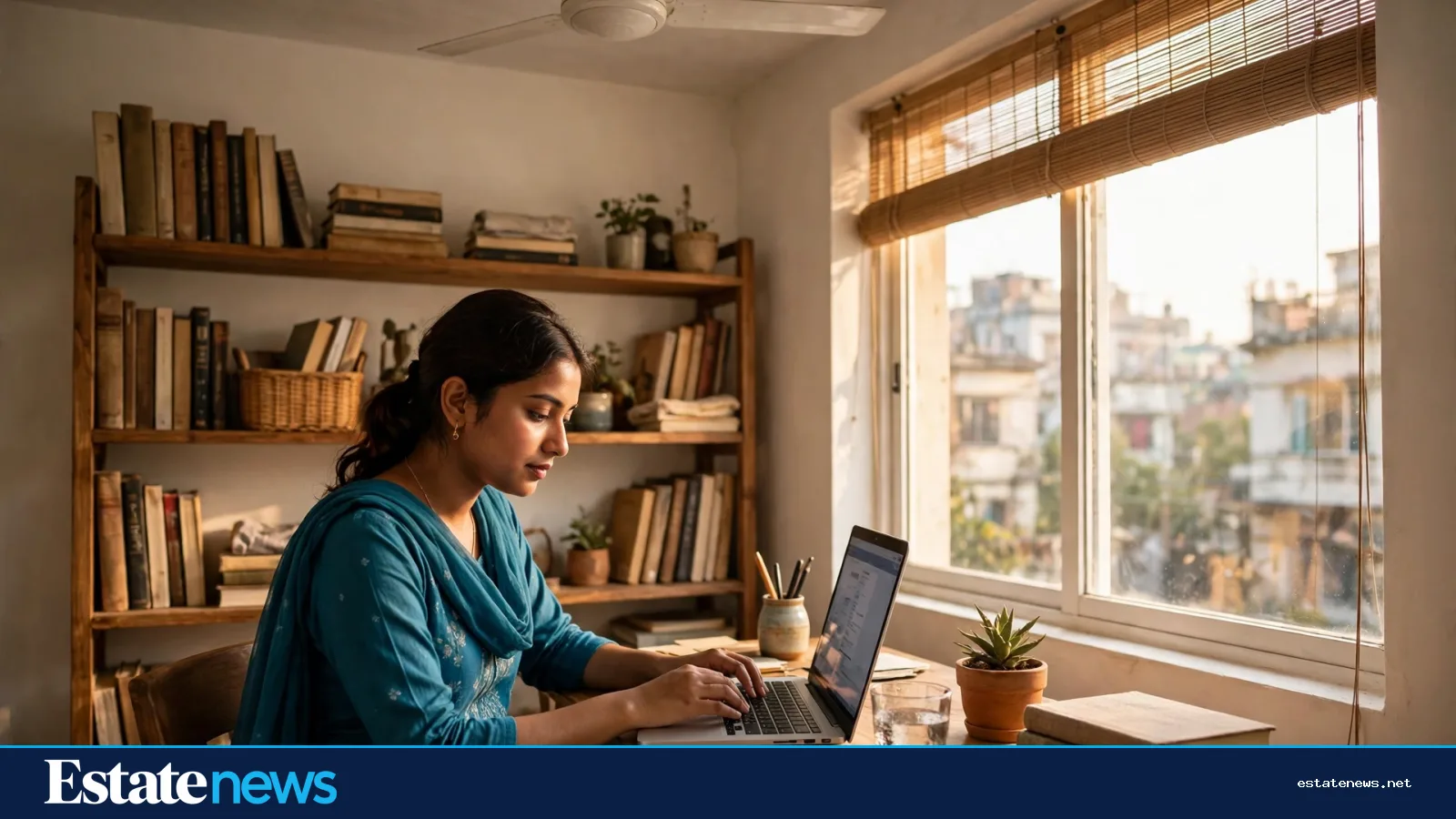
The work-from-home question in Dhaka is rarely about a spare room. Most flats do not have one. It is about a corner. A corner with light, a chair that does not hurt, and a door, or at least a curtain, that tells the rest of the flat that work is happening here. Get those three right and a dining chair at the table stops being a workplace and becomes a workaround.
The first decision is where. Light decides it more than space does. A desk beside a window keeps the room bright through the afternoon and keeps the video call from turning your face into a shadow. The balcony wall is another candidate, if the flat has one, and so is the wall opposite the bed, where the bed stays out of the camera's view. The worst spot is the one facing the room's main door, because every person who passes through becomes part of the call. Measure the corner before buying anything. A desk that is 90 cm wide fits most flat walls; 120 cm is generous and often impossible. Depth matters more than width: 60 cm gives room for a laptop and a notebook, and less than that means your elbows hang off the edge.
The chair is the budget

If money is short, spend it on the chair and buy the desk second. A chair with a back that reaches the shoulder blades, a seat that lets the feet rest flat, and armrests that do not force the shoulders up will decide whether a full day at the desk is possible. Dhaka's furniture markets in Panthapath and Jatrabari sell office chairs from about Tk 4,500 for a basic model to Tk 15,000 for one with a proper lumbar curve and a tilting back. Sit in it for ten minutes before paying. The one that feels fine for thirty seconds and wrong after ten minutes is the one to leave behind.
A desk can be simple. A 90 cm wooden table from a local carpenter, a folding desk that leans against the wall, or a wall-mounted shelf at desk height all work, and all cost less than a branded office desk. What matters is the height: the keyboard should sit so the forearms are level, and the screen should sit so the top edge is at eye level. A stack of books under a laptop does that job for free. A separate keyboard and mouse, even the cheapest ones, do more for comfort than any expensive desk.
Quiet, and a door that closes


Noise is the real problem in a Dhaka flat, and it does not come from the street alone. It comes from the kitchen, the television, the children, and the neighbour's generator. A door that closes is the cheapest sound treatment there is. If the room has no door, a heavy curtain on a rod does most of the same work, and it also hides the bed from the camera. A rug under the desk softens the room's echo. Curtains on the window cut the street noise a little and cut the glare a lot.
The other half of quiet is agreement. Tell the family the hours when the door is closed and the call is live. Put a small sign on the door, or a coloured card, so nobody has to guess. It sounds formal and it works, because a flat is a shared space and a closed door without a reason reads as rude. With a reason, it reads as work.
What the corner needs, and what it does not
The corner needs a power socket within reach, a light that does not throw a shadow on the keyboard, and a place to put the papers that are not on the screen. A small shelf above the desk holds the books and the charger. A drawer or a box under the desk holds the cables. It does not need a second monitor to start with, though a used one from a market in Multiplan or IDB Bhaban is the cheapest upgrade that actually changes the workday. It does not need a plant, though a money plant in a plastic pot on the windowsill costs Tk 150 and makes the corner look like a place rather than a punishment.
Keep the corner for work and work only. The moment the desk becomes the place where the bills are sorted and the children's homework is done, it stops being an office and becomes another table. That is the difference between a home office that works and a corner that slowly fills up with other things.