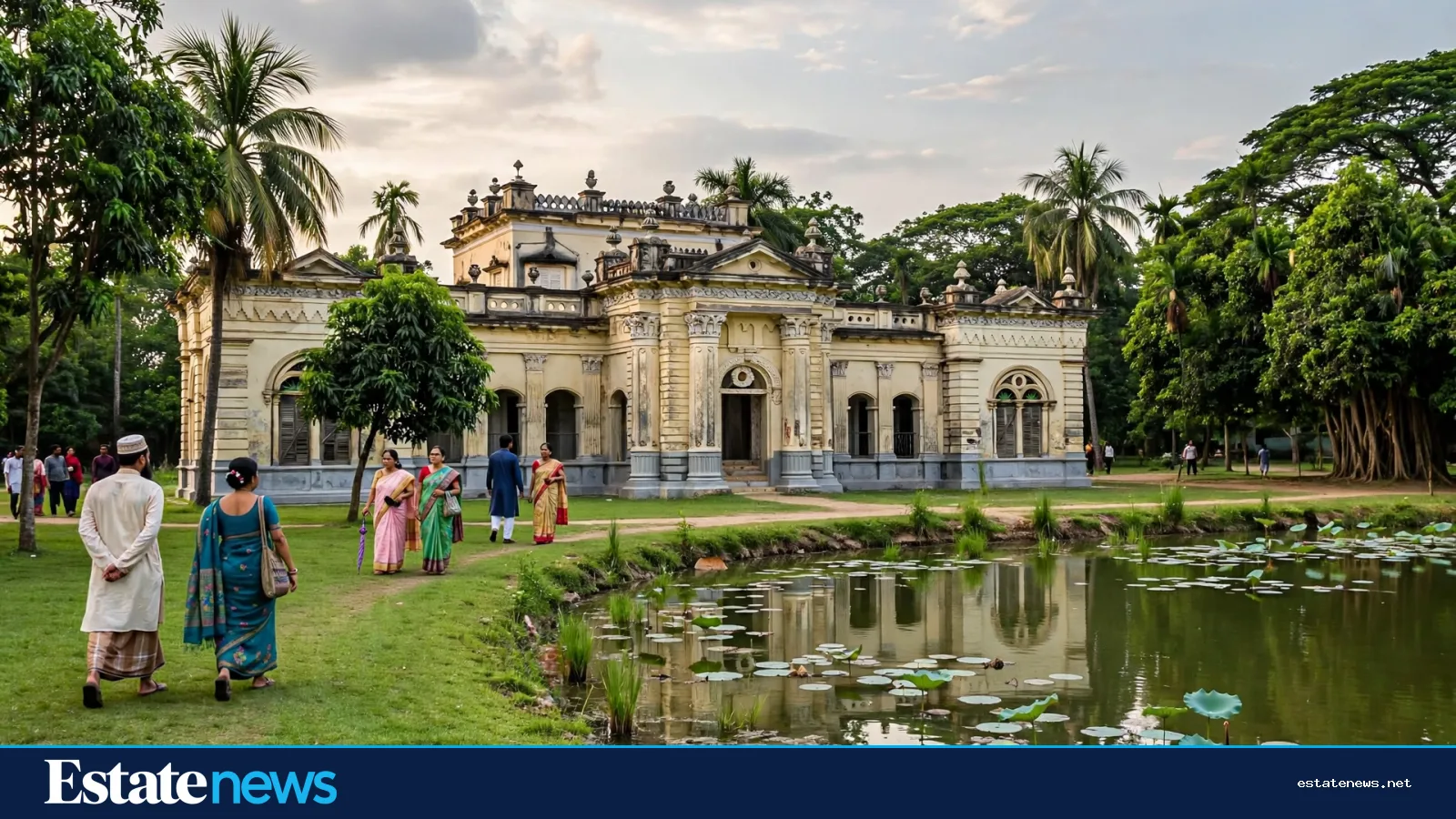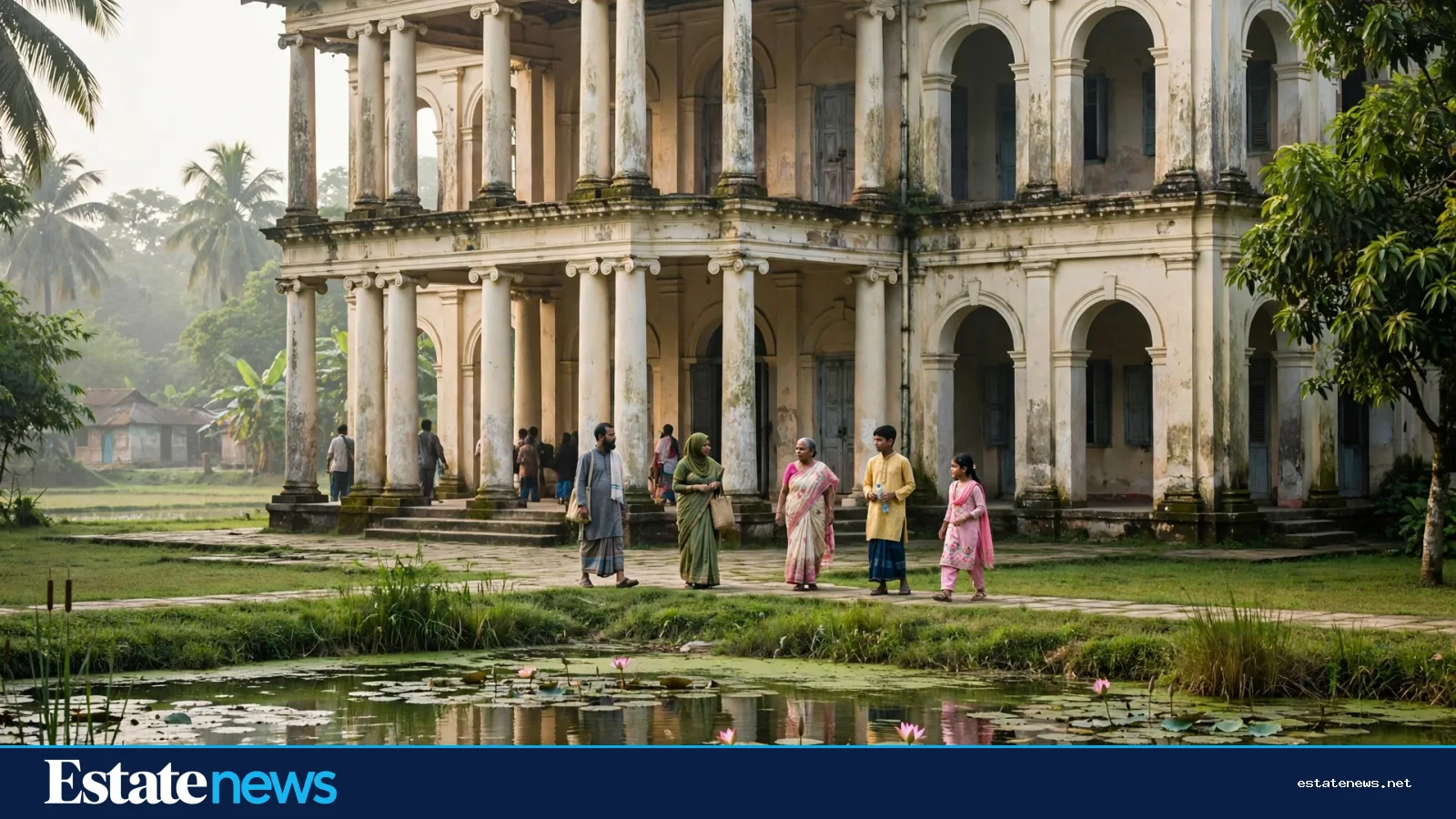
The road from Dhaka to Saturia runs flat and green, past paddy and ponds, and then the palace appears without much warning. Tall columns, arched windows, a facade the colour of old paper. Baliati Zamindar Palace sits in Baliati village in Manikganj's Saturia upazila, a short drive east of the district town and about 35 miles northwest of Dhaka. On a weekday morning the courtyard is quiet. A few visitors walk the lawns. The ponds around the complex hold the sky. It is hard to believe, standing there, that this was once the seat of one of the region's richest families, and harder still that so few people in the capital know it exists.
The story begins with salt. Gobinda Ram Shaha was a salt merchant in the middle of the 18th century, and salt in Bengal was serious money. He built the family's fortune, and his four sons, Dadhi Ram, Pandit Ram, Ananda Ram and Golap Ram, built the palace. The buildings went up in stages through the 19th century, not all at once, which is why the complex reads like a family album rather than a single design. Seven separate buildings stand across 5.88 acres, with about 200 rooms between them and three gateways of matching design. The family was once known locally as the Dosh-ani zamindars, and the palace is still called Baliati Zamindar Bari by the people who live around it.
An inscription that dates the house

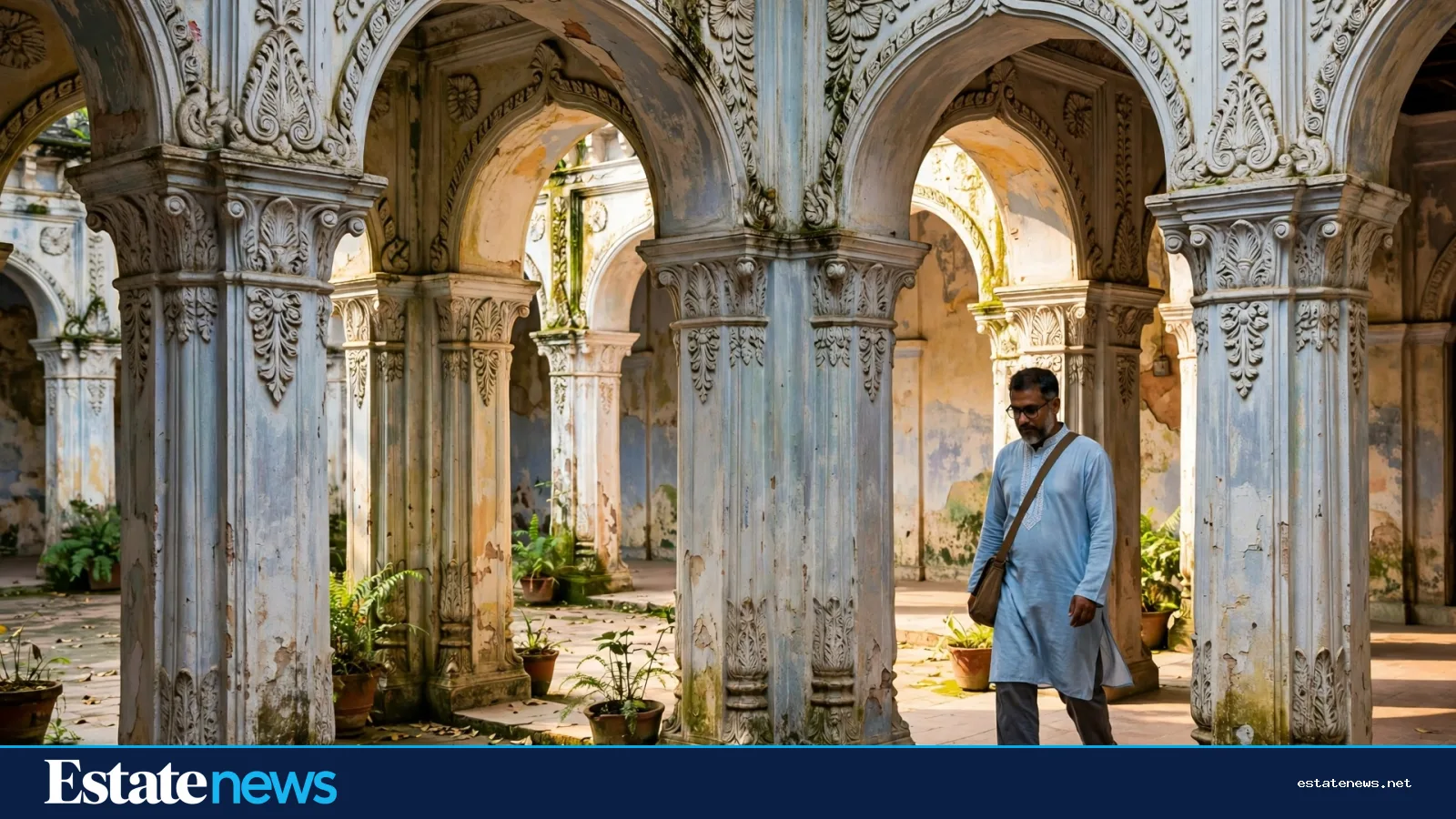
The palace keeps its own date. An inscription found in the complex records that the inaugural ceremony was held on the first day of Boishakh in the Bengali year 1300, which is 14 April 1893. That is the date the family chose to mark, and it fits the architecture. The columns carry a Greek-Roman touch, the roofs and arches borrow from the Renaissance and colonial styles that wealthy Bengali families favoured in the 19th century, and the plasterwork inside the grand rooms is dense with carving. The Rong Mohol, the hall of colour on the upper floor of the second building to the west, was the family's entertainment room. It now holds a museum, with old furniture, household objects and photographs from the zamindari years. Fifteen iron vaults survive in the complex, where the family once kept its valuables.
The family's reach went beyond Manikganj. Kishori Lal Roy Chowdhury, one of the Baliati zamindars, founded Jagannath College in Dhaka, the institution that later became Jagannath University, naming it after his father. It is the kind of detail that turns a handsome ruin into a living thread in the country's history. The college in old Dhaka and the palace in Saturia belong to the same story.
What the palace is now


The family left after the partition of 1947, as many zamindar families did, and the palace passed into other hands. The Department of Archaeology took over the complex in 1987 as a protected cultural property and renamed it Baliati Palace. It has maintained the site since, and the museum in the central block is open to visitors. The grounds are kept, the ponds are tended, and school groups and day-trippers from Dhaka make the journey on weekends.
That care has limits. A palace of 200 rooms needs more than a caretaker and a ticket counter. Some rooms stand empty, their plaster peeling and their shutters closed. The buildings that are not part of the museum get less attention. Heritage of this scale is expensive to keep, and Manikganj is not on the main tourist route. The palace survives because the state holds it, not because it earns its keep.
Why Baliati deserves a day trip
The case for Baliati is simple, and it has nothing to do with nostalgia. It is close. A visitor can leave Dhaka in the morning, walk the palace and its ponds, eat lunch in Saturia or Manikganj town, and be home before dark. The direct bus from Gabtoli to Saturia makes it possible without a car. And it is complete in a way that many heritage sites are not. The seven buildings, the gateways, the ponds and the museum together show how a zamindari household actually lived: where the family slept, where it entertained, where it kept its money, and how it displayed its standing to the district.
There is a larger point too. Bangladesh's heritage conversation usually stops at Lalbagh Fort and Ahsan Manzil. Baliati shows that the story is wider, and that the merchant families who built their fortunes on salt and trade left buildings as fine as any landlord's. The palace does not need to be restored into a resort or a film set. It needs steady repair, a proper guide, and visitors who know it is there. The columns have stood for more than a century. They can stand for another, if anyone is watching.