LafargeHolcim Bangladesh posted a sharp rise in profit in the July to September quarter, even as the construction industry around it stayed weak. The company earned Tk1.20 billion in the quarter, up 36 per cent on the same period last year, according to the Financial Express, which reported the results after the board approved the quarterly statements. Sales rose 6 per cent to Tk6.68 billion. Earnings per share stood at Tk1.03 for the quarter. The board declared an 18 per cent interim cash dividend, meaning investors receive Tk1.8 per share against those earnings.
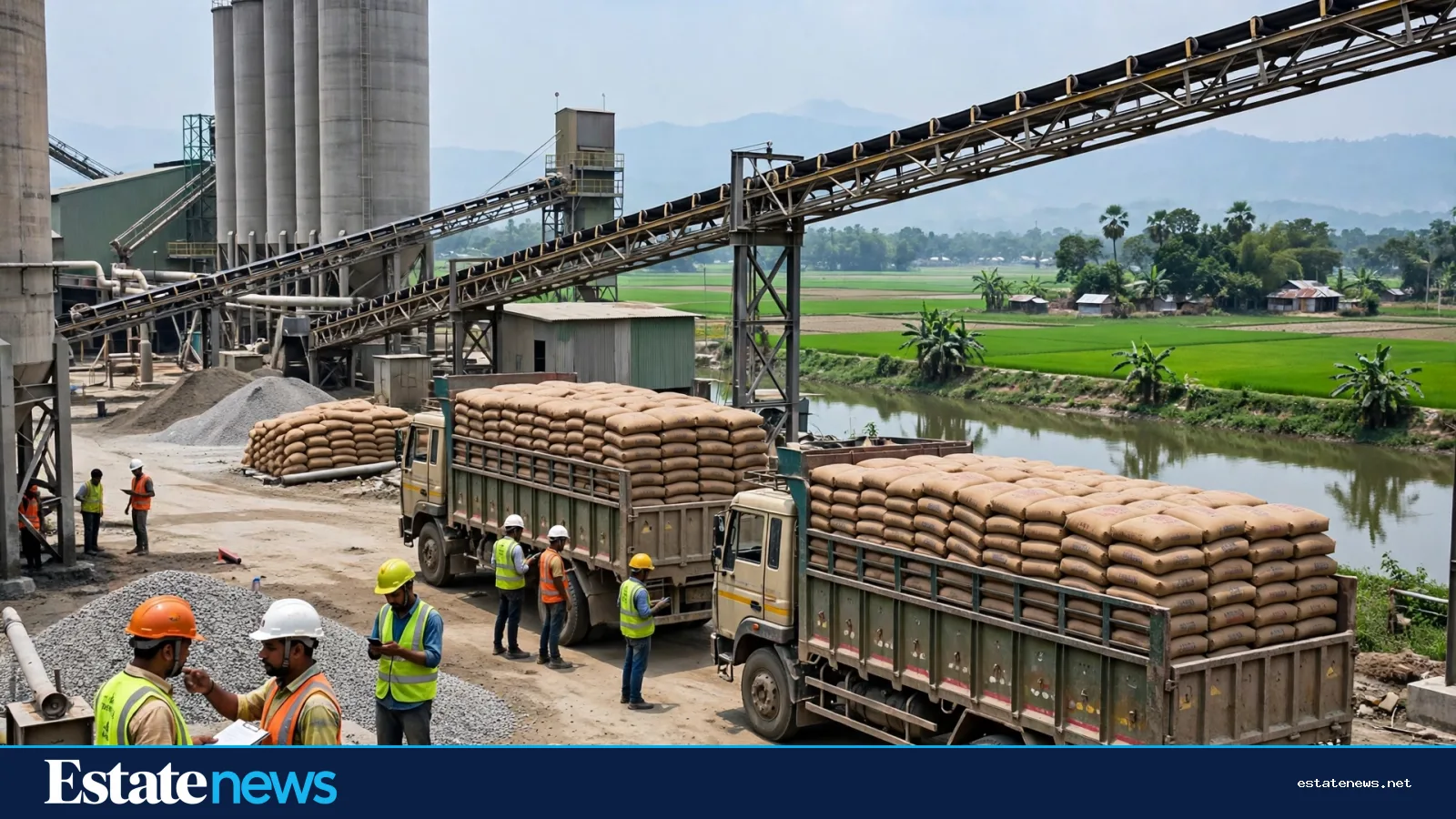
The company said the quarter's result came from higher sales of premium products and aggregates. Its aggregates business has grown at a 46 per cent compound annual rate over the last three years and now accounts for around 20 per cent of total revenue, according to the same report. LafargeHolcim makes clinker and cement under the Supercrete and Holcim brands at its Chhatak plant in Sunamganj, the only fully integrated dry-process cement plant in Bangladesh. It also runs Geocycle, a waste management arm, and its ready-mix concrete and building solutions businesses.
The nine-month picture is different

Look at the first nine months of 2026 together and the story changes. Profit fell 21 per cent year on year to Tk2.79 billion, despite higher revenue, the Financial Express reported on 19 October. Energy, fuel and production costs rose sharply, and the operating profit margin fell to 15.2 per cent in January to September, from 19.8 per cent in the same period last year. Operating profit fell 19 per cent to Tk3.49 billion. Earnings per share for the nine months stood at Tk2.41, down from Tk3.06 a year earlier. Revenue for the quarter to September was Tk7.58 billion, up 13.47 per cent, according to market data provider StockAnalysis, which put total revenue for the last twelve months at Tk30.67 billion.
Chief Executive Officer Iqbal Chowdhury said in a press release that the company delivered a resilient nine-month performance, despite higher costs and squeezed demand, through its commitment to innovation and operational excellence, according to the Financial Express. Geocycle co-processed more than 31,000 tons of non-recyclable waste in the period. The board had earlier declared a 10 per cent interim cash dividend for the first nine months.
Costs, gas and the road ahead


Energy is the thread running through the numbers. The company signed an agreement with Jalalabad Gas Transmission and Distribution System in June, which will ensure a stable gas supply to its Chhatak plant from January next year, according to the Financial Express. A steady gas supply matters for a plant that burns fuel around the clock. The company also said it planned to intensify operating efficiency, invest in an alternative and affordable energy mix, diversify its product portfolio and refine its pricing strategy.
The second quarter had shown a similar pattern. Profit rose 8 per cent to Tk1.05 billion in April to June, on revenue of Tk7.40 billion, up 14 per cent, driven by pricing and premium product sales. Half-year profit still fell 8 per cent to Tk2.17 billion, even as net sales rose 3 per cent to Tk15.44 billion. The company said then that macroeconomic challenges and elevated energy costs would persist in the second half of 2026.
What it means for builders
For builders and homebuyers, the results carry a plain message. Cement is still selling, and premium products are selling better than the rest. But the cost of making it has risen faster than the price it fetches, and that squeeze shows up in every bag that leaves the plant. LafargeHolcim is a joint venture of Holcim Group of Switzerland and Cementos Molins of Spain, and it has invested $500 million in Bangladesh, the largest foreign direct investment in the sector. Its scale gives it room to invest in energy and aggregates while smaller makers struggle.
The latest published quarterly results are from October. The next test will be the full-year figures, and whether gas supply from January eases the cost pressure that cut into nine-month profit. Until then, the quarter tells builders that demand for good cement is still there. The nine months tell them that making it has rarely cost more.