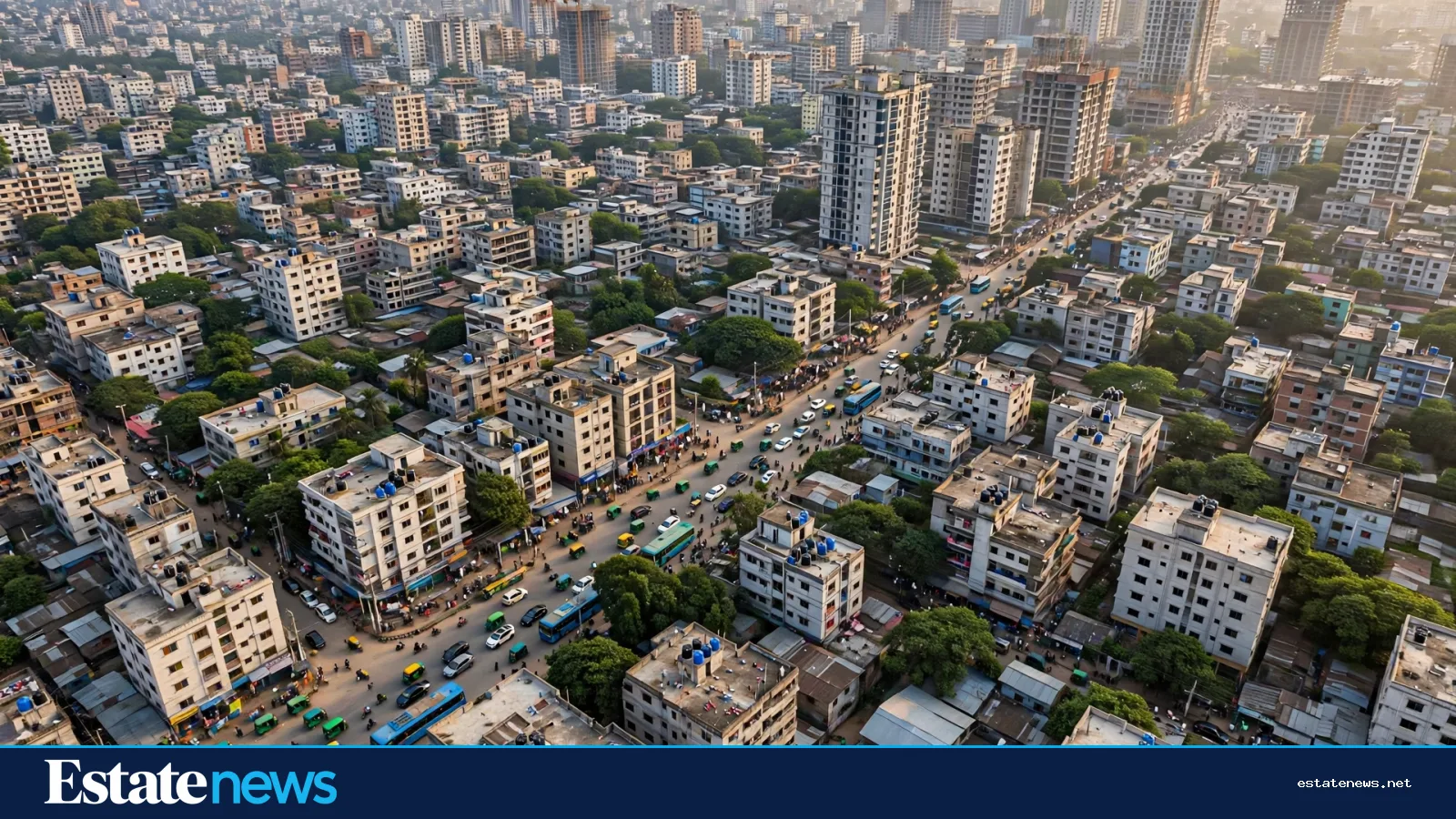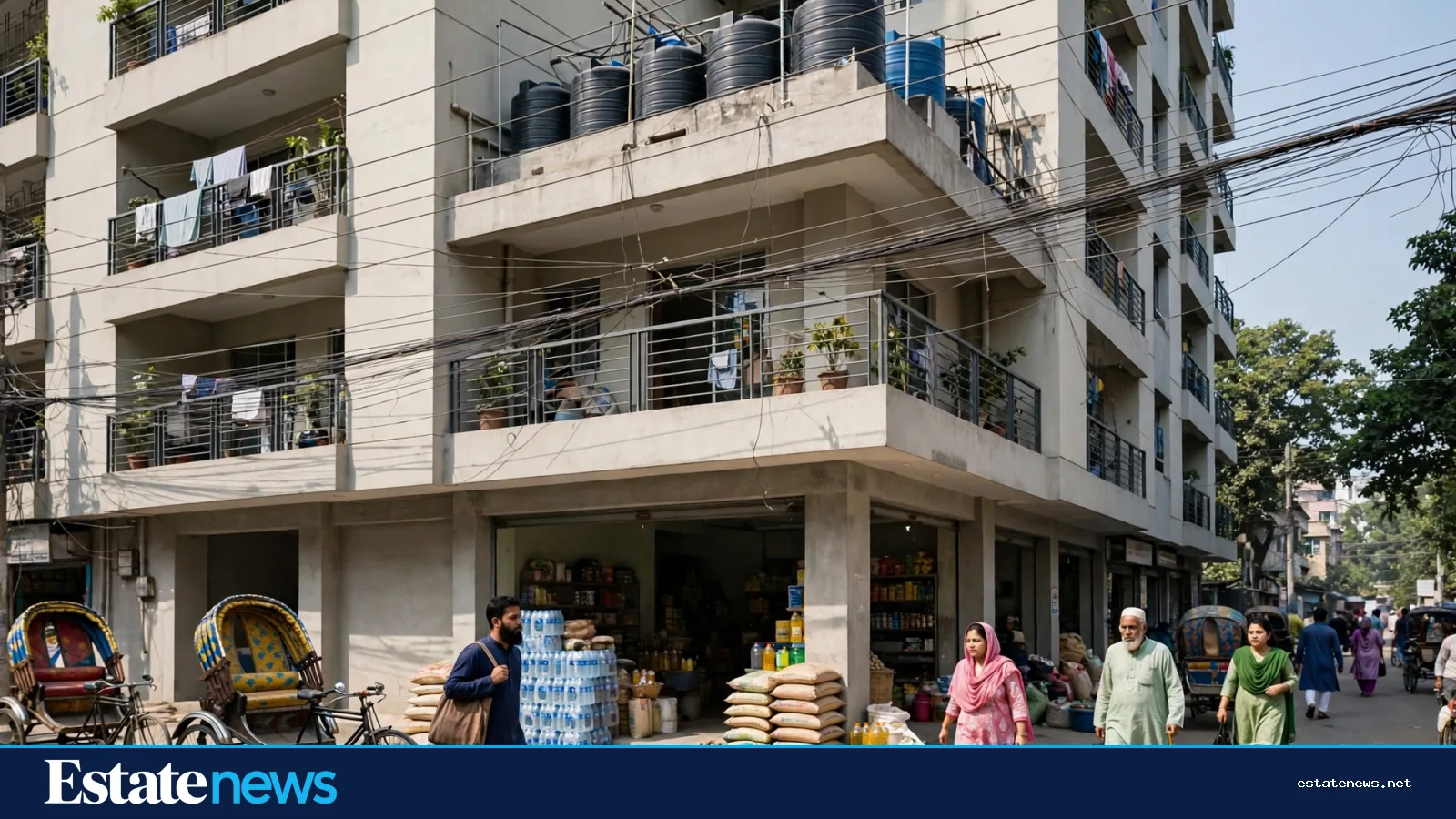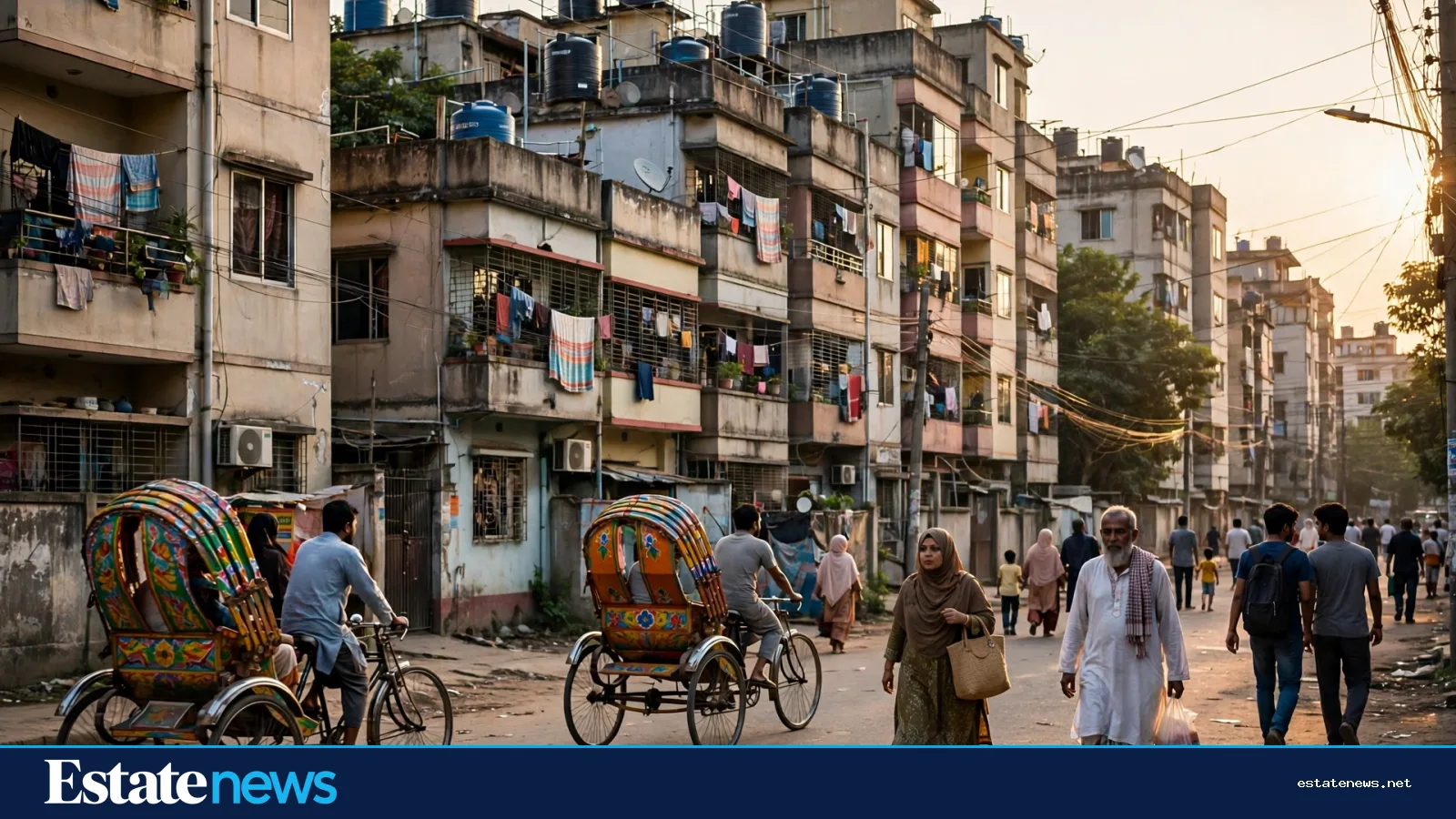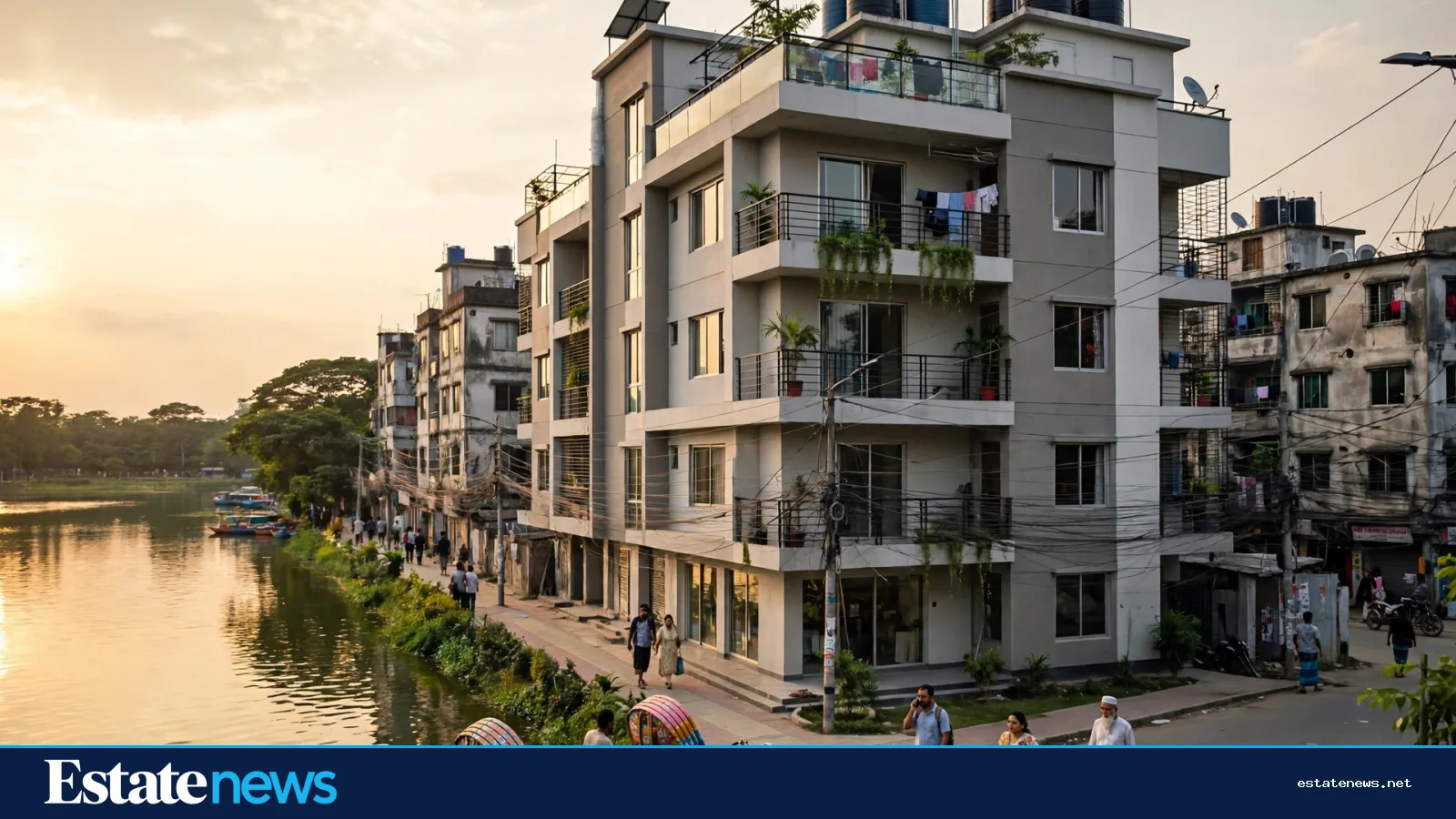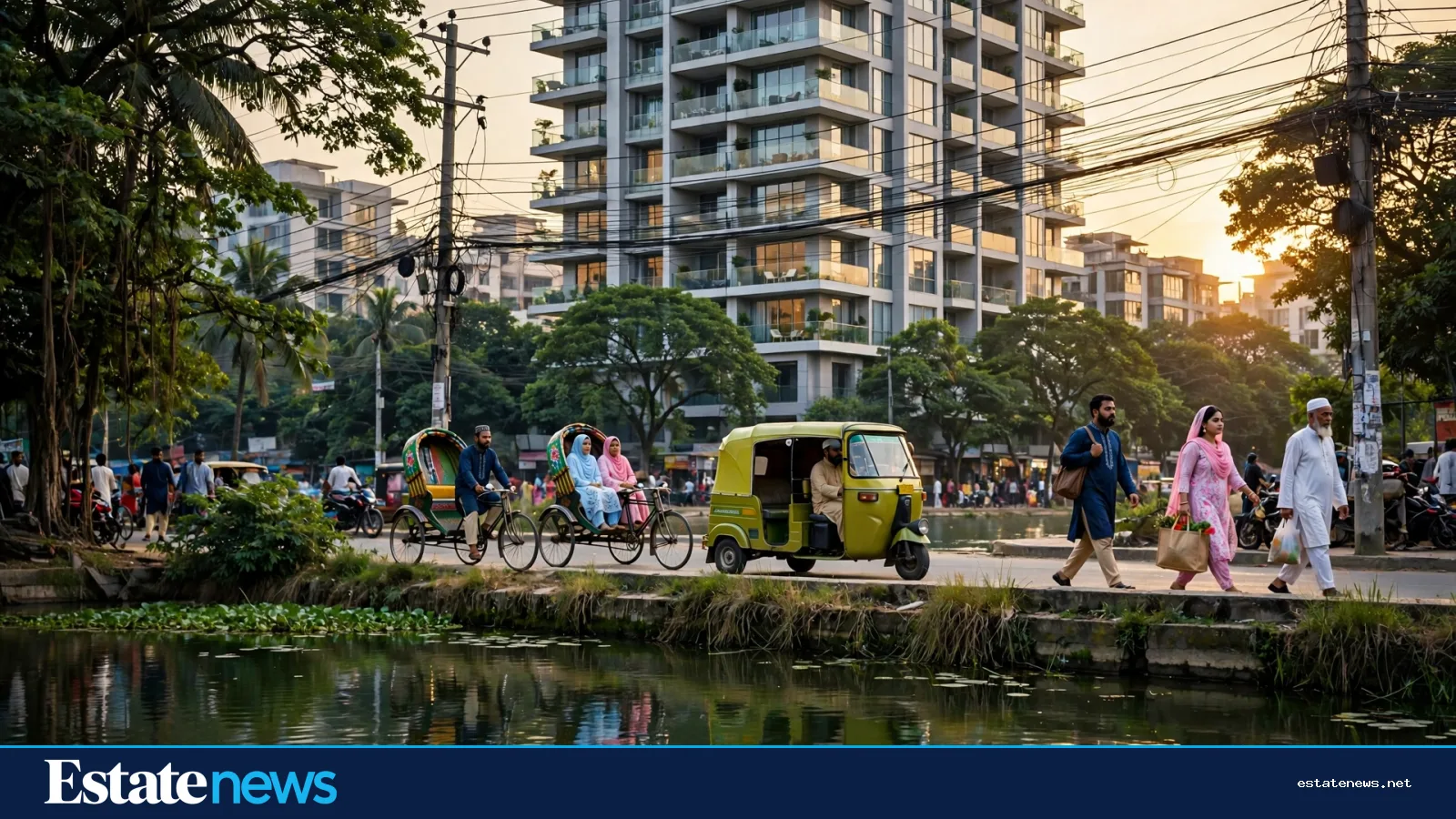
The light goes soft over Gulshan Lake just before six in the evening. Rickshaw bells ring along the lakeside road, a green CNG putters past, and the glass of the tall apartment blocks picks up the last of the sun. People walk home in panjabi and sari. From the pavement, the towers look calm and finished, as if they had always stood there. They had not. Forty-two years ago, the company that built some of them started with almost nothing to show, in a city where almost nobody bought a flat from a developer at all.
That company is Building Technology and Ideas Ltd, known to everyone in Dhaka simply as bti. Its story is worth telling because it is also the story of the Dhaka flat itself: how a home stopped being something a family built plot by plot, and became something a company could promise, design and hand over with a key. bti did not invent that change on its own. It was early to it, and it stayed with it longer than most.
Three companies, three projects, and a city learning to buy flats

When bti began in 1984, only three companies were doing housing business in the country, according to an interview its managing director F R Khan gave The Business Standard. Eastern Housing, Property Development and a company of the Ispahani Group were the whole field. bti started with three projects. The founder was Arshi Haider, and the first office was a small room in the BRTC building, the company's own history records.
Money was small and so were the numbers. The first project sold at Tk 900 to Tk 1,200 per square foot, Khan told The Business Standard. That figure sounds unreal now, and it should. Dhaka was a different city. Land was cheaper, buildings were lower, and a buyer who paid a developer in instalments was taking a chance on an idea that had barely been tested. bti's early job was not selling luxury. It was persuading families that a flat bought off a plan would exist at all, and that the company would still be there when the roof went on.
By 1990 the company had six projects. Growth was slow, and the slowness mattered. A developer that survives its first decade in Dhaka learns the trades that no brochure can teach: how to read a landowner, how to keep a site moving through a monsoon, how to hold a buyer's trust across three years of instalments. bti collected those lessons before it ever tried to sell grandeur.
Gulshan showed the company what luxury could mean
The turn came in the early nineteen nineties, and it came with an address. bti started its first housing project in Gulshan in 1992, and one in Baridhara in 1993, Khan said in the same interview. Around 1995, the company began building costlier luxury apartments in Gulshan. The expensive project of that period carried a price tag of Tk 1,500 per square foot.
That number marked a change in who the Dhaka flat was for. Gulshan had diplomats, business families and returning expatriates, and they wanted something the city's older housing could not give: security at the gate, a lift that worked, water that ran, rooms with air and light. bti's answer was to build for that demand and to charge for it openly. The risk was plain. A company that prices at the top of a small market has nowhere to hide if the finish is poor. The reward was a name that came to mean a certain standard, and a waiting list of buyers who had seen a finished building and wanted the next one.
Collections gave every buyer a way in


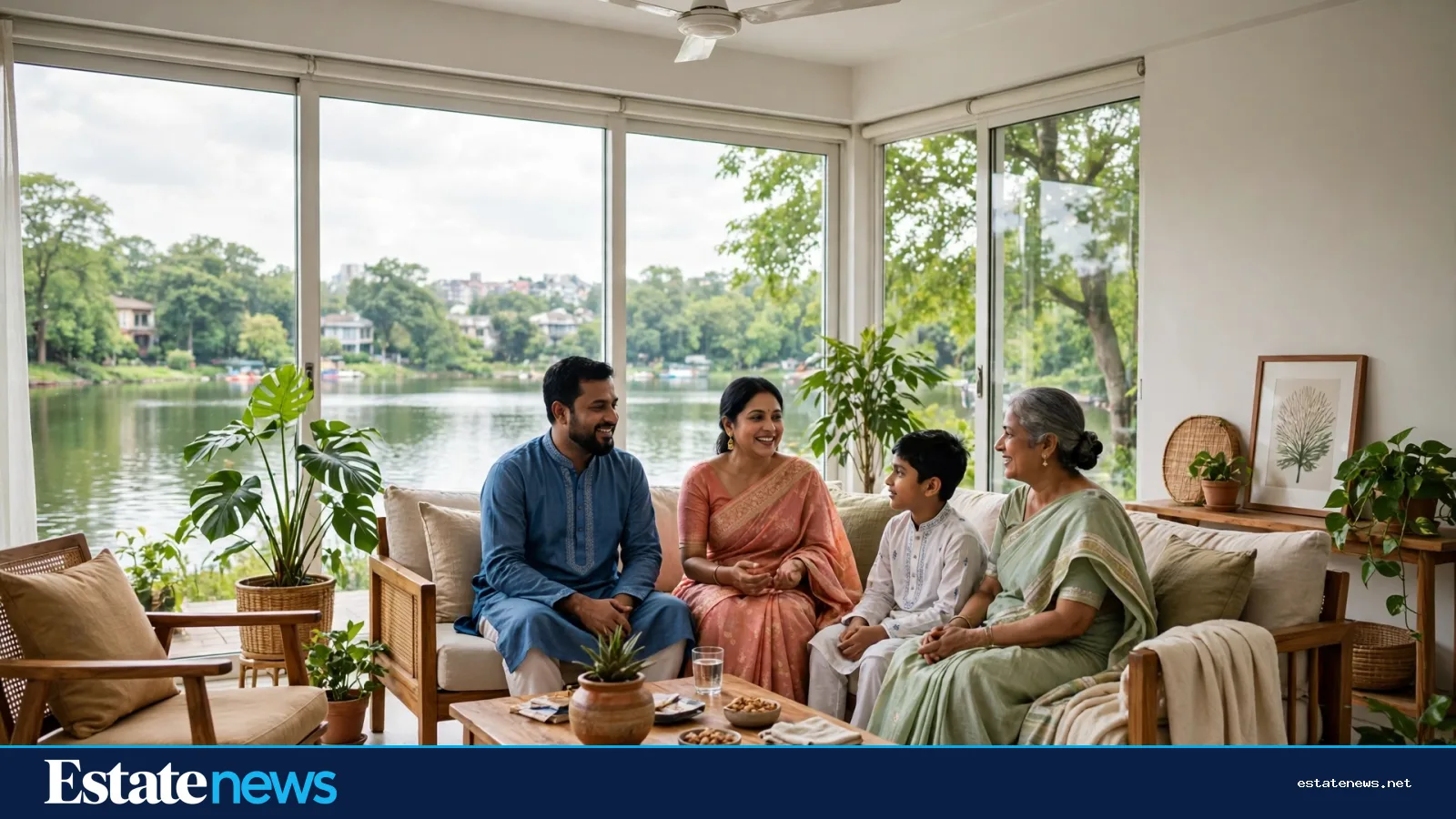
A single luxury tower does not make a housing company. What made bti last was the decision to build for more than one kind of buyer. The company sorted its homes into collections: the Platinum Collection at the top, then Premium, Classic, Standard and Commercial, a structure described in its published company record. A young family in Bashundhara and a business family in Gulshan could both buy from the same developer, at very different prices, without the company losing its identity in either place.
The scale of that work is large. The Business Standard reported in 2023 that the company had constructed around 450 buildings. Two other facts from its record explain why buyers kept coming back. bti was a founder member of the Real Estate and Housing Association of Bangladesh, holding membership number 001, and it was the first real estate company in Bangladesh to be awarded ISO 9001 certification for quality in design and construction. Certificates do not build flats. They do tell a buyer, before a single brick is laid, that somebody outside the company has looked at how it works.
The collections also spread the company across the map. Its projects reached Gulshan, Bashundhara Residential Area, Uttara, Mirpur, Mohakhali and Aftabnagar in Dhaka, and Khulshi in Chattogram. It moved into Chattogram in 2001, and its work later reached Cumilla. Each new area tested the same idea in a new place: that a buyer would pay for a home built to a stated standard, by a company with a record to protect.
THREE put the idea on the lake
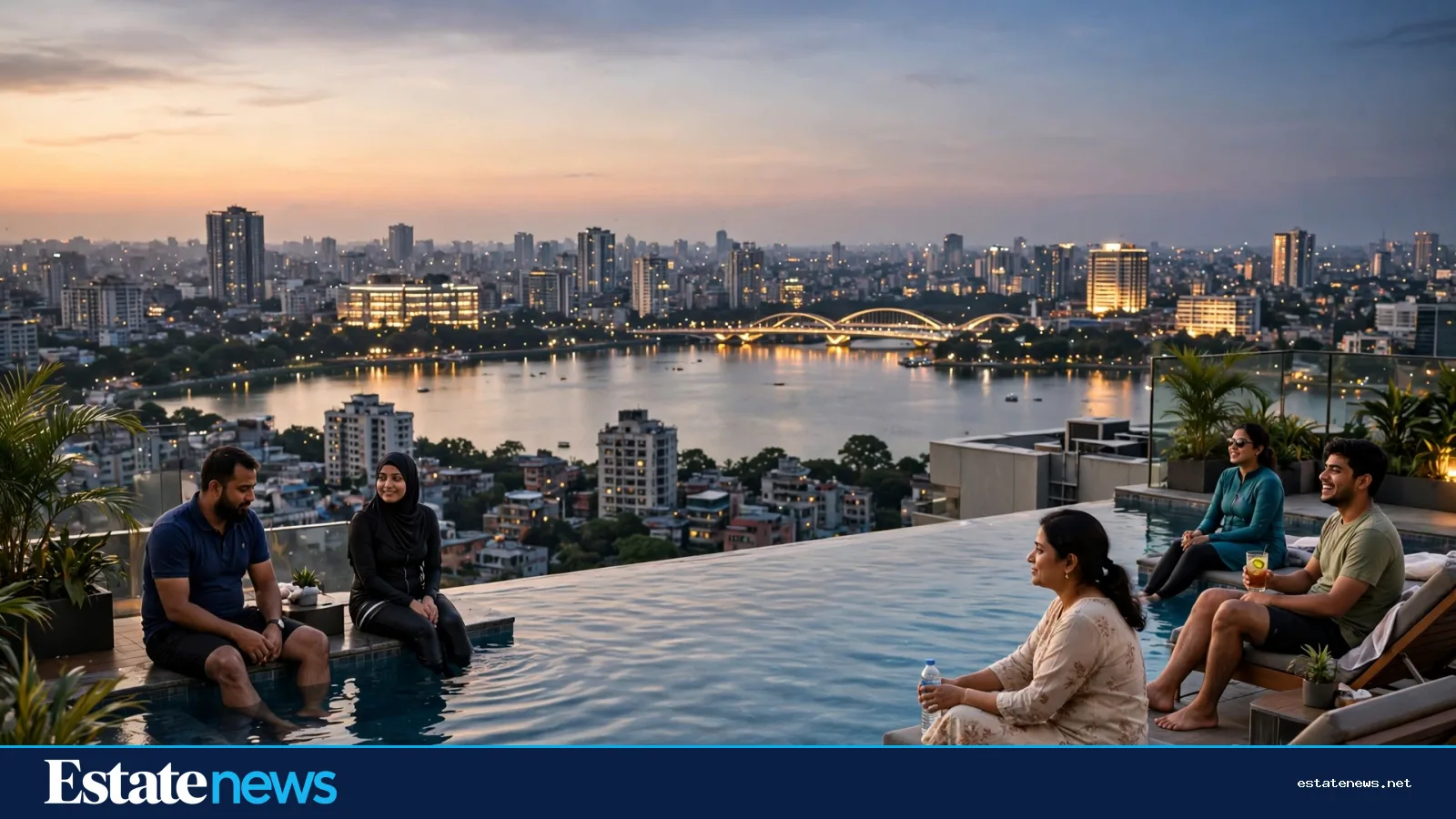
If one building sums up what bti became, it is THREE in North Gulshan. The project sits beside Gulshan Club and looks over Gulshan Lake. Each floor holds a single apartment of more than 7,000 square feet, with five bedrooms, according to reports in The Business Standard, Prothom Alo and the Financial Express. There are only 14 units in the building. The common facilities on the first floor include a 70-foot infinity lap pool that looks out toward the lake.
THREE was also the company's first smart home project in Bangladesh, with home automation built in from the start, Showcase magazine reported. The building was set for handover in June 2022, with most units already sold, the Financial Express reported that year. The numbers matter less than what they show. A developer that began by selling flats at Tk 900 a square foot was now selling one flat per floor, at a scale and a price that would have been unimaginable in 1984, and buyers were paying before the building was finished. That is trust, converted into concrete.
A new chief executive inherits an old question
Companies outlive their founders, and bti is now in that passage. In June 2026, the company appointed M Mahbubur Rahman as chief executive officer, The Business Standard reported. Rahman brought more than 20 years in the industry, and his previous job was chief executive of Rupayan City Uttara, one of the country's largest township developments. The appointment was presented as the start of a next phase of growth.
The question he inherits is the one bti has faced since 1984, only larger. Dhaka's buyers are more careful now. Interest rates have stayed high, registration costs bite, and families compare a new flat with a resale one, a smaller one, or no flat at all. A premium name helps in that market, and it also raises the bar. Buyers who pay at the top expect the lift, the water, the finish and the handover date to match the promise. A company with 450 buildings behind it is judged on the next one.
bti's answer, across four decades, has been to keep building in the open: finished buildings a buyer can walk through, collections that cover more than one budget, and projects in the places where Dhaka actually lives. The lake at Gulshan still catches the evening light. The towers above it are the visible part of the story. The rest of it is quieter, and it is the part that decides whether the name lasts: a site that finishes, a key that turns, and a family that moves in on the date it was given.