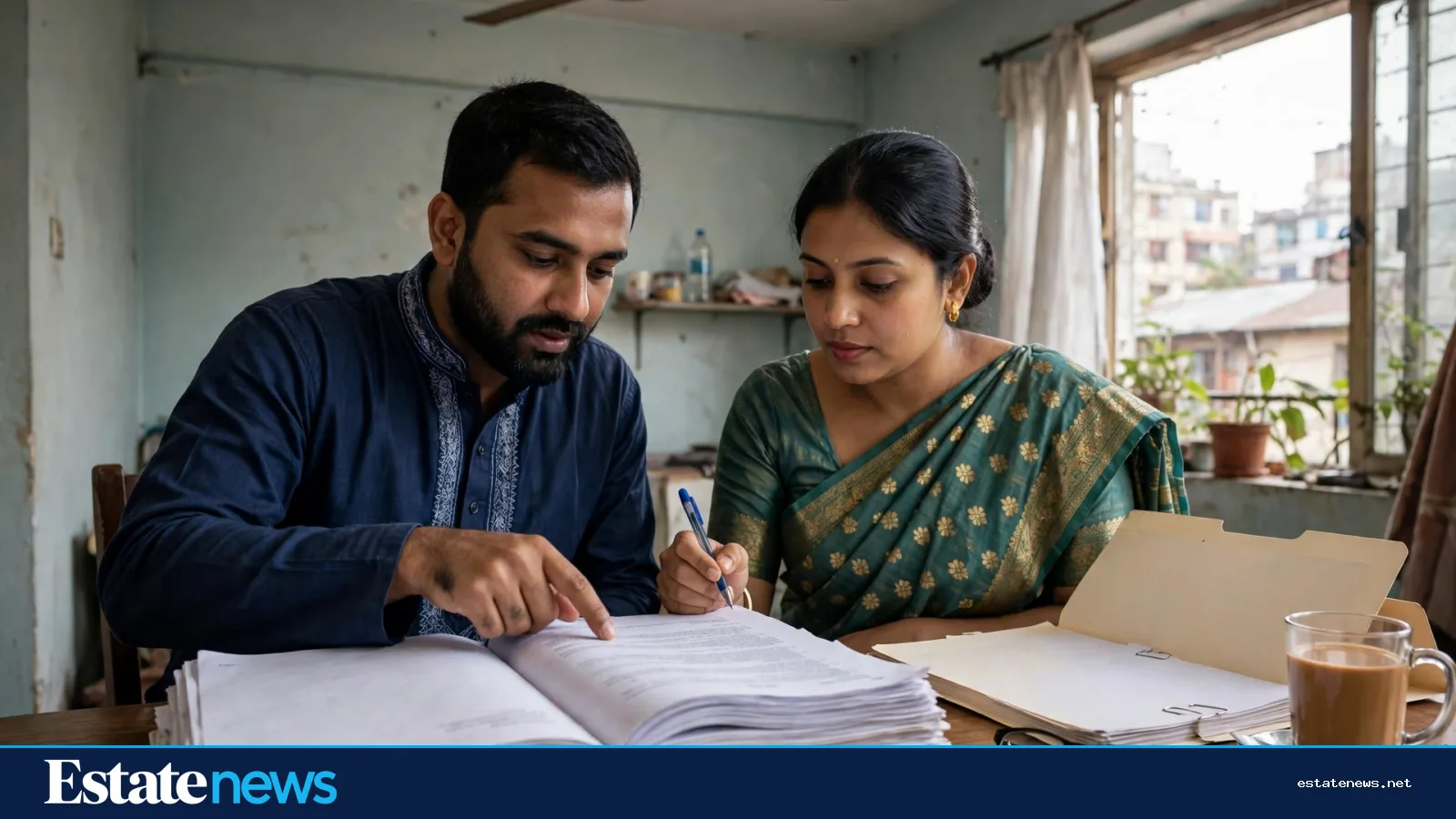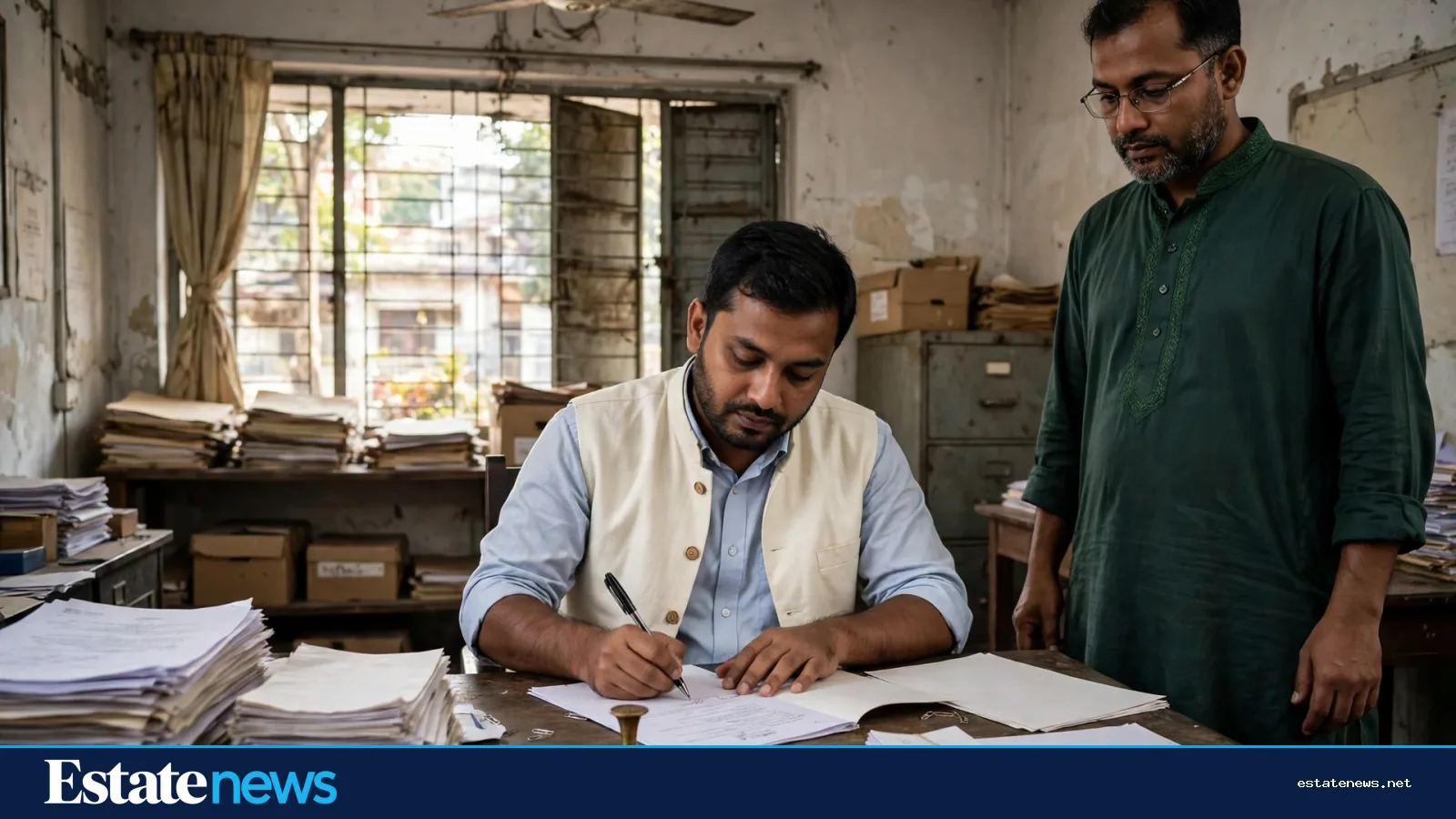
Ask a Dhaka flat owner what their flat is worth and the answer comes fast. Ask what they will keep after the sale and the pause is longer. That gap is the story of selling property in Bangladesh. The price on the agreement is only the starting point. Taxes, registration charges and the condition of the paperwork take their share before the money reaches the seller.
A sale deed in Bangladesh carries a stack of charges, not a single fee. The buyer usually pays the registration cost, but the seller needs to know the numbers too, because they shape the negotiation and the deed value both sides agree on. The standard charges on a sale deed are a 1 percent registration fee, 1.5 percent stamp duty and a local government tax of 2 percent inside a city corporation area or 3 percent outside it, all calculated on the deed value. On top of that sits source tax under section 125 of the Income Tax Act 2023, which runs from 2 percent to 5 percent of the deed value depending on the mouza, or a fixed minimum per decimal, whichever is higher.
The capital gains question

Then comes the question every seller asks: is there capital gains tax on the sale itself? Published guidance on the Income Tax Act puts capital gains from land or property sales at a flat 15 percent. That figure needs care. The budget for 2025-26 cut the capital gains tax on land transfers to 6 percent, 4 percent and 3 percent depending on location, down from the earlier 8 percent and above. And the Finance Bill for 2026-27 proposed a 15 percent capital gains tax on the flats and other benefits a landowner receives from a developer under a joint venture agreement, a change reported by The Business Standard in June 2026 that drew objections from the housing sector.
Three different numbers, three different situations. An ordinary resale of a flat, a sale of vacant land and a landowner's share from a developer agreement are not taxed the same way. Rates also vary by area, and by the mouza value the tax office applies, which may not match the price the buyer and seller agreed. The safe step is a written calculation from a tax adviser or a lawyer before the baina is signed, not after.
Timing matters more than sellers expect
Timing shapes the tax bill in a second way. The original purchase price, the registration cost paid at the time of buying, and any documented improvement cost all sit in the file, and they matter when a gain is computed. Keeping those papers is not bookkeeping for its own sake.


The market calendar matters too. Sellers who need the money by a fixed date often accept a lower price in the final weeks, while a seller with no deadline can wait for the buyer whose loan is approved. In Dhaka's resale market, a buyer with bank approval moves faster than a buyer with a higher offer and no financing.
The file a seller should have ready
A sale moves at the speed of its weakest document. Before listing a flat, a seller should gather the registered sale deed in their own name, the mutation khatian showing the record updated in their name, land development tax receipts up to date, the approved building plan and the RAJUK approval where it applies, the flat purchase agreement with the developer, and the chain of earlier deeds. If the flat was bought from a developer, the allotment letter, payment receipts and the handover letter belong in the same folder.
Two documents cause the most delays. One is mutation: under the Transfer of Property Act, a sale can be treated as void unless the seller, or the seller's predecessor for inherited land, appears in the latest khatian. The other is the flat's own record. A buyer, or the buyer's bank, will ask whether the deed, the mutation and the building approval all describe the same flat, floor and area.
Agree the deed value in the open
The deed value is where honest sellers get into trouble. The tax office works from the mouza value and its own schedule, so the practical approach is to check the mouza value for the area first, agree the deed value with the buyer in writing, and record the payment through the bank so the trail is clean.
A flat sale in Dhaka rewards the seller who does the dull work early. Sort the tax calculation, line up the documents, and let the price be the last thing negotiated, not the first.