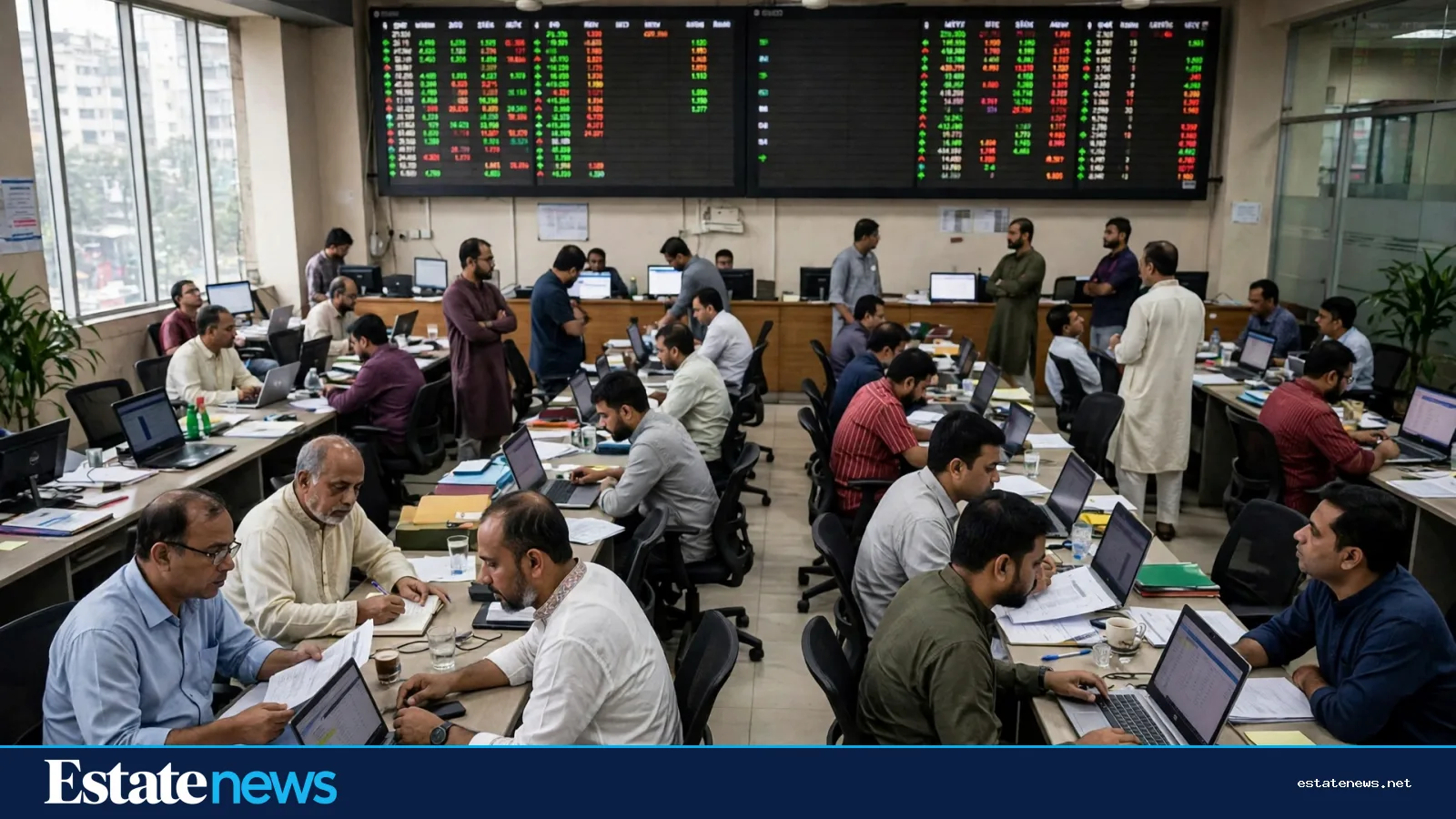
Dhaka's stock market rose for a second straight session on Thursday, 5 November. The benchmark DSEX index gained 71.41 points, or 1.34 percent, to close at 5,413.04, up from 5,341.63 in the previous session, according to The Business Standard. Turnover rose 23.6 percent to Tk 645.43 crore from Tk 522 crore. Of the issues traded, 249 advanced, 81 declined and 65 stayed unchanged. Market capitalisation stood at Tk 6,73,600 crore.
The buying had a clear shape. Textile led turnover with 21.6 percent of the total, followed by general insurance at 13 percent and fuel and power at 10.6 percent. Zaheen Spinning Mills was the day's top gainer, rising 9.09 percent. Shahjibazar Power led turnover among individual stocks at Tk 23.62 crore, narrowly ahead of Envoy Textiles at Tk 23.59 crore.
Two brokerage houses read the day in similar terms. EBL Securities said bargain hunters had returned to pick up beaten-down stocks after the sharp selloff of recent sessions. Prime Bank Securities linked the rebound to buying in bank shares, the return of sidelined investors, and improving sentiment as labour unrest in the garment sector eased. The market had fallen for four straight sessions before Wednesday's recovery, the Financial Express reported, so two days of gains read as a pause in the slide rather than a new boom.

Why a flat buyer should care about the DSEX
A share index does not set flat prices. It does set the mood in which big family decisions get made. When the market falls for days, households hold back. A family that was ready to book a flat waits a month to see what happens to its savings. A business owner who was ready to sell a plot waits for a better price. When the market steadies, some of that waiting ends. That is the link that matters, and it runs through confidence, not through any direct line from the trading floor to the sub-registry.
Bank shares matter most in that link. Banks fund the housing market. When bank shares rise and bank balance sheets look steadier, lending decisions get easier at the margin. A home loan is still priced on the borrower's income and the bank's own cost of funds, and rates have stayed high. But a calmer market makes a bank less likely to tighten further, and a borrower less likely to be told to wait.


The garment sector link runs the other way, through jobs. Textile stocks led turnover on Thursday, and the easing of labour unrest in garments was named by Prime Bank Securities as one of the reasons sentiment improved. Garments employ millions, and their wages pay rent and instalments across Dhaka and its industrial belts. A quiet factory floor is good news for a landlord in Gazipur and for a family in Mirpur paying a monthly instalment.
What two days do not prove
Two sessions do not make a recovery. Turnover at Tk 645.43 crore is stronger than the Tk 522 crore of the day before, yet it remains modest beside the market's busier days. The index at 5,413.04 is still far below the levels of the stronger months. A buyer who reads a two-day rise as a signal to rush into a flat would be making the same mistake as an investor who reads a two-day fall as a signal to sell everything.
The sensible use of the news is narrower. If a family has already chosen an area, checked a building and arranged its down payment, a steadier market removes one reason to delay. If the family has not done that work, the DSEX changes nothing. The flat, the builder's record, the deed and the loan terms decide the purchase. The market only decides the weather in which the decision is made.
This article is informational only and is not financial advice. Share prices and flat prices both move, and past sessions do not predict the next one.