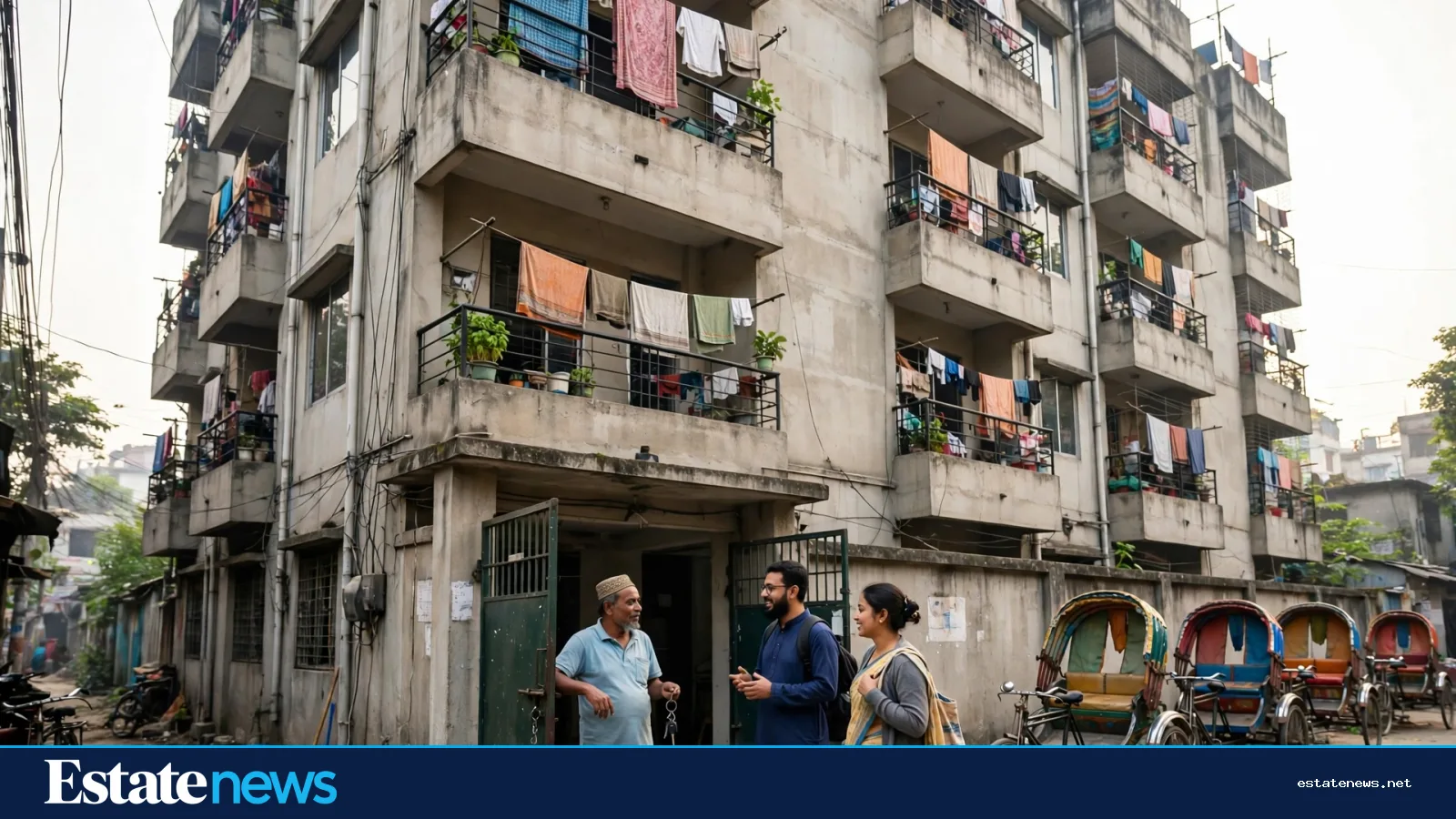
Every Dhaka landlord knows the rent. Few know the yield. The rent is a monthly number. The yield is what that rent means against the price paid, and it is the number that decides whether a flat earns its keep. Gross rental yield is simple arithmetic: a year's rent divided by the purchase price, times a hundred. The trouble starts with which rent and which price go into the sum.
Published sources disagree about Dhaka. Numbeo's crowd-sourced figures put gross yield at 2.69 percent in the city centre and 2.66 percent outside it. The Daily Star, in a banker's worked comparison, put it at around 2.5 to 3.5 percent. A listing-based index, the Global Property Guide, reports 9.17 percent gross. The reason they differ is the method.
Numbeo and The Daily Star compare like with like: one flat, its price, its rent. The listing-based index divides the median rent of all listed flats by the median price of all listed flats. In Dhaka, the flats listed for rent are mostly older and smaller than the flats listed for sale, so the ratio comes out higher. The flats are not the same flats. For an investment decision, the lower, like-for-like range is the honest one to use.

The worked example
Take Numbeo's asking figures for the city centre. A 1,500 square foot three-bedroom flat costs about Tk 2.77 crore, and the asking rent is Tk 57,588 a month, about Tk 6.91 lakh a year. Divide, and the gross yield is 2.5 percent. Outside the centre the same arithmetic gives the same answer: a Tk 1.36 crore flat at Tk 28,722 a month also yields about 2.5 percent.
Prothom Alo's October 2026 survey of nine Dhaka areas found three-room flats renting for Tk 18,000 to Tk 50,000 a month, plus a service charge of Tk 3,000 to Tk 7,000. A Tk 30,000 rent against a Tk 1.32 crore flat, a 1,200 square foot unit in Mirpur at Tk 11,000 per square foot, gives 2.7 percent. The pattern holds across the city.
Gross yield is not the money kept. Service charge, holding tax, repairs, vacancy and income tax all come out of it, so net yield runs well below the gross figure. A flat that yields 2.5 percent gross may keep under 2 percent after costs.
Where the rent works harder


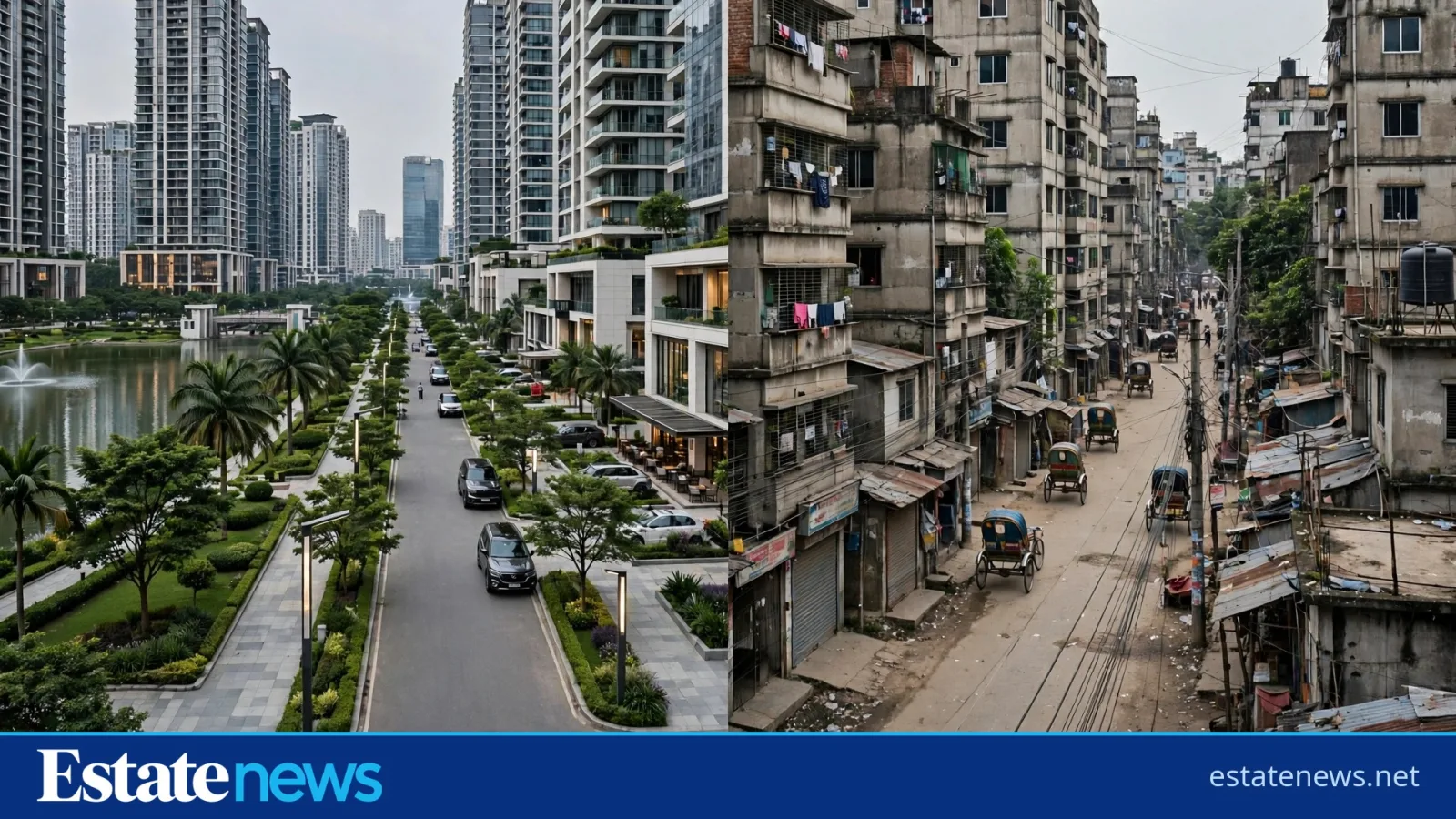
Area changes the yield, but not as most buyers expect. Premium areas pay less, not more. Gulshan and Banani command the highest rents, yet their purchase prices are so much higher that the yield falls. Guides put residential yields there near 4 to 5 percent on listing-based measures, and the like-for-like figure is lower still. The buyer in Gulshan pays for the address, the security and the lake view. Rent alone does not repay the price.
Mid-range areas do better on the ratio. Mirpur, Uttara and Bashundhara have lower entry prices and steady demand from salaried families, students and office workers. Small flats near universities, hospitals and metro stations stay occupied, and a two-bedroom unit near a Mirpur metro station usually finds a tenant faster than a large premium flat in Gulshan. Some guides quote 6 to 7 percent gross for these areas on listing-based measures. Against the like-for-like range, the honest reading is simpler: the yield beats Gulshan, but it stays modest, and the advantage is occupancy and lower entry cost, not a high return.
Shops and offices in Gulshan, Banani and Motijheel are quoted at 8 to 10 percent gross in published guides, with longer leases, but the capital needed is larger and a vacant shop costs far more than a vacant flat.
The comparison that decides it
Set the yield beside the cost of the money. The Daily Star's comparison put a home loan at 12 percent and government securities at 9 percent a year, against a rental yield of 2.5 to 3.5 percent. A flat bought with a loan at those rates does not pay for itself from rent. The rent covers part of the instalment, and the buyer pays the rest from salary, hoping the property's value rises over time.
That hope is not a number. Nobody can source a reliable forecast for Dhaka flat prices, and this article offers none. The income part of the return is small. A buyer who treats a Dhaka flat as a rent machine will be disappointed; one who treats it as a home first, with rent as a partial offset, reads the numbers correctly.
So calculate before buying. Take the flat's price plus registration costs, and divide a realistic year's rent, after service charge and a month of vacancy, by that total. Near 2.5 percent is normal for Dhaka. If a seller promises far more, ask which flats were compared.
This article is informational only and is not financial advice.