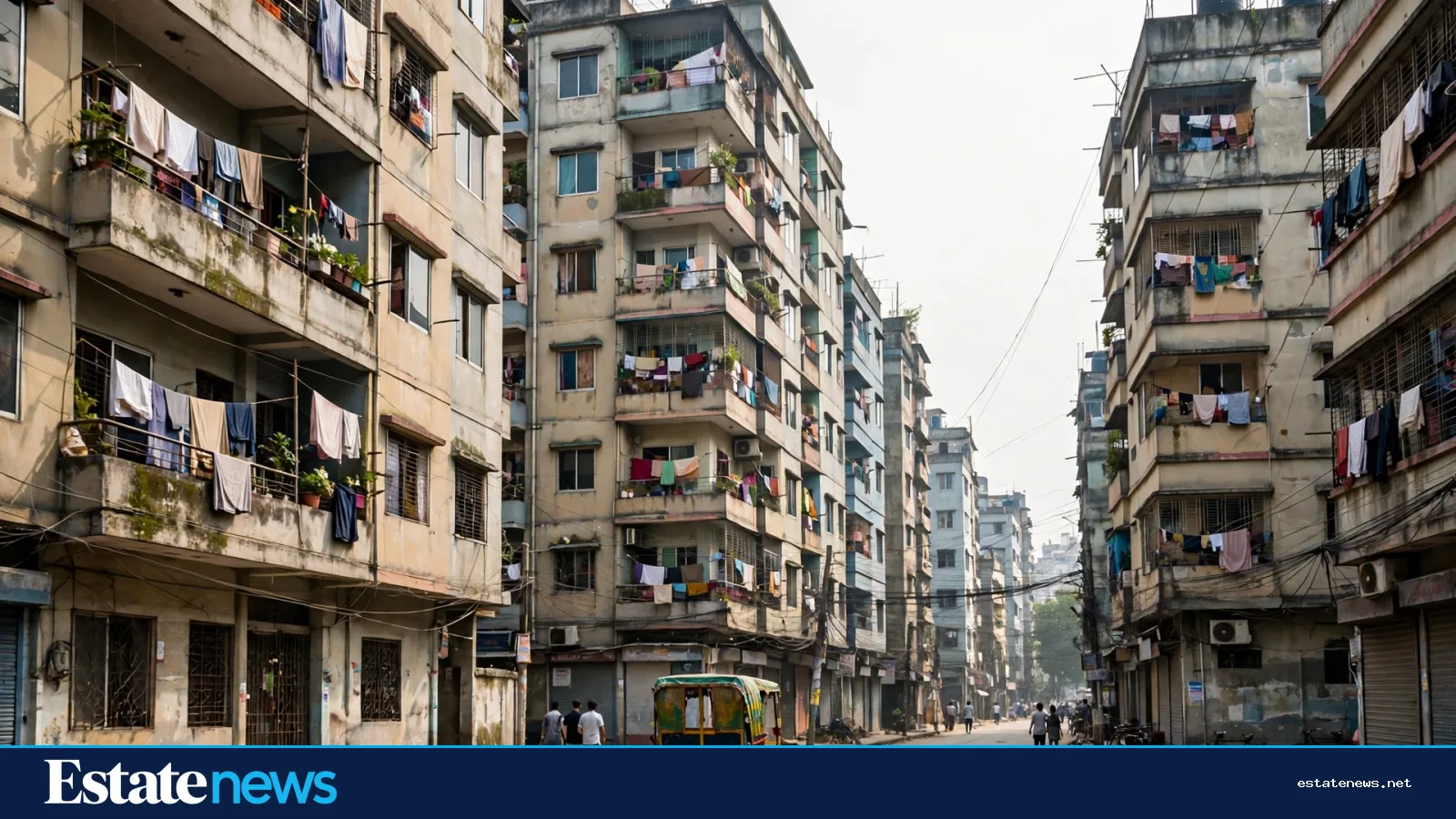
Every Dhaka buyer learns the city's price ladder quickly, because it shapes every other decision: where to look, what size to expect, and how large a loan to seek. The ladder has not changed its shape in late October. What has changed, slowly, is how buyers should read it — as a map of asking prices, not a record of what homes actually sold for.
Estate News' area tracker reports the following asking medians for late October: Gulshan Tk 20,000 per sq ft, Dhanmondi Tk 20,000 per sq ft, Banani Tk 13,888 per sq ft, Uttara Tk 12,500 per sq ft, Bashundhara R/A Tk 9,865 per sq ft and Mirpur Tk 8,700 per sq ft.
How to read these figures

A note on method matters before any interpretation. These figures are medians of asking prices in listings tracked by Estate News. A median is the middle listing in a set, so it is less distorted by a single very expensive or very cheap listing than an average would be. But it remains an asking figure: the price a seller is advertising, not the price a buyer ultimately paid. Transaction prices — the sums recorded when sales actually complete — can differ from asking prices in either direction, and they are not published in the same systematic way. Any comparison that treats an asking median as a sale price overstates what is known.
With that caution, the ladder itself is informative. Gulshan and Dhanmondi sit jointly at the top, at Tk 20,000 per sq ft. The two areas reach the same figure by different routes. Gulshan is Dhaka's most established premium address, where diplomatic, corporate and high-income demand meets limited supply. Dhanmondi combines an older, amenity-rich residential fabric — schools, hospitals, markets and parks — with sustained demand from families who want to stay close to the centre. A buyer paying at the top of the ladder in either area is paying, in large part, for location and scarcity rather than for floor area alone.
The middle of the ladder
Banani, at Tk 13,888 per sq ft, and Uttara, at Tk 12,500 per sq ft, form the middle of the ladder. Banani's position reflects its mix of commercial and residential demand and its proximity to Gulshan, without Gulshan's premium. Uttara's reflects planned development, wider roads and newer building stock, traded against a longer journey into central Dhaka. For many salaried buyers, this middle band is where the practical choice sits: a larger flat in Uttara or a more central flat in Banani, each with a different daily compromise.
Bashundhara R/A, at Tk 9,865 per sq ft, sits below both, reflecting its position as a large planned residential area with substantial new supply. Mirpur, at Tk 8,700 per sq ft, sits at the foot of this six-area ladder — the most accessible entry point among the areas tracked, and the area where a buyer with a smaller budget can most plausibly find a family-sized flat.
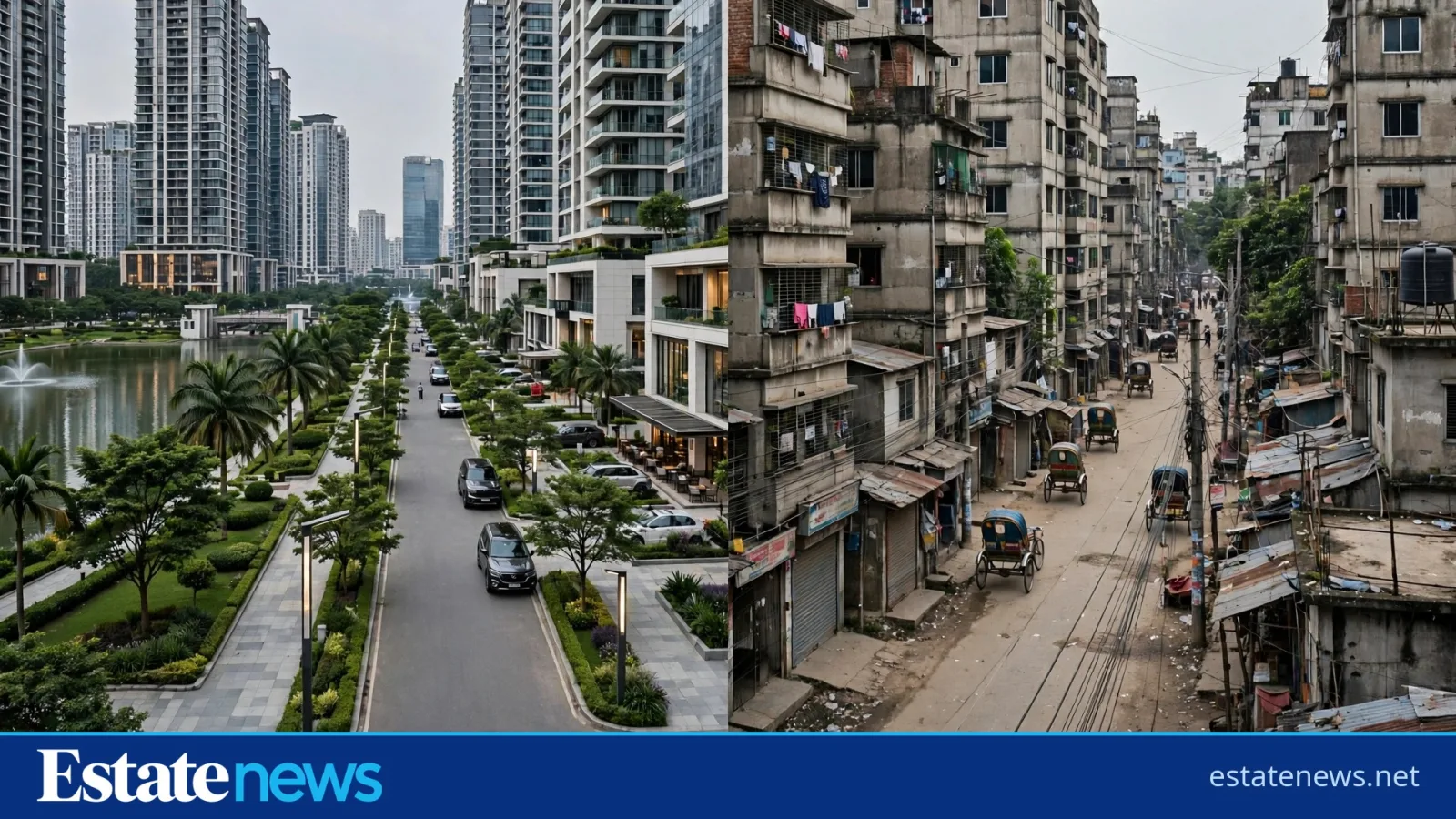
The spread from top to foot is wide: the Gulshan and Dhanmondi medians are more than double the Mirpur median. That spread is the clearest single illustration of why 'the Dhaka market' is a misleading phrase. There are several Dhaka markets, separated by location, and a citywide average would describe none of them well.
What the ladder does not tell you


An area median describes a typical listing. It does not describe any particular flat. Within a single area, a new building with a lift, generator and parking will ask more than an older building without them. A south-facing flat on a quiet side street will ask more than a similar flat facing a busy road. Floor, facing, building age, maintenance and exact micro-location all move the price around the median, sometimes substantially. A buyer who budgets from the median alone, without viewing flats, will be surprised in both directions.
The ladder also says nothing about direction. Asking medians are a snapshot, not a trend. A median that is unchanged from a previous snapshot may conceal rising asking prices in new buildings and falling asking prices in older ones, or vice versa. Readers who want a trend should look for repeated snapshots over time, with the same method, rather than reading movement into a single figure.
Finance adds a further filter. Under Bangladesh Bank's housing finance framework, banks generally lend up to 70 per cent of a property's value. The monthly instalment, not the price per square foot, is what most households actually budget for — and that instalment depends on the loan amount, the rate a bank actually offers and the tenure. Two flats with the same price per square foot can therefore carry very different monthly costs if their sizes differ.
Using the ladder well
For a buyer, the ladder is best used as a shortlisting tool. It tells you which areas are plausibly within your budget and which are not, before you spend weekends viewing flats you cannot afford. Within a shortlisted area, the work becomes specific: view several flats, compare their asking prices with each other and with any recent transactions you can establish, check the building and the papers, and negotiate from evidence rather than from the median.
For a seller, the ladder is a reality check. Pricing far above the area median requires a reason a buyer can see — a genuinely superior building, a rare layout, a location advantage — and not merely a hope. Pricing near the median, with a well-presented flat and clean papers, is how most sales in a slow market actually happen.
The ladder will move. Supply, finance costs and demand shift it, area by area, over months rather than days. For now, its shape is clear: a premium top, a practical middle, and an accessible foot — and a reminder, in every rung, that an asking price is an opening position, not a sale.
An asking median tells you where sellers are standing. Only a completed sale tells you where buyers and sellers met.
This article is informational only and is not financial advice.
Follow Estate News on Facebook for daily property, market and money updates: https://www.facebook.com/profile.php?id=61593817347872