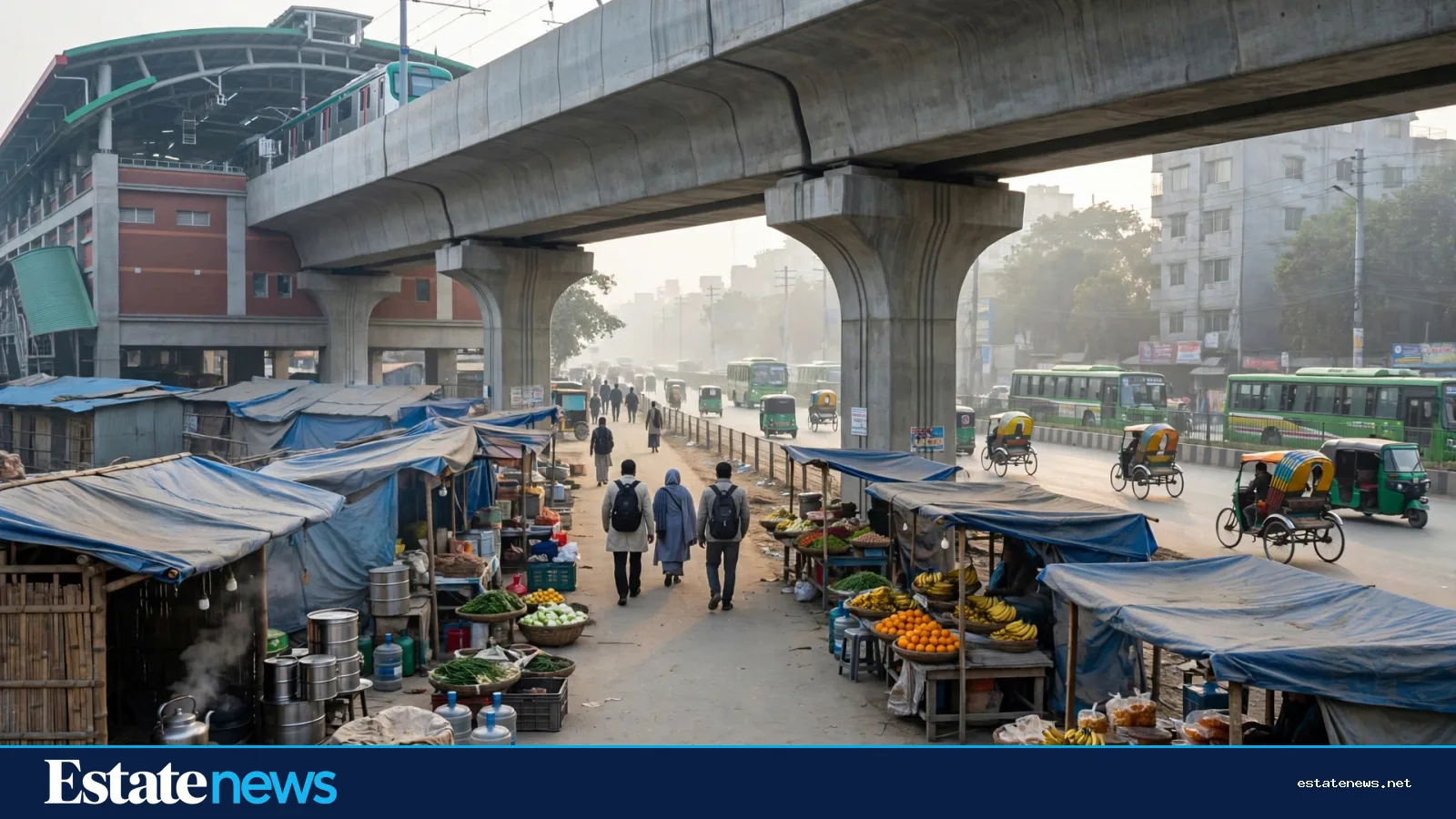
Dhaka's metro rail is, by the one measure that matters most to commuters, a success. MRT Line 6, which began carrying passengers on 29 December 2022, now moves more than 450,000 people on a typical day, according to Dhaka Mass Transit Company Limited (DMTCL) figures reported by Prothom Alo in October 2026. By the end of August 2026, a total of 313.5 million passengers had travelled on the line since it opened. The 16 stations now in service cover 20.1 kilometres from Uttara North to Motijheel, and the journey end to end takes about 33 minutes — against a road journey on the same corridor that The Daily Star has described as taking up to two hours in traffic.
That is the proven part. Everything else that is said about the metro — that it has transformed neighbourhoods, revived commercial districts and lifted property demand — deserves a slower, more careful reading, because the evidence for those claims is of a different kind: visible in places, suggestive in others, and in several important respects simply not yet published in a form a buyer can check.
What has verifiably changed: time, reliability and footfall

The first change is the simplest. A commuter from Uttara can now plan a journey to Motijheel in a fixed number of minutes, at a fare of Tk 20 to Tk 100 by distance, rather than budgeting for the worst traffic of the day. DMTCL's own planning had projected daily ridership of 500,000 between Uttara and Motijheel, and the current figure of more than 450,000 is close to that projection — a rare case in Dhaka infrastructure where actual use has nearly caught up with the forecast. Once the extension to Kamalapur opens, ridership is projected to reach 677,000 a day, according to the same reporting.
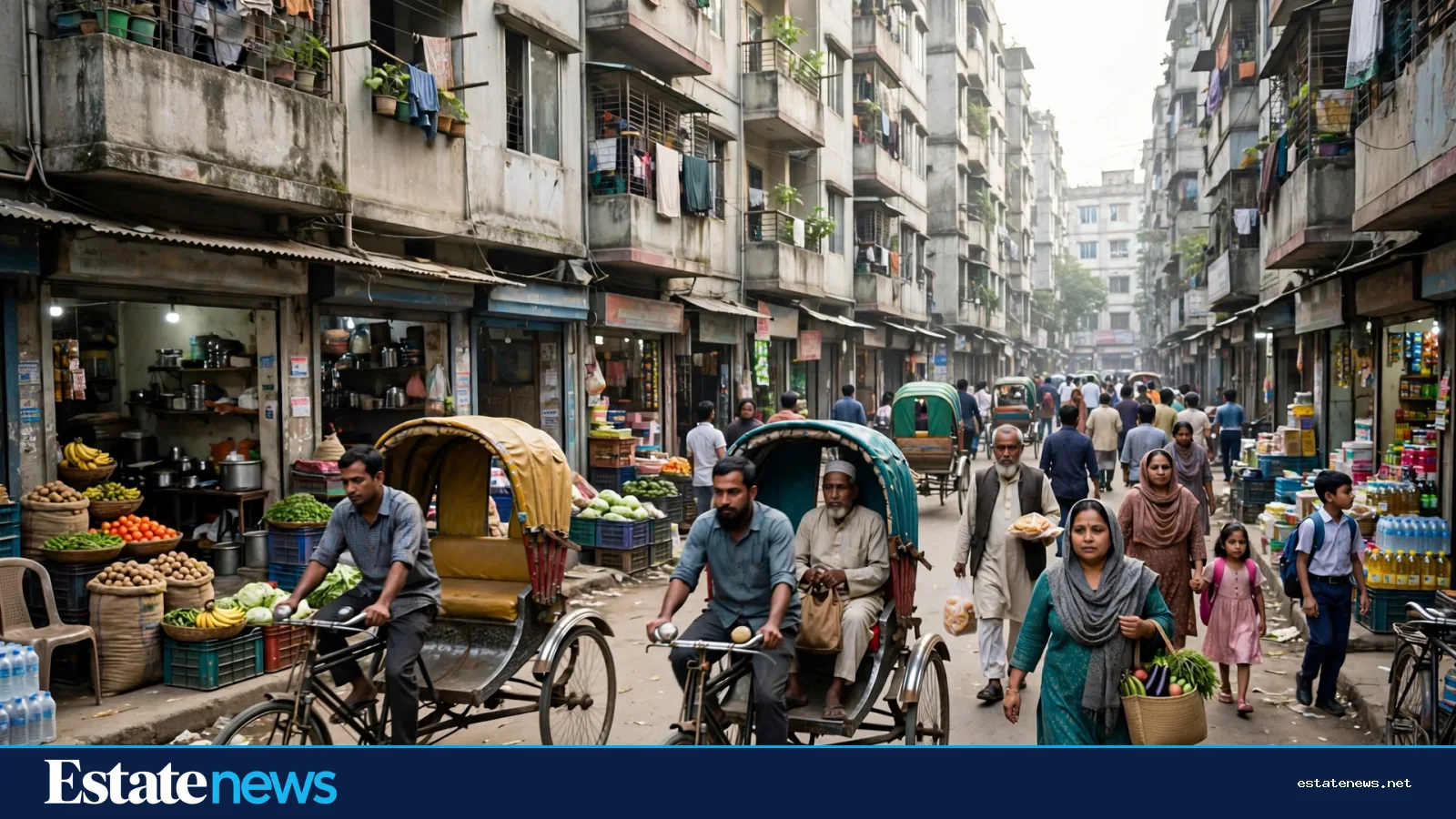
The second change is footfall. Sixteen elevated stations discharge thousands of people a day onto pavements at Uttara, Pallabi, Mirpur 10, Kazipara, Farmgate, Karwan Bazar, Shahbagh and Motijheel. Anyone who walks those station precincts at rush hour can see the consequence: tea stalls, food carts, mobile-accessory shops, pharmacies and copy shops clustering where the stairs come down. This is the ordinary commercial logic of a busy interchange, and it does not need a property boom to explain it. DMTCL itself has planned for it, with station plazas for commercial use at Farmgate, Agargaon, Uttara and Kamalapur, and a stated aim of earning 30 per cent of revenue from non-ticketing activities, as reported by The Daily Star.
What is visible but not yet measured: demand and development
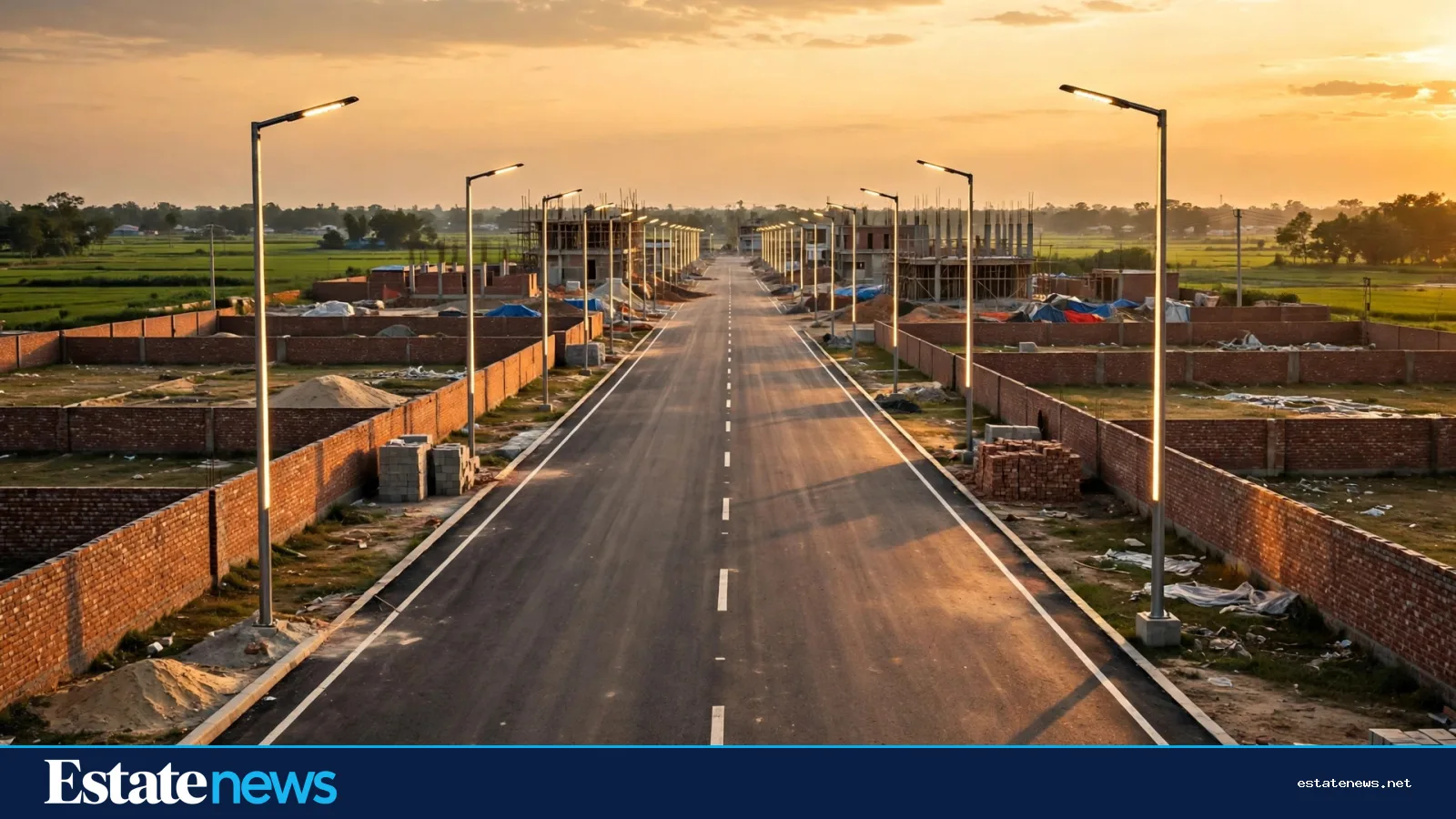
The third claimed change — that the metro has stimulated the housing market and fresh investment along the corridor, particularly in Uttara and Mirpur — is where the language in public discussion usually runs ahead of the data. The Daily Star's own analysis of MRT Line 6 notes land-use transformation and new development along the route, and a 2026 study from Dhaka University of Engineering and Technology (DUET) documents land-use and land-cover change along the MRT-6 corridor. Both point in the same direction: the corridor is being built up more intensively than before.
But "more building" is not the same as "higher prices" or "stronger demand", and no published, transaction-based dataset seen for this article separates the metro's effect from everything else happening at the same time — general population growth, road improvements, and the long-running shift of middle-income buyers towards the city's north. Asking prices quoted on listing sites are not transaction prices, and a rise in asking prices near a station does not prove that buyers are paying more, or that the metro caused it. Estate News has found no official, station-by-station series of registered transaction prices that would let a reader test the claim. Until such data exists, any statement that the metro "has raised property prices" around a given station should be treated as an opinion, not a fact.
What is still unproven, station by station
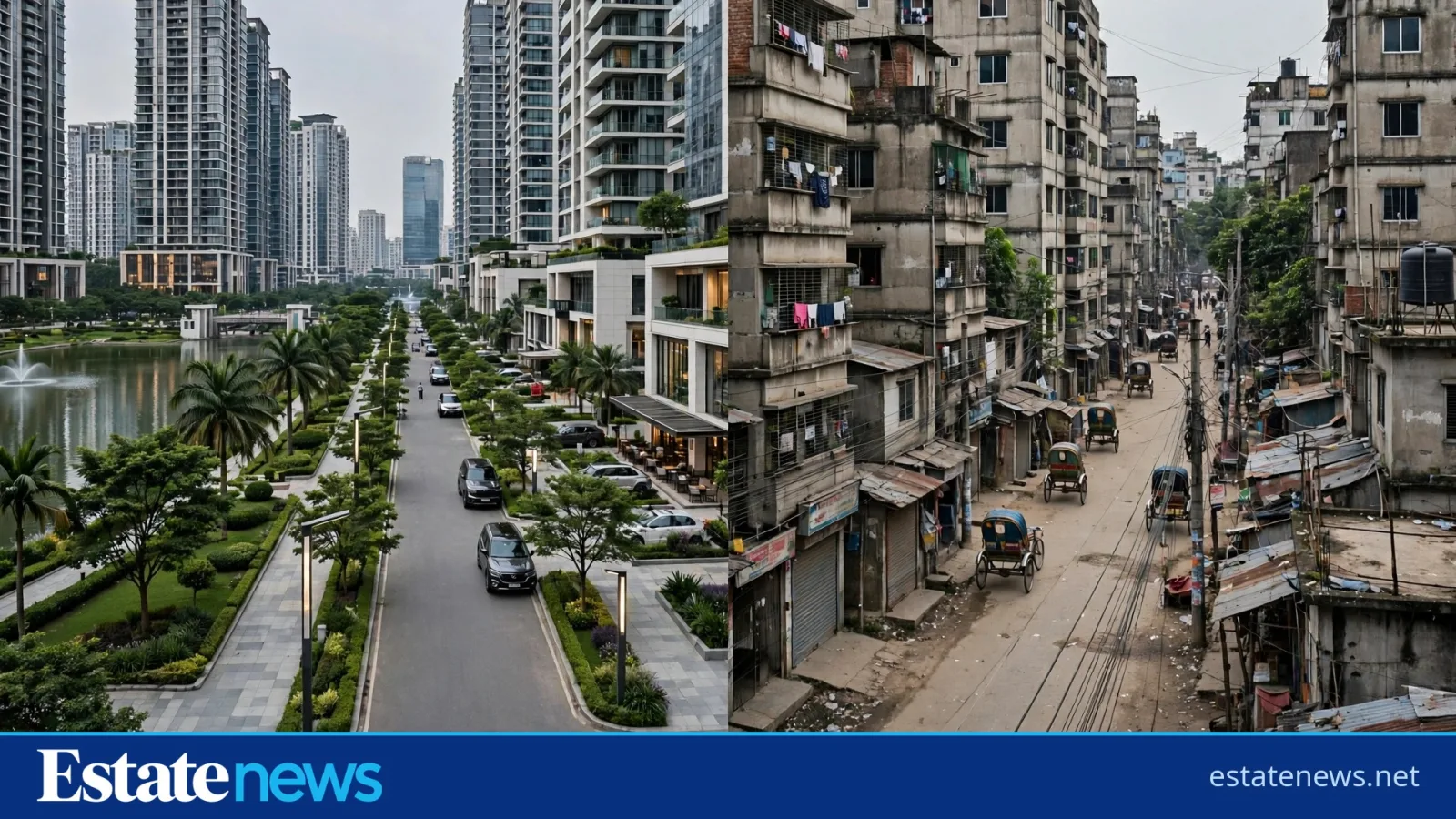
The honest picture varies by place. Uttara, at the northern end, already had a planned layout, wide roads and an airport next door before the metro arrived; the metro strengthened an existing advantage rather than creating one from nothing. Mirpur, by contrast, was a dense, older residential and commercial belt whose main constraint was the journey to the centre; for Mirpur, the time saving is arguably the larger change, and the commercial streets around Mirpur 10 and Kazipara stations are visibly busier. Motijheel tells a third story: once the city's commercial heart, it had lost ground to traffic congestion, and planners cited by The Daily Star expect the metro to help revive it as a central business district — an expectation, not yet a result, and one that depends on far more than a station, including office stock, parking and the state of the surrounding streets.
Two structural gaps also remain. First, the metro does not yet reach the airport, Old Dhaka, Gulshan, Banani or Dhanmondi, so for much of the city the "last mile" still depends on a rickshaw, a bus or a car — a fact that limits how far station-area effects can spread. Second, the Kamalapur extension, the line's final 1.16 kilometres, is not yet open. Prothom Alo reported in October 2026 that the extension was about 85 per cent complete, with track-laying and electrical work under way, trial runs expected in February and passenger service in early July, although delivery of some equipment from Japan, including fare-collection equipment, could push the opening slightly. Until that link opens, the line's eastern end stops at Motijheel, and the interchange with the railway terminus at Kamalapur — potentially the line's most important connection — is still a promise.
What buyers and tenants should actually check
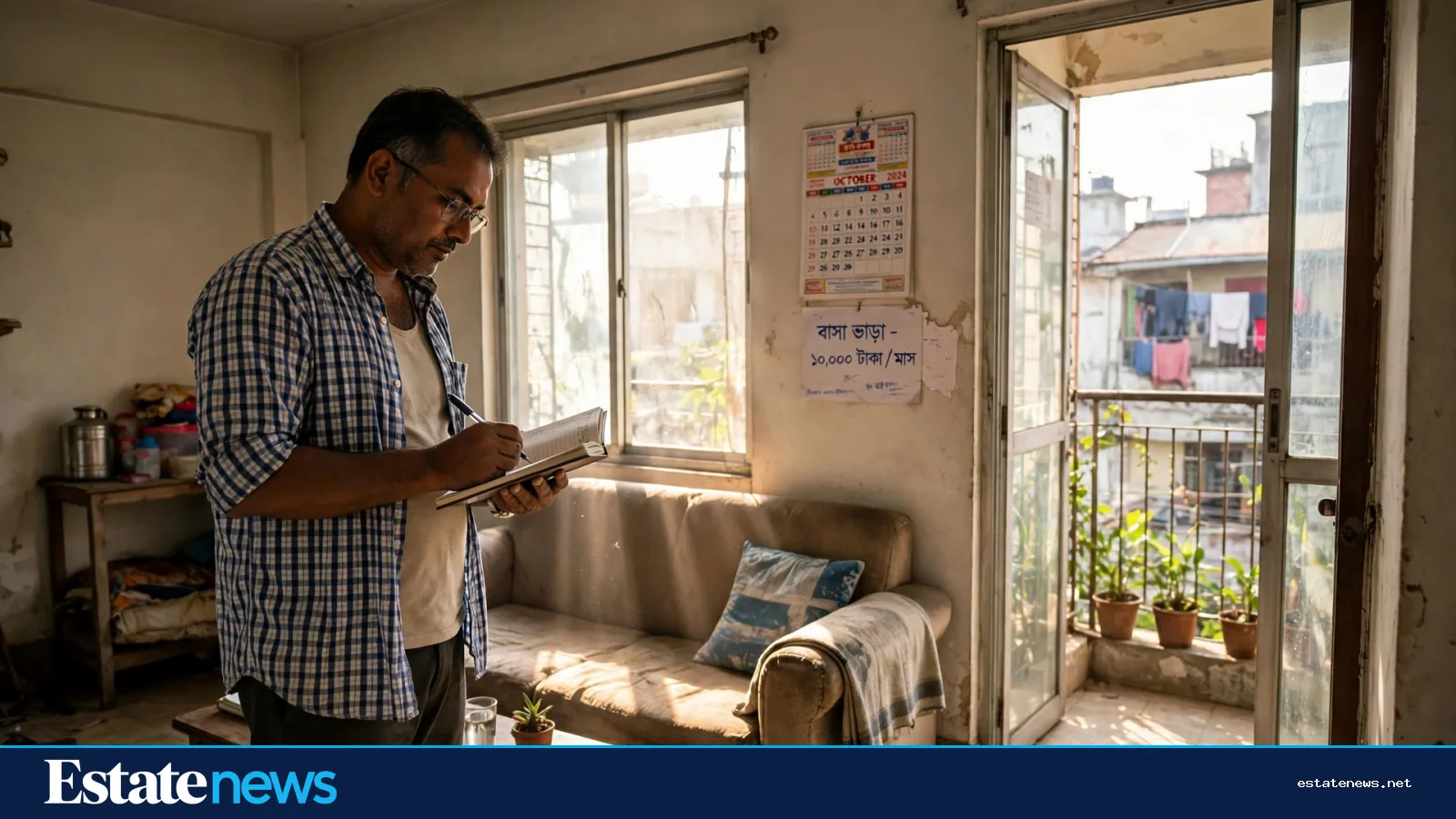
For a household choosing where to live, the useful questions are practical, not speculative. Walk from the station to the building at the hour you would actually travel, and time it — including the walk, the stairs and the wait. Visit in the rain, when the station precinct and its drains are under the most strain. Ask whether the building's access depends on a single congested road under the viaduct, or on a side street that stays passable. And separate the rent or price being asked today from any story about what the area "will be worth" when the next line opens: the first is a fact you can verify, the second is a forecast that should carry its evidence with it.
Dhaka's metro has already done something rare — it has given a large number of people a predictable journey across a city that rarely offers one. That is a large achievement on its own. Whether it remakes the neighbourhoods around its stations, and by how much, is a question the next few years of data will answer. Buyers who wait for that data, rather than paying today for a story about it, will be the ones who benefit most.
Follow Estate News on Facebook for daily property, market and money updates: https://www.facebook.com/profile.php?id=61593817347872