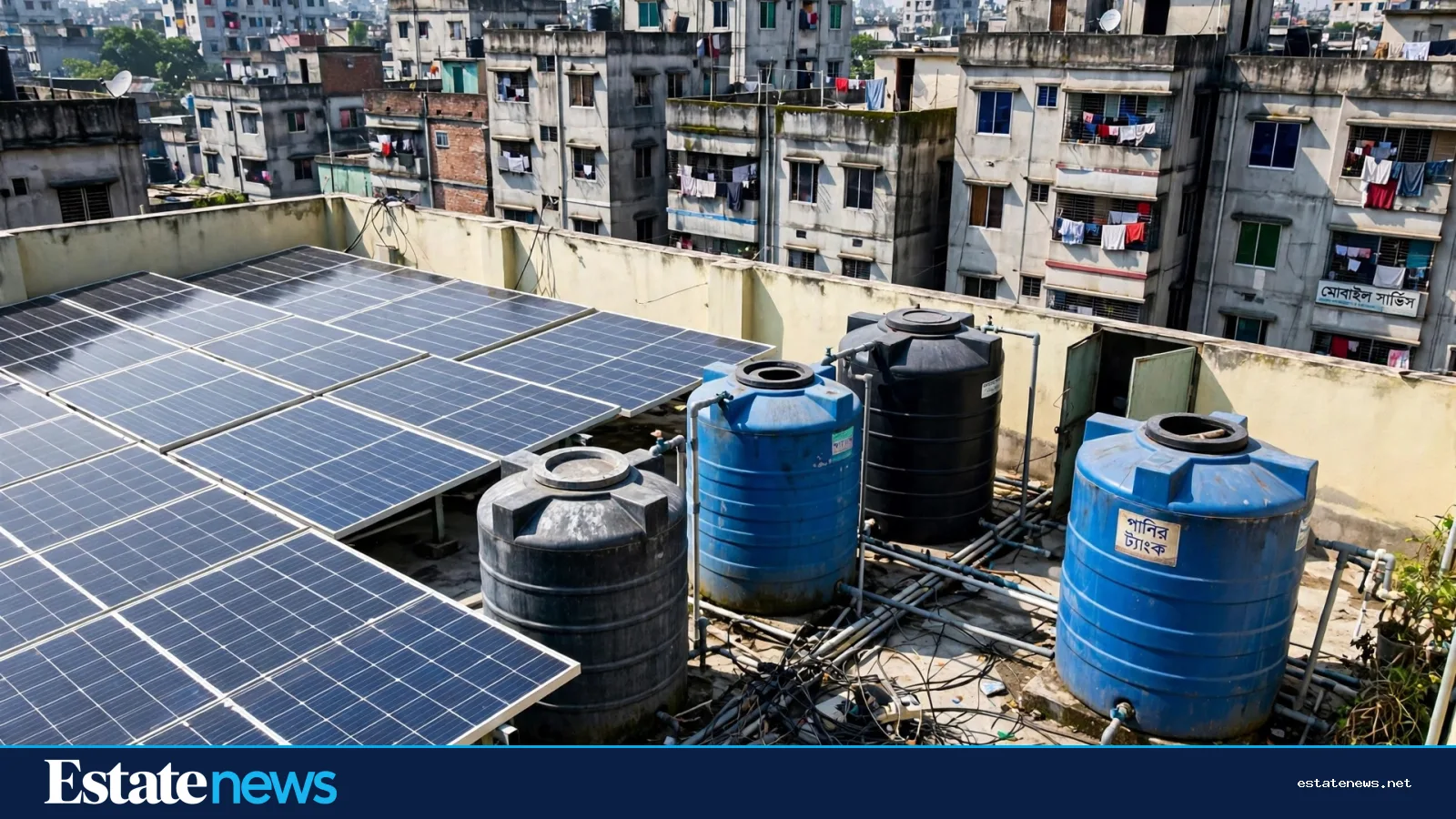
Stand on any rooftop in Dhanmondi at noon and the case for solar is easy to see. The sun is strong for most of the year. The roof is empty except for water tanks and a tangle of dish antennas. Below, the building's common meter is running: lifts, corridor lights, water pumps, the gate light, the generator on standby. Every one of those loads is paid for by the flat owners together, through the monthly service charge.
That shared bill is where rooftop solar earns its keep in an apartment building. A system on the roof feeds the common loads first. The lift runs on sunlight during the day. The pump fills the rooftop tank without drawing from the grid. The corridor lights cost less to keep on through the night if a battery is in the system. The savings show up not in one flat's bill but in the building's common account, which is where service charges come from.
The roof is the first decision

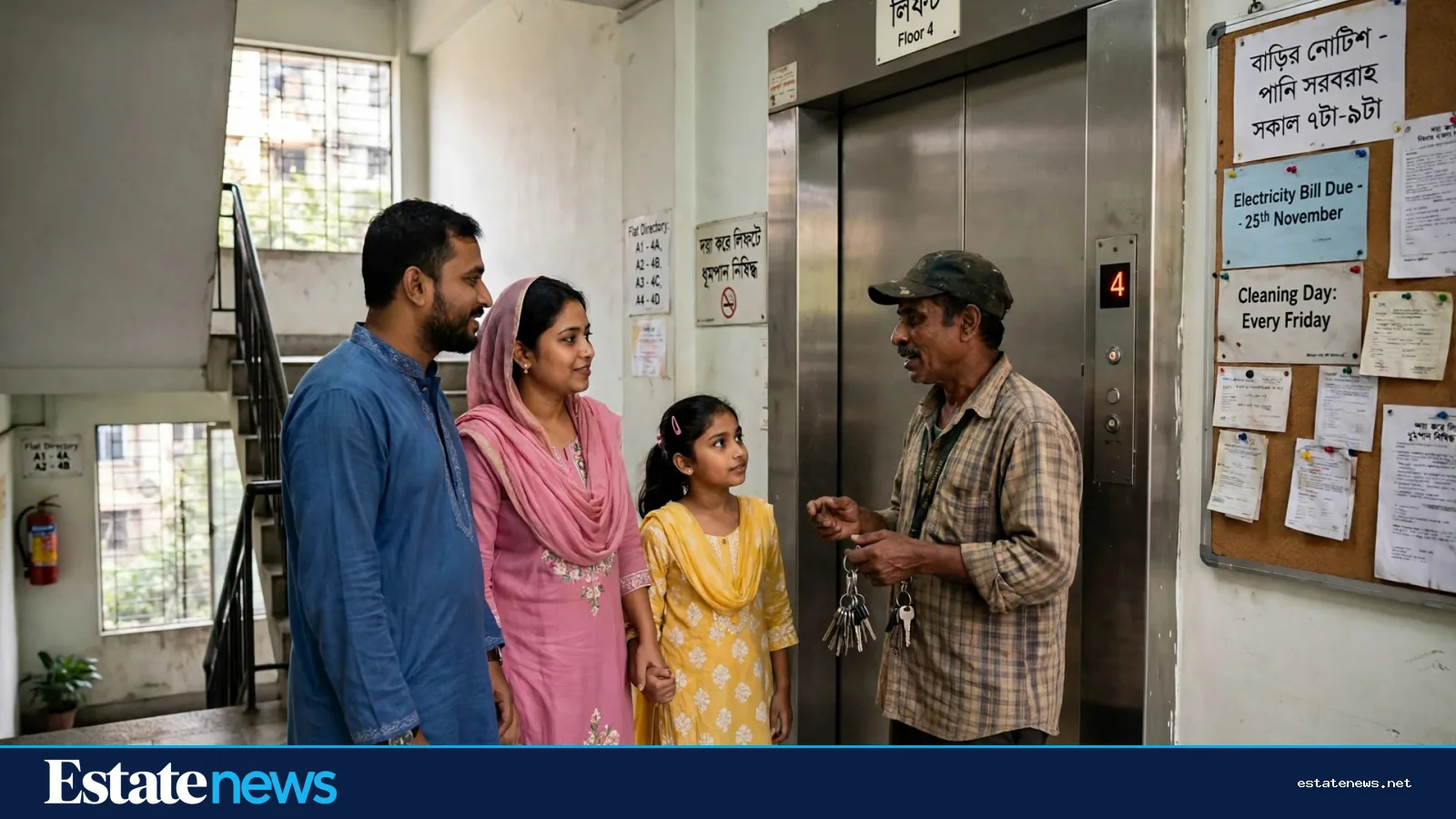
In a single house, the owner decides. In an apartment building, the roof belongs to everyone, and that changes everything. The building's management committee has to agree. The owners have to agree on how the cost is shared and how the savings are shared. A top-floor owner may worry about leaks under the panels, or about losing the roof space where the family dries clothes. A ground-floor owner may ask why they should pay the same as a top-floor flat when the lift matters less to them.
These are not technical questions. They are building questions, and they decide more solar projects than any price list does. Buildings that install solar successfully tend to have a committee that works, a service charge that is collected on time, and owners who trust each other with a shared investment. Buildings where the committee struggles to collect charges will struggle to collect for solar too.
The practical questions follow. How much of the roof is free, once the water tanks, lift room and stair head are accounted for? How much shade falls on it from the taller building next door? Is the roof strong enough to carry the panels and their frames? A structural check comes before any quotation, because a panel that damages a roof costs more than the electricity it saves.
How the savings work
A rooftop system earns money in two ways. It cuts the electricity the building buys from the grid, and it can, where the rules allow, send surplus power back to the grid under net metering. Net metering lets a building's meter run backwards when the panels produce more than the building uses, with the surplus credited against later bills. The details of the scheme, including who can join and how the credit is calculated, sit with the power distribution company for the area, and a building should confirm the current rules with its own distributor before committing.
The payback question is the one every owner asks, and it has no single answer. It depends on the size of the system, the price of the panels and batteries, the building's daytime load, and the tariff the building pays. Batteries add cost and let the building use solar power after dark, but they also need replacing after some years, and that replacement cost belongs in the maths from the start.


Estimates should be treated as estimates. A vendor's payback figure is a sales figure until it is checked against the building's own bills. The honest way to test it is to take a year's electricity bills for the common meter, work out the daytime use, and ask two or three vendors to quote against the same numbers. If the quotes disagree wildly, the assumptions disagree, and the building should find out why before signing.
What can go wrong
Solar panels last a long time, but the system around them needs care. Dust settles on panels in Dhaka's dry season and cuts output until they are cleaned. Inverters, the boxes that turn panel power into household power, fail more often than panels and cost real money to replace. A system installed without proper wiring, or without protection against lightning and surges, can become a hazard rather than a saving.
Maintenance, then, is part of the purchase, not an afterthought. Who cleans the panels? Who checks the inverter? Who pays when a part fails in year five? A building that answers those questions before installation will enjoy the system. A building that discovers them afterwards will argue about them for years.
A sensible first step
For most apartment buildings, the sensible first step is small. A system sized to the common loads, lift, pump and lights, rather than to every flat's air conditioners. A committee decision recorded in writing, with the cost and savings split agreed in advance. A quotation from more than one vendor, checked against the building's real bills. And a maintenance plan with a named person responsible.
Dhaka has the sun. Its rooftops are mostly empty. The buildings that will benefit from solar are not the ones with the biggest roofs, but the ones whose owners can agree, whose committees can collect, and whose maths is done on real bills rather than on promises.
This is general information, not financial advice.