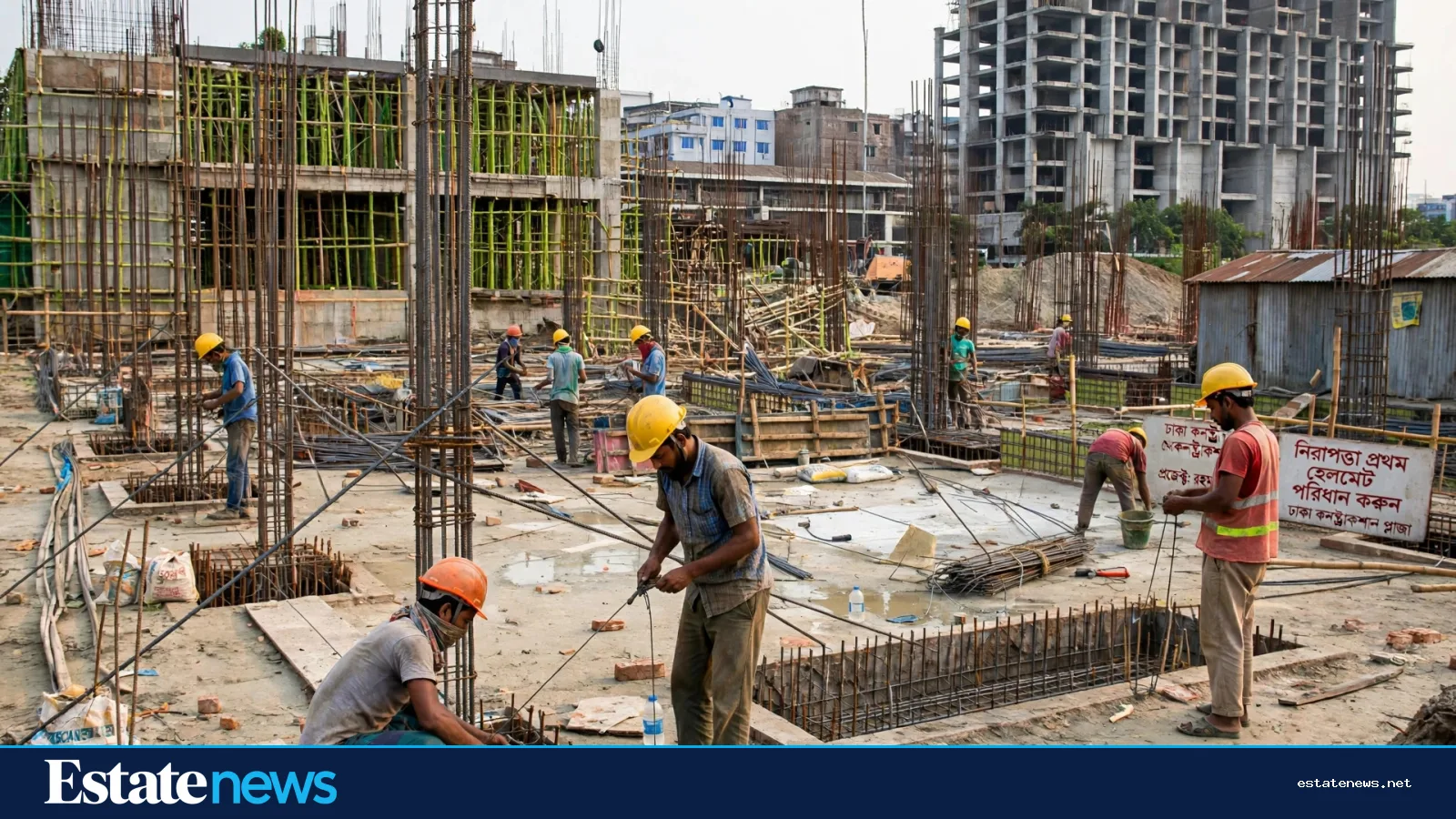
Every flat in Dhaka starts as a pile of materials. Rod, cement, sand, brick, glass, paint, wire, pipe. Add labour, transport, fuel and finance, and you have the cost of a building before a single buyer walks in. The trouble for anyone trying to follow those costs week by week is that most of the prices that matter are quoted shop by shop, site by site, and they move without a public record.
This tracker works with what is published and checkable. Each week it takes the verified figures available on the day, names the source, and says plainly what the numbers mean for a buyer. This week the clearest published signal comes from Bangladesh's biggest steelmaker.
Methodology

This tracker is dated 7 November 2026. It uses published company results and disclosed market figures only. Prices are described as asking prices or published company figures where that is what they are, and transaction prices where a transaction is reported. Where a figure is a range, it is labelled as a range. No single shop quote is presented as a market price.
BSRM Ltd closed its 2026 financial year, ended 30 June 2026, with consolidated profit of Tk 7.03 billion, up 14.49 percent from Tk 6.14 billion a year earlier. Revenue rose 13.77 percent to Tk 109.95 billion. Earnings per share reached Tk 23.54, up from Tk 20.57, and the board recommended a 55 percent cash dividend.
BSRM Steels did better still. Its revenue was Tk 12,949 crore and net profit Tk 715 crore, up 38 percent. Earnings per share rose to Tk 19.03 from Tk 13.77, with a 60 percent cash dividend recommended. Across the two companies, combined revenue was Tk 23,943 crore, up 20 percent, and combined net profit Tk 1,418 crore, up 25 percent.
Those are company results, not a price list. But they carry a cost message. BSRM supplies nearly a quarter of Bangladesh's steel demand, in an industry worth around Tk 75,000 crore. When the country's largest steelmaker grows revenue and profit together, it tells readers that building work is under way and steel is moving. A steelmaker does not post record profit in a dead construction market.
Steel: the week's clearest signal
What pushes building costs


Four drivers decide what a developer pays to put up a building in Dhaka, and each of them is moving in its own way.
The first is raw material. Bangladesh imports most of its steel scrap and billet, so the world price and the taka's value against the dollar feed straight into rod costs. When import costs rise, local rod prices follow, usually with a lag of weeks rather than days.
The second is energy. Steel mills, cement plants and brick kilns all burn fuel or electricity, and energy prices sit inside every bag of cement and every tonne of rod. A mill that pays more for power passes part of that cost on.
The third is transport. Rod and cement travel by truck and river from Chattogram and the industrial belts to building sites in Dhaka, Gazipur and Narayanganj. Fuel prices, road conditions and seasonal demand all show up in delivery costs.
The fourth is labour. Masons, rod binders, electricians and plumbers set the pace of a site, and their wages rise with demand for skilled hands. A busy construction season pulls wages up; a slow one lets them settle.
What buyers should watch
For a buyer, the cost tracker matters in one place above all: the gap between a project's booked price and its building cost. Developers who booked flats a year ago at fixed prices absorb cost rises themselves until the contract says otherwise. Buyers booking now meet the current cost picture in the price they are quoted.
Three checks help. Ask what stage the building has reached, because a nearly finished building carries less cost risk than a hole in the ground. Ask what is included in the quoted price, because fixtures, lifts and generators can sit inside or outside the headline figure. And compare the same size flat across two or three nearby projects, because a price far below its neighbours usually means something has been left out.
The record date for BSRM's dividend is 15 November, and its annual general meetings fall on 17 December. Those dates matter to shareholders. For flat buyers, the date that matters is simpler: this week, steel's biggest name in Bangladesh reported a strong year, and the building trade is busy. Costs are firm, demand is real, and the market is moving.