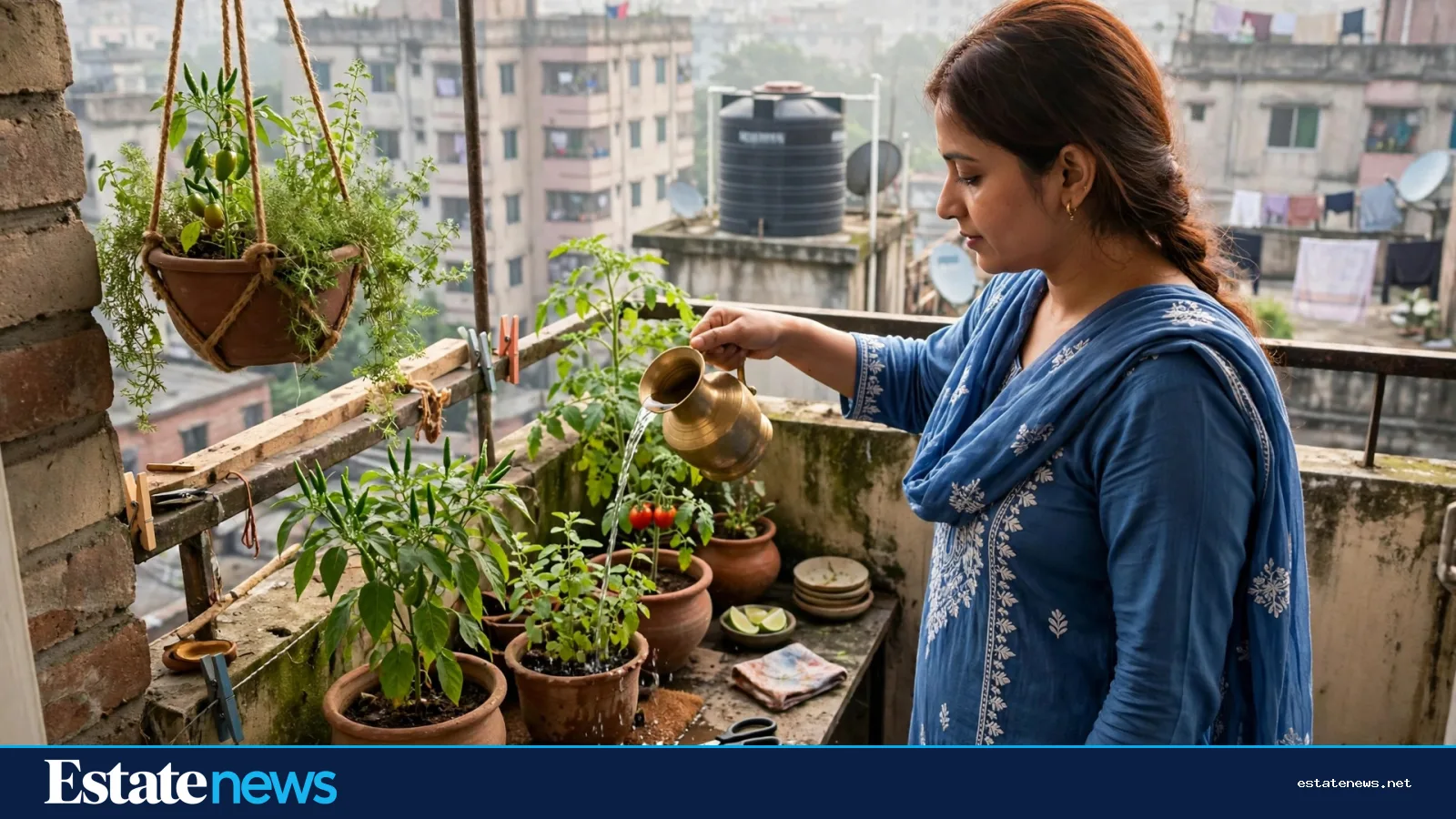
Every morning in Dhanmondi, before the traffic builds up on Satmasjid Road, a woman on the third floor waters her balcony. The pots are clay, the plants are chilli, tulsi and a tomato vine that has climbed halfway up the grille. It takes her ten minutes. By the time she is done, the kitchen has fresh green chilli for the day, and the flat smells faintly of wet earth. That is the whole point of a balcony garden in Dhaka. It is not a farm. It is a small patch of green that pays for itself in small ways, every day.
Balconies in Dhaka flats are usually small, often no more than a metre deep, and they do a lot of jobs already. Clothes dry there. The gas cylinder sits there. Children lean on the grille to watch the street. A garden has to fit around all of that, which is why the flats with the best balcony gardens are rarely the ones with the most plants. They are the ones where somebody planned where the pots go.
Start with what survives

Dhaka's weather does the choosing, whether the gardener likes it or not. The hot months are hard on tender plants. The monsoon drowns pots that cannot drain. Winter is the kindest season, and it is short. The plants that last in Dhaka balconies are the ones that forgive neglect, and the list is a familiar one to anyone who grew up here.
Green chilli and tulsi are the usual first plants, and for good reason. Both grow in a small pot, both are used in the kitchen or the prayer room, and both survive a missed watering. Pudina, or mint, spreads fast and needs a pot of its own, or it will take over its neighbours. Tomato and brinjal need a bigger pot and a stick to climb, and they reward the effort in winter. For colour, marigold and portulaca, the noon flower, ask for almost nothing except sun. For shade, money plant and snake plant survive in corners where nothing else will, and they suit a balcony that gets little direct light.
The mistake most beginners make is buying too much at once. A nursery in the neighbourhood will sell a dozen seedlings for very little, and a new gardener will take all twelve home. Half of them die in the first month, and the balcony looks like a failed project. Two or three pots, kept alive for a season, teach more than twelve pots bought in one afternoon.
The cost, kept honest
A balcony garden does not need much money, but it is worth counting what it does need. A clay pot, a bag of soil, a seedling and a small watering can are the basics, and a modest start of three or four pots usually falls within a few hundred taka in typical Dhaka market ranges. The ongoing cost is smaller still: soil topped up now and then, a new seedling when one dies, a length of rope or a bamboo stick for a climbing plant.


What costs more is the container habit. Fancy planters, imported pots and decorative stands can push the bill up fast, and they do nothing for the plants. Old paint buckets, cut-down oil drums and broken earthen pots all grow chilli just as well. The money is better spent on good soil and on pots with a drainage hole. A pot that cannot drain will kill a plant in the first heavy rain of the monsoon, however much it cost.
Care that fits a flat
Watering is the daily job, and the rule is simple: water in the morning, before the sun gets strong, and check whether the soil is actually dry before watering again. Overwatering kills more balcony plants in Dhaka than underwatering does. In the monsoon, pots need to be tilted or moved under cover, because a week of rain will rot the roots of anything sitting in standing water.
Feeding is light work. Kitchen waste, dried and mixed into the soil, does most of it. A handful of compost every month or so is enough for a small pot. Chemical fertiliser is easy to overdo in a small container, and a burnt plant rarely recovers.
The building matters too. A balcony garden sits on common property in most Dhaka apartment buildings, and the flat owners association may have rules about weight, water dripping onto the flat below, and plants hanging over the edge. A short word with the building caretaker before the pots go up saves an argument later. Water that drips onto a neighbour's laundry is the fastest way to end a balcony garden.
What lasts
The gardens that survive in Dhaka flats are the ones that become a habit, not a project. Ten minutes in the morning, a look at the soil, a snip of a dead leaf. The plants that make it through one full year, heat and monsoon and winter, are the ones that will keep going. Chilli and tulsi, a tomato vine in winter, a money plant in the shade. Nothing grand, and nothing that needs a gardener.
There is a quieter gain as well. A balcony full of green changes how a flat feels. The air is a little cooler in the evening. The grille looks less like a cage. Children learn where a chilli comes from. In a city where most families live in flats and most flats look alike, a few pots of green are the cheapest way to make a home feel like it belongs to the people inside it. The woman in Dhanmondi knows this. She waters her plants, picks a chilli for lunch, and goes inside. The balcony does the rest.