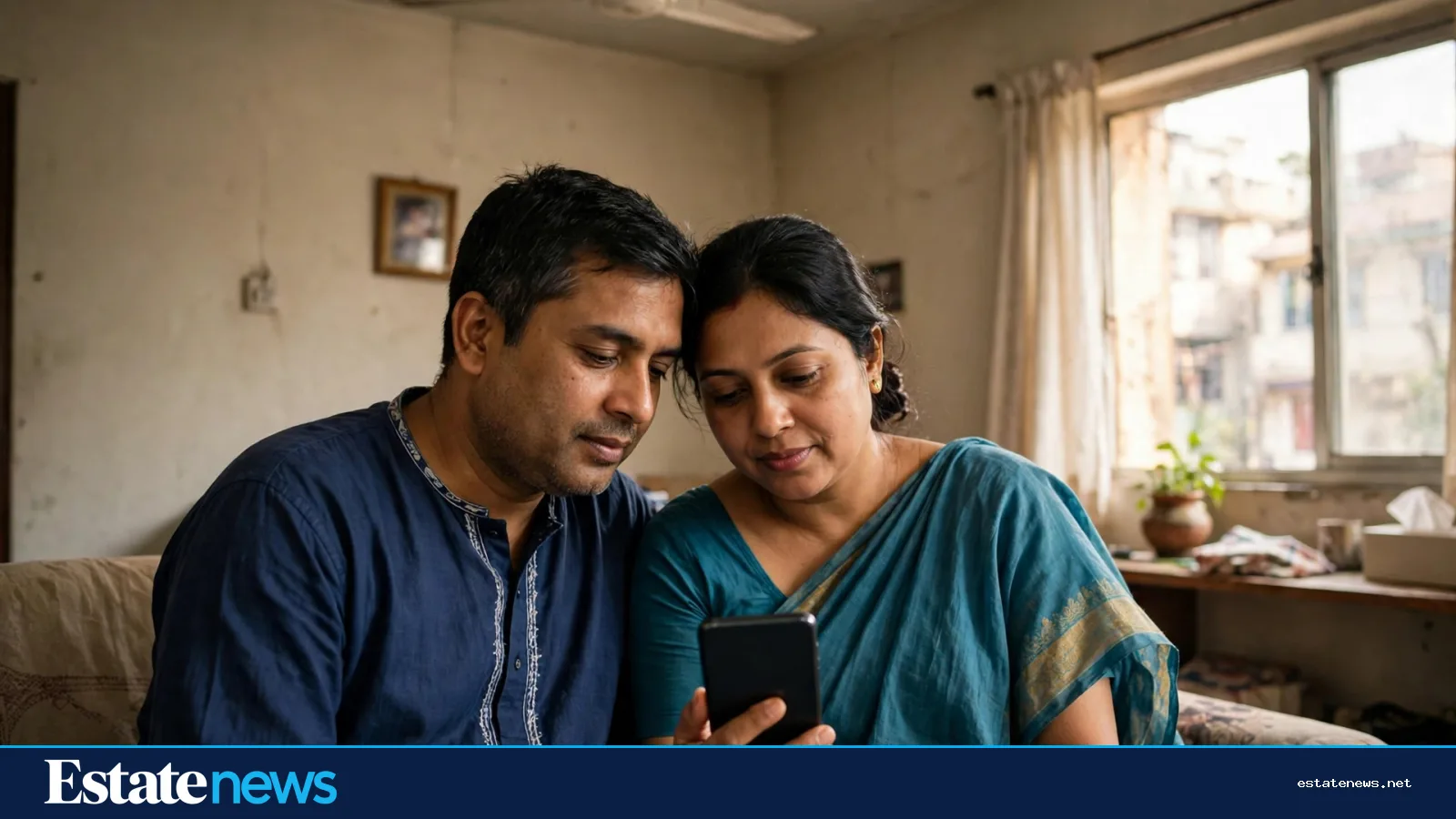
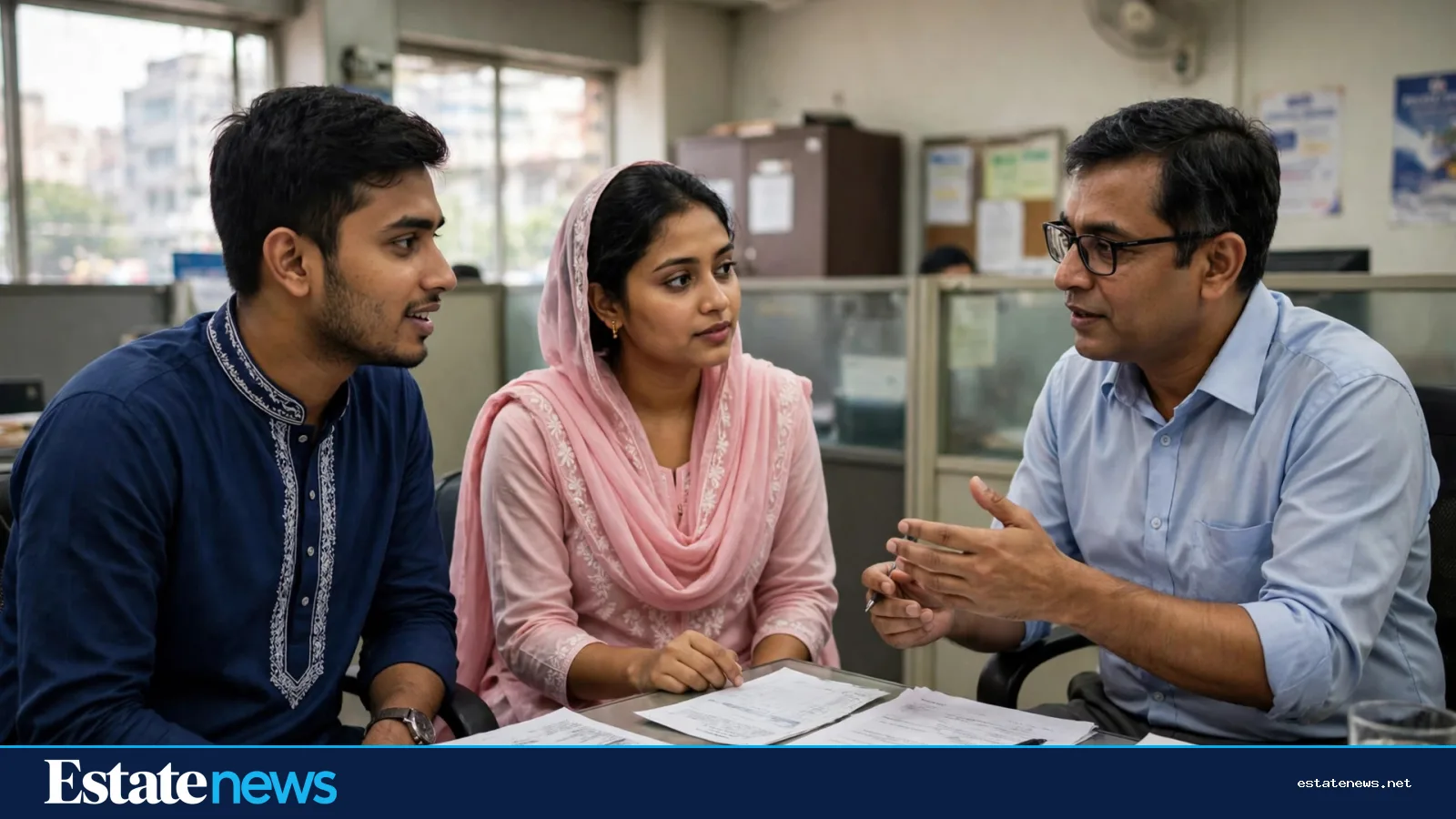
A Dhaka couple earning Tk 1 lakh a month between them, or one earner taking home Tk 1 lakh, often asks the same first question at a bank: how big a loan can we get? The answer is not a single number. It is a negotiation between the bank's caution and the family's real spending, and it starts with the monthly instalment.
The worked example, and what it leaves out
Take an illustrative example, not a bank offer. A loan of Tk 50 lakh over 20 years, at an illustrative rate of 12 percent a year, works out to an instalment of about Tk 55,000 a month. At an illustrative 10 percent, the same loan over the same term works out to about Tk 48,000 a month. A loan of Tk 40 lakh at the illustrative 12 percent works out to about Tk 44,000 a month.

Those figures are arithmetic, shown so a buyer can see how the rate and the loan size move the instalment. They are not today's bank rates. Rates differ by bank, by loan size and by the borrower's profile, and they change. A buyer should get a written offer from the bank, with the rate, the tenure and the instalment printed on it, and compare it with two other banks before deciding. A rate that looks small on a poster can carry a processing fee and other charges that change the real cost.
Tenure matters as much as rate. A longer loan cuts the instalment and raises total interest; a shorter one does the reverse. The right choice fits this family's next ten years.
The down payment comes first
Before the loan, there is the down payment, and it is where most first-time buyers stall. Banks commonly finance only part of a flat's price, and the buyer must bring the rest as savings. On a Tk 70 lakh flat, a 20 percent down payment is Tk 14 lakh. That is before any other cost is counted, and it has to be saved, not borrowed. A buyer who has Tk 14 lakh saved and a clean income record is a different borrower from one who has Tk 5 lakh and hopes the bank will cover the gap. It will not.
Saving that sum takes a plan, not a wish. A family saving Tk 20,000 a month reaches Tk 14 lakh in about five years and ten months, if the money is set aside every month without a break. At Tk 30,000 a month, the same sum takes about three years and eleven months. The arithmetic is simple. The discipline is not, and families that automate the transfer on salary day, into an account they do not touch, are the ones that get there.


Registration, tax and the costs after the price
The flat price is not the final bill. Registration costs in Bangladesh, per the site's own calculator guide, run as follows: stamp duty 1.5 percent, registration fee 1 percent, local government tax 2 percent inside a city corporation or 3 percent outside, and VAT on new flats of 2 percent up to 1,600 sq ft or 4.5 percent above that. Mutation costs a fixed Tk 1,170.
On a new Tk 70 lakh flat of up to 1,600 sq ft inside a city corporation, those charges add up to about 6.5 percent of the price, or about Tk 4.55 lakh, plus the Tk 1,170 mutation fee. That money is due around the time of registration, and it is rarely covered by the loan. A buyer who budgets for the flat and forgets the registration cost finds a gap of several lakh taka at the worst moment, when the papers are ready and the money is not.
Then there is the monthly cost after moving in. The service charge covers the lift, the generator, the guard and the cleaning of common areas. It varies by building, and buyers should ask for the current charge in writing, and ask what it covers, before they book. A low service charge that leaves the lift broken is not a saving.
Three questions to ask the bank
A buyer walking into a bank with a Tk 1 lakh salary should ask three things. What is the maximum instalment you will allow on my income, after my existing commitments? What is the full cost of the loan, including the processing fee and any insurance the bank requires? And what happens if I want to repay early, or if my income falls for a few months?
The answers, in writing, from three banks, are worth more than any online calculator. A home loan is the largest debt most Bangladeshi families will ever take. It deserves a slow decision, a saved down payment and a registration budget set aside in advance. The salary opens the door. The savings, the paperwork and the comparison shopping decide how far through it a family can walk.
This is general information, not financial advice.