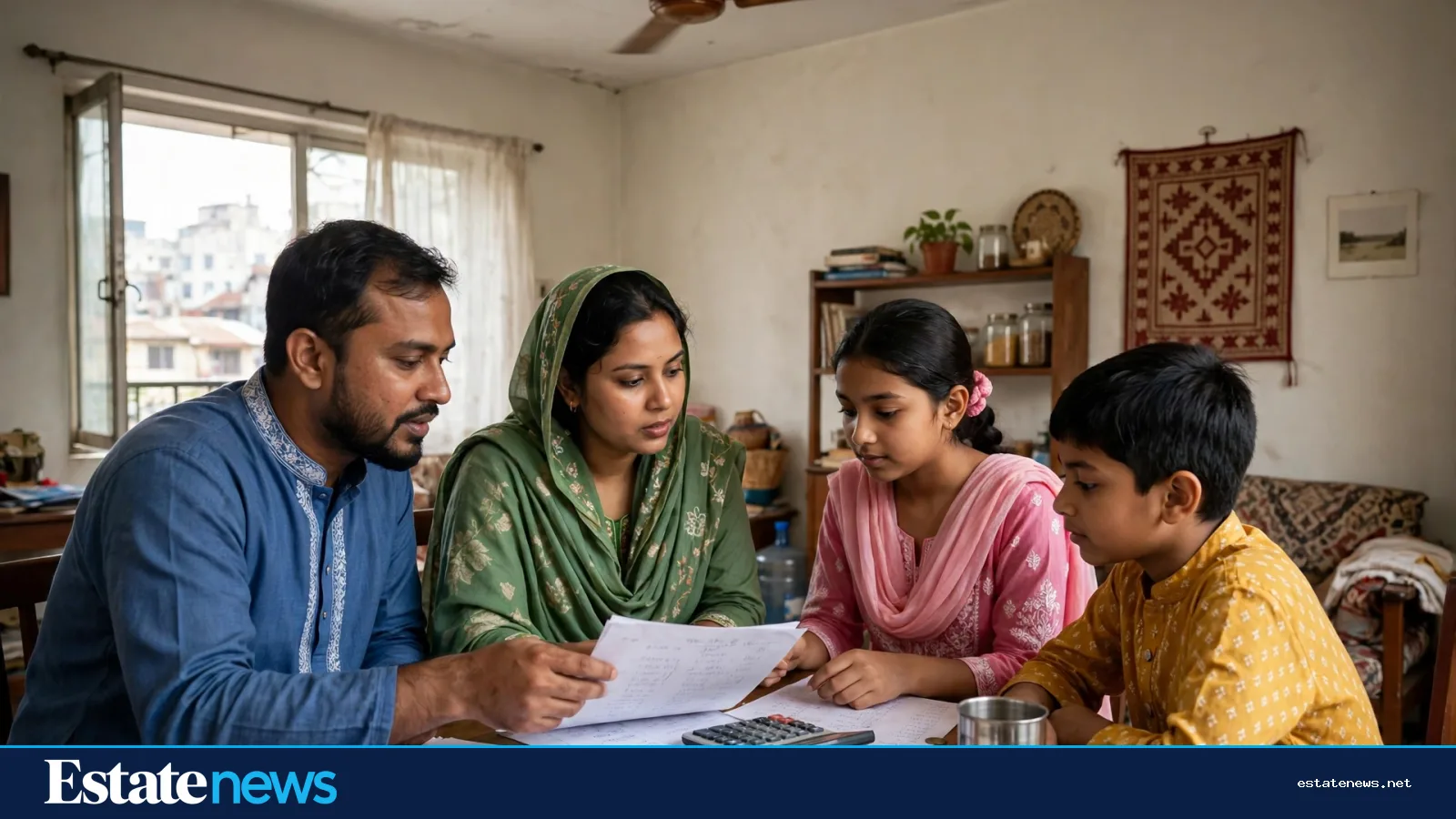
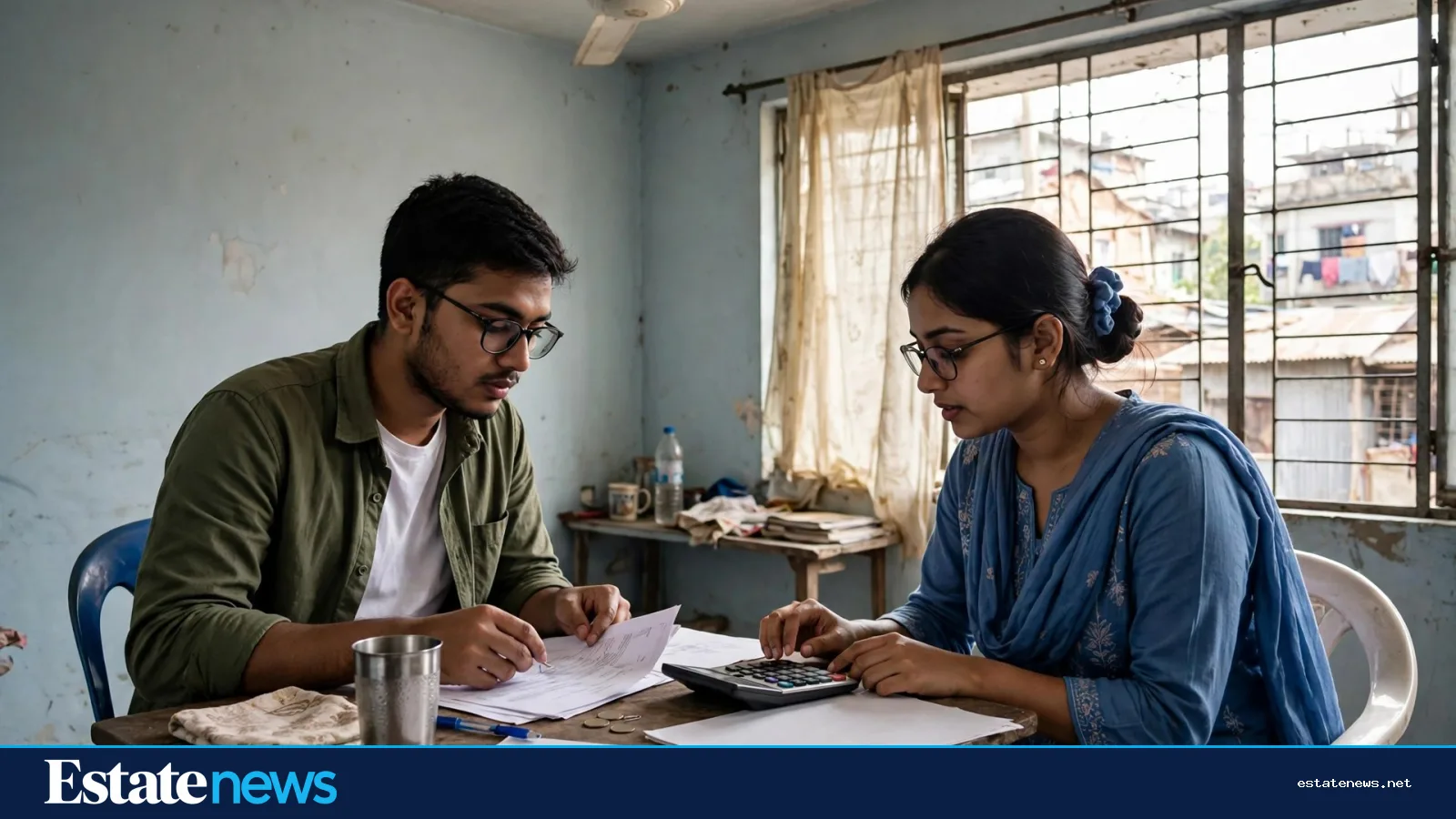
Every flat buyer in Dhaka does the same sum in their head. The flat costs Tk 1 crore. The bank will lend most of it. The monthly instalment will be something manageable. Then the bank sends the schedule, and the numbers look different from the ones in the buyer's head. This is what that schedule actually says, at the rates borrowers face today.
Home loan rates currently run at 11 to 12 percent, according to The Daily Star, with a maximum tenure of 25 years and a ceiling of Tk 2 crore on the loan. Those three facts set the frame for every calculation that follows. The figures below are an illustration worked out from the standard EMI formula at a stated rate and tenure. They are not an offer from any lender, and the rate any borrower actually gets will depend on their income, their job and the bank's own pricing on the day.
The instalment

Take a loan of Tk 1 crore at 11.5 percent a year, repaid over 25 years, or 300 monthly instalments. The equated monthly instalment comes to about Tk 1,01,647. That is the figure a borrower would pay every month for a quarter of a century, assuming the rate stays fixed at 11.5 percent for the whole period. In practice most home loans in Bangladesh carry rates that can move, so the instalment can move too.
The same loan at 11 percent costs about Tk 98,011 a month. At 12 percent it costs about Tk 1,05,322 a month. Half a percentage point is worth about Tk 3,600 a month on a loan of this size, and a full point is worth about Tk 7,300 a month. That is why the rate matters more than the loan amount in most negotiations, and why borrowers who can wait for a lower rate, or who can put down a larger deposit, save real money.
The interest bill
The monthly figure hides the larger one. Over 25 years, the borrower at 11.5 percent pays back about Tk 3.05 crore in total: the Tk 1 crore borrowed, plus about Tk 2.05 crore in interest. The interest alone is more than twice the amount borrowed. At 11 percent the total interest is about Tk 1.94 crore. At 12 percent it is about Tk 2.16 crore.
Put another way, a family that borrows Tk 1 crore today will have paid for three flats by the time the loan ends, and will own one. That is not an argument against borrowing. Rent over 25 years is also money that never comes back. It is an argument for knowing the size of the commitment before signing, and for testing it against a bad year: if the household income fell by a fifth, could the instalment still be paid?


The bill before the keys
The loan is not the first bill. Registration and taxes come before the flat is legally the buyer's, and they are large enough to break a tight budget. On a flat bought for Tk 1 crore, the charges under the site's registration-cost guide run as follows. Stamp duty is 1.5 percent, or Tk 1,50,000. The registration fee is 1 percent, or Tk 1,00,000. Local government tax is 2 percent inside a city corporation, or Tk 2,00,000. VAT on a new flat up to 1,600 square feet is 2 percent, or Tk 2,00,000. Mutation costs a fixed Tk 1,170. The total comes to about Tk 6,51,170, and that is before lawyer's fees and the cost of the deed itself.
Buyers outside a city corporation pay local government tax of 3 percent rather than 2 percent, and VAT rises to 4.5 percent for a new flat above 1,600 square feet. A buyer of a larger new flat in a city corporation could therefore face a registration bill well above Tk 8 lakh on a Tk 1 crore purchase. The money has to be ready in cash. Banks do not lend for registration.
How to make the sum smaller
Three choices change the arithmetic. A bigger deposit shrinks the loan, and every lakh not borrowed saves about Tk 2 lakh in interest over 25 years at 11.5 percent. A shorter tenure raises the monthly instalment but cuts the interest bill sharply: the same loan over 20 years costs more each month and far less in total. And a lower rate, even by half a point, is worth thousands a month for decades.
Families planning a purchase should also keep a cushion. Six months of instalments in a separate account is a reasonable buffer against a lost job or a medical bill. A home loan runs for 25 years, and 25 years will contain at least one bad year.
The flat is worth buying when the numbers work on a careful reading, not on the first reading. Work out the instalment, add the registration bill, keep the cushion, and only then decide. The bank's schedule is honest about what the loan costs. The borrower's job is to read it before signing, not after.
Note: this article is general information only, not financial advice. Rates and terms change, and a borrower's own circumstances decide what is affordable. Speak to a lender or a licensed adviser before taking a loan.