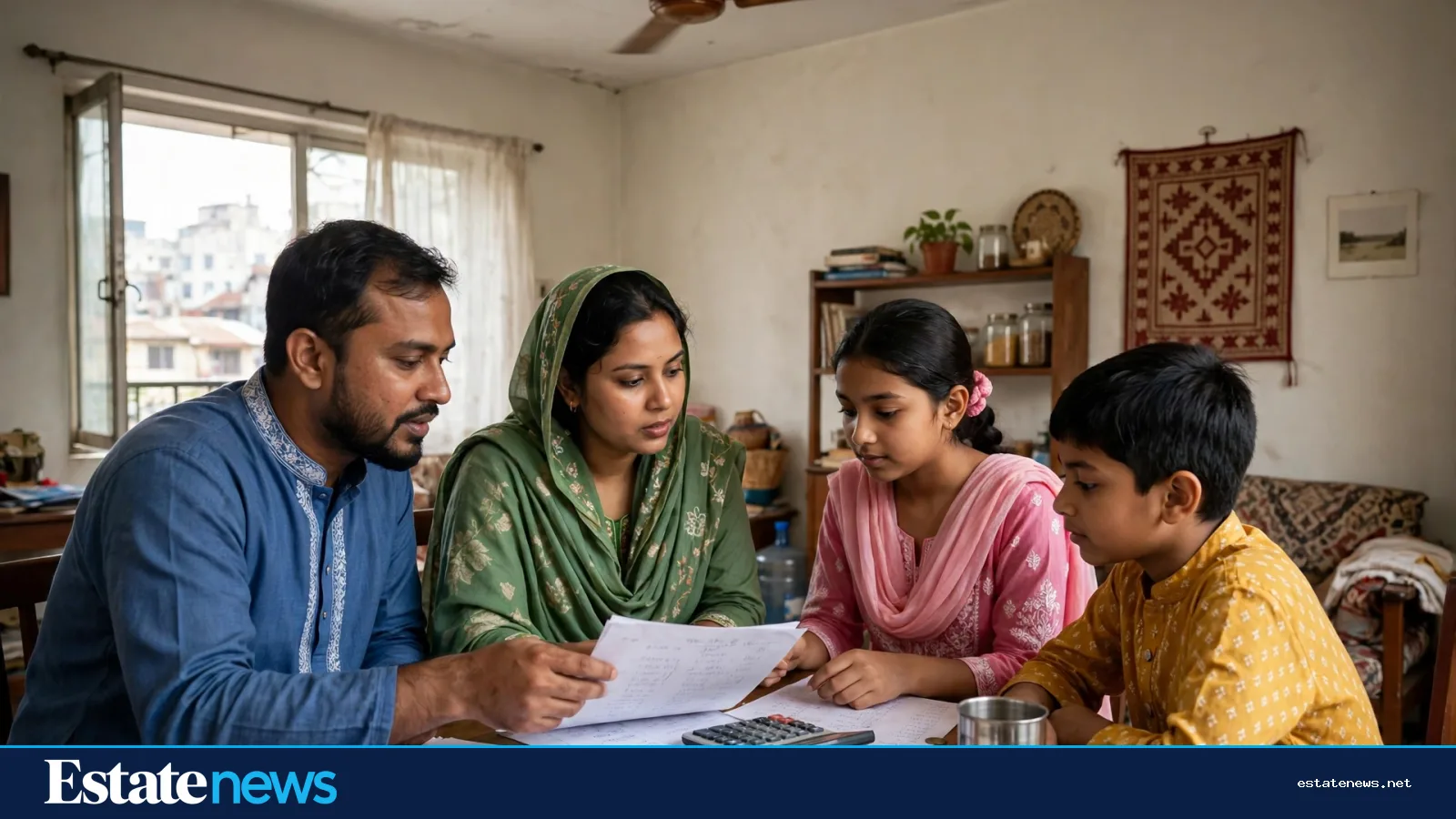
Every first-time buyer in Dhaka meets the same argument, usually at a family dinner. Rent is money gone, relatives say, while an EMI builds something of your own. The argument feels convincing because it is half true. Rent does not build equity. An EMI does, slowly, and only after interest takes its share in the early years. The honest way to compare the two is not a slogan. It is a worked example, with the assumptions stated plainly.
Take the following illustration, not a market figure. A buyer considers a flat priced at Tk 1.2 crore. She pays 20 percent as a down payment, Tk 24 lakh, and borrows the remaining Tk 96 lakh. The loan runs for 20 years at an annual interest rate of 10 percent, with a fixed monthly instalment. Those assumptions are chosen for clarity; real bank offers, rates and tenures vary, and a buyer must confirm the actual terms with the lender.
The monthly instalment

On those assumptions, the monthly EMI comes to about Tk 92,600. Over 240 months, total payments reach roughly Tk 2.22 crore, of which interest accounts for about Tk 1.26 crore. That interest figure surprises most buyers, and it should. In the early years, most of each instalment goes to interest, and the loan balance falls slowly. Equity builds, but it builds late.
Set that against rent. A rented flat of similar size in a comparable area may cost far less per month than Tk 92,600, leaving the tenant with cash each month for savings, family needs or a future down payment. The tenant also avoids registration costs, loan processing fees and the maintenance bills that fall on an owner. The renter's monthly life is lighter, and that lightness has a real value, especially for a young household whose income may still be rising.
What buying adds beyond the instalment


Ownership adds costs that never appear in the EMI table. Service charges, lift and generator upkeep, water pump repairs and periodic repainting all fall on the owner. A flat also ties a household to one area. A job change across the city, or a school change for a child, becomes harder when the home cannot move.
Ownership also adds things rent cannot offer. The home can be altered, the tenure is secure, and no landlord can decline a renewal. Over a long stay, the monthly instalment stays fixed in nominal terms while rents around it tend to rise, so the gap between owning and renting narrows with time. A buyer who stays fifteen or twenty years in one flat experiences a different arithmetic from a buyer who moves after four.
How to use this example
Use the example as a template, not a verdict. Replace the flat price with the price of a real flat you have visited. Replace the rate and tenure with the bank's written offer. Add registration, service charges and a repair reserve to the buying side, and add the rent increases a landlord might seek to the renting side. Then ask the question that matters most: which monthly outgo can this household sustain in a bad month, not only in a good one?
Buying wins when the household stays long, the instalment fits comfortably, and the area suits life for years. Renting wins when flexibility matters, when savings are still building, or when the right flat in the right area is not yet on the market. Either choice can be sensible. The mistake is to choose on a slogan instead of on numbers that have been worked through, line by line.
This article is for information only and is not financial advice. Loan rates, terms and charges vary by bank and by borrower, and readers should confirm current terms with a lender and, where needed, a qualified adviser before deciding.