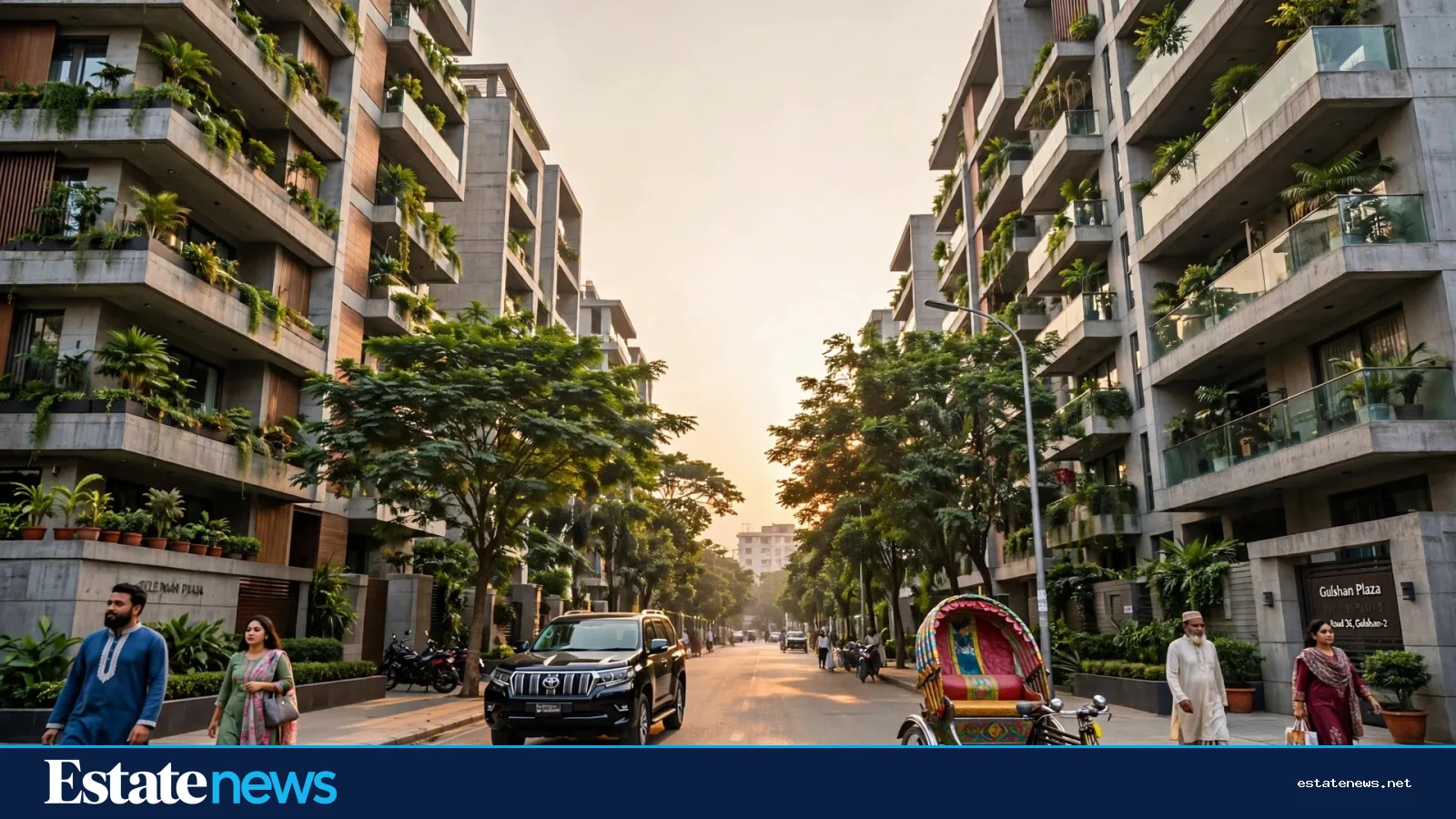
Drive down Gulshan Avenue on a weekday morning and the city feels different from the Dhaka a few kilometres south. The roads are wider, the plots are larger, and the buildings carry names rather than numbers. This is the premium belt, the two neighbourhoods where Dhaka's most expensive addresses sit side by side, and the price gap between them says something about how buyers choose.
Asking prices in Gulshan run near Tk 20,000 a square foot, while Banani sits near Tk 13,888, according to a listing sample taken on 10 November 2026. Both figures are asking prices, the numbers sellers put on listings, not settled transaction prices. The gap is wide, and it has held for years. Gulshan carries the embassies, the corporate offices and the lake. Banani carries the restaurants, the schools and the shorter commute to the rest of the city. Buyers pay for the difference, as this portal's earlier comparison of the two neighbourhoods set out in detail.
Rangs Properties has built in both neighbourhoods since 1997, when the company began work as part of the RANCON group. Over 25 years it has delivered more than 200 projects across more than 35 locations, but its name is tied most closely to this belt. Its first condominium complex in Bangladesh, Rangs Waterfront, was handed over in 2003. Rangs Anam Plaza followed in 2004. The squares came next: FC Square, RD Square and RK Square, and Z Square, a 19-storey building on Gulshan Avenue.

Concrete, glass and the lake
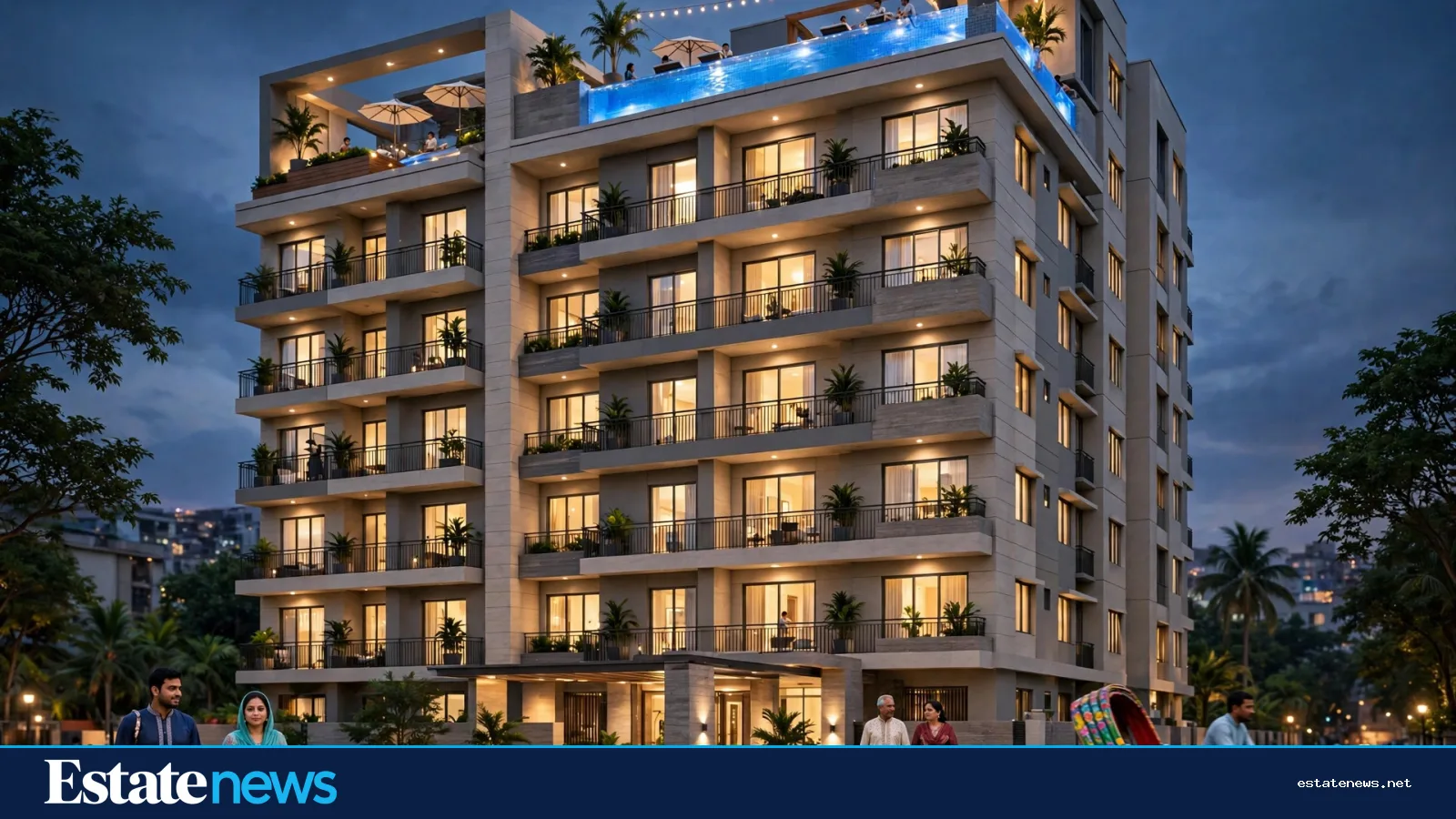
Walk past a Rangs building and one detail gives it away. The company works in fair-face exposed concrete, the raw grey surface left visible instead of hidden behind plaster and paint, and pairs it with planting that runs up the facade. The style is deliberate. In a city where most towers hide behind the same pale render, a Rangs building reads as a Rangs building from the street.
Lake Placid, on Road 35 in Gulshan, shows the approach at residential scale. The project sits on 9 katha and was designed by Inspace Architects. Diorama, in Gulshan 2, is under construction. In Banani, Miranda carries the same language. FS Vega sits in Baridhara, and Torukabbo adds another address to the list. None of the project prices here are stated, because the company has not published current prices for them, and this portal does not print a price it cannot source.
The company's own material describes its standing in strong terms. Those are the company's words, not this portal's finding, and readers should weigh them as a seller's description of its own work. What can be checked is the record: two decades of handovers in the same two neighbourhoods, and a set of buildings that still look like the day they were finished.


What the asking prices leave out
A buyer comparing Gulshan and Banani on price alone misses the rest of the bill. Service charges in the premium belt run high, because the buildings carry generators, lifts, water treatment and staff around the clock. A flat that looks cheaper per square foot can cost more every month once the charge lands. Parking is another quiet cost. A second car in Gulshan is a negotiation, not a given. For a sense of how a developer's record shapes what a flat is worth over time, the story of BTI and the three ways to live in Dhaka makes the same point from a different builder's history.
The asking medians also hide the spread inside each area. A lake-facing flat in Gulshan and a flat on a back lane in the same neighbourhood can sit thousands of taka apart per square foot. Banani's lower median covers the same range. The number is a starting point for a search, not a price for a specific flat. A buyer working with a fixed budget can see what Tk 75 lakh buys across six Dhaka areas to place these two neighbourhoods against the rest of the city.
Who buys here, and why now
The buyers in this belt fall into two groups. One group has lived in Gulshan or Banani for years and is moving within the area, trading a smaller flat for a larger one or a larger flat for a building with better services. The other group is buying in from outside, often a family that built its money in business and wants the address to match. Both groups check the same things: the builder's handover record, the building's service charge history, and whether the flat can be resold without a long wait.
Rangs has stayed in this market by building the same kind of product again and again, rather than chasing every new area. That focus is also its limit. A buyer who wants a new flat at a mid-market price will not find it in this belt. The premium belt is what it is: a small set of streets where the price of entry stays high, and where the builder that shaped it still sets much of the tone. For the rest of Dhaka, the lesson travels anyway. A developer that keeps its buildings in good repair, and keeps its promises about what a flat includes, holds its value longer than one that does not.