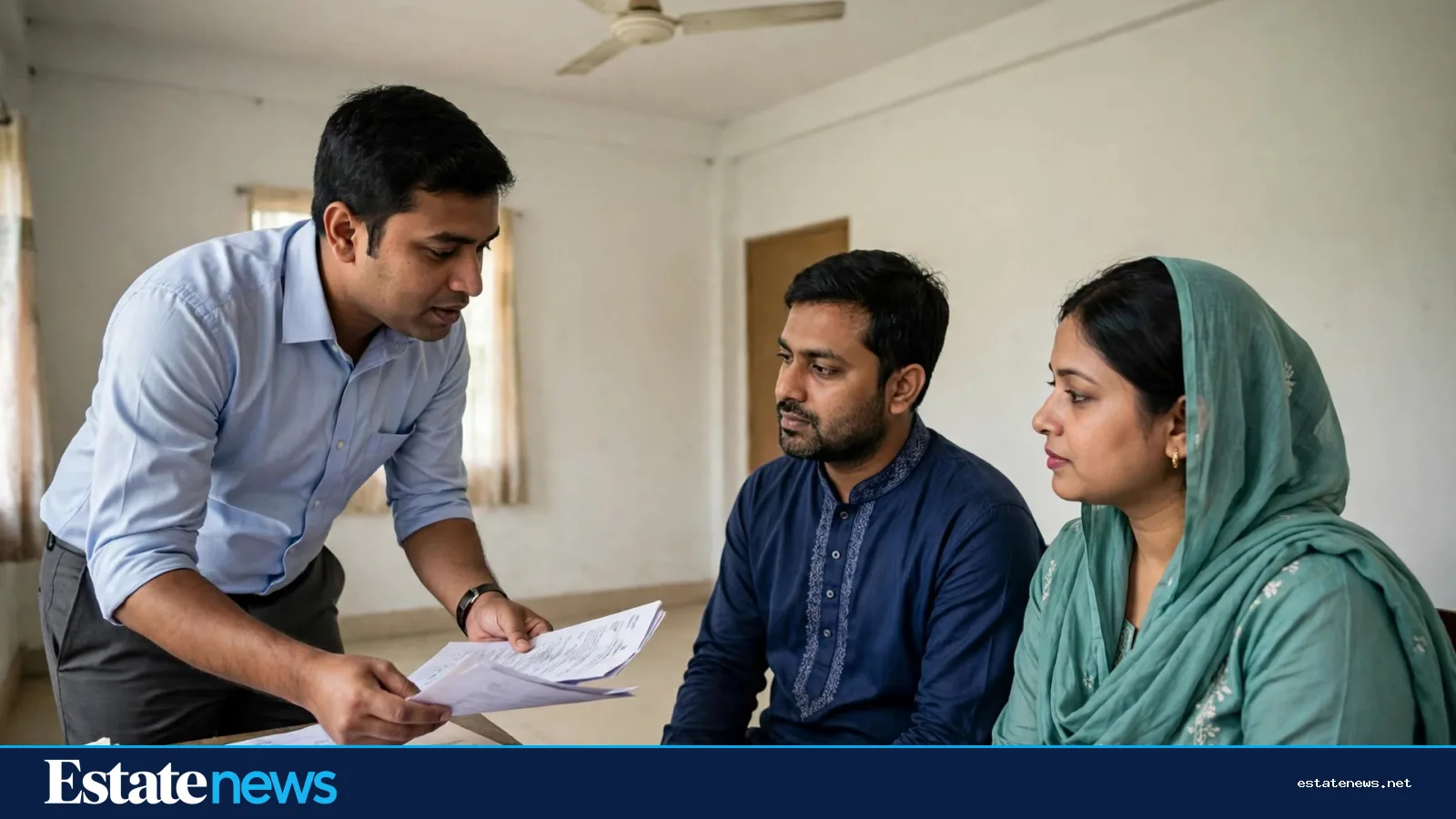

A flat advertised at Tk 50 lakh sounds like a round, manageable number. It is the figure a family circles in a brochure and carries into a bank. But nobody moves into a flat for Tk 50 lakh. The price on the brochure is the first payment in a chain, and the rest of the chain decides whether the purchase stays affordable.
The registration costs are the fixed part of that chain, and they follow the rates in Estate News's own registration-cost guide. On a Tk 50 lakh flat, stamp duty at 1.5 percent comes to Tk 75,000. The registration fee at 1 percent adds Tk 50,000. Local government tax adds Tk 100,000 inside a city corporation, at 2 percent, or Tk 150,000 outside it, at 3 percent. VAT on a new flat up to 1,600 square feet is 2 percent, or Tk 100,000. The mutation fee is a fixed Tk 1,170.
Adding it up

Inside a city corporation, those charges total Tk 326,170 on top of the Tk 50 lakh price. Outside a city corporation, the total is Tk 376,170. That is the cash needed to make the flat legally yours, before a single piece of furniture is bought. Buyers who budget only for the price find themselves short at the sub-registry office, which is the worst place to discover a gap.
Then comes the down payment. Banks in Bangladesh do not lend the full price of a flat. A buyer typically pays part of the price from savings and borrows the rest. If the down payment is 20 percent, that is Tk 10 lakh on a Tk 50 lakh flat. At 30 percent, it is Tk 15 lakh. The exact share depends on the bank, the borrower's income and the flat itself, so treat these as scenarios to plan around, not as a rate any bank has promised. Either way, the deposit is the largest single sum most families will ever hand over at once.
Put the pieces together for a buyer inside a city corporation with a 20 percent down payment. The deposit is Tk 10 lakh. Registration and related charges are about Tk 3.26 lakh. The remaining Tk 40 lakh comes as a loan, repaid in monthly instalments over years. The cash the family must hold before moving in is roughly Tk 13.26 lakh, plus whatever furnishing costs.
The furnishing bill nobody budgets for
A new flat arrives bare: empty rooms, bare walls, a kitchen with no shelves. Furnishing it is the cost buyers most often forget. A basic fit-out, with beds, a dining table, seating, fans, lights, kitchen racks and curtains, can run into several lakh taka even with modest choices. A fuller fit-out, with wardrobes, a better kitchen, air conditioning and appliances, costs considerably more. Prices vary so widely by choice that no single figure is honest, so budget in bands: set aside a minimum for the essentials, and treat anything beyond that as a second phase after moving in.


There are smaller costs too. A loan processing fee. A valuation fee. The cost of moving. The first service-charge bill. None of them is large alone. Together they can absorb a month's salary if they arrive unplanned.
How to plan without surprises
Start with the total, not the price. Add the price, the registration charges from the table above, the down payment and a furnishing band, and write the sum down. Then compare it with savings, not with income. A loan covers the price. Savings cover everything else.
Keep a separate reserve after paying. A family that empties its savings on the deposit and the registration has no cushion for the first broken pipe or the first month when income dips. A reserve of a few months' expenses, held back deliberately, is what keeps a new home from becoming a source of stress.
Finally, check the flat's size against the VAT line. VAT is 2 percent on new flats up to 1,600 square feet and 4.5 percent above that. On a Tk 50 lakh flat above 1,600 square feet, VAT alone would be Tk 225,000 instead of Tk 100,000. A buyer choosing between two flats of similar price should know which side of that line each one sits on.
A Tk 50 lakh flat is a real goal for a salaried family, and it is reachable. It is reachable, though, only when the family budgets for the flat it will actually pay for: price, paper, deposit and furniture together. Count all four before you sign, and the keys will feel like a beginning rather than a bill.
This is general information, not financial advice.