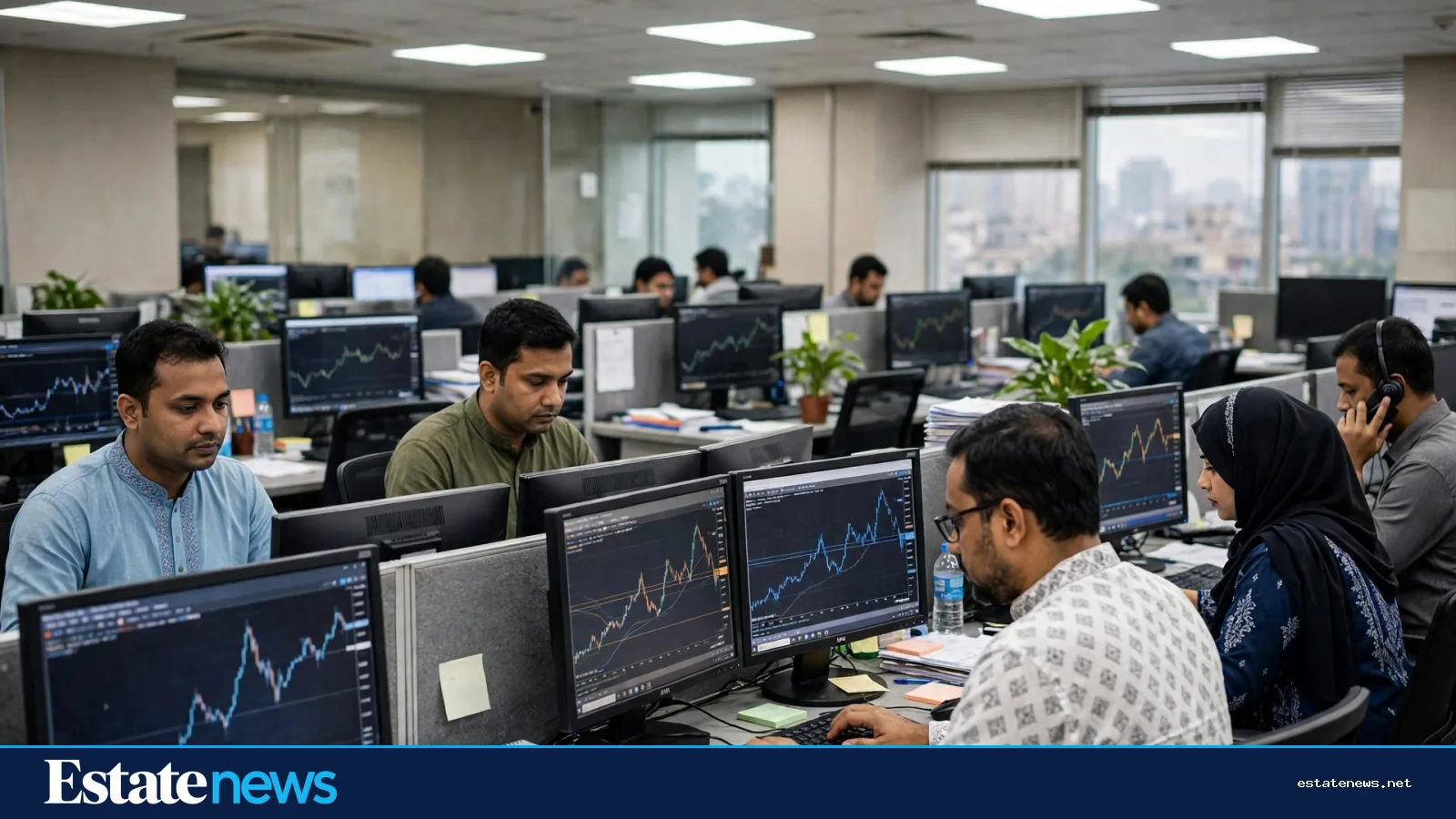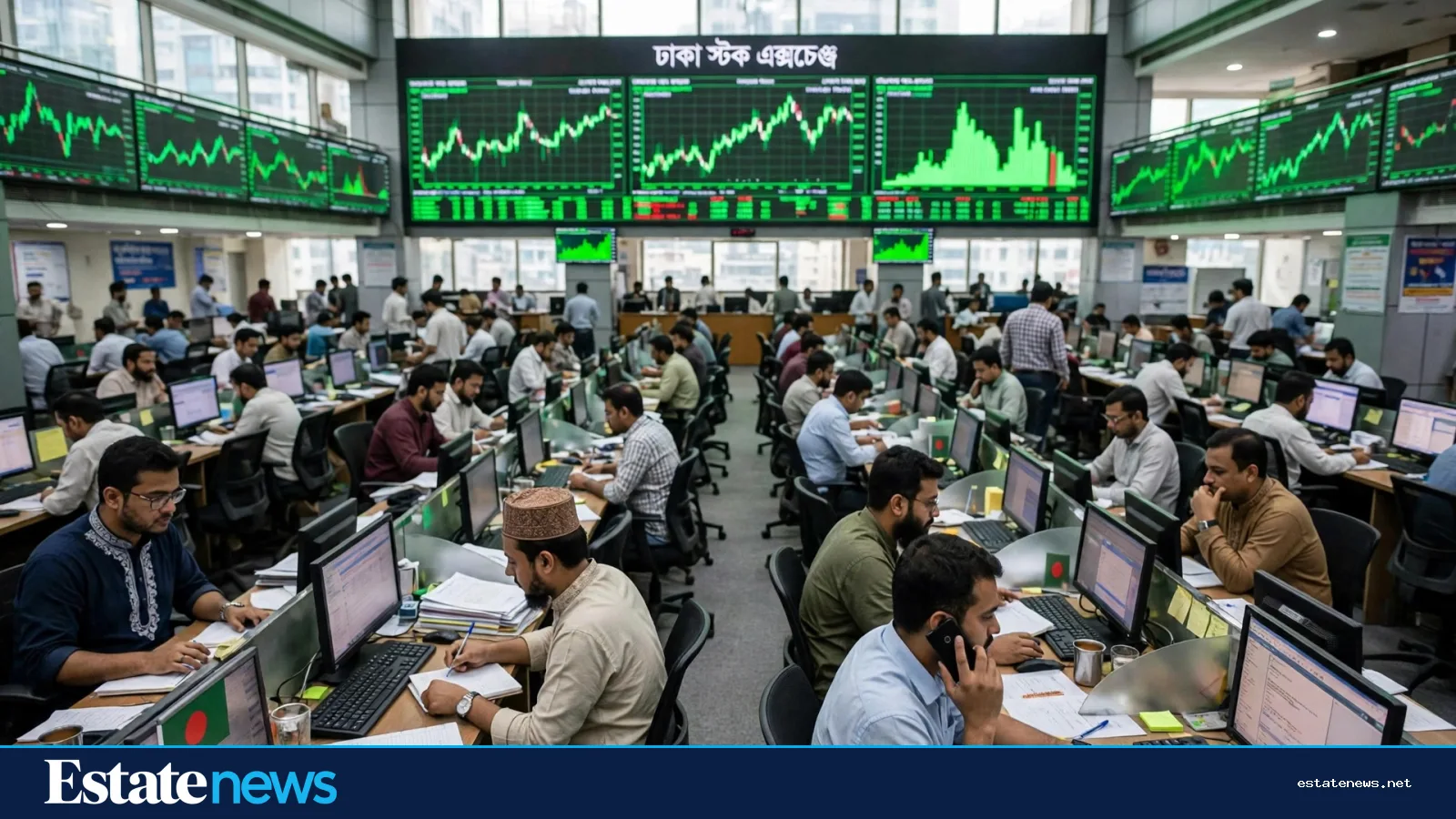
Six weeks of losses can change how a market feels. Brokers stop calling with ideas. Small investors stop checking prices every morning. The talk turns to when the bleeding stops, not where the next gain comes from. Last week, for the first time in a month and a half, the talk changed.
The DSEX, the Dhaka Stock Exchange's broad index, closed the week at 5,445.06. That was up about 32 points, or 0.6 per cent, from 5,413 the week before. The move itself was modest. The break in the pattern was not. A Tuesday rebound of 43.92 points did much of the work, and Wednesday brought turnover of Tk 757.7 crore, the highest since 23 September. Trading, in other words, came back with the prices.
A regulator move helped the mood

Markets rarely turn on a single number. The week also brought a decision from the Bangladesh Securities and Exchange Commission that brokers had been waiting for. The regulator extended the deadline for adjusting negative equity in broker and merchant bank accounts to 2030. Negative equity, the gap left when a margin loan is worth more than the shares behind it, has hung over the market for years. Pushing the adjustment deadline out gives brokers room to work through old positions without forced selling. It does not fix the underlying losses. It does remove a deadline that was pressing on trading desks.
Foreign investors, meanwhile, stayed on the selling side. October brought a net foreign sale of about Tk 181 crore, with sales of Tk 283 crore against purchases of Tk 102 crore. That figure sits uneasily beside the week's gain. Local buyers drove the rebound while foreign funds kept leaving. A recovery built on local money can hold. It can also fade fast if local buyers lose nerve, because the foreign bid is not there to catch a fall.
Why flat buyers should watch a stock index
A property portal writes about the stock market for a plain reason. Households in Bangladesh hold their savings in a small number of places: bank deposits, savings certificates, gold, shares and property. When one of those places starts to look better, money moves. When shares fall for six weeks in a row, some of that money looks for a safer home, and flats are often where it lands. When shares turn, some of it drifts back.
That does not mean a 32-point weekly rise will move flat prices. It will not, and anyone who says otherwise is selling something. What it does mean is that the alternative to property stopped looking like a one-way loss. A buyer who was weighing a flat against the market now faces a real choice again, and a seller who was counting on desperate share sellers to fund a purchase may find the urgency fading.


The link runs the other way too. Property is slow money. A flat cannot be sold on a Tuesday because the index rose. Shares can. Households that need cash quickly sell shares first, and that selling pressure is part of what kept the market weak. A steadier market gives those households less reason to sell in a hurry, which steadies the funding behind property deals as well.
What to watch next, not what to celebrate
One green week is a data point, not a trend. The questions that will decide whether it becomes more are straightforward. Does turnover stay near the Tk 750 crore level, or does it sink back toward the thin trading of the losing weeks? Do banks and the larger listed companies hold their gains when results come out? And does the BSEC's longer deadline lead to cleaner books, or only to a longer wait for the same problems?
Property investors should also watch the calendar. The week that just ended was the first green one after six red ones, but the index still sits far below where it stood in stronger years. A buyer with a flat in mind should treat the rebound as background, not as a trigger. The flat's price, its location, its papers and its rent still decide whether it is a good buy. The index only tells you what the rest of the household's money is doing while you decide.
There is one more number worth keeping in mind. Wednesday's turnover, Tk 757.7 crore, was the best since 23 September. Turnover is the market's pulse. Prices can rise on thin trading and mean little. Prices that rise while more shares change hands mean more. If that pulse stays strong into this week, the rebound earns a second look. If it fades, last week will read as a pause inside a longer slide.
This article is informational only and is not financial advice. Share prices can fall as well as rise, and property decisions should be based on a buyer's own finances and checks.
Read more: DSEX rises for a second day as turnover hits a seven-week high (https://estatenews.net/markets/dsex-rises-for-a-second-day-as-turnover-hits-a-seven-week-high) | Bangladesh Market Wrap, 14 November (https://estatenews.net/markets/bangladesh-market-wrap-14-november-a-quiet-weekend-for-stocks-as-remittance-passes-1287-billion) | MSCI lets Bangladesh back in (https://estatenews.net/investment/msci-lets-bangladesh-back-in-six-stocks-join-four-leave)