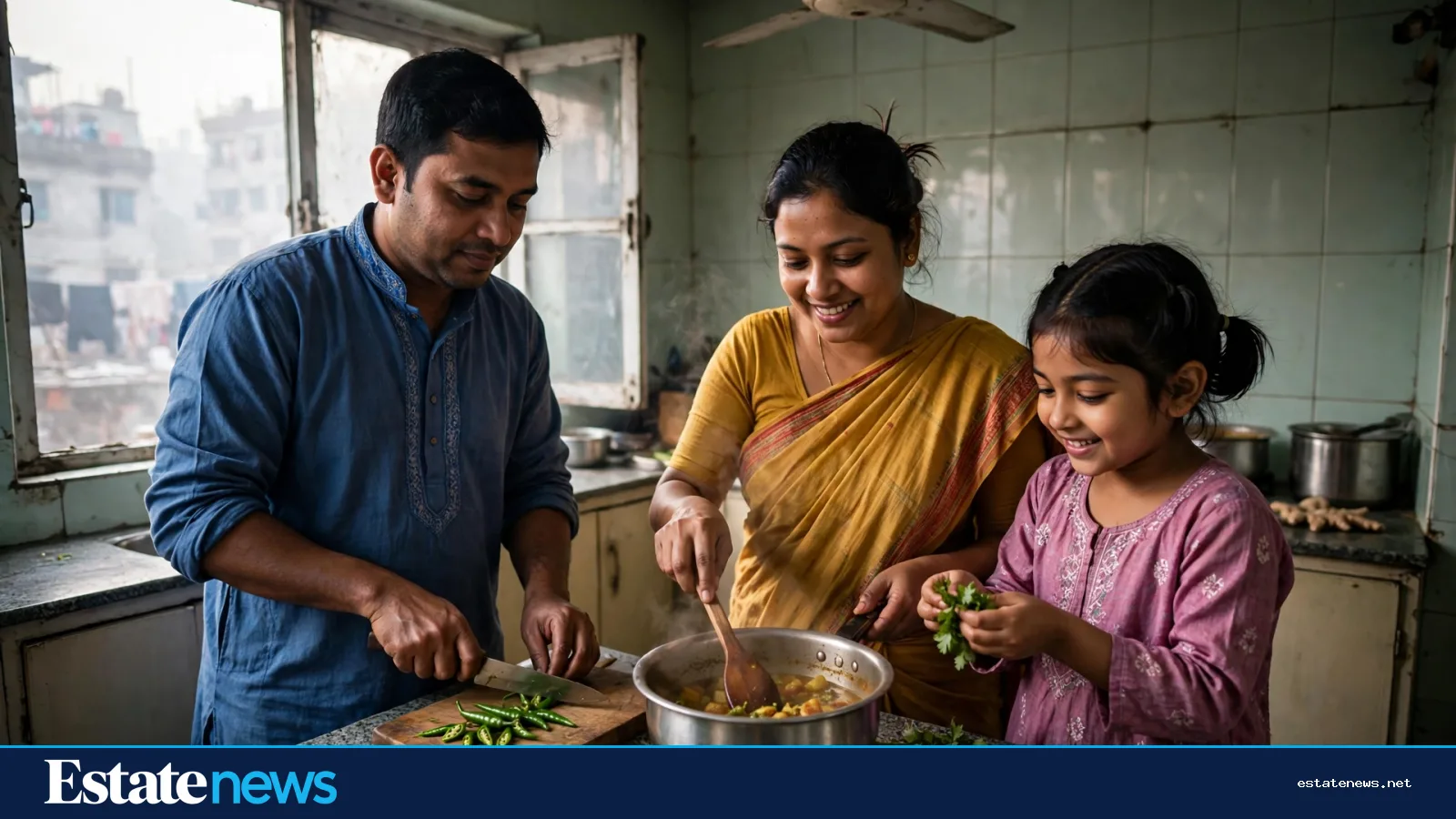
Winter changes a Dhaka kitchen before it changes anything else in the flat. The sun sits lower, the mornings come damp, and the cooking moves indoors for longer stretches of the day. The same small room that worked fine in the monsoon suddenly needs more light, more storage and more air, and the fixes are mostly small ones, done in the right order.
The first thing to sort is the light. In winter, the sun reaches further into the room in the morning and leaves earlier in the afternoon, and a kitchen that faces the wrong way can feel dim by four o'clock. The cheapest change is to clear the window. Move the tall jars and the stacked plates away from the sill, wash the glass, and let the low sun do its work. A light curtain, or no curtain at all during the day, makes more difference than a new bulb. Save the bulb for the corner over the stove, where the cook actually stands.
Storage that keeps the damp out

Damp is the winter kitchen's quiet problem. Mornings bring condensation on the tiles, and the spices, the rice and the flour sit in the same air. The fix is to lift things off the floor and off the wall. A low shelf or a rack keeps the sacks and jars where the air can move around them, and a tight lid matters more in winter than in summer. Keep the daily spices in small jars near the stove and the bulk stock in a dry cupboard, and check the cupboard once a week for the first sign of damp. A cloth bag of rice left against a cold wall will tell you the story before anything else does.
The counter is the other half of storage. Winter cooking in Dhaka means more of it: cauliflower and new potatoes, greens that need washing, fish that needs cleaning. A counter buried under jars and appliances leaves nowhere to work. Clear one stretch of counter and keep it clear, the way a cook keeps a cutting board clear. The jars can live on a shelf above. The counter is for the work.
Air while you cook


A winter kitchen fills with steam faster than a summer one, because the windows stay shut and the cooking runs longer. The extractor, if the flat has one, should run from the moment the pot goes on, not after the room is already fogged. If there is no extractor, open the window a crack on the side away from the stove and let the steam find its way out. The trick is a small gap, not a wide-open window, so the room stays warm while the air moves.
The ceiling fan has a part to play here too. Run it slow while cooking, just enough to push the warm air down and the steam toward the window. It is not about cooling the room. It is about keeping the air moving so the walls do not weep and the cook does not stand in a cloud.
The winter cooking corner
Put the three things together and the winter kitchen takes shape. Light over the work, storage that stays dry, and air that keeps moving. A stool near the stove for the person shelling peas, a basket for the morning's vegetables by the door, a cloth for wiping the condensation off the tiles before it spreads. None of this needs a renovation. It needs an hour on a Friday morning and a willingness to move things around.
Estate News has covered the rooms around the kitchen in the same spirit. "The Dining Corner: How Dhaka Flats Make Room for Meals" looked at where the food goes once it leaves the stove, "The Home Office Corner: Working From a Dhaka Flat" found the quiet corner for work, and "The Art of Styling Open Shelves Without Looking Cluttered" showed how to keep the things you use every day within reach without making the room look crowded. The kitchen is the room that feeds all of them, and in winter it deserves the first hour.
The season will pass, the sun will climb again, and the kitchen will go back to its summer shape. Until then, the light, the dry shelf and the small open window are enough. A Dhaka kitchen does not need to be big. It needs to be arranged for the season it is in.