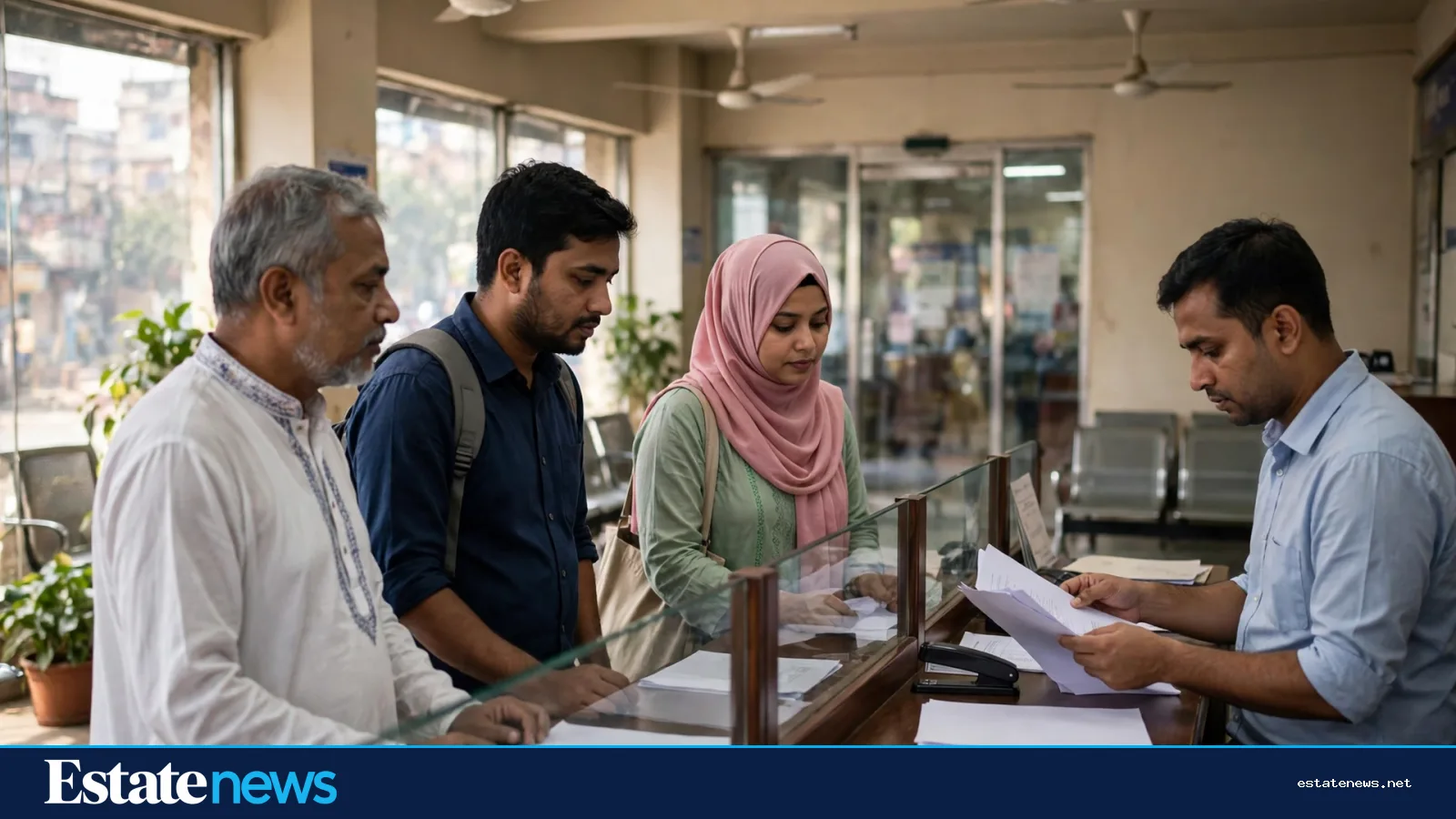
Sixteen inspection teams walked into sixteen banks on Tuesday. Bangladesh Bank has launched a special inspection of 16 leading commercial banks over suspected irregularities in foreign-exchange transactions, and the teams are now on site, working through the books. The central bank has not named any of the banks. It has said what the teams are looking for, and it has said it will act once the reports come in.
The inspection focuses on two things. The first is discrepancies in NOSTRO account reconciliation. A NOSTRO account is an account that a domestic bank maintains with an overseas bank in a foreign currency. When a Bangladeshi bank receives dollars from an exchange house abroad, or pays dollars to a supplier, the money passes through that account. The bank's own records and the overseas bank's records are supposed to match. When they do not, the difference has to be explained.
The second is the alleged manipulation of net open position limits. The net open position, or NOP, is the net sum of a bank's foreign-currency assets and liabilities, including spot and forward transactions and off-balance-sheet items. Bangladesh Bank sets a limit on how large that position can be. A bank that hides dollars held overseas from its reported position can look smaller than it is, and can take a bigger bet on the currency than the rules allow.

A market under pressure despite strong inflows
The probe comes at a strange moment for the currency. The inflows are strong. Exports in July to October reached $17.04 billion, up 6 percent year on year. Remittance from 1 July to 17 November reached $13.52 billion, up 13 percent. LC settlements in July to September reached $18.91 billion, up 11.5 percent. Money is coming in, and trade is moving.
Yet the taka has been slipping. It depreciated Tk 0.45 in the interbank market in the first 18 days of November. The dollar stood at Tk 124.75 on 18 November, against Tk 124.30 on 1 November. The BC selling rate, the rate banks charge for bills for collection, was Tk 125.0587, up from Tk 123.7753 a month earlier, according to the Bangladesh Foreign Exchange Dealers Association.
That gap between strong inflows and a weakening currency is what the inspection is meant to explain. If banks have been misreporting their positions, or selling dollars bought from overseas exchange houses at a higher margin than the rules allow, the market price of the dollar can rise even while the dollars themselves keep arriving. A senior Bangladesh Bank official told The Financial Express that the teams were trying to identify any irregularities in foreign-exchange transactions in the market in recent days, and that the central bank would take necessary action after receiving the inspection reports.


Bangladesh Bank has also been selling dollars itself to steady the rate. It sold $220 million on Wednesday and $220 million on Thursday, 19 November, plus $100 million on Monday, nearly $800 million in this round of intervention. Selling from the reserves while remittance pours in is the central bank's way of saying the pressure is not a shortage of dollars. It is a problem in how the dollars move through the banks.
What this means for builders and buyers
For the property market, the forex market is not an abstraction. Rod, cement inputs, lifts, tiles and finishing materials all arrive through import payments, and those payments are settled in dollars at the rate the banks charge. When the rate is distorted, the cost of a building moves with it, and the developer passes that cost on. A home loan borrower feels it too, because the same dollars that buy materials are the ones an NRB buyer sends home, and the rate at which those dollars convert decides what a flat abroad actually buys in Dhaka.
This is the other side of the story Estate News carries in the same day's floating-rate piece, "A Floating Taka Within a Month: What the Governor's Plan Means for Builders and Buyers", which reports the governor's plan to let buyers and sellers negotiate foreign currency prices directly within a month. A floating rate only works if the market it floats in is honest. The probe is the central bank checking whether it is.
"The Dollar Rule at the Airport: What Travellers and NRBs Must Declare Now", the 20 November piece, set out the rules for carrying currency in and out of the country. The inspection is the wholesale version of the same discipline: the rules for moving dollars exist, and Bangladesh Bank is now checking whether the banks that move them have been following them.
Estate News also covered the clean-up of the banks themselves in "A Tk 30,000 Crore Fund to Fix Weak Banks: What It Means", the 19 November piece on the Bank Resolution Fund. The forex probe sits beside that fund. One is about bad loans on the books. The other is about the daily trading that decides the price of the currency. Both are about the same thing in the end: whether the banks can be trusted with the money that flows through them.
No bank has been named, and no finding has been published. The inspection teams are expected to finish shortly, according to the central bank. When their reports land, the question will be whether the irregularities were a handful of reporting errors or a pattern that moved the market. Until then, the taka's small daily slide is the number to watch, and the probe is the reason to watch it.