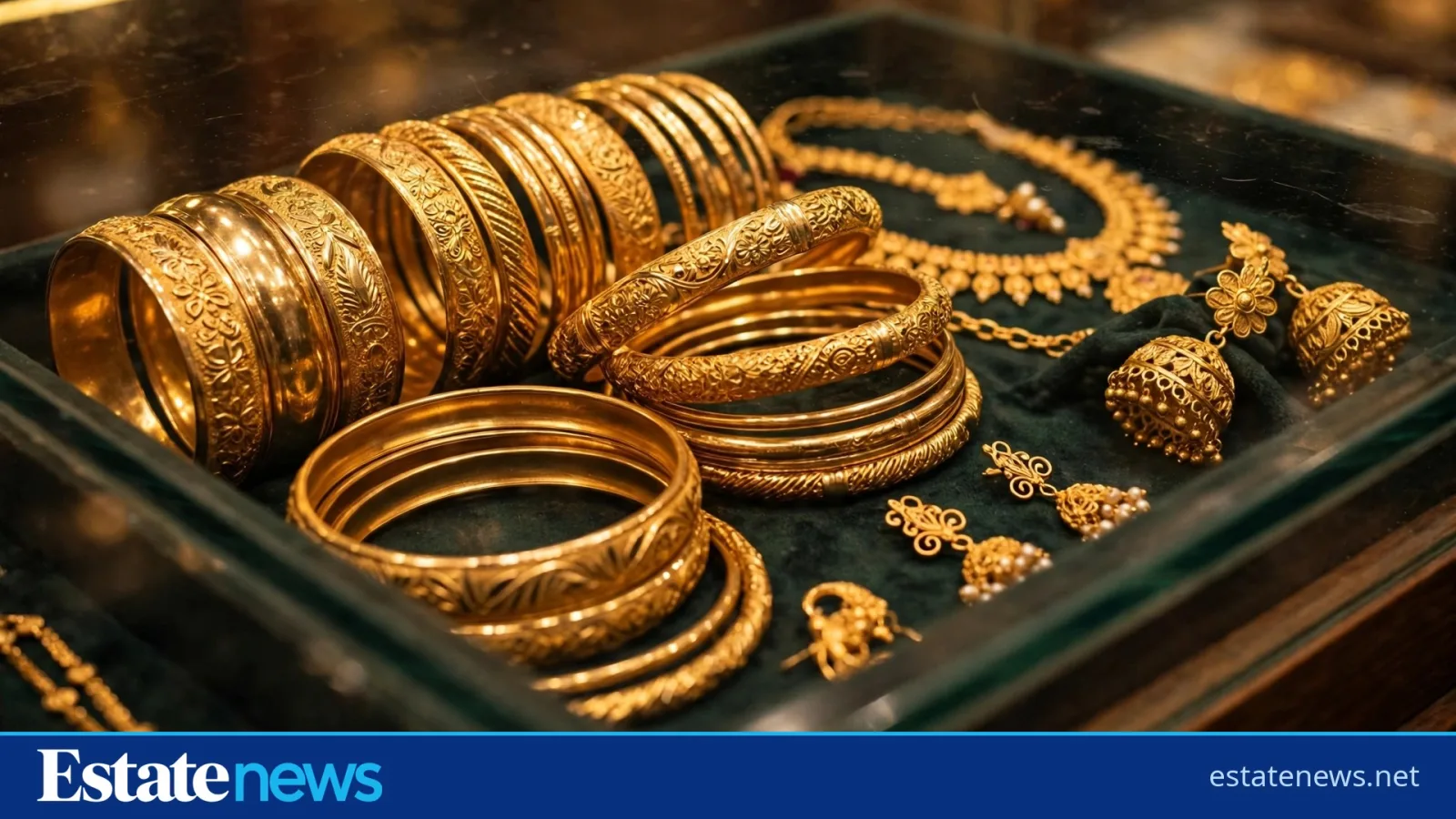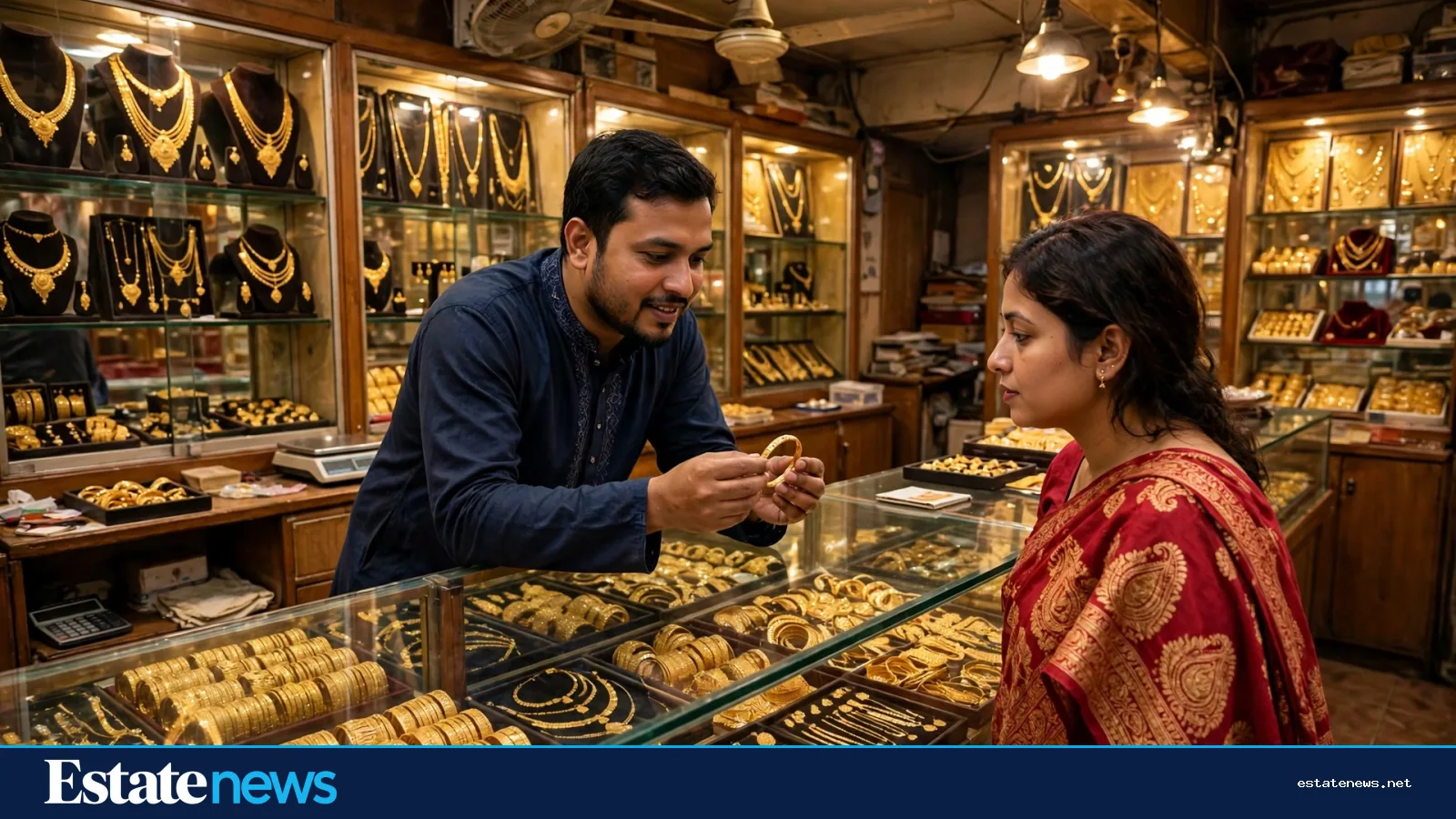
Gold has fallen below Tk 200,000 a bhori for the first time in a year. The Bangladesh Jewellers' Association, known as BAJUS, cut the price of 22-carat gold by Tk 6,182 to Tk 194,964 a bhori. The association announced the cut at around 10:30pm on Saturday, and the new rates take effect across the country today, Sunday.
The price of 22-carat gold first crossed Tk 200,000 a bhori on 6 October last year. It has been above that line ever since, until now. For a household that holds its savings in gold, that line mattered. Crossing back below it changes what the family's jewellery is worth, and what a new purchase costs.
Tk 34,700 gone in two weeks

The fall has been fast. After three hikes over four days added Tk 12,072 to reach Tk 229,664 a bhori on 5 November, BAJUS began a string of reductions. The price was cut by Tk 2,741 on 6 November, by Tk 2,741 on 11 November, by Tk 2,216 on 12 November and by Tk 2,158 on 13 November. On 20 November came a record cut of Tk 10,964, taking the price to Tk 201,166. Saturday's fresh reduction of Tk 6,182 makes nine adjustments in two weeks, and a total fall of Tk 34,700 a bhori.
The driver is international. Dewan Aminul Islam Shaheen, chairman of BAJUS's Standing Committee on Pricing and Price Monitoring, told bdnews24.com that the association had adjusted domestic rates in line with a sharp fall in the international gold market. International gold is down 9.4 percent so far this week, the steepest weekly decline since the week ending 20 March, and the price of gold per ounce on the global market has fallen by more than $2,000 over the past year.
The scale of the retreat is easier to see against January. On 29 January this year, the price of 22-carat gold in Bangladesh hit a record high of Tk 286,001 a bhori, in line with rising international prices. From that peak to today's Tk 194,964 is a fall of more than Tk 91,000 a bhori in under ten months. Gold that neared Tk 300,000 in January now sits below Tk 200,000.
What it means for buyers


For a family planning a wedding, the fall is good news. Gold jewellery is the largest single purchase in many Bangladeshi weddings, and a Tk 34,700 fall in two weeks changes what a set of bangles costs. A buyer who waited through the autumn, when the price kept climbing, now finds the same gold cheaper by a wide margin.
For a family holding gold, the picture is different. Gold is the Bangladeshi household's savings account, kept in a locker or a drawer rather than a bank. A fall of Tk 34,700 a bhori in two weeks is a fall in the value of that savings, even if nothing has been sold. The loss is only on paper until the gold is sold, but the number still matters to a family counting what it owns.
That is the tension in every gold price move. Buyers and holders want opposite things, and the same number pleases one and worries the other. The honest way to read it is that gold is a volatile asset, and its price can move a long way in a short time in either direction. Nobody can say from today's cut whether the slide will continue or reverse.
The household-money lesson
The gold slide is a reminder about how Bangladeshi families save. Gold sits beside cash, bank deposits and land as one of the main stores of household wealth. When its price falls by a fifth in under a year, the family's balance sheet moves with it. Estate News has written about that squeeze from the spending side in "The Middle-Class Squeeze: What Rising Costs Do to the Flat-Buying Plan", and about the choice between renting and buying in "Rent or Buy in Dhaka: The Maths That Decides It in 2026". Gold belongs in the same conversation: it is the asset many families sell when they need a deposit, and the asset they buy when they have savings to spare.
A few practical points follow from the numbers. The BAJUS rate is the reference price for hallmarked gold, and the price a shop charges can differ by making charges and by the shop. The rate moves with the international market, so a buyer watching the price should watch the global trend as well as the local announcement. And the fall does not make gold cheap in any absolute sense: at Tk 194,964 a bhori, it remains far costlier than it was a few years ago, when a bhori cost Tk 6,900 in 2000 and crossed Tk 100,000 only in July 2023.
This article is not financial advice. Gold prices move, and a two-week slide is not a forecast. What the numbers do show is that the metal that climbed to Tk 286,001 in January can fall below Tk 200,000 by November, and that any family holding it should know the price it holds, not only the price it remembers.