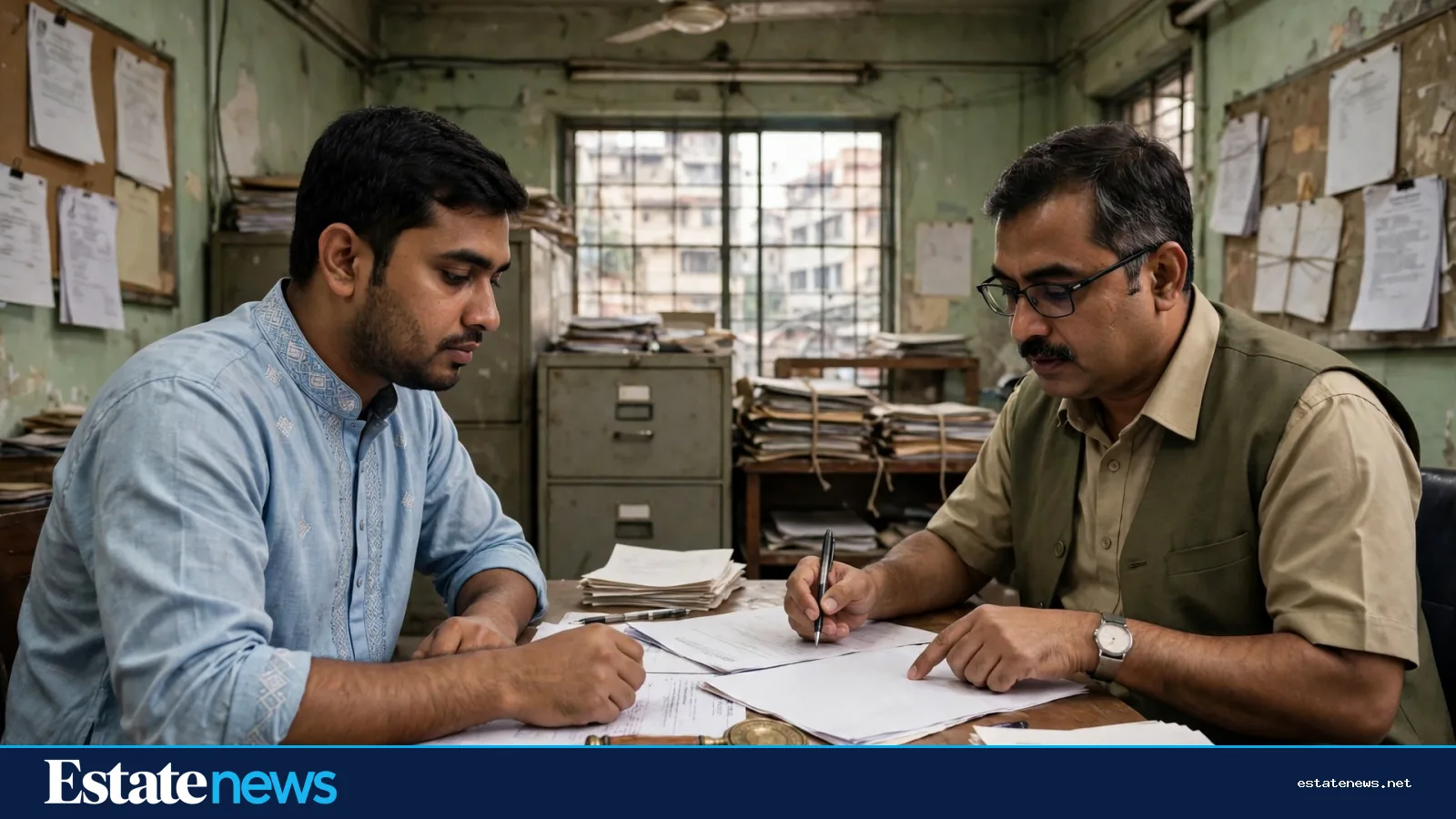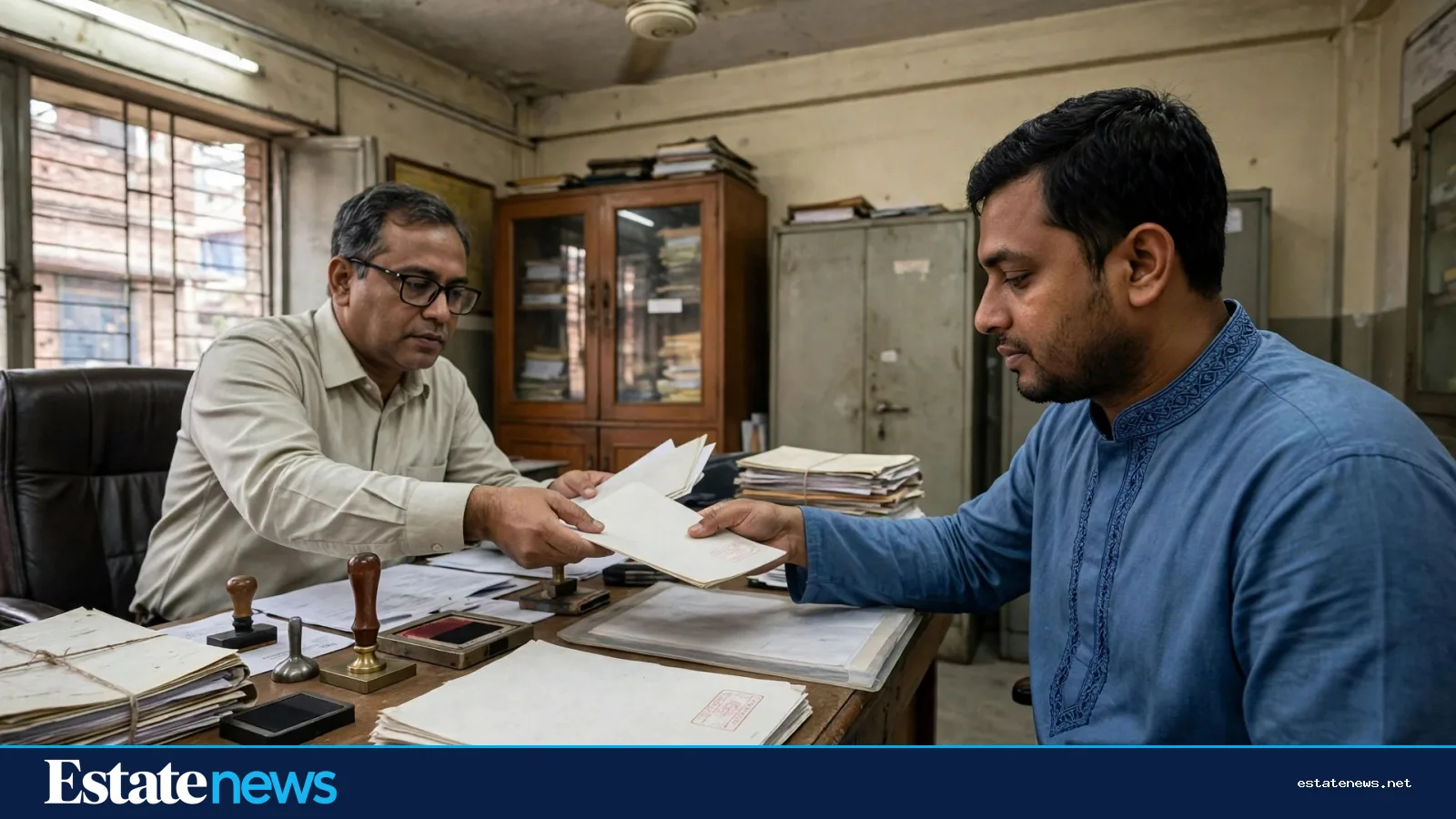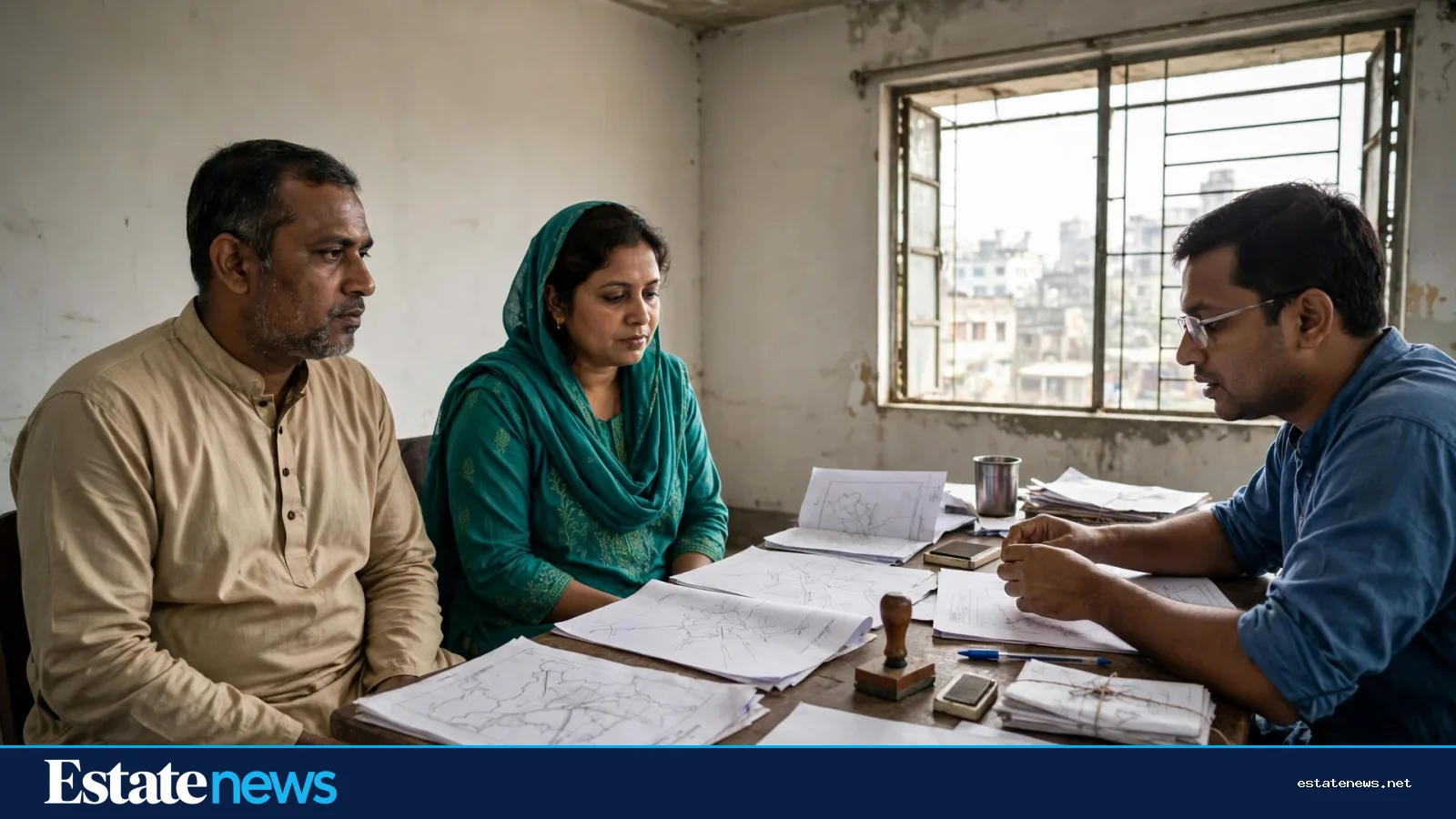
Every flat in Dhaka has an owner, and every owner will one day leave that flat to someone else. Most families never think about the paperwork until the moment arrives. Then the questions come all at once: whose name goes on the record, what papers does the land office want, and can the flat be sold before the records are fixed? The answers are less frightening than families expect, but they depend on doing the steps in the right order.
The first thing to understand is that ownership passes under personal law, not under the land office's choice. When a landowner dies in Bangladesh, title passes to the heirs immediately under their personal law. Muslim heirs take fixed shares under Islamic law, as modified by the Muslim Family Laws Ordinance 1961. Hindu heirs follow the Dayabhaga school. Christian heirs, and most others, follow the Succession Act 1925. The land office records the shares that the warish certificate and personal law support. It does not choose between competing family accounts.
The warish certificate comes first

The practical starting point is the warish certificate, the inheritance certificate that names the heirs. It is issued by the Union Parishad chairman, the municipality mayor, or the city corporation ward councillor where the deceased lived. Every heir should be named on it, with their relationship to the deceased. Debts, funeral costs and valid bequests are paid before any heir takes a share, and the certificate is the paper that every office, bank and sub-registry will ask for first.
For bank accounts, shares and savings certificates, the family may also need a succession certificate from the court. Banks usually ask for one when the amount is above their internal limit, or where there is no nominee. A flat itself does not need a succession certificate. Land and flats move through mutation, not through the succession certificate, though a bank holding the flat's loan file may ask for the certificate before it releases its own papers.
Joint mutation or separate mutation
Mutation, or namjari, is the process of updating the land record after a change in ownership. It is filed online with the Assistant Commissioner (Land), who heads the upazila or circle land office, and the official fees for mutation total Tk 1,170. The application goes through the Ministry of Land's e-mutation portal, and fees have been payable only by digital means since October 2022.
A Ministry of Land circular issued in February 2025 cleared up the most common confusion. Heirs can mutate inherited land in two ways. The first is joint mutation: all the heirs apply together with the warish certificate, and the Assistant Commissioner (Land) records them as co-sharers on one khatian, showing each heir's share of the deceased's land. No partition deed is needed for this. The ministry has told land offices not to reject joint applications for want of a distribution deed.


The second route is separate mutation. If the heirs want separate records, so that each one occupies a defined plot and pays land development tax separately, they must first agree who takes which plot and record it in a registered partition deed, executed at the sub-registry office. Each heir can then obtain a separate khatian. Where the heirs cannot agree, the dispute moves to the civil court through a partition suit. Mutation records possession and liability for tax. It does not finally decide title.
What a flat needs on top of the land record
A flat is not only land. The building stands on land recorded in a khatian, but the flat itself sits inside a developer's project or a housing society's records. After mutation, the heirs should also get the developer or the society to record the transfer in its own books. A buyer who checks only the khatian and skips the society's records can find the flat's maintenance bills still arriving in the dead owner's name, and the society refusing to recognise the sale.
The same care applies to the deed. A buyer should read the chain of title back to the original purchase, confirm the flat's size against the deed, and check that the seller is the person the records name. Estate News covered the deed checks in detail in "Flat Price in Dhaka 2026: What a Flat Costs Area by Area", and the purchase agreement clauses in "ফ্ল্যাট কেনার চুক্তিপত্রে যা দেখবেন: সই করার আগে এই ধারাগুলো". An inherited flat deserves the same checks, plus one more: proof that every heir has agreed to the sale.
The checks before buying an inherited flat
The single most important check is consent. If a flat is held jointly by four heirs and only three of them sign the sale deed, the fourth can challenge the sale later. A buyer should see the warish certificate, count the heirs, and make sure each one has signed or given a registered power of attorney. If the heirs have divided the property through a registered partition deed, the buyer should see that deed and confirm the seller's share matches the flat being sold.
Then come the ordinary checks. The mutation khatian should be in the seller's name, or in the joint names of the heirs. The land development tax should be paid up to date, with receipts to show it. The building should have its RAJUK approval, and the flat's registration should be complete. A flat that was never registered in the deceased owner's name cannot be cleanly transferred by the heirs, and the family should finish that registration first.
There is one more habit worth keeping. Families should keep a single file for the flat: the deed, the mutation khatian, the tax receipts, the warish certificate, and the partition deed if there is one. When the next generation inherits, that file is the difference between a month of paperwork and a year of it. The flat will outlive its owner. The papers should be ready for the person who comes next.