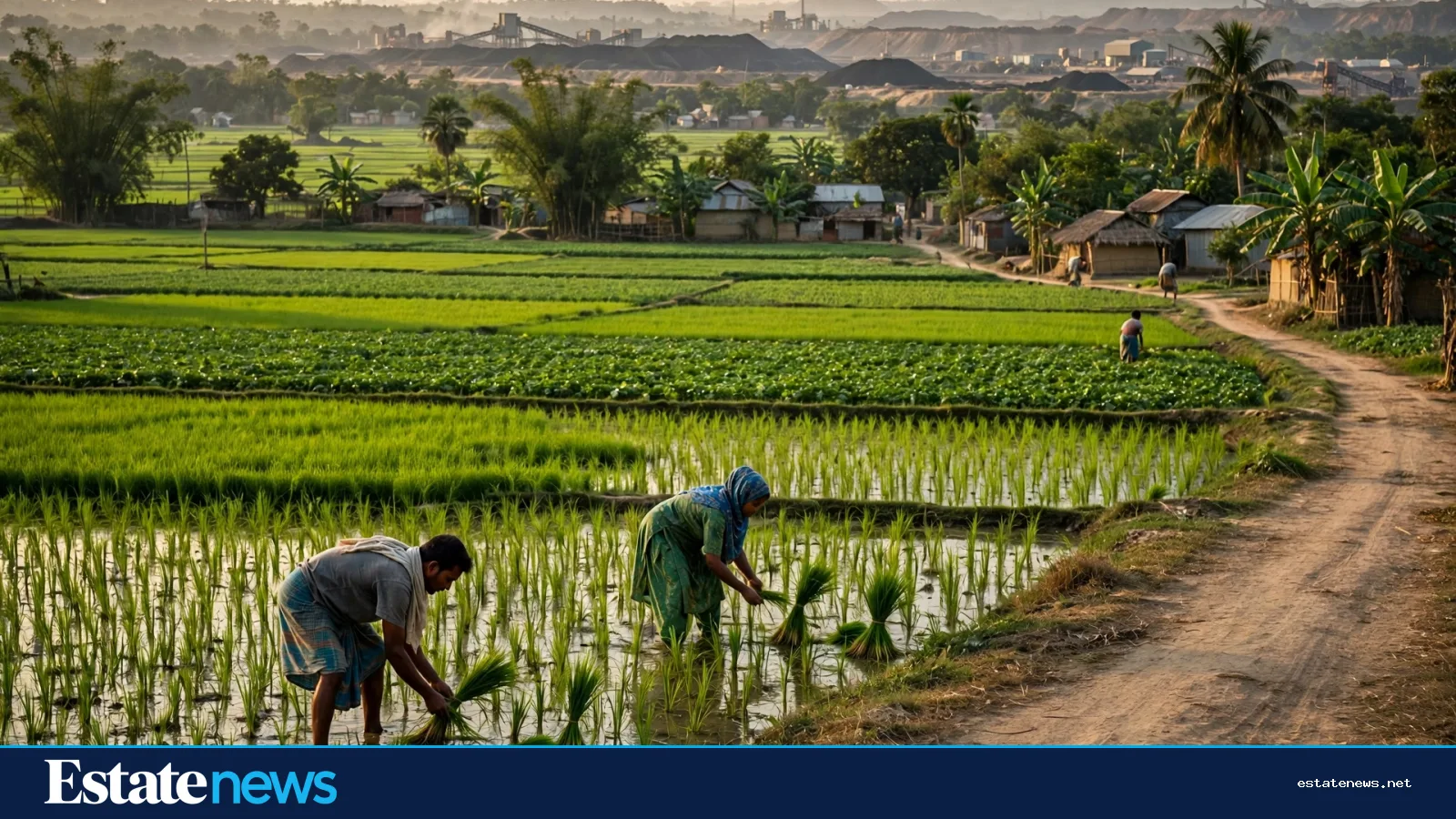
The paddy fields of Phulbari stretch flat to the horizon, and under them sits one of the largest coal deposits in Bangladesh. The argument over that coal has run for two decades. This month it came back with a deadline attached.
Power, Energy and Mineral Resources Minister Iqbal Hassan Mahmood Tuku told the fifth Bangladesh Economic Summit in Dhaka on Saturday that the time has come to explore the Phulbari coal mine through open-pit mining. Modern technology, he argued, could minimise damage to agricultural land, and the benefits of coal-based electricity could outweigh the losses in agricultural production. He said Prime Minister Tarique Rahman had instructed officials to finalise a coal-extraction roadmap within three months, with talks on the bidding process already underway.
Phulbari, in Dinajpur, holds an estimated 572 million tonnes of coal, of which around 475 million tonnes is considered mineable. Those are the numbers that make the deposit impossible to ignore and impossible to dig without a fight. The land above it feeds families. The coal below it could feed power plants.

What the people of Phulbari asked for
On 6 November 2026, more than 300 residents rallied demanding coal extraction, provided it comes with fair compensation, rehabilitation and jobs. That condition is the whole story in one sentence. The demand is not for digging at any cost. It is for digging on terms that leave the people who live there better off than before.
The government is also planning a coal-fired power plant near the mine so the extracted coal can be used directly for electricity generation, cutting transport and generation costs. The minister pointed to the money already spent on imported fuel, saying Bangladesh had spent around Tk 50,000 crore on liquefied natural gas subsidies. Domestic coal, in his argument, would cut that dependence and lower the cost of power.


The Daily Star's opinion piece on the announcement, published 17 November, takes a different view of the timetable. It argues that rushing into mining without assessing the costs would be unwise, and that the exercise should commission a fresh, independent assessment of the project's environmental and social impact before inviting bids, rather than limiting itself to a three-month roadmap. That is the opinion's position, not Estate News's conclusion. But it names the question the roadmap has to answer.
The questions the roadmap must settle
A roadmap that only sets dates will not settle Phulbari. It has to settle four things first. How much farmland would open-pit mining take, and for how long, and can that land really be farmed again afterwards, as the minister says modern technology allows. Who gets compensated, how much, and when, before the digging starts rather than after. Where the displaced families will live and work, and what jobs the mine and the power plant will actually offer them. And what happens to the water, the soil and the air around the pit while it operates.
These are not new questions. They are the same ones that stopped the project before, and they have not gone away because a new deadline was set. The 300 residents who rallied on 6 November understood that. Their demand was for extraction with conditions, not extraction without them.
Estate News covered the energy side of this story in "ADB Backs 1,000 MW of Solar: What It Means for Dhaka Roofs", where more than 1,000 MW of solar and battery storage is being lined up with private money. And "The Solar Jobs Bangladesh Cannot Fill Yet" showed the other side of the energy transition, the workers who will have to be trained to build it. Solar and coal are not the same answer, but they share the same test: whether the energy Bangladesh builds actually reaches the people who pay for it. "Rangpur: The Northern City Finding Its Own Buyers" looked at the north from a different angle, a city building its own housing market far from Dhaka's glare. Dinajpur sits in that same north, and its future will be decided by what happens to its farmland as much as by what happens under it.
Three months is a short time to answer questions that have stood for twenty years. The roadmap will be judged not by whether it arrives on time, but by whether the people of Phulbari can read it and see their own lives in it.