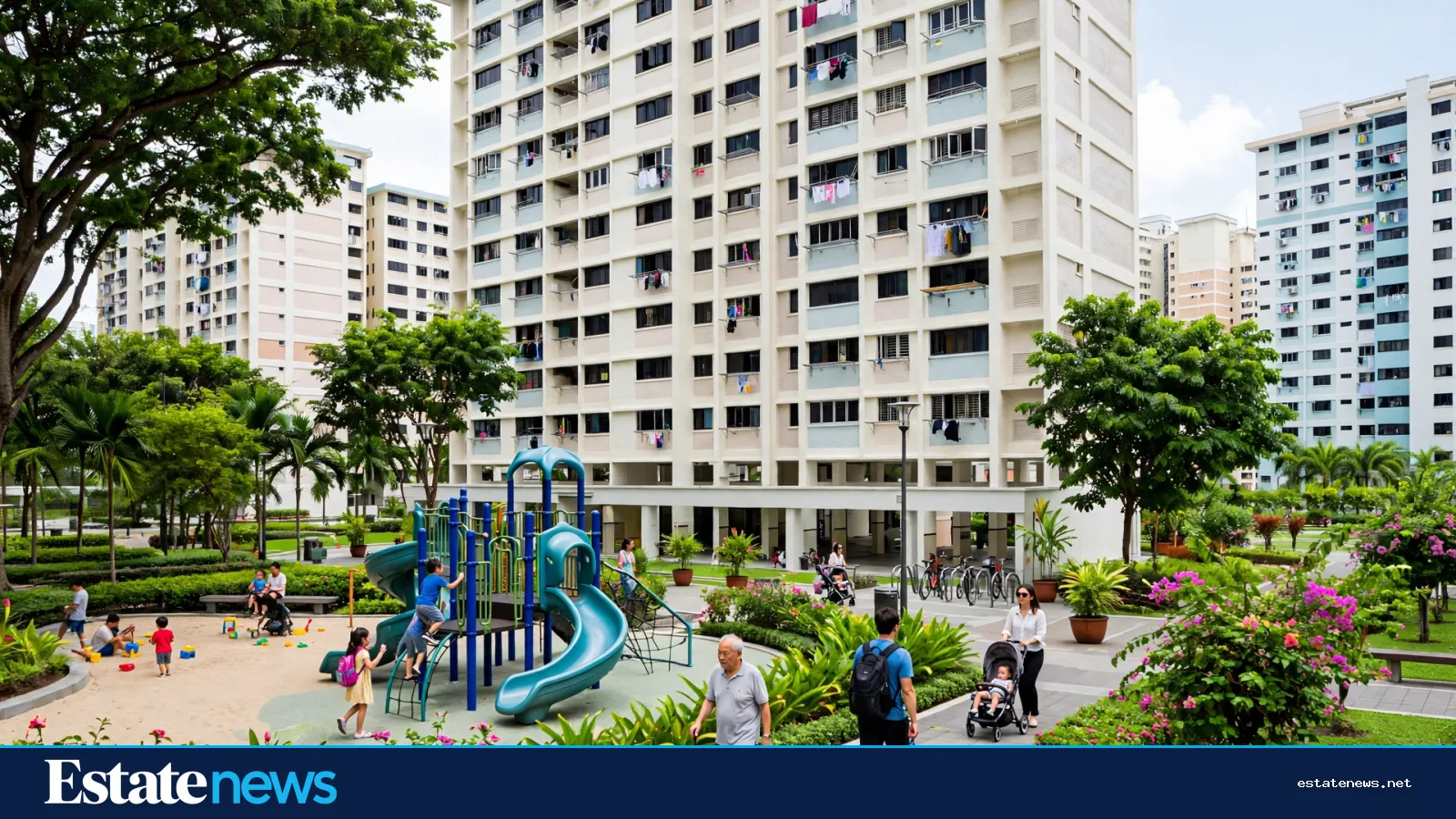
Walk through a Singapore housing estate and the first thing you notice is how ordinary it looks. Tower blocks, a playground, a coffee shop, a wet market, a school around the corner. The second thing you notice is the scale. About 80 percent of Singapore's resident population lives in flats built by the state. Home ownership sits near 90 percent, one of the highest rates in the world. In a city where land is among the most expensive on earth, almost everyone owns a home, and almost everyone owns one the government built.
The builder is the Housing and Development Board, the HDB, set up in 1960 when Singapore was a newly self-governing island with a severe housing shortage and streets full of squatters. In its first three years the board built more than 31,000 flats, more than its predecessor had managed in three decades. By the end of 1965, the year Singapore became independent, it had completed 54,000 flats. The urgency never really left the system. Today the HDB has supplied more than one million flats across 24 new towns.
The model rests on three decisions that were made early and never reversed. The first was land. The state owns about 90 percent of Singapore's land, acquired for public purposes, which means the board never has to compete with private developers for the ground it builds on. The second was the lease. HDB flats are sold on a 99-year leasehold, with the state keeping the underlying land and the buyer holding the same legal rights as a private homeowner for the life of the lease. The third was savings. In 1964 the government introduced the Home Ownership for the People scheme, and buyers pay for their flats largely from the Central Provident Fund, the compulsory savings scheme every working Singaporean pays into. Home ownership rose from 29 percent of resident households in 1970 to 88 percent by 1990, and it has stayed near 90 percent since.

A town, not just a tower
What makes the model work is that the HDB never built towers alone. It built towns. Toa Payoh, Ang Mo Kio, Bedok and the newer estates each arrived with shops, schools, clinics, parks and transport built in, so that a family moving into a new flat was moving into a working neighbourhood. More than 90 percent of HDB dwellings are owner-occupied today, and the estates are clean, safe and equipped, with the parks and playgrounds that make a tower block feel like a place to live rather than a place to store people.
The system has its own rules for keeping it fair. Flats are allocated by ballot and by eligibility, not by who can pay the most. The Ethnic Integration Policy sets quotas in each block and neighbourhood, so that no estate becomes the home of a single community. Resale is allowed, but only after a minimum occupation period, and flats in prime central locations now carry a 10-year minimum occupation period and subsidy clawbacks under the Prime Location Public Housing model introduced in 2021. The point of all of it is the same: the flat is a home first and an asset second.
None of this is without strain. Resale prices in the most sought-after estates have climbed, and younger buyers worry about what happens to a 99-year lease as it runs down. The board plans to launch around 55,000 new flats between 2025 and 2027, expanding into new districts such as Mount Pleasant and Woodlands North. The model is still being adjusted, sixty-five years after it began.
What transfers to Dhaka, and what does not


Dhaka cannot copy Singapore, and it should not try. Singapore is a city-state where the government owns the land. Dhaka's land is mostly private, held in small plots, tangled in titles and fought over in court. A state builder with compulsory purchase powers does not exist here, and the politics of creating one would be a different argument altogether.
But three things do transfer, and Dhaka is already moving on two of them. The first is speed of approval. Singapore's system works because the state can decide quickly. Estate News reported the reform that could do the same here in "Approvals in 14 Days: The Reform That Could Speed Up Building", the 18 November piece on the approvals reform. A developer who waits months for a plan approval is a developer whose costs rise before a brick is laid.
The second is the new town. Purbachal is Dhaka's attempt at what Singapore did with Toa Payoh and Ang Mo Kio: a planned town with roads, plots and services laid out before the houses arrive. Estate News examined the choice it presents to buyers in "Purbachal Plots or Dhaka Flats: Land Versus Apartment, and the Choice Behind It", the 31 October piece on land against apartment. The lesson from Singapore is that a new town fails if it is only plots and towers. It needs the school, the market and the bus on the first day, not the tenth year.
The third is savings linked to housing. Singapore's buyers pay from savings they were required to build. Bangladesh has no equivalent channel for a flat buyer, and the home loan market carries the whole weight instead. That is a longer argument, and it belongs to the banks and the budget, not to a single article.
The same day's LDC graduation piece, "LDC Graduation: Bangladesh Cannot Graduate on Low-Cost Labour Alone", set out the innovation gap that decides whether Bangladesh builds its next industries or keeps making the same ones. Housing sits inside that question. A country that cannot house its workers near their work cannot keep them, and a city that cannot build enough homes will keep pricing its own people out.
Singapore's answer was not a clever financial product. It was a board with land, a lease, a savings scheme and a habit of building the whole town at once. Dhaka's answer will look different, because Dhaka is different. But the test is the same one Singapore set for itself in 1960: can an ordinary working family own a decent home, in a neighbourhood that works, without waiting a lifetime for it?
This is not financial advice, and no model from another country is a promise about prices here. It is a reminder that the housing problem has been solved before, at scale, by a city that started with less land than Dhaka has and more people per square kilometre. The method is public record. The question is which parts of it Dhaka is willing to borrow.