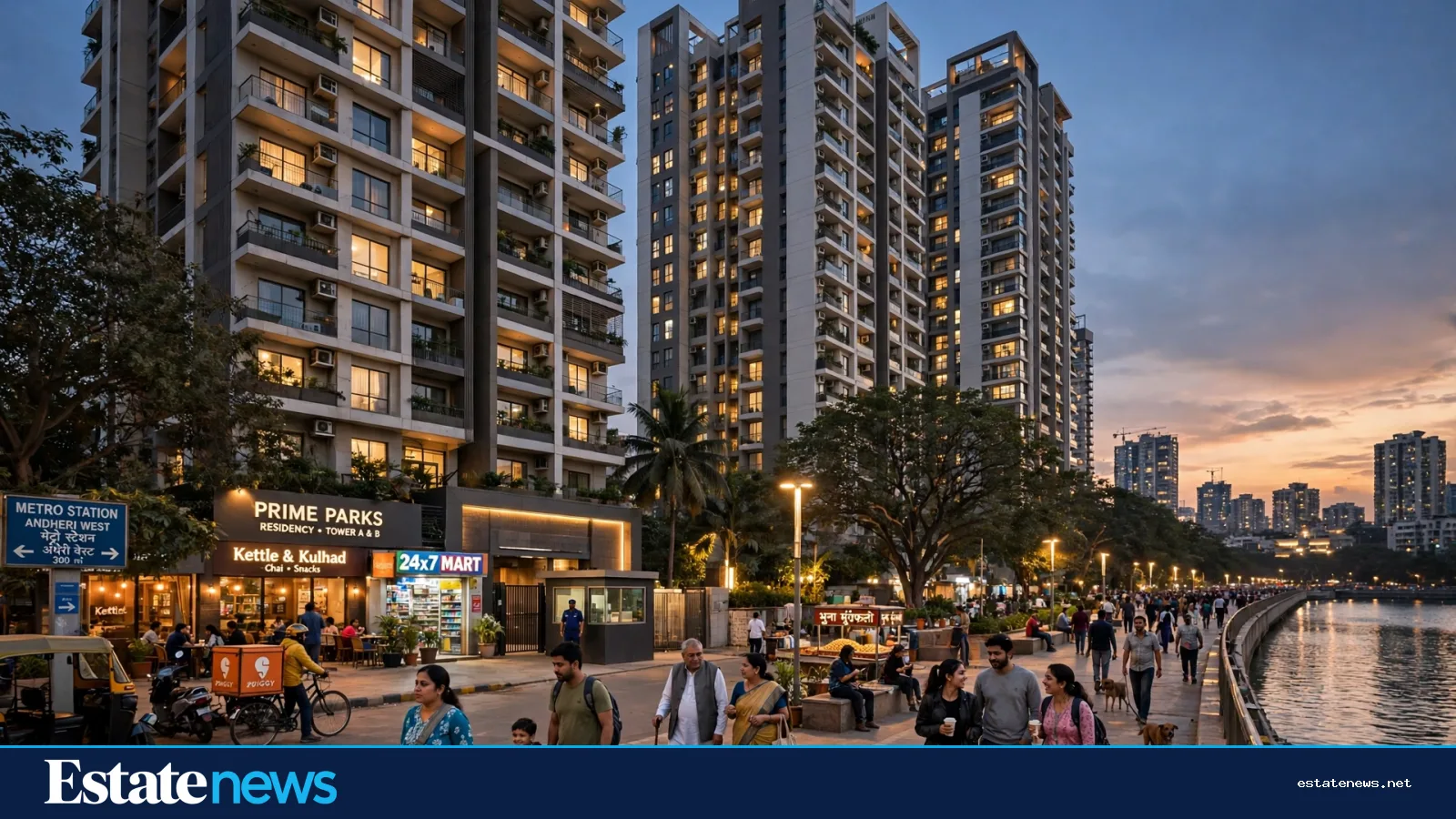
India's housing market is growing again, but it is growing in one direction only. Homes priced above Rs 1 crore now account for 72 percent of all sales in the country's top seven cities. Homes below that line are shrinking fast. The market has split in two, and the split is widening.
The figures come from JLL, which tracked residential sales across India's top seven cities in the first nine months of 2026. Sales rose 6 percent year on year to 2,14,562 units, reversing a 12 percent decline in the same period last year. The recovery was driven entirely by the top end. Homes above Rs 1 crore grew 23 percent, and the Rs 1.5 to 3 crore segment grew 54 percent. Homes below Rs 1 crore fell 23 percent, to 59,566 units.
The cities where the premium runs fastest

Bengaluru led the nine-month sales tally with 54,225 homes sold, up 18 percent on the year. Mumbai followed with 42,112, down 1 percent, and Pune with 35,153, down 13 percent. Delhi NCR recorded 30,242 sales, up 8 percent, Hyderabad 29,112, up 16 percent, Chennai 13,094, up 22 percent, and Kolkata 10,624, unchanged. Bengaluru, Mumbai and Pune together accounted for 60 percent of sales across the seven cities.
New supply followed the same tilt. Launches rose 15 percent to 2,59,425 units in the nine months, with Bengaluru launches up 41 percent, Hyderabad up 37 percent and Mumbai up 24 percent. Developers are building what is selling, and what is selling is large and expensive.
The quarterly picture from Anarock Research tells the same story with a warning attached. Sales in the July to September quarter rose 3 percent year on year to about 1,00,220 units, with a total value of about Rs 1.55 lakh crore. The average price across the seven cities reached Rs 9,714 per square foot, up 7 percent on the year, with the National Capital Region up 12 percent. But unsold inventory also rose 12 percent, to about 6,30,590 homes, and new launches of 1,14,320 units in the quarter exceeded sales by 14,100. More homes are being built than are being sold, and the ones being built are the expensive ones.
The rate that changed the maths


Money costs more now. The Reserve Bank of India raised its repo rate by 25 basis points to 5.50 percent on 7 October, the first hike in nearly four years, and entry-level home-loan rates sit around 7.1 to 7.75 percent. A higher rate bites hardest at the bottom of the market, where buyers borrow most of the price. A buyer of a Rs 1.5 crore flat can absorb the extra interest. A buyer of a Rs 60 lakh flat often cannot, and that buyer is the one disappearing from the sales figures.
What Dhaka should take from it
Dhaka has its own version of the same split. Premium demand in Gulshan, Banani and Dhanmondi stays firm, and the builders who work those streets sell on reputation and space. The affordable end, the flats that a young family on a single salary could buy, is thin, and the supply that does exist sits far from the centre. Estate News has tracked the premium end in its developer profiles and the wider market in its price tracker, and the pattern in both is the same as India's: the top of the market moves, the bottom waits.
The lesson is not that premium homes are a problem. A city needs homes at every price, and a developer who builds a good flat at Rs 1.5 crore is doing honest work. The problem is the gap. When 72 percent of sales sit above one price line and the homes below it fall by nearly a quarter, the market is telling the middle of the city that there is nothing for it. India now has 6.3 lakh unsold homes, and many of them are the expensive ones. A market that builds only for the top can end up with stock it cannot sell and buyers it cannot serve.
Estate News covered the same tension in other markets. "Dubai Prices Hit a Four-Year High While Deals Slow" tracked a city where prices rose as deals cooled. "Dubai Sales Cool 45% as Rental Contracts Hit Records" showed the same split from the rental side. "South Korea's $1 Trillion Export Year: What AI Demand Means Here" looked at how a strong export economy feeds housing demand. The pattern repeats: when money concentrates at the top, housing follows it, and the homes ordinary buyers need are the last to be built.
This is not financial advice, and no reader should buy or sell a flat on the strength of another country's sales figures. But the Indian numbers are a mirror worth holding up to Dhaka. A housing market that works for everyone is built from the middle outward, not from the top down.