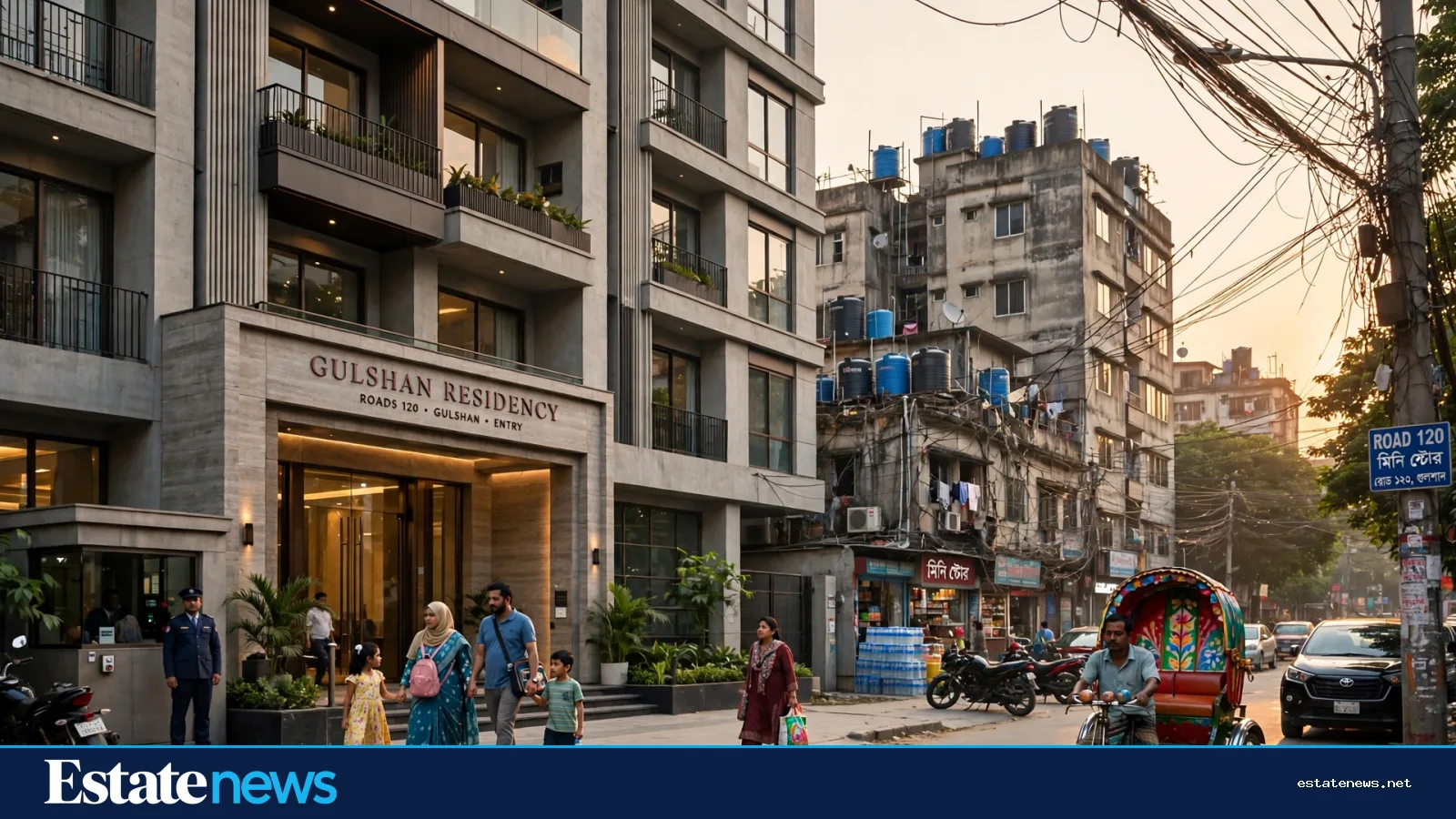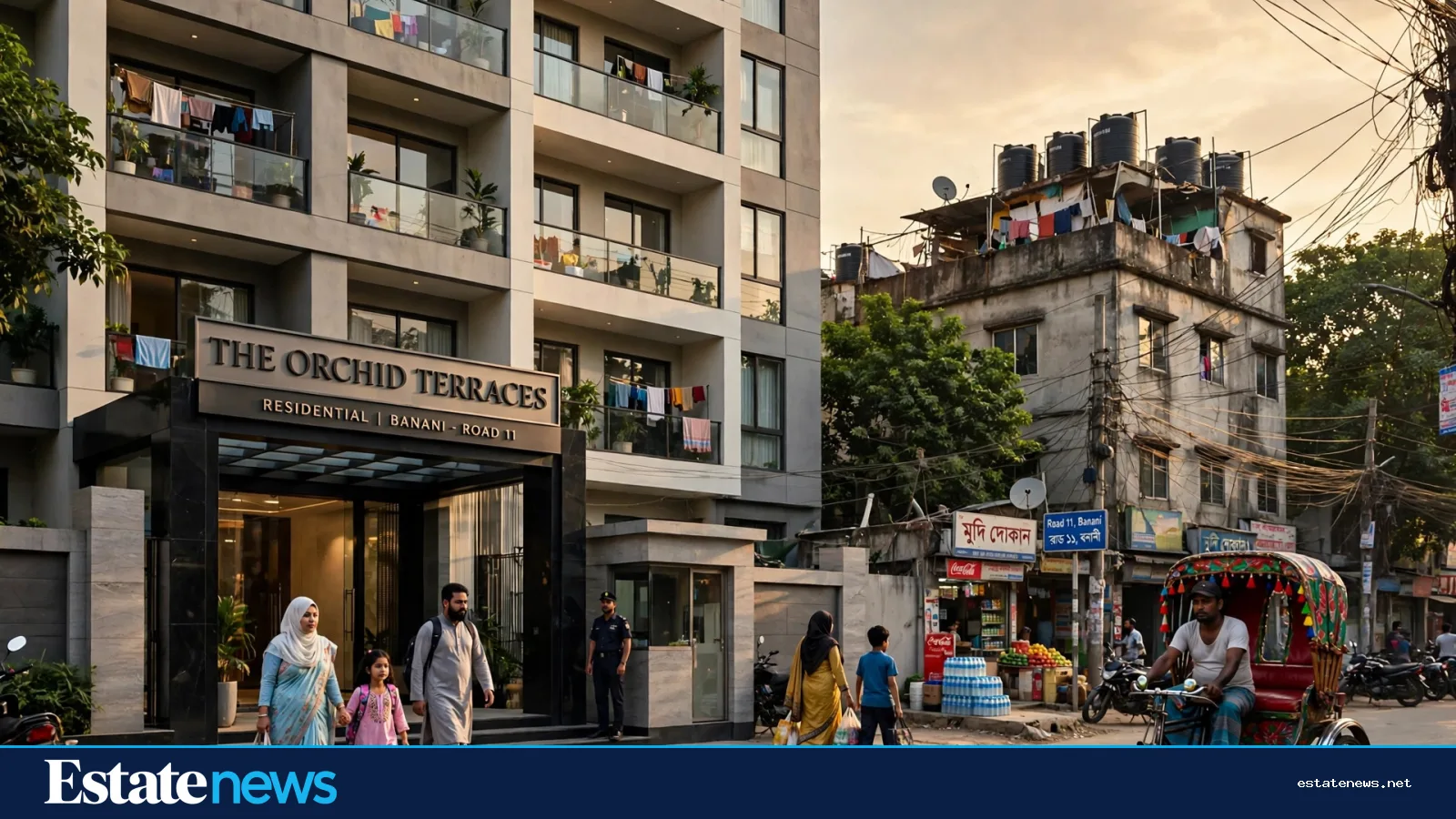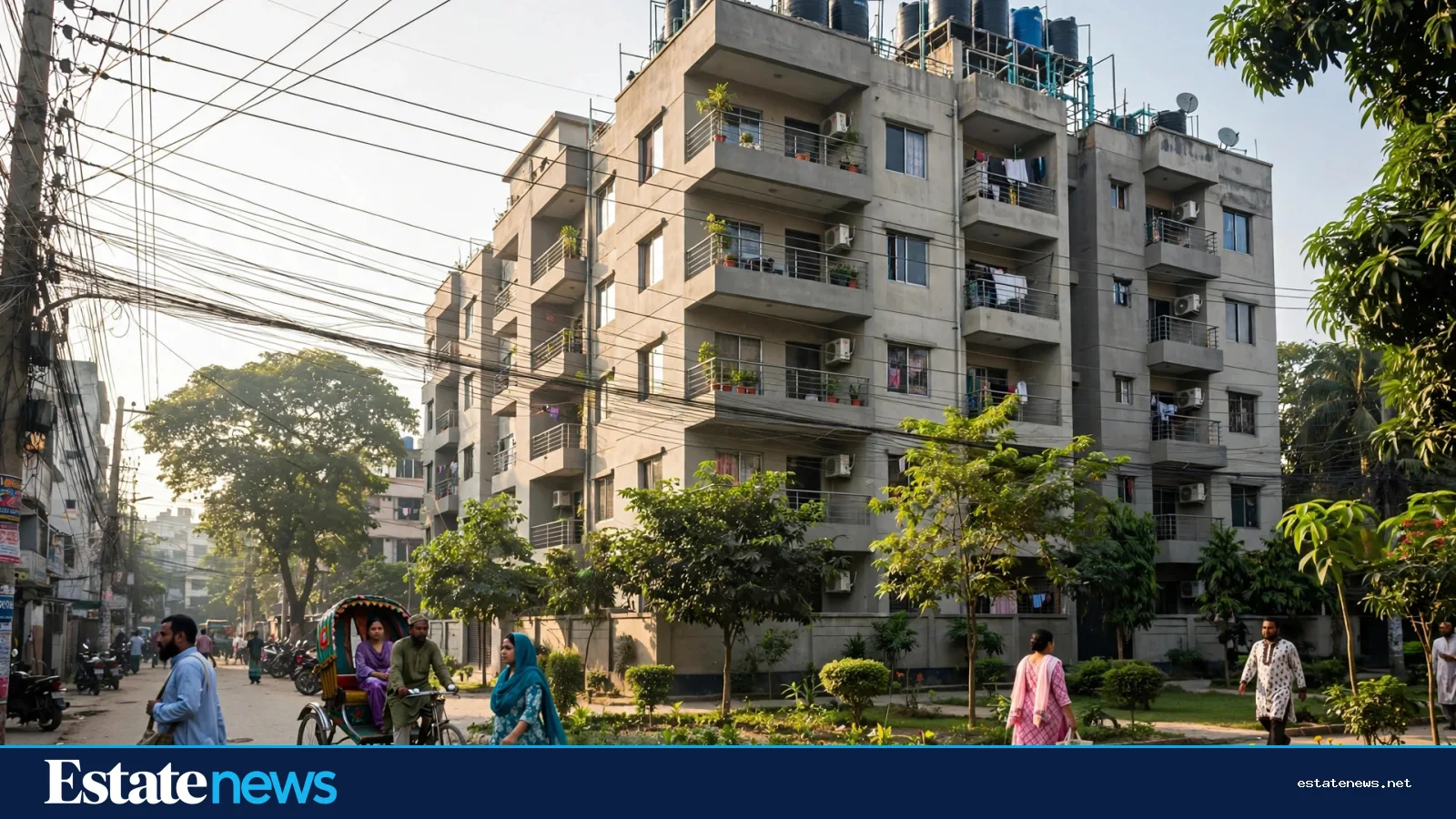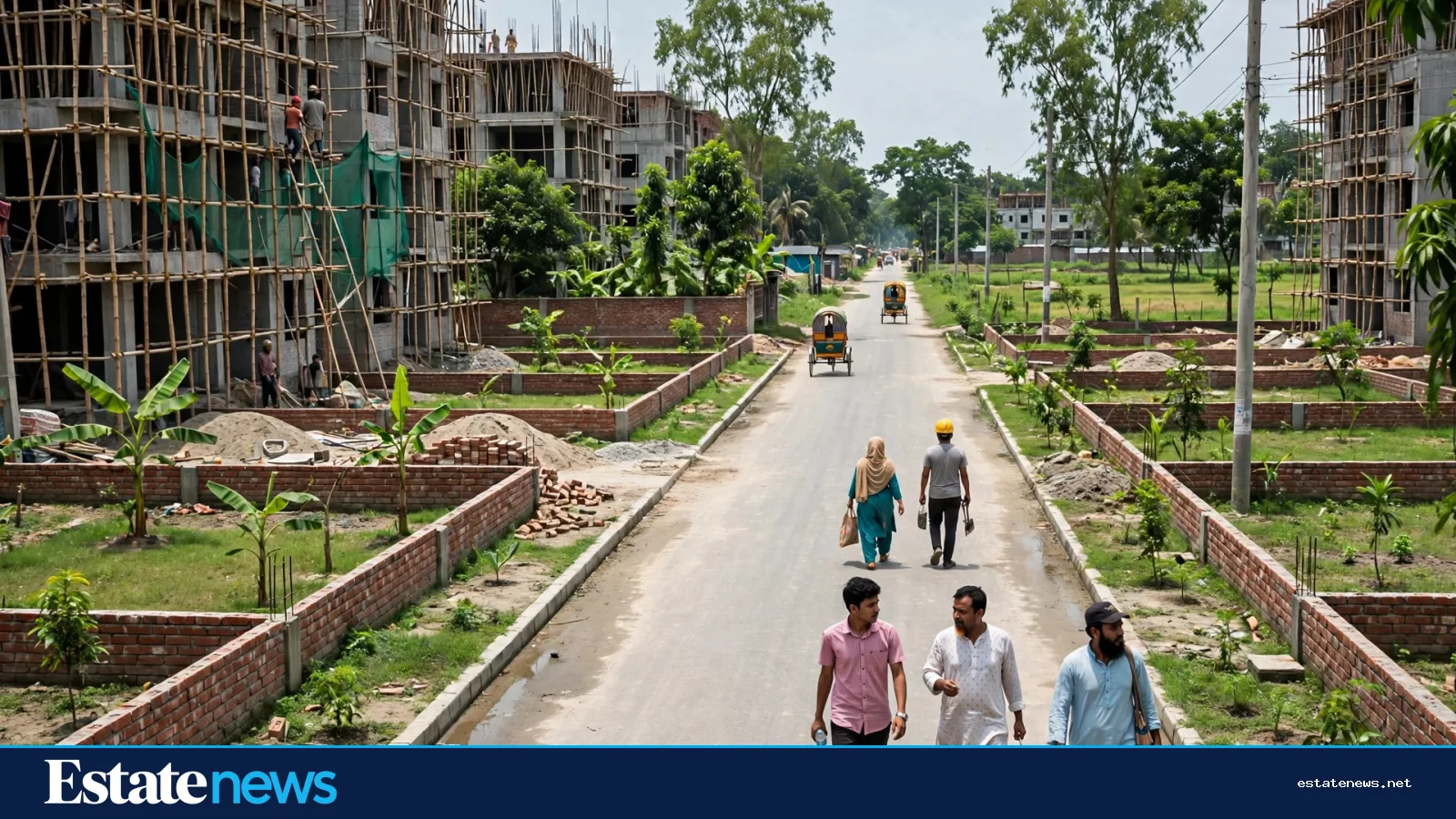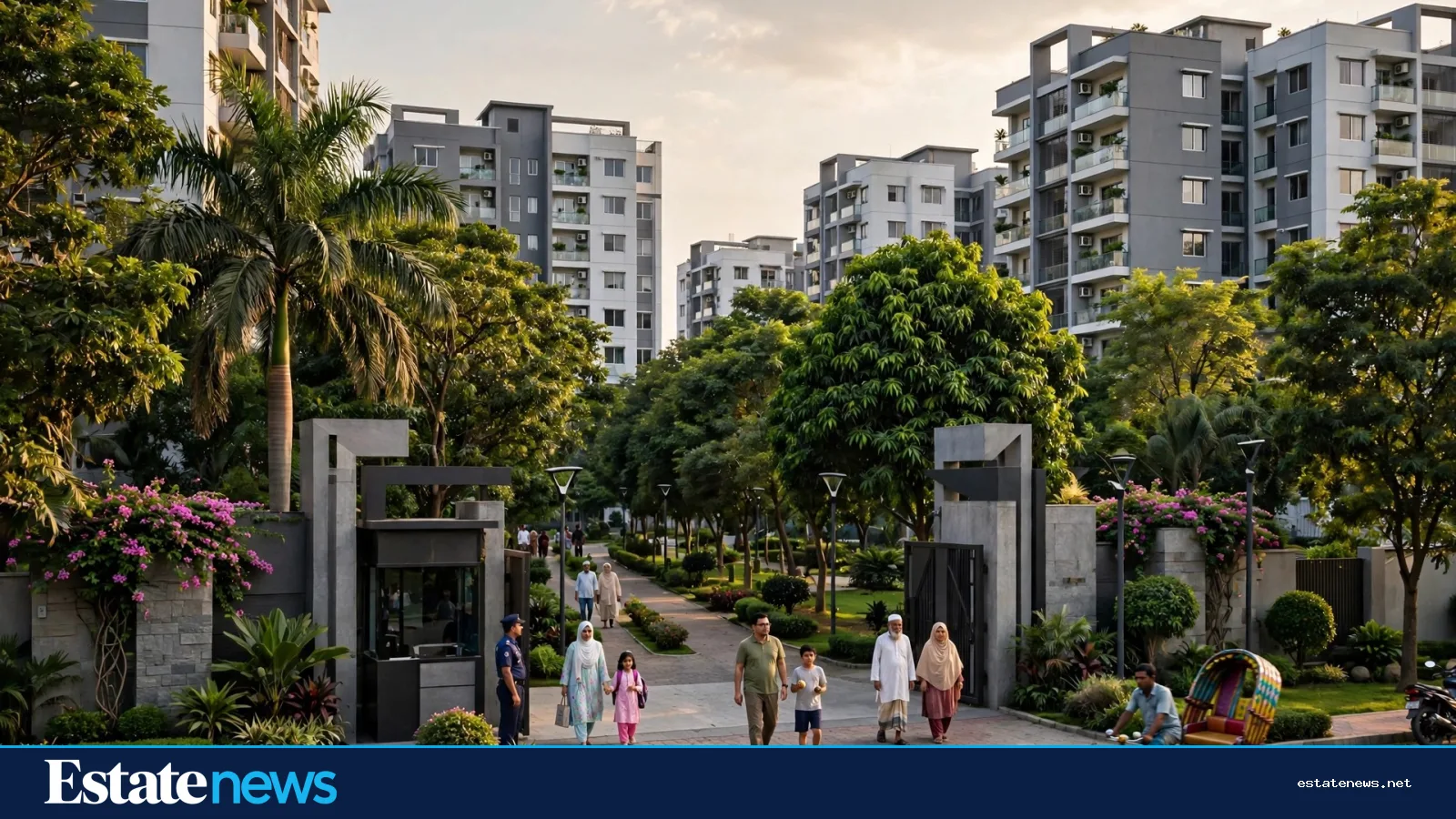
The gate at Rupayan City closes the day the way it opens it. A guard checks the car, the barrier lifts, and the noise of Sonargaon Janapath Road drops away behind the wall. Inside, the streets are wide enough for two children on bicycles and a morning walker to pass without anyone stepping onto the grass. A rickshaw waits near the gate for the resident who does not want to take the car out. The towers stand in rows behind the trees, their balconies lit one by one as the light goes.
It is an ordinary evening in Uttara, except for the fact that it happens inside a wall. Rupayan City, built by Rupayan Housing Estate Ltd of the Rupayan Group, describes itself as Bangladesh's first premium mega gated community. The claim is on the company's own site, rupayancity.com, and it is the claim the whole township is built around: a home measured not by the square feet inside the flat but by the open ground, the sky and the greenery around it. The company calls the idea "Break the Square Feet Story", and the township is the argument made concrete.
Uttara was the right place for that argument. The suburb was planned on a grid, with wide roads and sectors, and it grew into the city's northern address for families who wanted space and a planned neighbourhood. What it never had, until Rupayan City, was a single development large enough to run as a town of its own, with its own gates, its own streets and its own shared buildings. The township took a stretch of that planned suburb and turned it inward, behind a boundary that residents pay to live inside.

The idea behind the gate
The company's site sets out the pitch in three words: prestige, protection and privilege. Protection comes first in practice. Rupayan City runs what it calls a three-layer security system, and the gate is only the visible part of it. Guards, controlled entry and the enclosed streets do the work that a single apartment building's lift lobby cannot. For a family moving from an older Uttara block, where the street outside belongs to everyone, the difference is felt on the first night: the road past the flat is quiet, the children are visible from the window, and nobody who does not live there is passing through.
Prestige is the harder part to build, and the company has worked at it through scale. The township is organised in phases, named Majestic, Grand and Sky Villa, and the names are meant to carry the address the way a sector number carries an older Uttara address. A resident of Rupayan Grand Majestic, quoted on the company's site, says it was the environment of the neighbourhood and the community that drew the family there, not the flat alone. That is the sentence the whole project depends on. A gated township sells the neighbourhood first and the flat second.
Three phases, one address
The phases sit close enough to read as one place. The towers share the same landscaping, the same internal roads and the same shared buildings. Club houses give residents somewhere to gather without leaving the gate, and a mosque inside the township means Friday prayers do not need a trip out to the sector road. The company presents all of it as part of one lifestyle, and the residents who use the club house in the evening and the walking paths in the morning are the ones who make that claim hold.
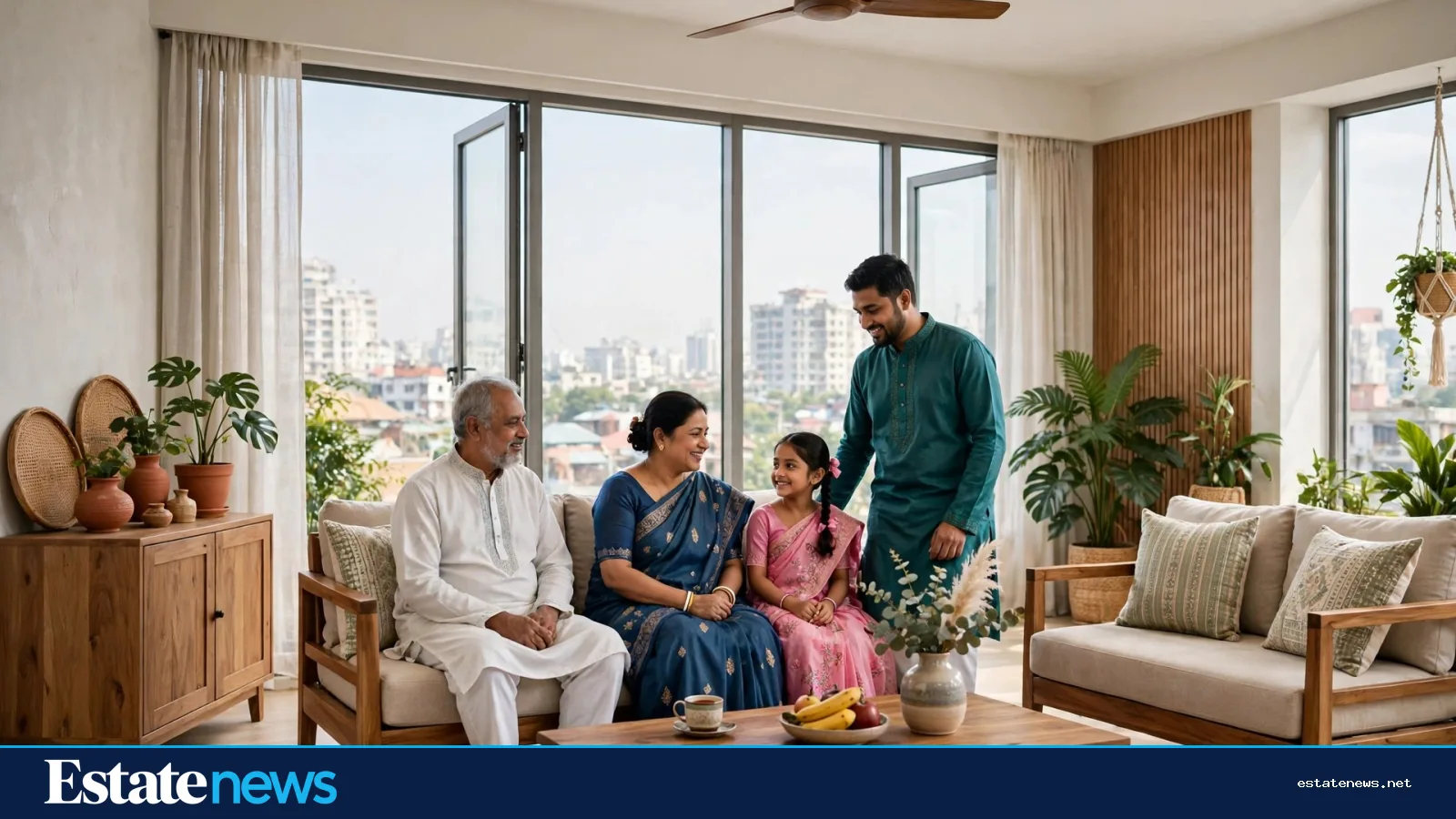
Inside the flats, the selling point is quieter than the gate suggests. A living room with a ceiling fan turning, daylight through a wide window, and a family sitting together after the day's work is the picture the township wants buyers to carry home. The rooms are finished for families who will live in them for years, not for a viewing. Wooden furniture, plants on the sill, a dining table that stays set: the interior does the slow work of making a large development feel like a home, and it is the part of the township that no gate can provide.


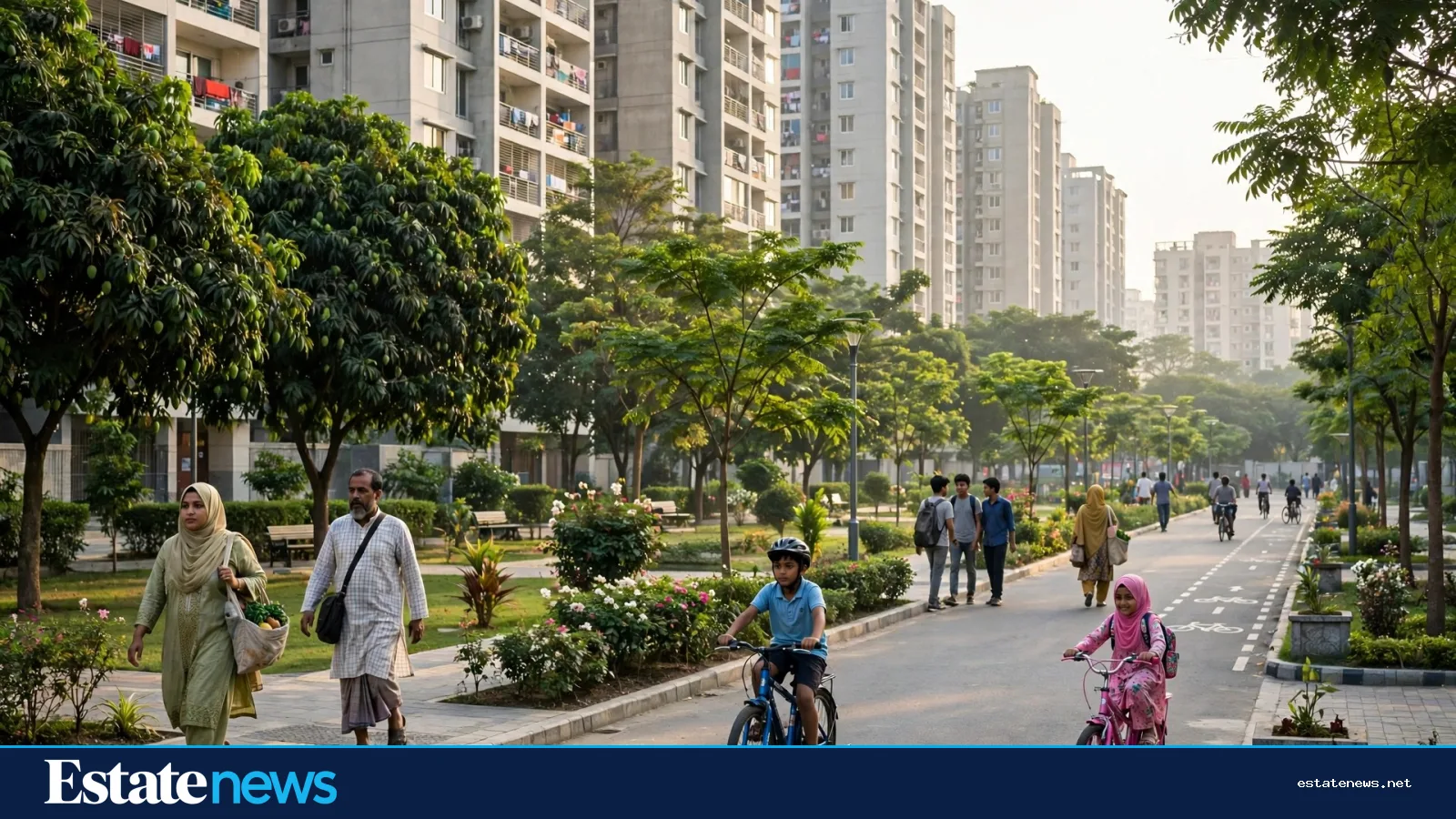
Walk the internal streets in the morning and the township stops looking like a project. Children ride bicycles along the lanes, older residents walk in pairs, and the trees planted along the roads give shade before the heat builds. The towers are close, but the ground between them is open, and that open ground is what the company's "Break the Square Feet Story" line is pointing at. A buyer in Uttara can find a larger flat elsewhere. What is harder to find is a street where children can cycle without traffic, and that is the thing Rupayan City is actually selling.
What the township changed
Before Rupayan City, Uttara's premium housing was a collection of separate buildings on separate plots, each with its own gate and its own small patch of ground. The township changed the unit of sale. Instead of buying a flat in a building, a buyer buys into a managed neighbourhood, with shared facilities, shared security and shared streets. Estate News covered a similar kind of builder in "ABC Real Estates: The Quiet Premium Builder From Banani to Uttara", a profile of another developer that grew across the same neighbourhoods without making noise about it. The difference here is scale and enclosure: ABC built across Uttara, while Rupayan built a place with a boundary around it.
The model has travelled. "Bashundhara R/A: The Developers Building Dhaka's Biggest Neighbourhood" looked at how the capital's largest residential area filled up with developer-built towers, and "Who Builds in Uttara: The Developers Behind Dhaka's Planned North" mapped the builders working the suburb's sectors. Rupayan City sits inside that story as the most enclosed version of it: a township that took Uttara's planning and added a wall, a gate and a management layer on top.
That enclosure is also the question hanging over the project. A gated township works when the shared parts stay shared: the club house open, the gardens tended, the security staffed, the streets clean. If the management slips, the wall stops being a selling point and starts being a boundary around a place that is going quiet. The company's task now is the unglamorous one, keeping the common areas at the standard the first residents were shown, phase after phase, as more families move in and the township fills.
For a buyer weighing a flat here, the checks are the same as anywhere else in Dhaka, and the premium does not remove any of them. The deed and the chain of title, the RAJUK approval for the building, the handover terms written into the agreement, and the registration cost after purchase all matter as much as the gate. A township address raises the amount at stake in each of those steps. It does not shorten them.
Rupayan City changed Uttara by showing that a developer could sell a neighbourhood rather than a flat, and that buyers would pay for the streets and the security as much as for the rooms. The towers will keep rising in the suburb, and other developers will keep borrowing the idea. The test for this township is simpler than any of that: whether the morning walk, the bicycle lanes and the quiet streets still feel like the place the first residents chose, ten years from now, when the paint has faded and the novelty is gone.