Every flat in Dhaka has kilometres of wire inside its walls, and almost nobody who buys one ever sees it. The wire is buried in the plaster, behind the switches, above the ceiling. It only becomes visible when something goes wrong. That is why a new cable brand matters to builders, even if buyers never ask for it by name.
AkijBashir Group entered Bangladesh's electrical wire and cable industry in January this year with the launch of its new brand, AkijBashir Cables, introducing what it calls the country's first three-layer insulated electrical wire. The announcement was made at a formal ceremony at the Bangladesh-China Friendship Conference Centre in Dhaka, and the Daily Star's report of the launch has been circulating again this week. The brand is now ten months into the market, and its story is worth telling properly: what it promised, what it sells, and what it means for the people who build flats.
Three layers, and a heat limit

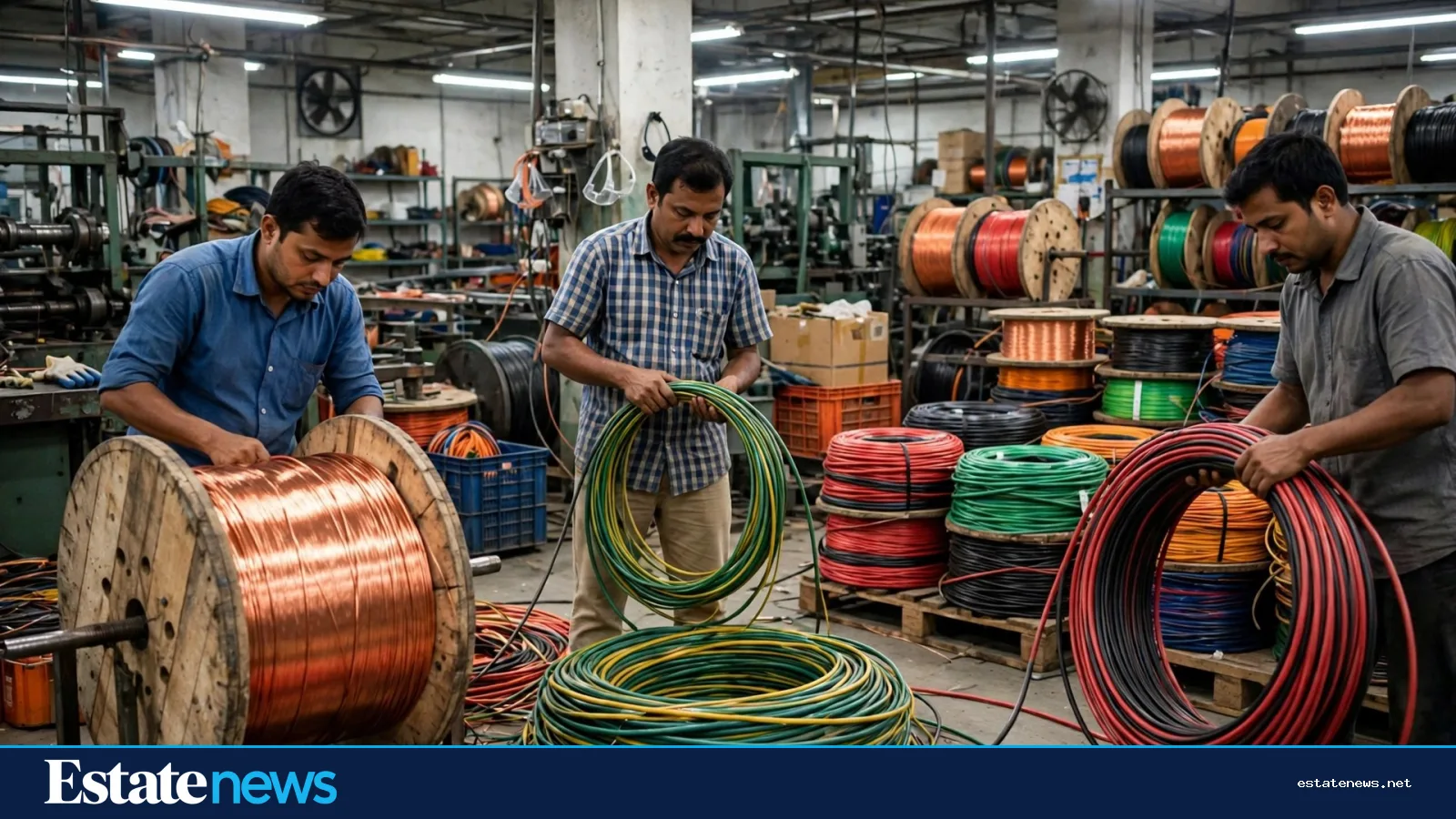
The cables feature a pure copper core with three layers of insulation, designed to provide enhanced safety, durability and resistance to high temperatures of up to 105 degrees Celsius, according to the company. The point of the extra layer is straightforward. Insulation is what keeps current inside the wire. When insulation fails, current leaks, and leaks cause short circuits and fires. A third layer is the company's answer to the most common failure in a Dhaka flat's wiring.
The brand was unveiled by Mohammod Khourshed Alam, chief operating officer of AkijBashir Group, alongside senior executives including Helal Ahmed, deputy managing director, and Mohammad Omar Faruke, head of business for cable operations. The group committed an initial investment of Tk 300 crore to the venture, Alam told The Daily Star in an interview after the launch, and opened 32 showrooms across the country to sell the range.
Why a wire brand is a building story


Wire and cable sit in the same basket as steel and cement: inputs every builder pays for, and every buyer pays for indirectly. A flat's price carries the cost of the rod in its columns, the cement in its walls and the cable in its conduits. When a new local brand enters any of those markets, it changes what builders can buy and what they pay for it.
The building-cost picture this winter was set out in "Building Costs This Winter: Rod, Cement and the Sq Ft Maths", which worked through what rod and cement cost a builder right now, and in "Steel's Winter: What BSRM, KSRM and GPH Ispat Tell Builders", which followed the steel mills into the cold season. "Steel, Cement and the Cost of Building: What November's Prices Mean for Developers" covered the same ground for the month. Cables belong in that same conversation. A builder choosing wire is choosing between safety and price, and the cheaper wire usually wins until something burns.
The company's claim for its cable is that it raises the safety standard without asking the builder to import. AkijBashir Cables plans a full range of electrical wires, power cables and industrial conductors for residential, commercial and industrial use, and intends to build research capacity alongside manufacturing, with an emphasis on material science and long-term performance testing. That is the company's own description of its plans, and it should be read as a plan, not a result.
What to ask before the walls close
For a buyer, the wire inside the walls is almost impossible to check after handover. The time to ask is before the plaster goes on. Which brand of cable is being used, and does it carry the rating the builder claims. Whether the wiring has been tested before the walls are closed. Whether the electrician who did the work is the one whose name is on the job, or a day labourer hired for the week.
AkijBashir's entry does not answer those questions by itself. A brand on a spool is only as good as the hands that pull the wire through the conduit. But a local manufacturer with 32 showrooms and a stated investment behind it gives builders a domestic option where the choice used to be between imports and the cheapest local wire on the market. That is a small change in a large industry. In a flat, small changes in the walls are the ones that matter most, because they are the hardest to fix later.