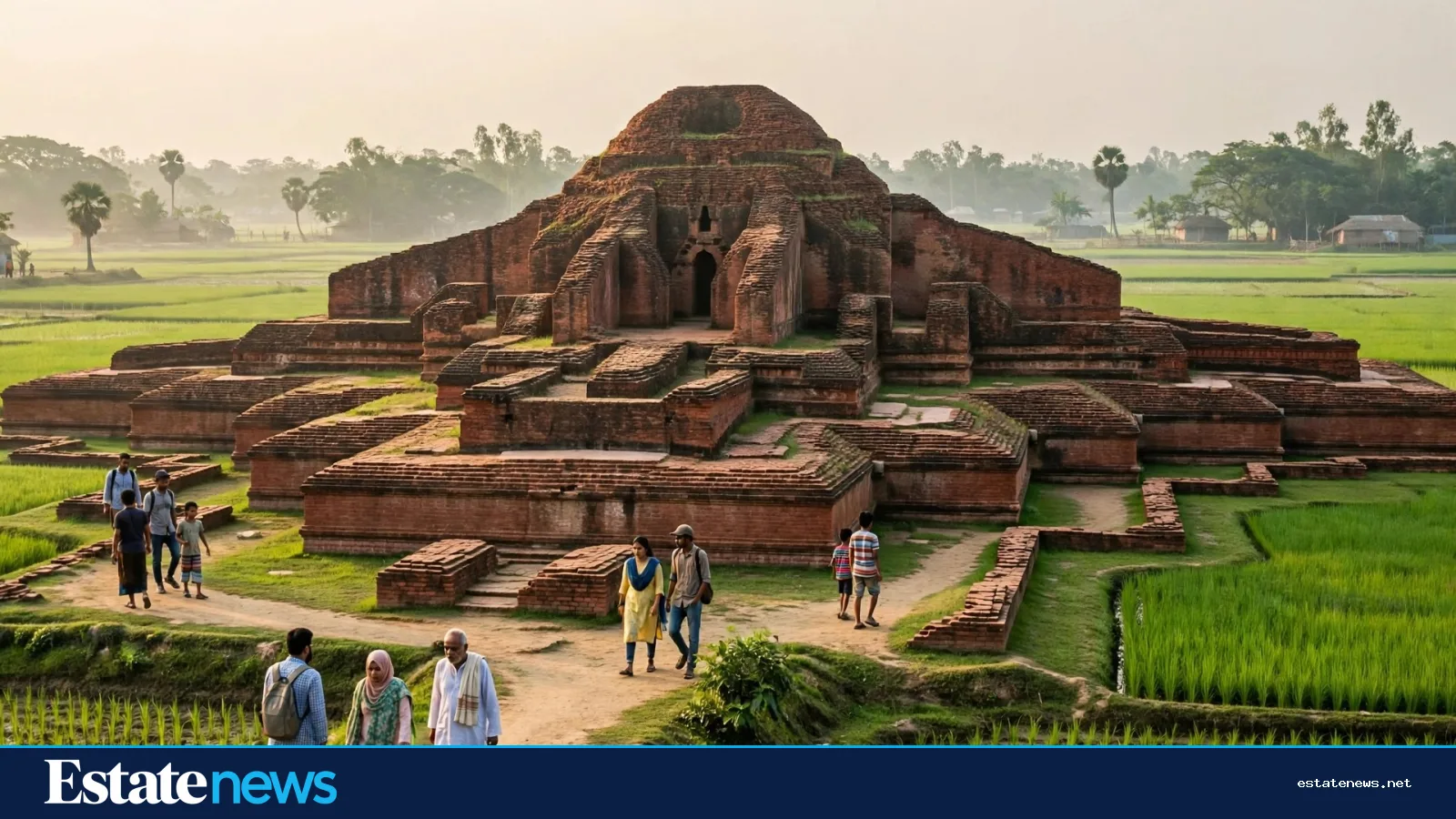
From the road, Paharpur looks like a hill that should not be there. The plain of Naogaon runs flat and green to the horizon, and then the ground rises in a great stepped mound of red brick, terraced and weathered, with a village beside it and fields all around. Local people say the mound looked like a hill, a pahar, and the village took its name from it. That is the local telling, and it is a good one: for centuries, nobody passing through would have guessed that the hill was a building.
It was. Under the grass and the earth stood Somapura Mahavihara, the great monastery of Somapura, one of the largest Buddhist monasteries south of the Himalayas. UNESCO, which put the ruins on its World Heritage List in 1985, calls it the most spectacular and important pre-Islamic monument in Bangladesh. The monastery covers about 11 hectares, and its plan, a vast square of monks' rooms around a towering central shrine, went on to shape Buddhist building from Myanmar to Java. Twelve centuries after it was built, it still teaches.
Who built it, and the argument about that

The monastery was built in the late 8th century, under the Pala kings who ruled Bengal and the lands around it. A clay seal found in the compound names the community of monks of King Dharmapala's mahavihara at Somapura, and on that evidence the foundation is credited to Dharmapala, the second Pala king, who ruled in the late 8th and early 9th centuries. UNESCO dates his reign to about 770 to 810. Other chronologies give about 781 to 821.
The record is not tidy, and it should be said plainly. Tibetan histories credit the building instead to Dharmapala's successor Devapala, who ruled from about 810 to 850, after his conquest of Varendra, the region Paharpur stands in. A pillar inscription from the reign of Devapala's successor Mahendrapala shows the royal connection continued. The two accounts do not agree on which king laid the first brick. What they agree on is the scale of the thing that was built, and the royal patronage behind it.
Somapura belonged to a small family of great monasteries that worked as the universities of the Buddhist world. Nalanda and Vikramashila, in what is now Bihar, are the famous names. Somapura was their Bengali counterpart, and the three were in close contact: scholars, texts and reputations moved between them. Tibetan sources say the scholar Atisa, who later carried Buddhism to Tibet, lived at Somapura. The monastery taught Mahayana Buddhism in its Vajrayana form, and its monks studied, copied and debated the texts that travelled across Asia.
A monastery built like a city
The plan is the first thing that strikes a visitor. A high wall encloses a great square courtyard. Rows of small rooms for monks run along the inside of that wall. In the middle, on a raised terrace, rises the central shrine, a cruciform pyramid of brick that climbs in steps towards the sky. The whole place reads less like a single building and more like a walled town built for study and prayer, with the shrine as its centre and the monks' rooms as its streets.
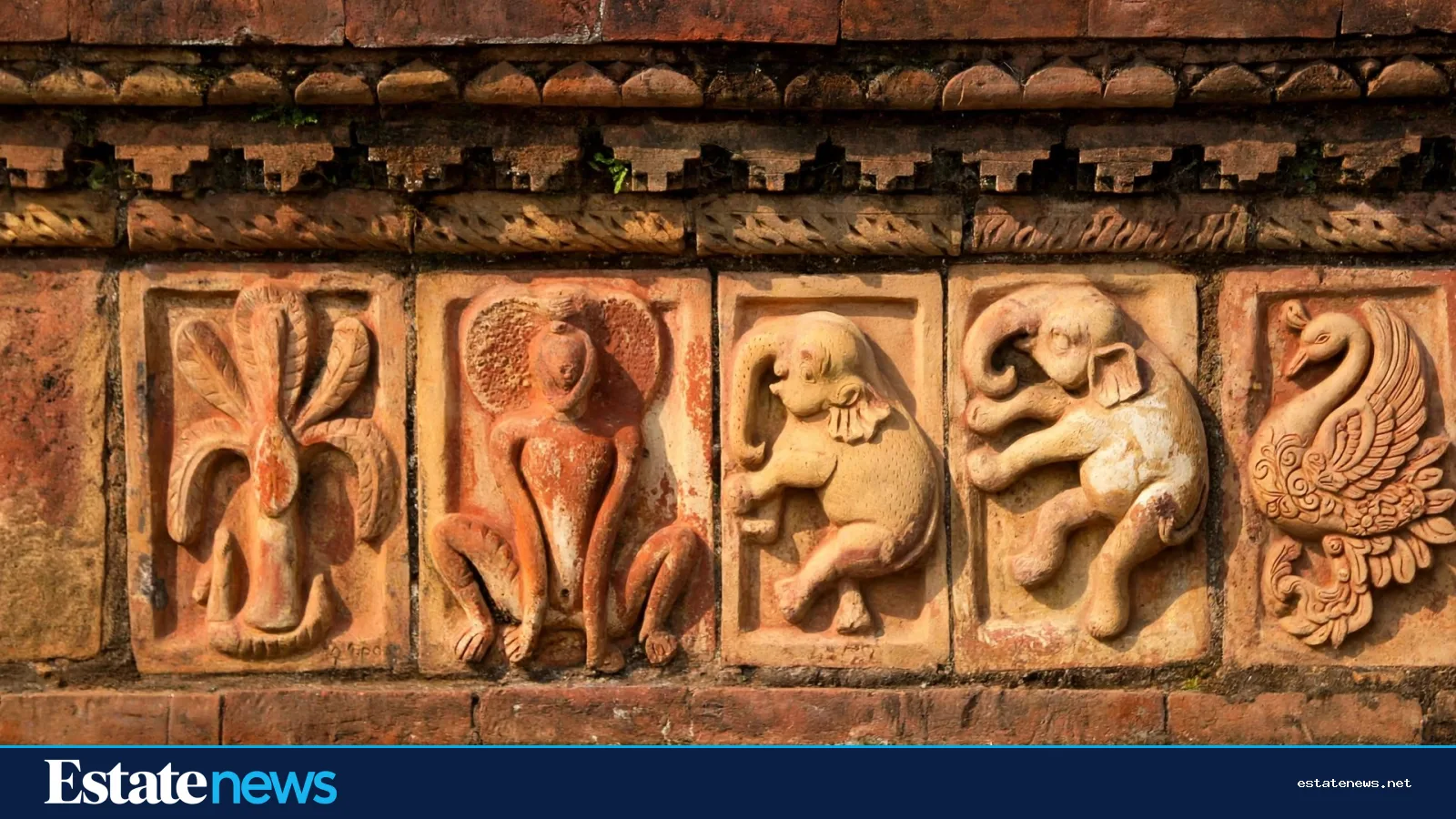
The walls themselves are the monastery's other textbook. Bands of carved terracotta plaques run along the brickwork, showing figures, animals and scenes from daily life: people at work, musicians, dancers, animals, and stories from the Buddhist tradition. Stone sculptures stood in the shrine and the chapels. The builders worked in brick, because brick was what the Bengal plain offered, and they made it carry the weight of a monument. The red of the brick, the green of the fields around it, and the wide sky above are the colours of the place now, and they were the colours of it then.


The monastery thrived for centuries, into the 12th century, and then it faded. Trade routes shifted. Patronage moved on. The buildings fell, the earth covered them, and the mound became a hill in the local imagination. It was noticed by the surveyor Buchanan Hamilton in the early 19th century, and excavation began in the 1920s. The Department of Archaeology in Bangladesh has conserved the site since, and a museum stands beside it.
What stands there today
Today Paharpur is a working archaeological site and a place of quiet pilgrimage. Visitors walk the paths between the ruined walls, climb the terraces of the central shrine, and look out over the fields that once fed the monastery. School groups come from Naogaon town, about 35 kilometres to the south. Buddhist visitors from abroad come to stand where Atisa is said to have lived. Families from the village beside it come on holidays, and the children run along the walls the way children run along any old wall.
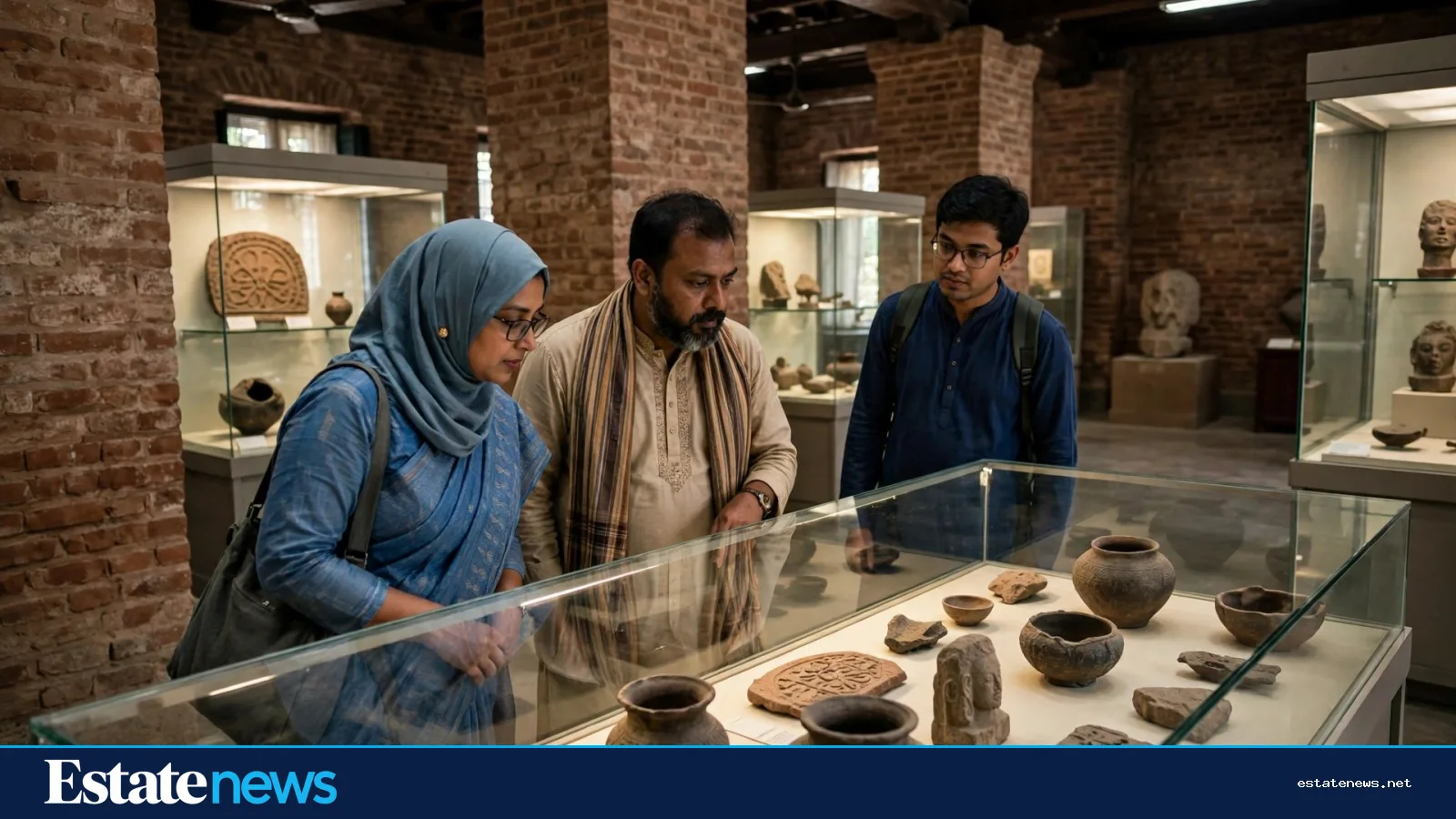
The museum on the site holds what the ground gave back. Artefacts found in the excavations sit in glass cases: seals and coins, stone figures, pieces of sculpture, and the small objects of monastic life. The clay seal that names Dharmapala is the most important thing in the collection, because it is the document that ties the building to its builder. It is a small object for so large a claim, and that is part of its charm.
The town around the site lives with the monastery rather than off it. Farmers work the fields that ring the ruins. Small shops sell tea and snacks to visitors. The site brings a steady stream of people to a part of Naogaon that would otherwise see few outsiders, and the Department of Archaeology's conservation work keeps the brick standing against the rain and the heat. The balance is a delicate one: a World Heritage site needs visitors, and it also needs the quiet that lets old brick survive.
Estate News has told the stories of other old buildings in the same way. "Mainamati: The Buddhist City Buried Under Cumilla's Hills" followed another Buddhist site, and "Mahasthangarh: The Ancient City Beneath the Mango Groves" traced a far older city in Bogura. "The Crown Jewels of Bengal: A Map of the Country's Great Old Buildings" put them on one map. Paharpur belongs at the head of that list, not only because it is the largest of them, but because its plan travelled. The monastery-city built here became a model, and the model reached across the Bay of Bengal.
Twelve hundred years on, the lesson of Paharpur is not only about Buddhism, or about the Pala kings. It is about what a building can do when it is built to last and built to teach. The monks are gone. The kings are gone. The brick is still there, rising out of the plain, and the students still come.