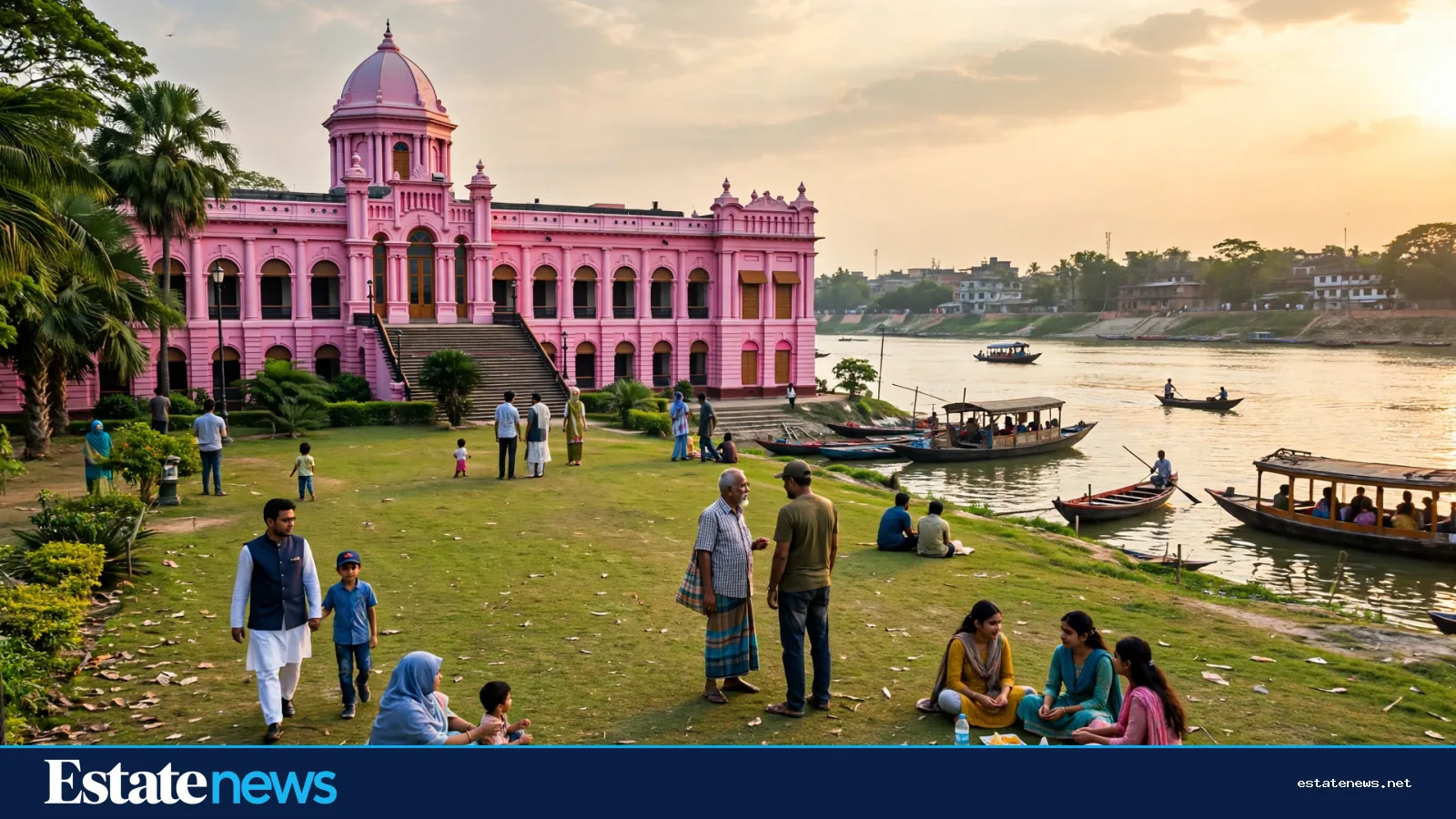
Stand on the lawn at Ahsan Manzil in the late afternoon and Dhaka comes to you in layers. The pink walls catch the last light, the Buriganga slides past with its boats, and families spread out on the grass the way they have for years, taking photographs and letting the children run. Behind the palace, the lanes of Islampur and Kumartoli close in, crowded and loud. In front of it, the river stays open. The building sits between the two Dhakas, the old trading city and the new one, and it has watched both of them grow.
Ahsan Manzil was the residence and the court, the kachari, of the Nawabs of Dhaka, and for half a century it was the most powerful address in the city. The palace at Kumartoli, on the bank of the Buriganga in Old Dhaka, was built between 1859 and 1872 by Nawab Khwaja Abdul Ghani, according to Banglapedia. He named it after his son, Khwaja Ahsanullah. The site had a longer past: in the Mughal period it held a garden house, and the Khwaja family bought the property from French traders before turning it into their seat. Abdul Ghani hired Martin and Company, a European construction and engineering firm, to draw up a master plan for the residence, and the work took thirteen years.
The old trading house became the Andarmahal, the ladies' quarters, and the new block became the Rangmahal, later renamed Ahsan Manzil. The name means the house of Ahsan, and the building was built to carry it. It was the Nawab's home, his office, and the place where the city's business was settled, day after day, in the panchayet council the Nawab presided over.

A palace built for ceremony
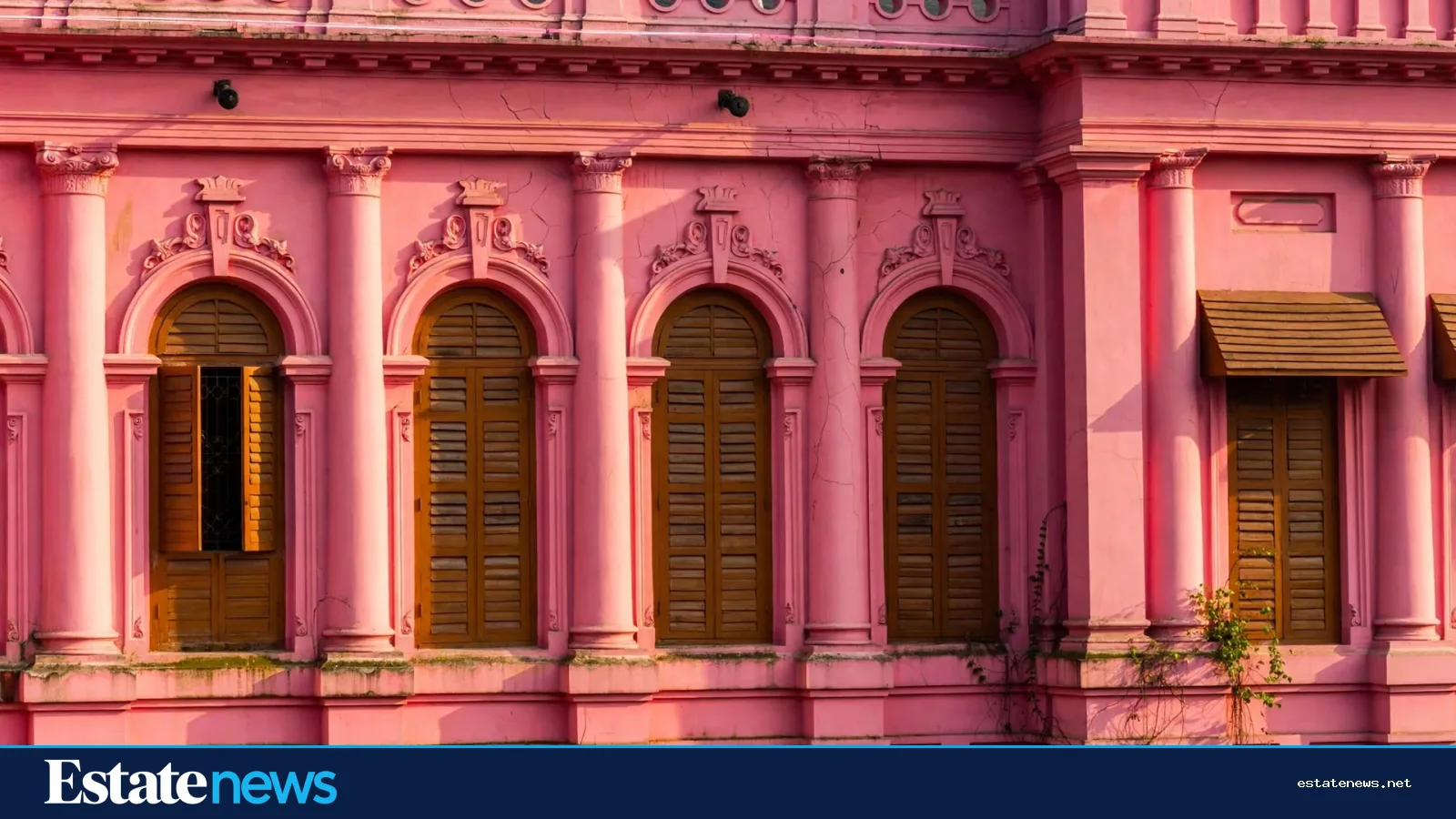
Up close, the pink is not one colour. It deepens in the shade of the arches and turns almost white where the afternoon sun hits the plaster, and the wooden shutters behind the arched windows give the facade a rhythm that photographs never quite catch. The building stands on a raised platform about a metre high, and Banglapedia records its size as 125.4 metres by 28.75 metres, a long two-storey block with a dome at its centre. The style is Indo-Saracenic, European in its bones with arches and verandahs that belong to a tropical climate, and it was built to impress people arriving by river. The dome, the stairs and the wide verandah all face the water, because the water was the road.
The palace was a stage as much as a home. In 1874, Lord Northbrook, the Governor General of India, attended an evening function here when he came to lay the foundation of the waterworks installed by Nawab Abdul Ghani, the first modern water supply for the city. Viceroys, governors and princes came through the same doors. Abdul Ghani, who held the personal title of Nawab from 1875, and his son Ahsanullah ran the largest zamindari in East Bengal from these rooms, and the palace's daily court settled much of the city's communal business.
The building has been knocked about by the weather and by history. A tornado on 7 April 1888 wrecked much of the palace, and an earthquake in 1897 damaged it again. Abdul Ghani rebuilt with more decoration than before, and the family stayed on. The decline came later and slower, after the zamindari was abolished and the family moved away. By the middle of the twentieth century, the palace had fallen into disrepair, and parts of the grounds had been taken over by squatters and small workshops. The pink was still there, but the court was gone.
The museum years


The government of Bangladesh acquired Ahsan Manzil and its surroundings in 1985, and the restoration that followed was one of the first big heritage jobs in the country. The work ran under the Directorate of Public Works and Architecture, and according to Banglapedia it was completed in 1992, when the palace came under the control of the Bangladesh National Museum on 20 September 1992 and opened as a museum. Some accounts date the preservation work itself to 1989, with the public opening in 1992; either way, the museum opened its doors in 1992, and that is the date the building's second life begins.
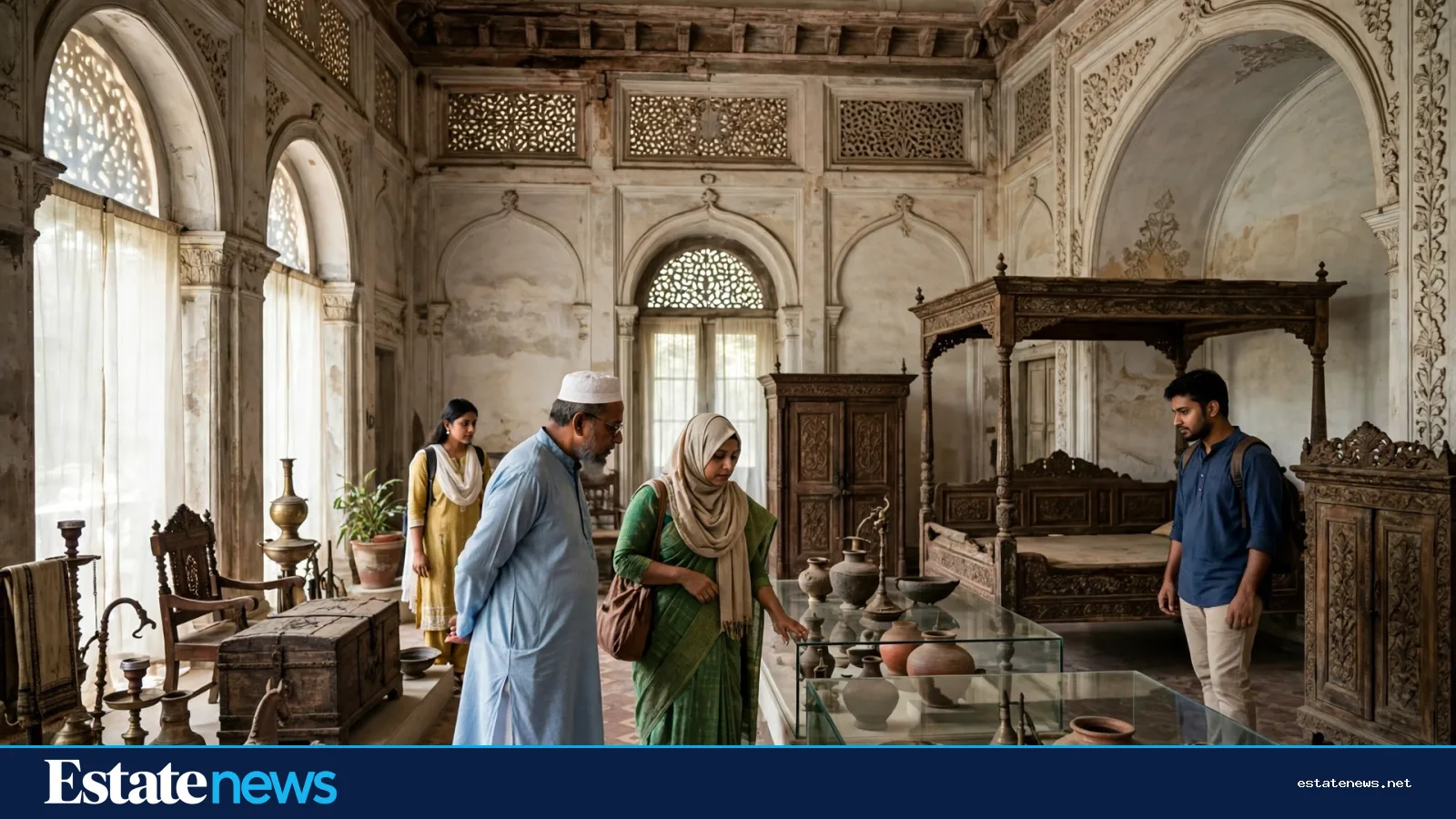
Inside, the palace has been put back to work as a museum. The rooms hold the Nawab family's furniture, photographs, documents and objects of daily life, and the galleries tell the story of the family and of Dhaka in the nineteenth and early twentieth centuries. School groups move through the ballroom, couples pose on the stairs, and older visitors point out the objects they remember from their grandparents' houses. The museum is run by the Bangladesh National Museum, and it draws the crowds that Old Dhaka's other historic buildings can only hope for.
The palace matters for more than its own story. It is the clearest surviving picture of how Dhaka's richest family lived, and how the city was governed before the modern state took over. The All India Muslim League was founded here in 1906, under the patronage of Nawab Sir Khwaja Salimullah, and that single fact ties the building to the politics of the whole subcontinent. The house that hosted a viceroy's dinner also hosted the meeting that changed Bengal's politics, and both happened in the same pink rooms.
What stands there today
Walk the grounds now and the palace feels cared for in a way it was not for decades. The lawn is kept, the facade is painted, and the river frontage is open to the air. Estate News has covered other old buildings of Dhaka in the same spirit, from "Curzon Hall: The Red Brick Hall That Taught Dhaka to Dream" to the survey in "The Crown Jewels of Bengal: A Map of the Country's Great Old Buildings", and Ahsan Manzil stands apart from them for one reason: it is not a ruin to be imagined, or a hall still in daily use. It is a house, kept as a house, and visitors can walk through the rooms where a family actually lived.
The Star Mosque of Old Dhaka, covered by Estate News on 16 November, shows what a single community can preserve. Ahsan Manzil shows what the state can do when it decides a building is worth saving. The two kinds of care sit a short walk apart, and Old Dhaka needs both.
There is a limit to what a museum can do, and the palace shows it. The rooms are quiet, the furniture is behind ropes, and the life that filled the house, the court, the dinners, the daily panchayet, is gone. What remains is the building, and the building is enough. It still faces the river, it still catches the late light, and it still tells anyone who stands on the lawn how Dhaka grew: from a trading town on the Buriganga, to a Nawab's court, to a city that keeps its pink palace as a reminder of where it came from.
The boats still pass. The families still come. The palace still watches.