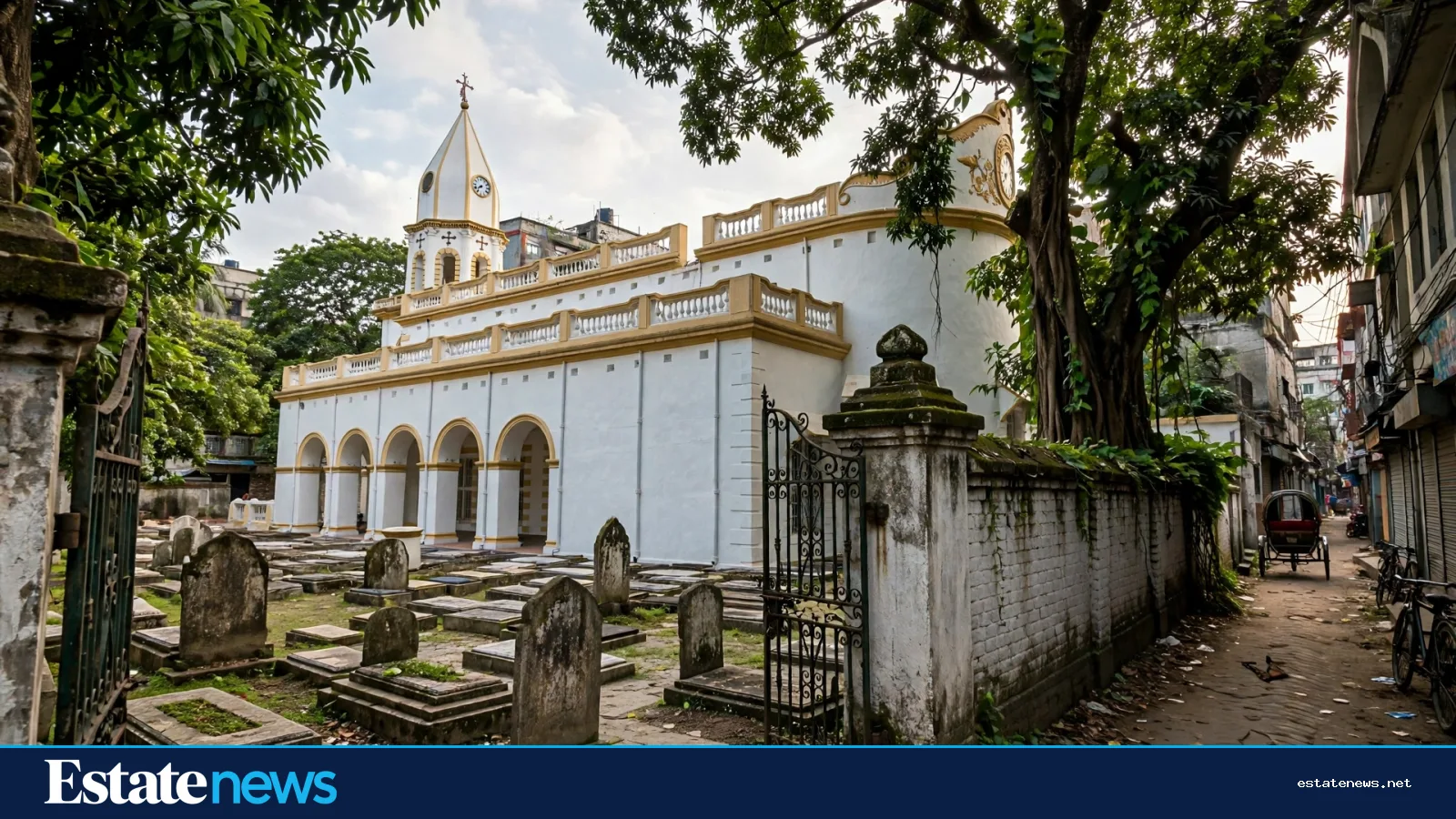
Turn off the main road in Armanitola and the noise of Old Dhaka drops away. A high wall, an iron gate, and then a green yard where old gravestones stand in rows under the trees. The white church rises behind them, its clock tower catching the light above the rooftops. Inside the wall, the city feels a long way off. Outside it, the lanes are as crowded as ever. The contrast is the point. This small compound has kept its quiet for nearly two and a half centuries.
The Armenian Church of the Holy Resurrection was completed in 1781, according to Banglapedia and the church's own foundation plaque. It stands on Armenian Street in Armanitola, the neighbourhood that takes its name from the Armenian merchants who settled there. The Armenians came to Dhaka for trade in the 17th and 18th centuries, dealing in jute and leather, and some stayed and made the city their home. The area where they lived became known as Armanitola, and the church became its anchor.
The church was built on ground that was already a graveyard. Before the church rose, the Armenian community buried its dead on this plot, and the tombstones that survive serve as a chronicle of Armenian life in Dhaka. Agaminus Catachik, an Armenian merchant, gave the land for the church. Michel Cerkess, Okotavata Setoor Sevorg, Aga Amnius and Merkers Pogose helped build it. The church was consecrated by Bishop Ephreim, and a small chapel that had stood in the graveyard gave way to the larger building.

The traders who built it
The Armenians of Dhaka were merchants first. They traded in jute and leather at a time when Dhaka's river trade was the city's lifeblood, and they were among the pioneers of the jute trade in the second half of the 19th century. The families that mattered in that trade, the Pogoses, the Agacys, the Michaels, the Stephens and the Manuks, appear again and again in the records of the church and the city. Nicolas Pogose, an Armenian merchant and zamindar, founded the Pogose Laboratory School and College in 1848, the first private school in Bangladesh.
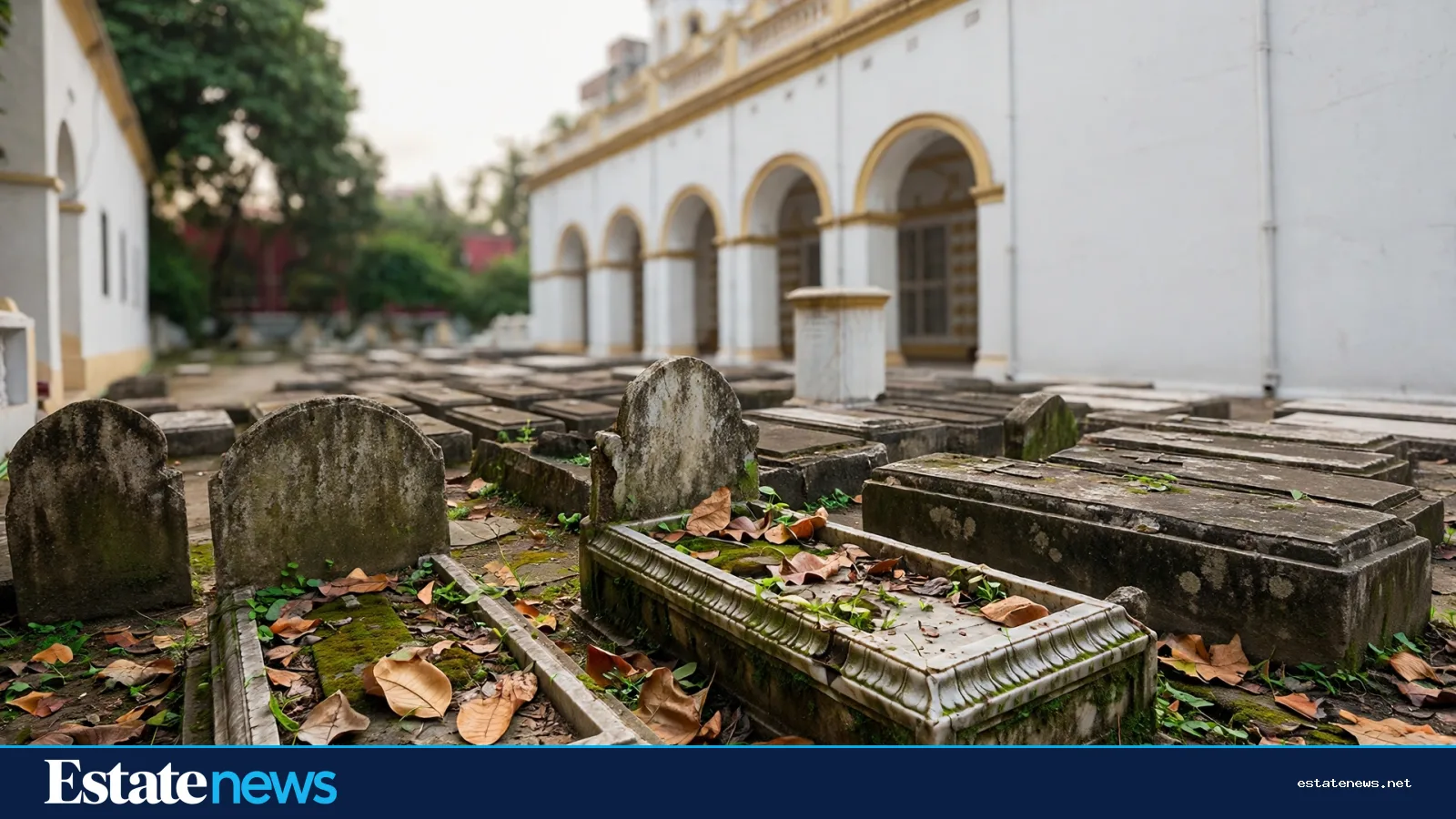
The church's own records tell the shape of that community. Between 1833 and 1918, the church registered more than 200 deaths, more than 250 baptisms and more than 50 marriages. Those numbers describe a community that was small but settled, marrying, burying and baptising its children in the same yard for three generations. The church held 200 tombs, and the stones carry names in Armenian and English, dates that run through the 19th century, and the occasional carving of a khachkar, the Armenian cross-stone.
A belfry was added on the west side of the church in 1837, and a clock tower followed within fifty years of the church's construction. The clock could be heard four miles away, and it stopped in 1880. The tower fell in the earthquake of 1897 and was rebuilt. The church itself is a long, two-storey building with four doors and 27 arched windows, its main floor divided into three parts, with a pulpit, a middle section and an area once set aside for women and children.
The churchyard


The churchyard is the part that stays with a visitor longest. The stones are weathered, some leaning, some half sunk into the grass, and the inscriptions take patience to read. They are the most complete record of who the Armenians of Dhaka were: traders, wives, children who died young, men who lived long enough to see the trade change around them. A visitor who walks the yard slowly will find stones from the 18th century beside stones from the early 20th, the whole history of a community in one small plot.
Inside, the church holds paintings by Charles Port and a statue of the kind found in Armenian churches across Asia. The main floor is simple rather than grand, which fits a community that built for worship and burial rather than display. The red-brick parsonage beside the church once housed the caretaker, and for years the last Armenian of Dhaka, Michael Joseph Martin, kept the place. He preserved and protected the church from 1986, and after him Armen Arslanian took up the care of the building in 2014, visiting every few weeks from abroad.
What stands there today
Today the church is a working place of worship in the Armenian Apostolic tradition, and Christians of all denominations are welcome to hold services there. It is also, quietly, a neighbour. The compound sits close to Mitford Hospital, and the church has opened its doors to people in need in the surrounding area, serving a neighbourhood that is among the poorer districts of the capital. That habit of looking outward is part of why the building has survived when so much around it has changed.
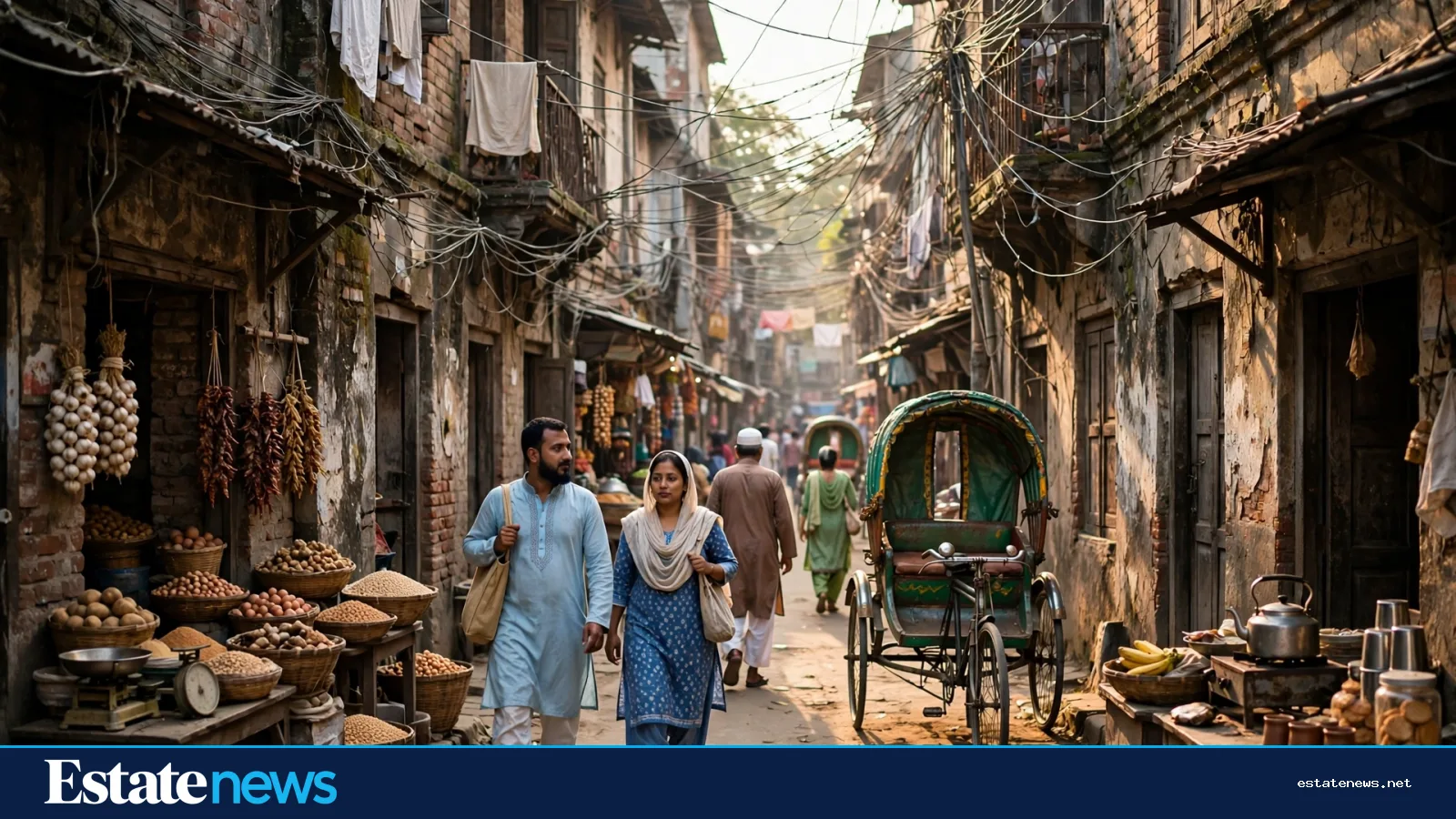
Step outside the gate and the city returns at full volume. Rickshaws, shop shutters, the smell of food from the lane stalls, and the Star Mosque a short walk away, the other great landmark of Armanitola. The two buildings sit close together and belong to different histories, and the lane between them carries both. Estate News has covered other old buildings of Dhaka in the same spirit, from "Ahsan Manzil: The Pink Palace That Watched Dhaka Grow" to "Curzon Hall: The Red Brick Hall That Taught Dhaka to Dream", and the survey in "The Crown Jewels of Bengal: A Map of the Country's Great Old Buildings". The Armenian Church is smaller than any of them, and quieter, and that is what makes it worth the visit.
There is a limit to what a small churchyard can hold. The Armenian community of Dhaka is gone, its traders and their families scattered long ago, and the church keeps their names rather than their presence. What remains is the building, the stones, and the wall that holds the noise out. Stand in the yard in the late afternoon, when the light comes through the trees and the clock tower stands against the sky, and the city that the Armenians helped build feels close enough to touch.