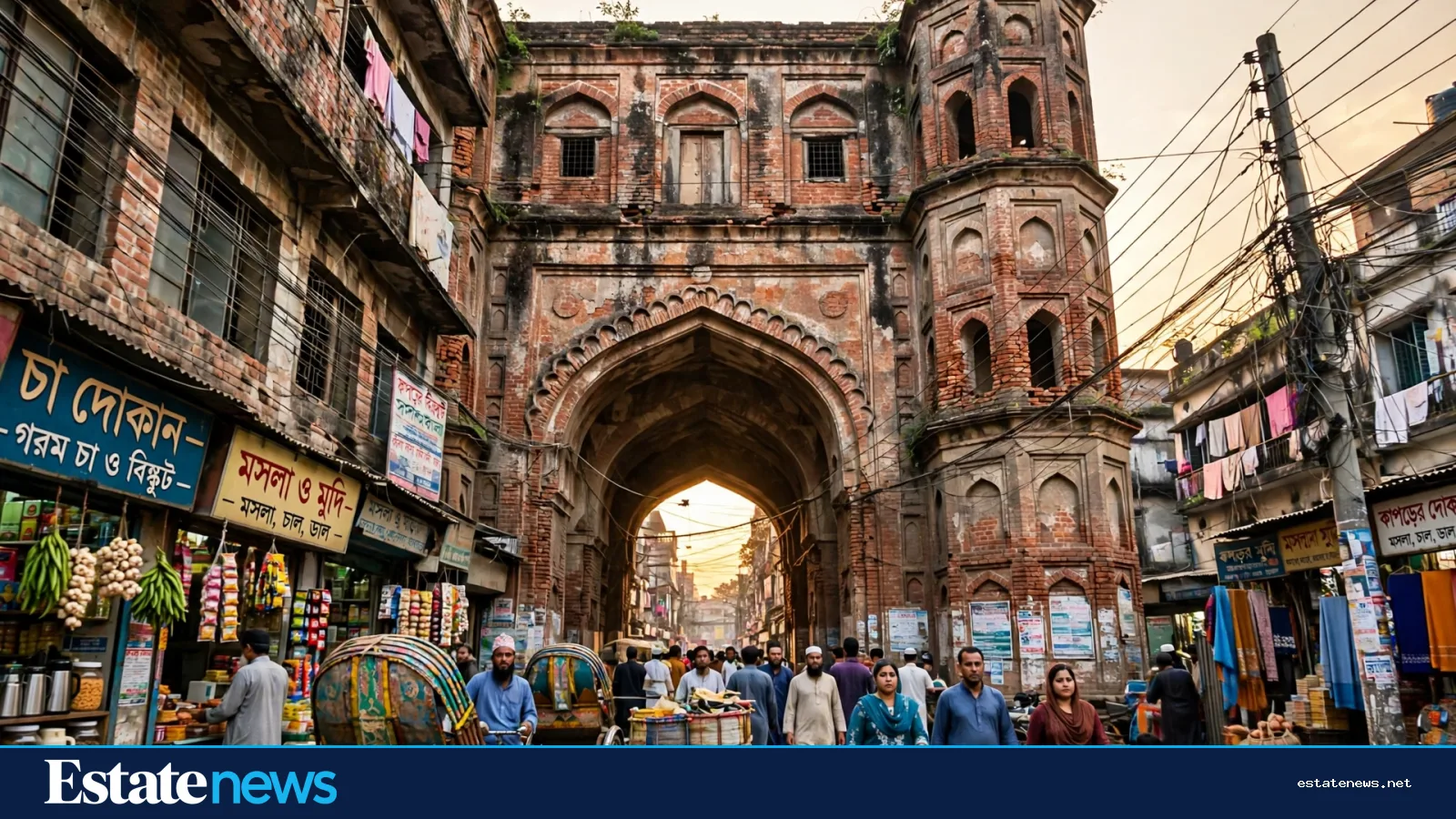
South of Chowk Bazaar, down a lane that smells of spice and hot oil, a brick gateway rises above the shop signs. Rickshaws squeeze past it, and most of the people who pass under it every day have no idea what it is. The gateway is the surviving face of Bara Katra, the great caravanserai of Mughal Dhaka, and it has stood on this spot for close to four centuries.
Bara Katra was built between 1644 and 1646, when Dhaka was the capital of Mughal Bengal and the Buriganga was a working river full of merchant boats. The builder was Mir Abul Qasim, the diwan, or chief revenue official, of Prince Shah Shuja, the second son of Emperor Shah Jahan. The building was meant to be Shah Shuja's residence in the city. The prince did not take to it, and he gave the palace to Abul Qasim, who turned it into a katra, a caravanserai, an inn for merchants and travellers arriving by river and road. Two Persian inscriptions on the building record the dates, one in 1053 AH, which falls in 1643-44, and one in 1055 AH, in 1645-46, confirming the gift from the prince to his diwan.
A palace that became an inn

The gift came with a condition that still reads like a piece of social policy. Abul Qasim endowed twenty-two shops with the building as waqf, a charitable endowment. The income from the shops was to pay for repairs and for the poor, and the officials in charge were told not to take rent from any deserving person who alighted there. A traveller who arrived in Dhaka with goods to sell and nowhere to sleep could stay at Bara Katra without paying for the room. Dhaka in the 1600s was a port city, and the katra stood between the river and Chowk Bazaar, so a merchant could unload a boat, store his goods and sleep under the same roof.
The plan of a Central Asian inn
The building was laid out around a quadrangular courtyard, in the manner of the caravanserais of Central Asia. Two storeys of arcaded rooms ringed the open court, with twenty-two living cells in each wing, according to the architectural record, and shops facing outwards. Two gateways were built, one on the north side and one on the south. The southern wing was the grand side, fronting the river, and it ran 67.97 metres, about 223 feet, along the water. Its three-storeyed gate held an octagonal central chamber, and the corners were marked by tall octagonal towers, of which only the two in the south wing still stand. The word katra itself comes from the Arabic katara, a colonnaded building, and in Persian and Arabic writing it meant a caravan sarai, a resting place for a caravan.
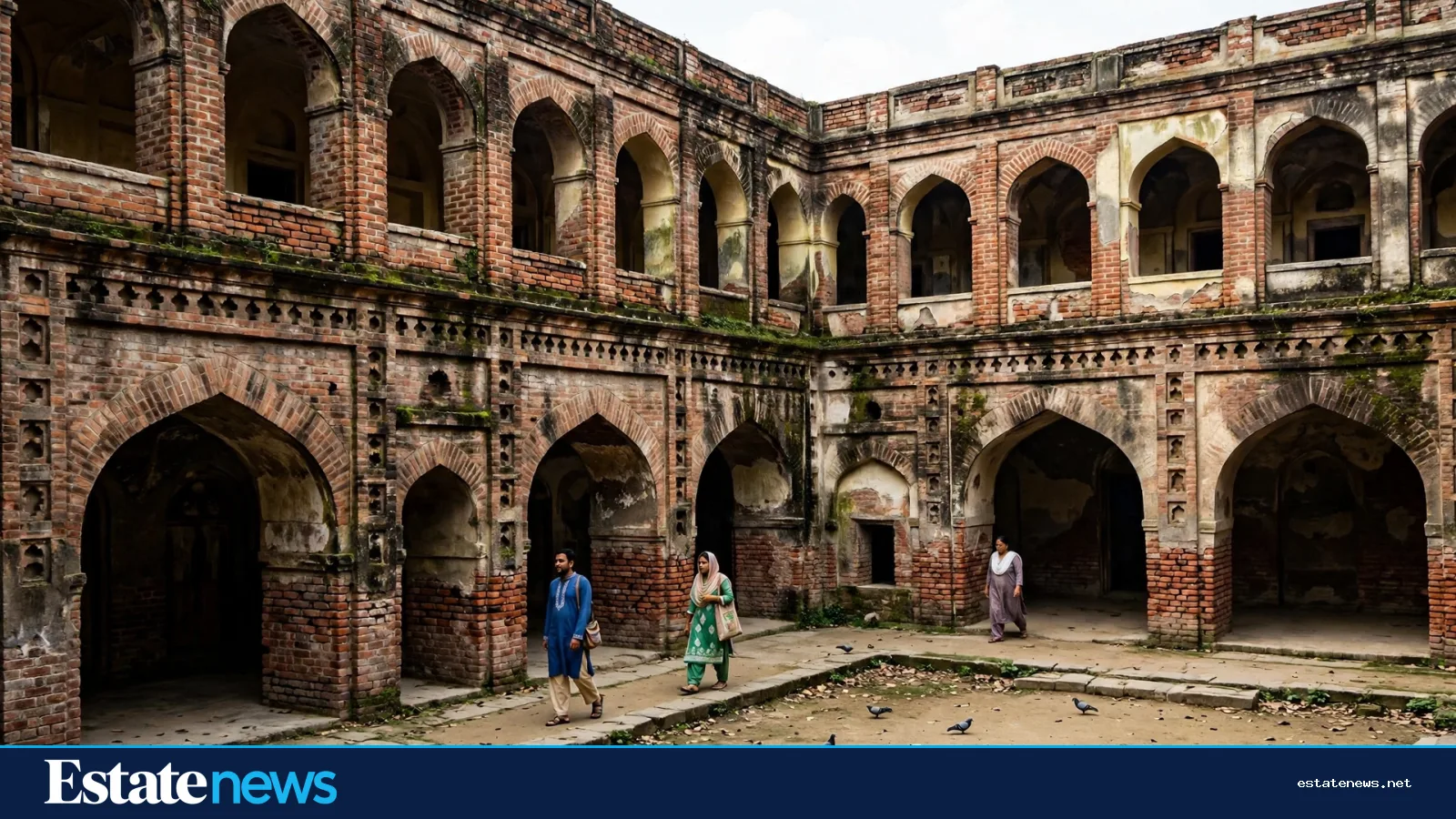
The work was finished in the imperial Mughal style of the day, with arched openings, stucco decoration and a fortified look that made the inn resemble a small palace. Charles D'Oyly drew the building in 1823, when its river frontage, gateway and towers were still complete. Dhaka built a second katra in the same century, the Chhota Katra, around 1664 under Subahdar Shaista Khan, following the same pattern on a smaller scale.


The river made it, then the river left it
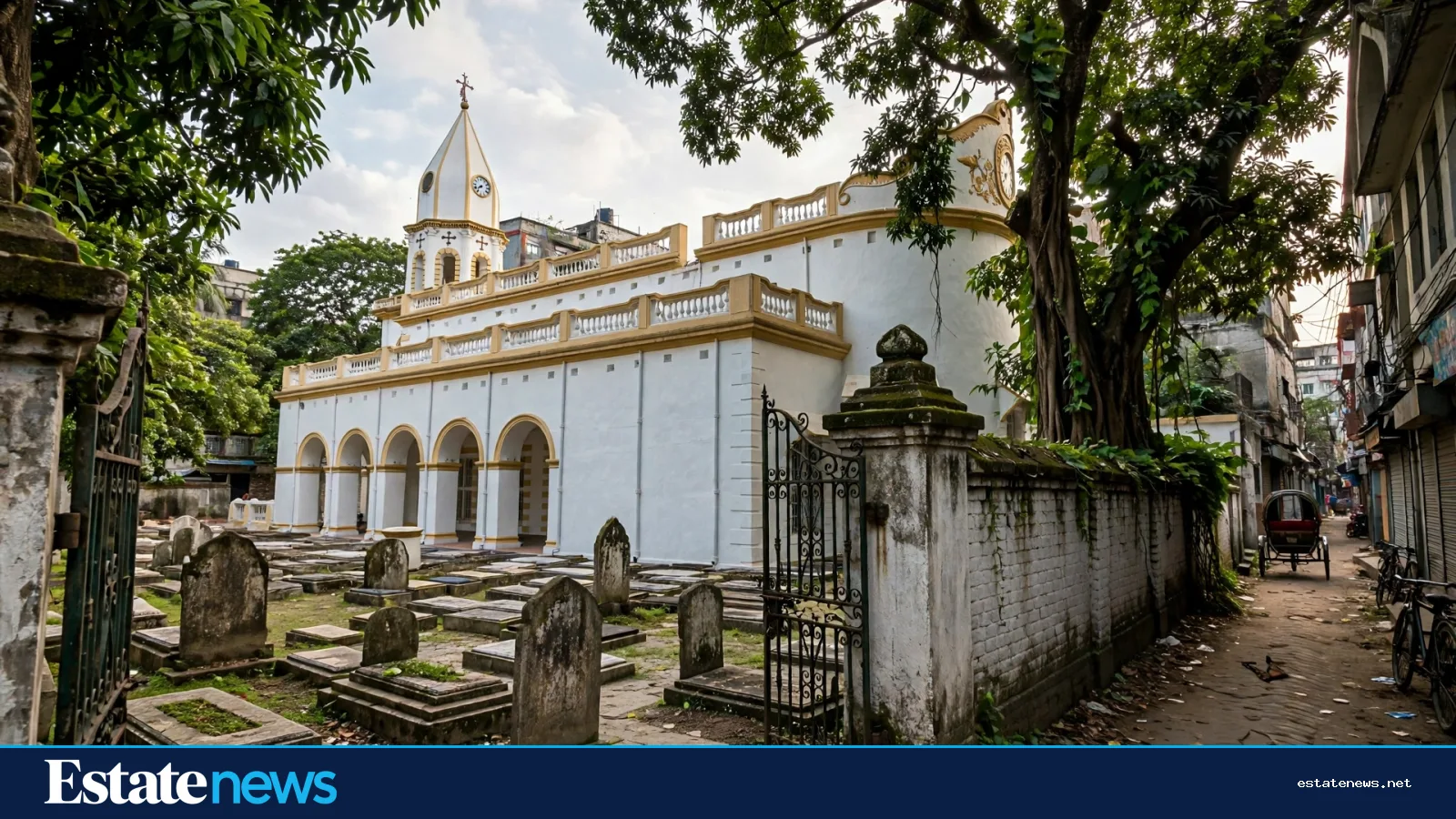
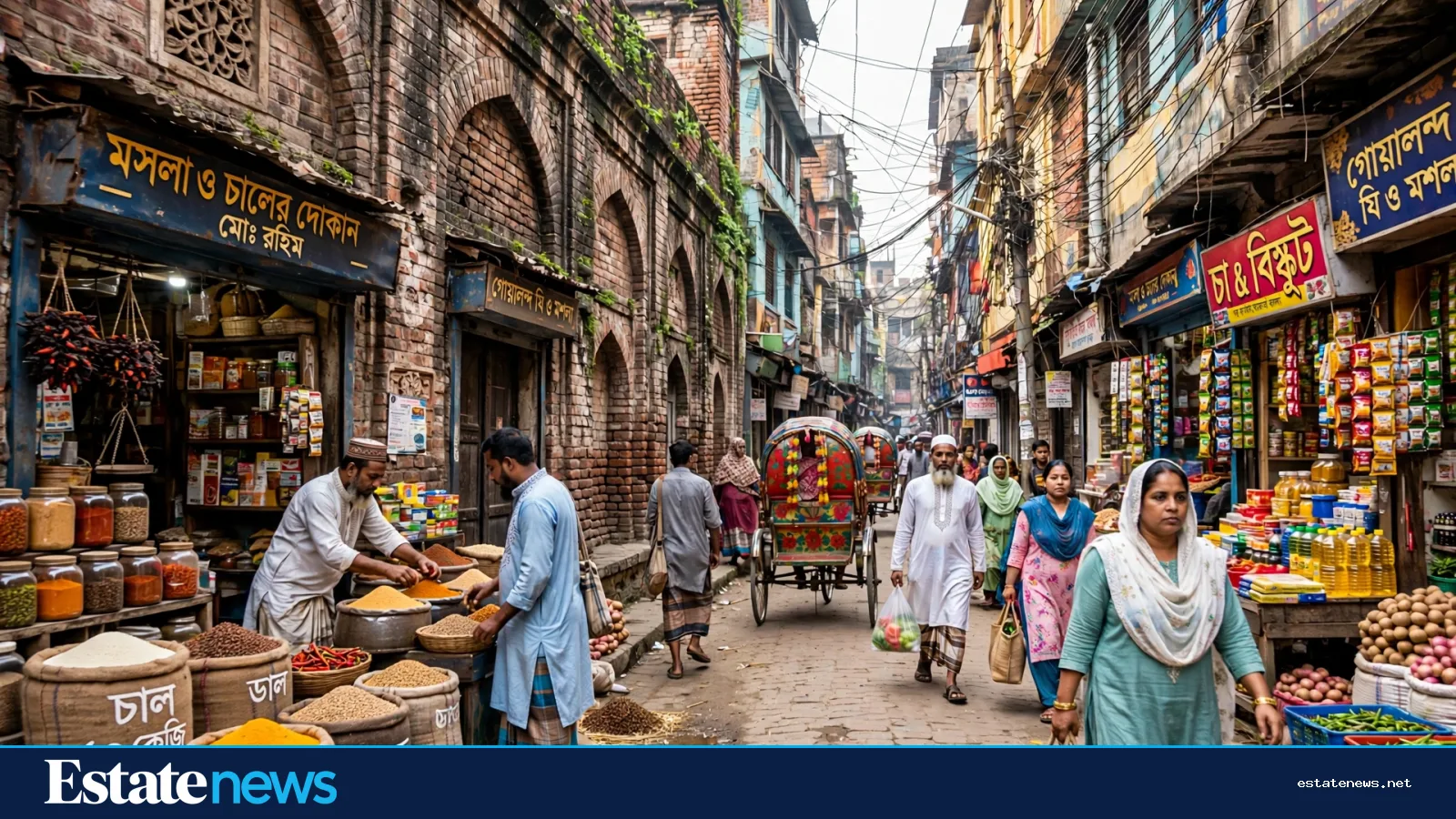
For three centuries the river ran along the southern side of the palace. Then the embankment built to protect Dhaka from annual flooding pushed the water away, and the katra lost the view that had given it its purpose. The Buriganga no longer laps at the gate, and Bara Katra Lane, in Ward 30 of Dhaka South City Corporation, is now a crowded commercial street, with the old brickwork sitting between shops and warehouses.
Walk the lane today and the old building is easy to miss. More than half of it has already been destroyed, and what survives is in a poor state. The southern wing is the part that still reads as a building, with its gateway and towers. The rest has been eaten away by encroachment, by alterations made by the owners, and by new multi-storeyed construction raised inside the old footprint. The Department of Archaeology has not been able to take charge of the monument, because of litigation and resistance from the owners. Reports in 2022 said part of the structure was pulled down, and the news drew a fresh round of attention to a building that had been quietly disappearing for decades.
Estate News has covered other Old Dhaka buildings that survived their centuries better, including "Ahsan Manzil: The Pink Palace on the Buriganga and the Old Dhaka It Still Anchors" and "Lalbagh Fort: Dhaka's Unfinished Palace and What It Still Teaches a City About Water, Gardens and Public Life". Those two are protected, visited and photographed. Bara Katra is the one that did not get that luck.
Why the old inn still matters
Banglapedia still calls Bara Katra perhaps the most magnificent Mughal edifice of Bangladesh, and the claim rests on the gateway alone. The monumental central archway, the octagonal chamber behind it and the towers at the corners are a record of how a trading city housed its visitors, and how a prince's palace could be turned, by one endowment, into a public good. The twenty-two shops were the funding model: rent from the shops paid for the roof over the traveller, and the traveller paid nothing. The lane still trades, the market still draws crowds, and the gateway still stands over the street, a piece of the city's working history that is worth keeping.