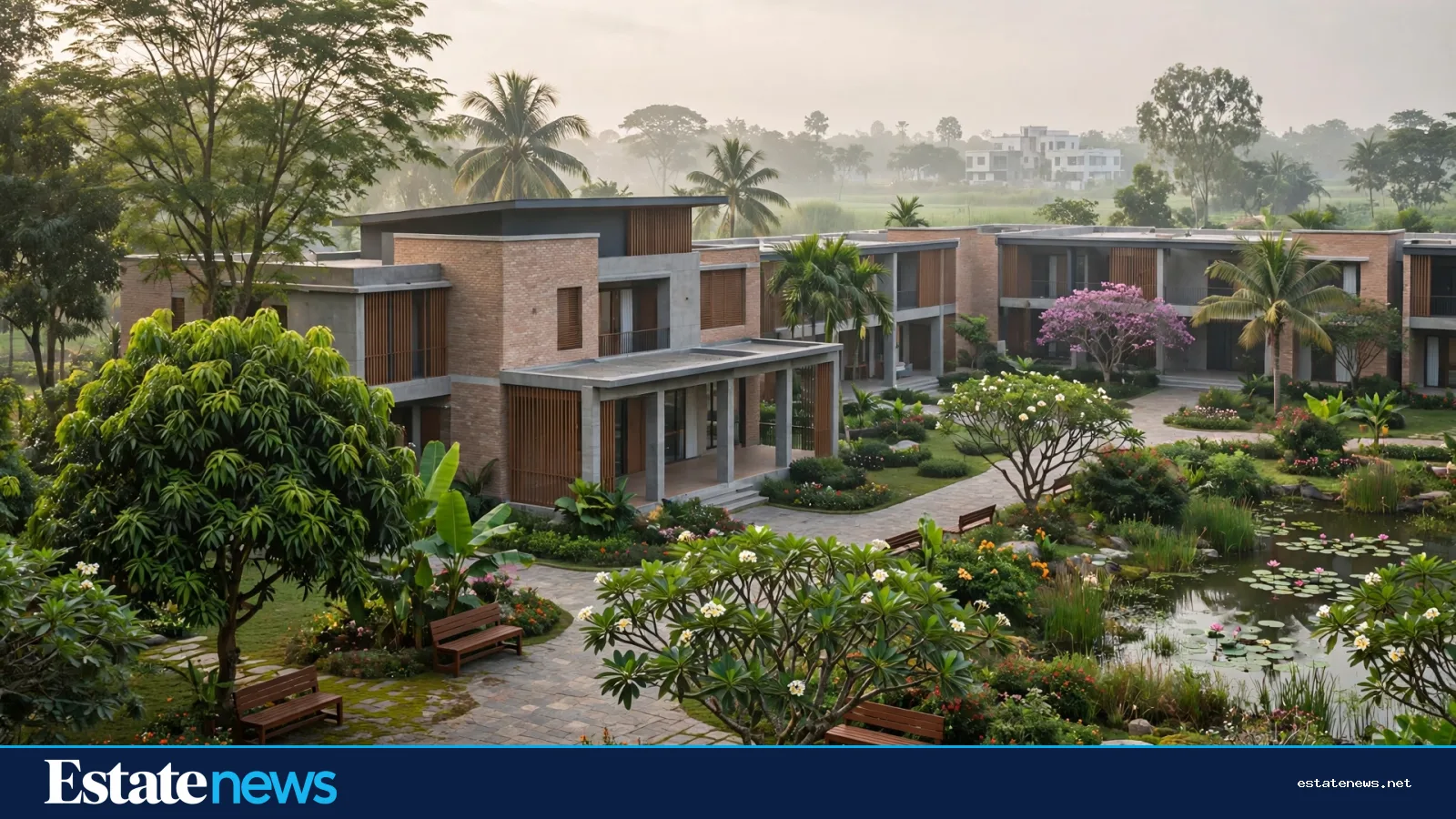
Drive out of Dhaka on the 300 Feet Expressway, past the half-finished towers and the plots still waiting for their turn, and the city loosens its grip in stages. The traffic thins. The air smells of wet earth instead of exhaust. In Rupganj, a short distance from Purbachal, a gate opens onto ten bighas of land where the buildings sit low, the paths are wide, and the pace of the place is set by people in their seventies and eighties. Nothing here shouts. That is the point.
This is the Japan-Bangladesh Friendship Retirement Homes and Hospital, known as JBFRH. It opened its doors to residents on a limited scale on 20 December 2024, and it offers Dhaka something the city has never really had: a home built for old age, with a hospital inside the same compound. Four residential buildings hold 272 apartments, 232 of them for purchase and 40 for rent. A 150-bed palliative care unit stands beside them. The question the project asks is a simple one, and it is new for Bangladesh. What if growing old did not mean depending on whoever happens to be at home?
The idea arrived before the building did

Retirement homes are common in Japan, where the JBFRH idea took shape, and almost unknown in Bangladesh, where old age has always been a family matter. Parents move in with a son or a daughter. A grandchild helps with the stairs. A neighbour keeps an eye out. That arrangement still holds for most families, and it will for a long time. JBFRH does not argue with it. The project was built for the families where the arrangement has already thinned out: children living abroad, a flat in Dhaka with stairs nobody can climb any more, a parent who needs help at three in the morning and has nobody in the next room.
The chairman of the project is Professor Sarder A Nayeem, a laparoscopic surgeon. The Japanese connection is not decoration. In July 2025, a delegation from Japan's Gakken Group visited the project, a sign of how closely the Bangladeshi team has studied the Japanese model of care for older people. The name on the gate says friendship, and the friendship is practical: how a building is laid out, how care is organised, how a resident's day is put together.
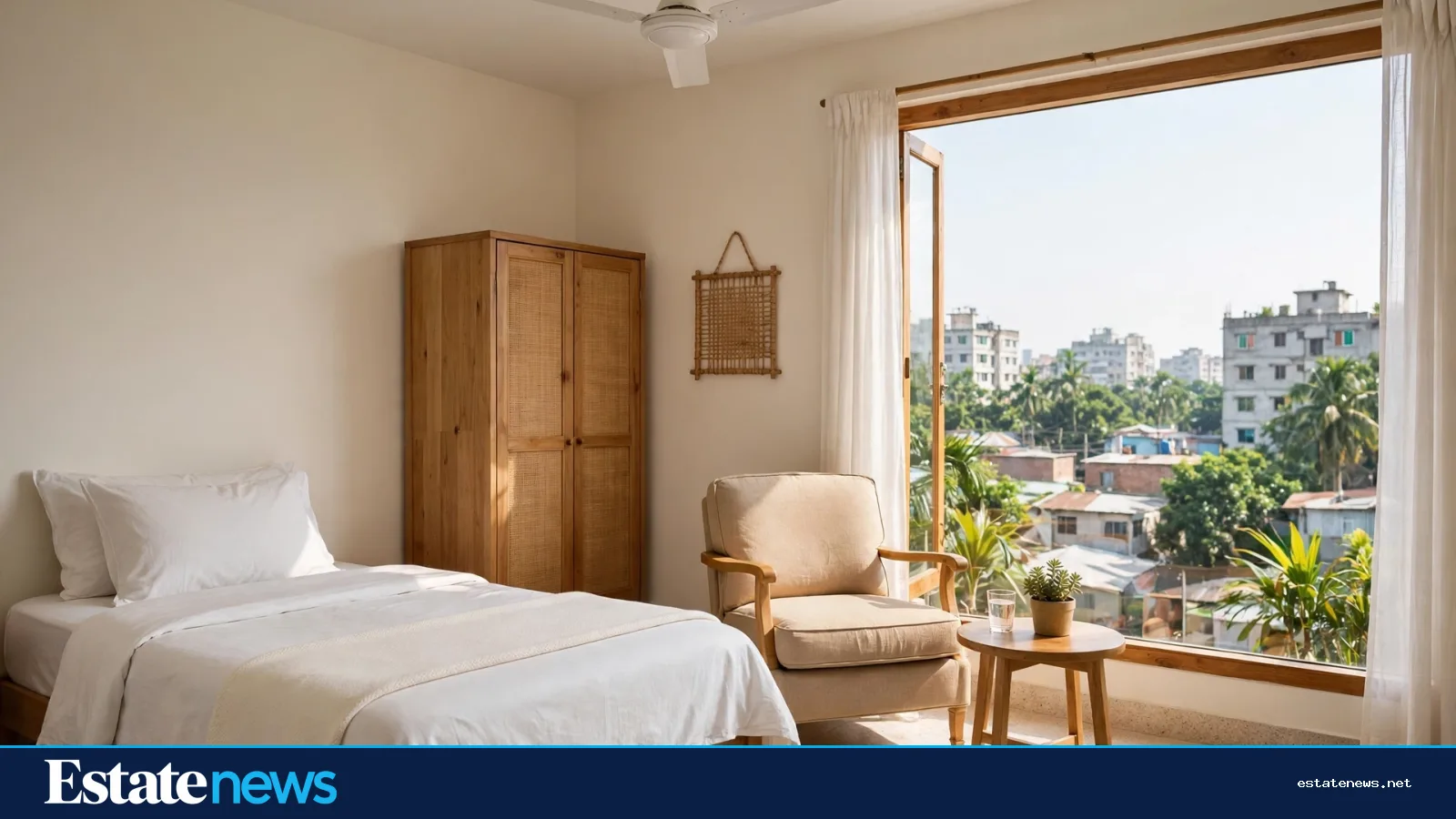
The scale of the place is easy to miss from the road. Ten bighas sounds large until you stand inside it, and then it feels deliberate. Seven buildings stand on the site. Four of them are residential, named Padma, Meghna, Surma and Jamuna, and together they hold 272 apartments, 232 for purchase and 40 for rent. The rest of the land goes to the hospital, the gardens, the dining rooms and the walkways between them. A studio apartment is a small, complete home: a bedroom and living space in one, a bathroom built for a person who may not move easily, a door wide enough for a wheelchair. The project's own website lists the studio apartment at 700 square feet.
Four buildings, 272 front doors
Walk the grounds in the late afternoon and the design explains itself. The paths are flat. The benches sit in shade. Residents move at their own speed, and nobody hurries them. A retirement home is judged the way a flat is judged, by light and air and how far the bathroom is from the bed, except here the judgement also covers the distance to the nurse's station and the doctor on call. The buildings are arranged so that help is close without being in the way, and that is a harder design problem than it looks.
Care is the product, not the flat


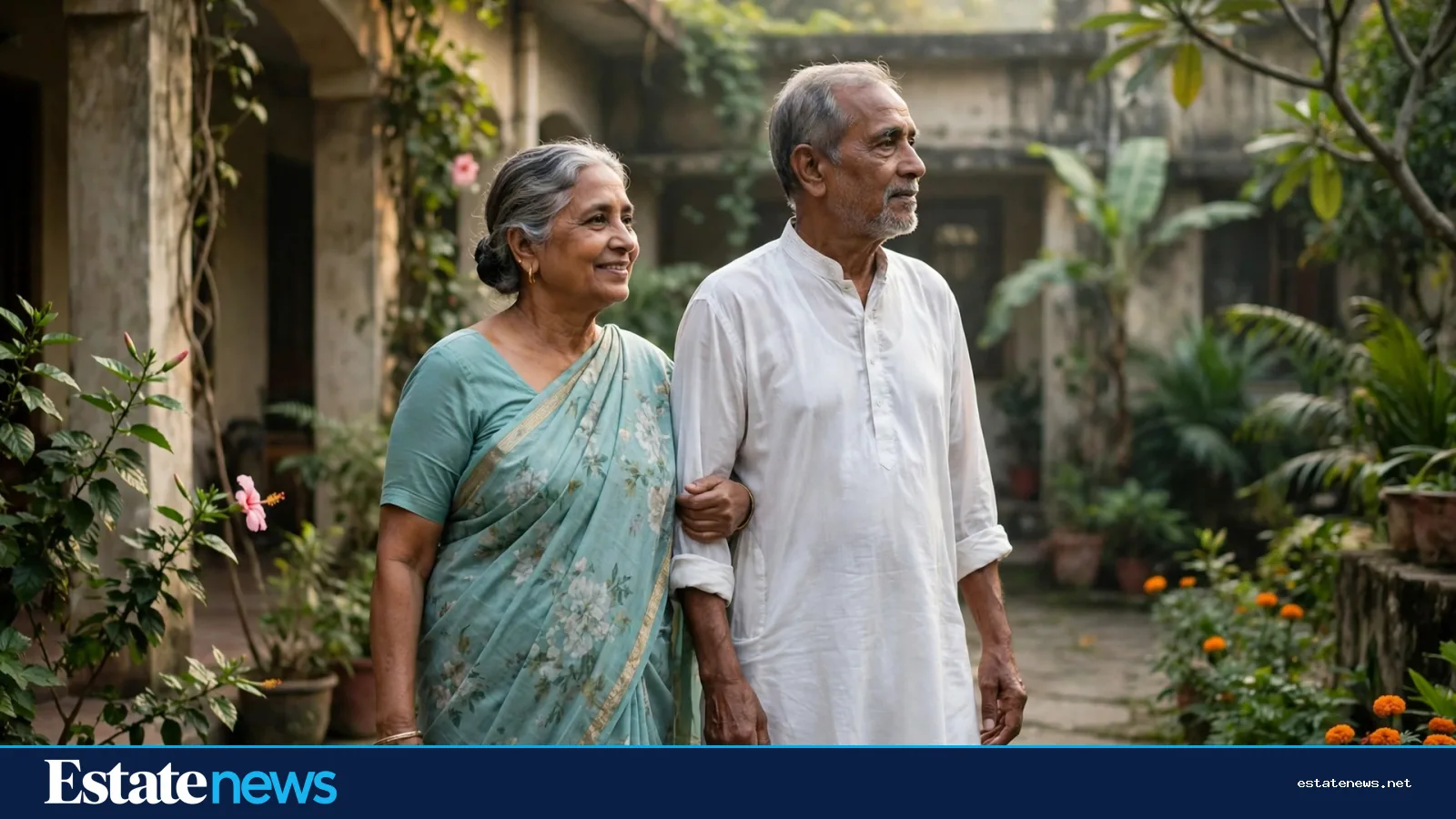
The 150-bed palliative care unit is the part of JBFRH that separates it from an ordinary housing project. Palliative care is the care given to people with serious illness, where the aim is comfort and dignity rather than a cure, and a 150-bed unit of that kind is a large commitment for any private project in Bangladesh. It sits beside the apartments for a reason. A resident whose health turns can move to a higher level of care without leaving the place they live, and without the family having to start a new search in a crisis.
That is also how the pricing works. Renting costs Tk 25,000 a month, with a Tk 25,000 service charge on top. Five meals a day cost Tk 800 a day, or Tk 24,000 a month, and medical services add Tk 20,000, taking the total monthly expense to Tk 94,000, according to the project's deputy managing director, Dr Ashik Ur Rahman. Buying an apartment costs Tk 1.3 crore, and a buyer is exempt from rent and service charges but still pays for meals and medical care. A stay can also be as short as a day, at Tk 5,000. In plain terms, the rent is not only for the room. It pays for the care that comes with it, and the more care a resident needs, the more the price moves. A family comparing JBFRH with a flat in Dhaka is comparing two different things, and the comparison only makes sense once the care is counted in.
The price is the part of the story nobody can walk past. Close to a lakh a month is beyond most retired households in Bangladesh, and JBFRH does not pretend otherwise. It is a premium product, aimed at families with savings, a pension, or children earning abroad who can pay for a parent's care. That is a real market, and it is growing as Dhaka's middle class ages, but it is not the whole market. The question the project raises, rather than answers, is what a retirement home looks like for the family that cannot pay a lakh a month. Somebody will have to build that version, and it will look very different from this one.
Who moves in, and what changes for them
A resident at JBFRH gives up something real. A family flat in Dhanmondi or Uttara holds a lifetime of furniture, neighbours, a mosque or a temple down the road, and the habit of a street. Moving to Rupganj means leaving all of that for a new address near Purbachal, where the neighbourhood is still forming. What the resident gets in return is company of their own age, meals cooked and served, and medical help that does not depend on a son taking a day off work to drive to a hospital. For a widow living alone in a big flat, or a couple whose children are in Toronto or London, that trade can make sense. For a parent surrounded by grandchildren in the family house, it will not, and the project does not need it to.
Estate News has profiled the same kind of builder before, including "Rakeen Development: The Mirpur Builder Behind Bijoy Rakeen City", a project that sells a whole neighbourhood behind one gate. JBFRH sells something narrower and stranger: a neighbourhood behind one gate where every resident is old, and where the gate exists so that care can reach them quickly. The two projects answer different questions, and a buyer choosing between them is really choosing what stage of life the home is for.
What Purbachal learns from its oldest residents
Purbachal is usually written about as a city of the future, a place of plots and towers and new roads. JBFRH adds an older resident to that story. A new town needs schools and markets, and it also needs somewhere for the people who built the old city to spend their last years with dignity. The retirement home opened in December 2024, not this week, and its first year has been quiet by design. A project like this grows by word of mouth, one family telling another that their mother is safe there, and that kind of trust takes longer than a launch ceremony.
The test for JBFRH will not be the opening. It will be the fifth year, when the first residents have grown frailer, the palliative unit is full, and the promise of care has to be kept at three in the morning rather than made at a reception desk. If the project passes that test, it will have done something no Dhaka developer has done before: it will have made growing old a problem with an address. Other builders will follow, and the prices will come down, and the idea will spread beyond the families who can pay a lakh a month. That is how a new kind of housing usually starts in this city, with one expensive example, and then the copies, and then the version ordinary people can afford. The copies have not arrived yet. The example has, and it stands in Rupganj, waiting to be judged on the care it gives.