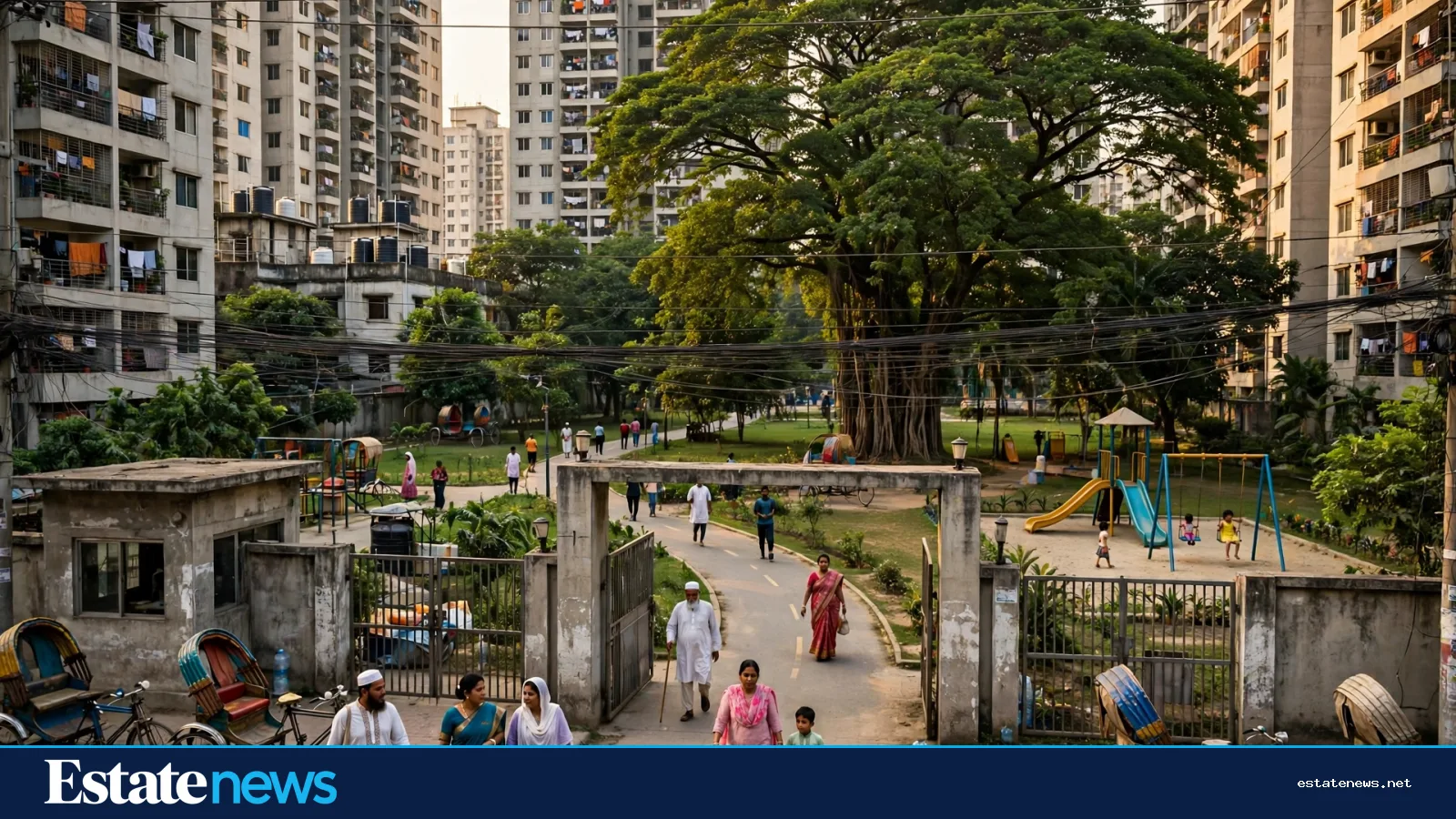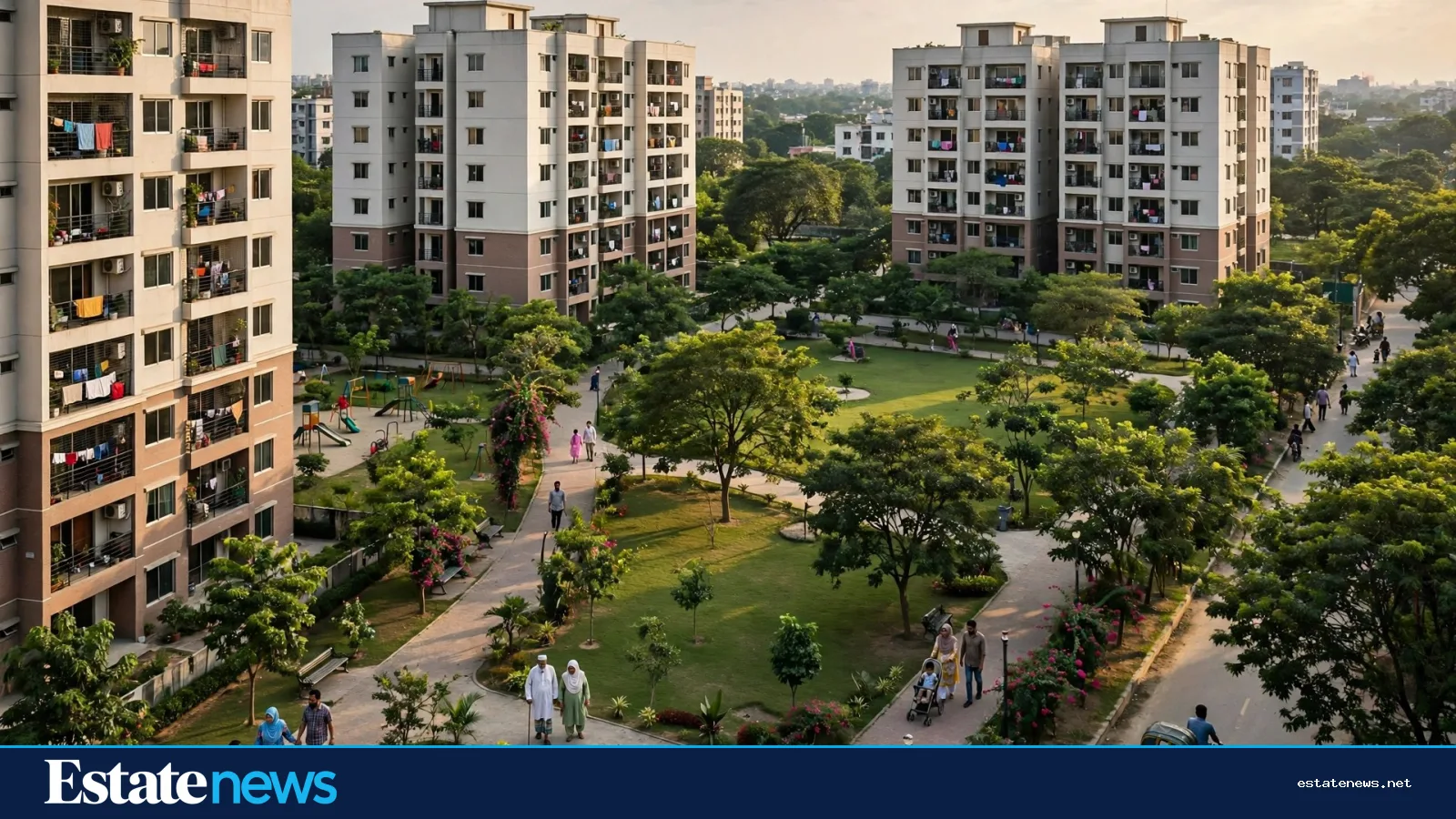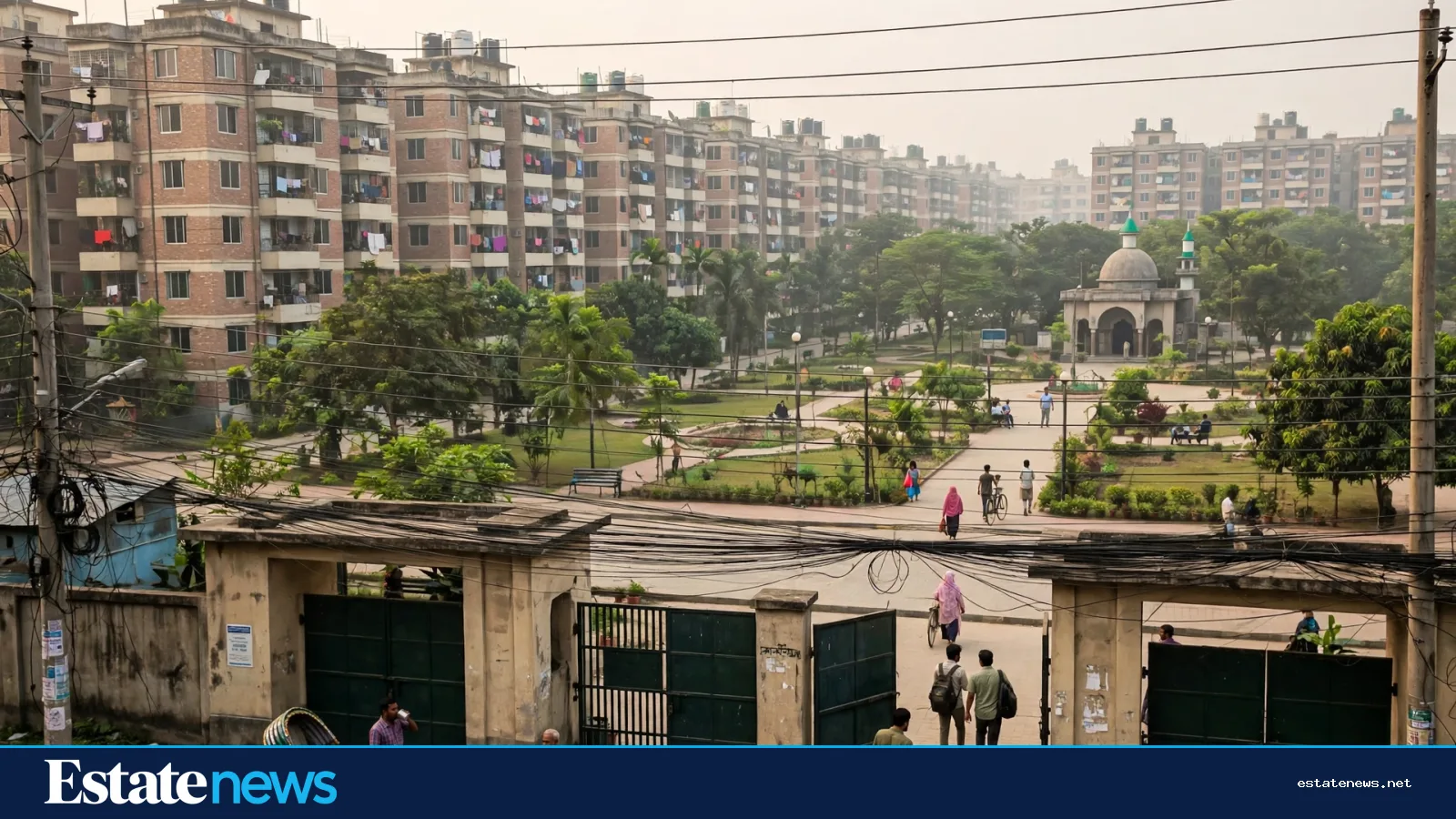
Morning at the Lake City gate starts before the city wakes properly. A rickshaw puller waits by the green steel gates while schoolchildren in uniform walk out in small groups, and the first tea stall on the road outside is already steaming. Inside the gate the sound changes. The horns fade, the trees take over, and the long rows of brick apartment blocks stand in straight lines around a central green, with a mosque dome rising above the trees. It feels less like a housing project and more like a town that was drawn on one sheet of paper and then built, all at once.
This is Lake City Concord in Khilkhet, and the company behind it is Concord Real Estate. The township is the project that explains the company better than any brochure could. Concord began in 1972 rebuilding bridges damaged in the war, grew into one of the country's biggest construction firms, and then did something no Bangladeshi developer had tried before: it built a whole neighbourhood for the middle class, with more than 4,000 apartments on a single site, and sold the idea that a flat could come with a town attached. Fifty years on, the test of that idea is not the launch. It is whether the town still works.
From war-damaged bridges to the towers of Motijheel

Concord Engineers and Construction Ltd was set up in 1972 by S. M. Kamaluddin, an engineer who had spent about eight years with an engineering firm after graduating, according to a Daily Star profile from 2009. The company was formally established in 1975. Its first work was the unglamorous kind: repairing bridges that the war had left broken. That beginning shaped what came after. Concord learned its trade on public works before it ever sold a flat.
The list of what the group built in the decades that followed reads like a tour of the country's public face. The National Martyrs' Memorial at Savar, the Prime Minister's Office, Zia International Airport, the Janata Bank headquarters, the Jiban Bima Tower and the Shilpa Bank building in Motijheel all carry Concord's hand, as does a 750-foot Telecom Tower in Singapore. In Dhaka's first building boom, Concord was the firm that put up some of the first high-rises in Motijheel, and its founder bought early into Gulshan when others doubted the area would grow north. The company's own history, published for its 50th anniversary, puts the count at more than 1,200 completed projects and more than 10,000 residential and commercial units handed over. Those are company figures, and they are the scale on which the rest of the story has to be judged.
A township, not a tower
Lake City Concord arrived when Dhaka's flat prices had already pushed the middle class out of the centre. The company opened the first phase in March 2005, handing over 330 flats at Namapara in Khilkhet, about 1.5 kilometres east of the Khilkhet bus stop and beside RAJUK's Purbachal project. The Daily Star reported at the time that the township would have 18 buildings of 16 storeys each on completion, and that the smallest flats, 450 square feet, were priced at Tk 4.5 lakh, the cheapest apartments then on offer in Bangladesh. The largest flats, 1,500 square feet, were priced at Tk 15 lakh. Those were 2005 prices, and they belong to a different Dhaka. What matters now is the shape of the idea: one site, one gate, and everything a family needs inside it.
The township as it stands today holds more than 4,000 apartments, according to the company's own published material, along with a shopping complex, schools, mosques and green open space. The design leaned on a construction method the company calls RCBM, a more earthquake-resistant technique it says it used first at Lake City. Concord had already introduced ready-mix concrete commercially in Bangladesh, setting up the country's first concrete batching plant in 1990, and pioneered concrete blocks as an alternative to kiln-burnt clay bricks in 1998. A buyer walking the site would not see any of that. The point of the engineering was that it stayed invisible, holding up buildings that were sold cheap and built fast.
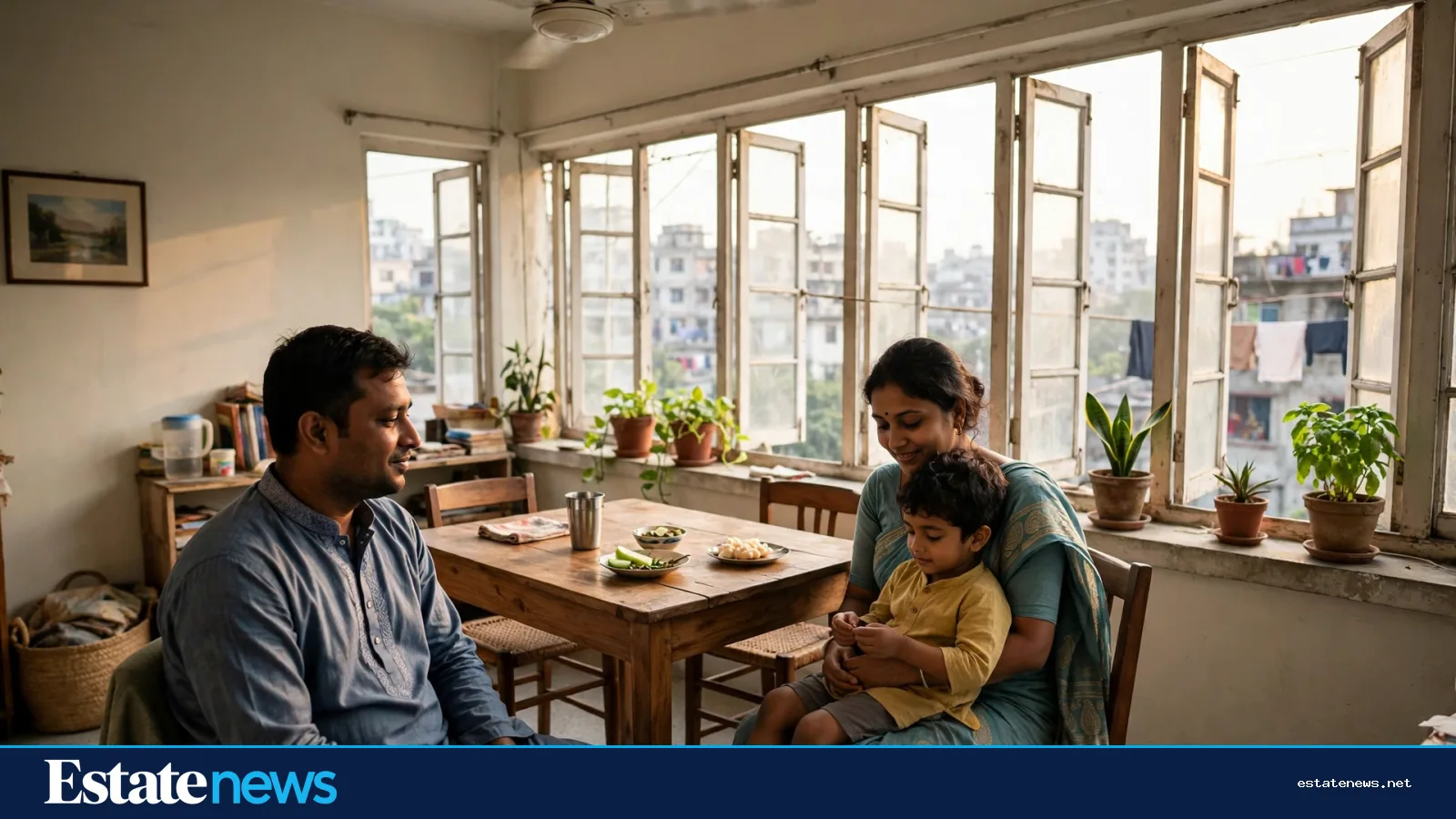
Step inside one of the flats in the late afternoon and the idea turns physical. The ceiling fan turns above a wooden dining table. Daylight comes through wide windows. A family sits together after the day's work, and the rooms feel finished for living in. Plants on the sill and a child's school bag by the door: the interior does the slow work of making a large development feel like a home.


Luxury came later, and it came in the same hand
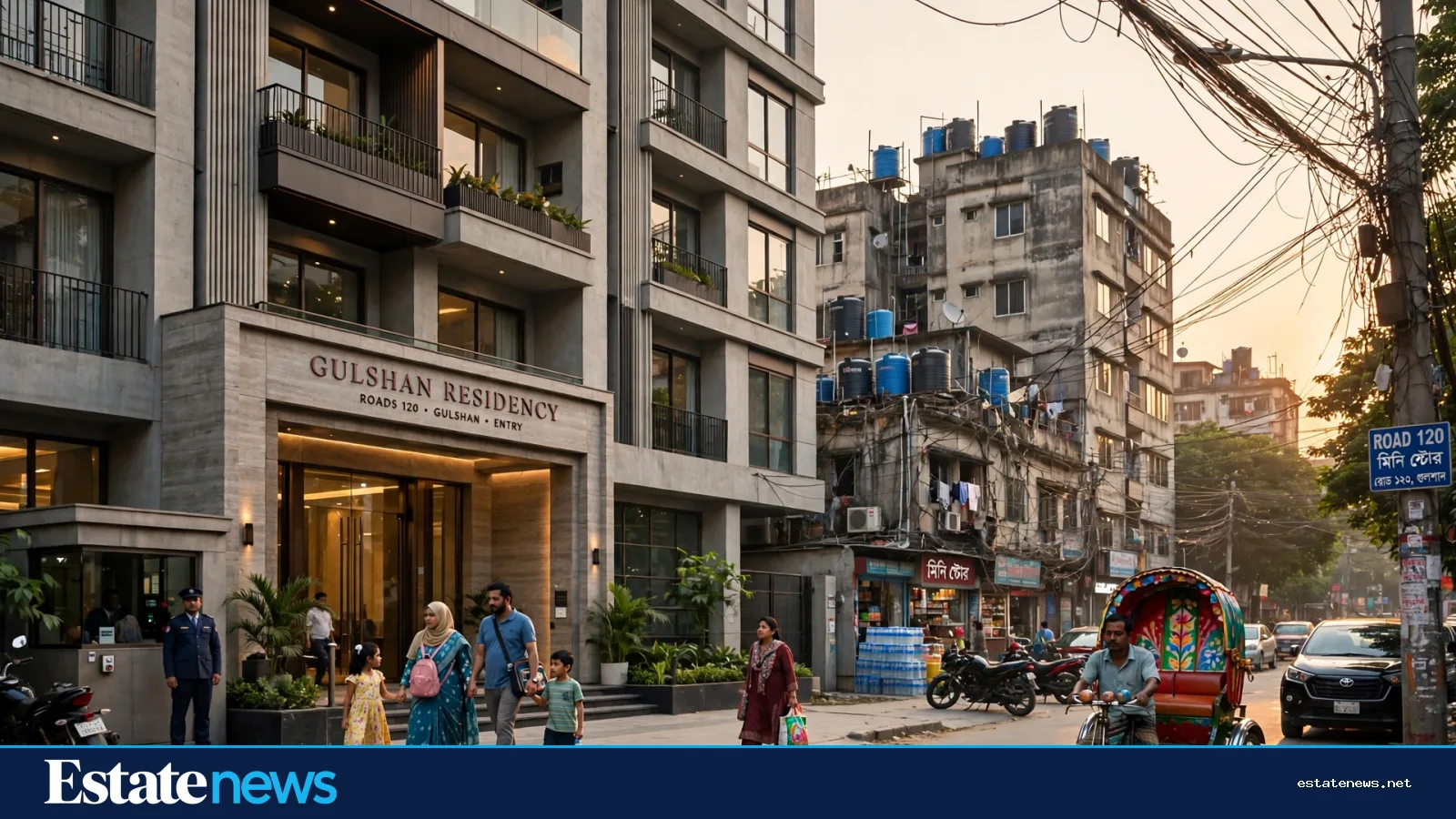
Concord did not stay in the affordable lane. Its real estate arm now sells luxury apartments in Gulshan, Dhanmondi, Bashundhara, Baridhara, Banani, Uttara and Chattogram, and its current listings include Concord Godhuli, ready flats of 1,575 to 2,350 square feet inside Lake City Concord itself. The move from Tk 4.5 lakh flats to luxury towers in Gulshan is the arc of Dhaka's own market, and Concord walked it in step. The company also moved sideways into leisure, building Fantasy Kingdom at Ashulia, the theme park that changed land prices around it several times over, according to the Daily Star's 2009 profile of the chairman.
The thread that runs through both ends of the business is the same. Concord builds at a scale where the shared parts matter more than any single flat: the substation, the water supply, the mosque, the market, the road inside the gate. A tower in Gulshan and a township in Khilkhet look like different products, but they are built by the same habit of mind, which is to treat the building as a small piece of infrastructure and the neighbourhood as the product.
The record buyers should test
A builder of whole neighbourhoods invites a harder kind of scrutiny than a builder of single towers, and Lake City has had its share. A Daily Star report in May 2011 found residents raising questions about fire-safety provisions in the complex, and noted that land earmarked in the approved layout for a school and a mosque had been used for two more buildings. RAJUK had approved the original 8.5-acre layout in June 1999 and a revised layout in 2009. The report is fifteen years old, and the township has changed since, but it is the right caution for any buyer: a gated community is only as good as its papers, and a buyer should ask to see the RAJUK approval, the deed and the chain of title before paying a booking amount. Estate News explained the documents that matter in "How to Verify a Land Title in Bangladesh: The Documents That Matter", and the registration cost that follows a purchase in "Flat Registration Cost in Bangladesh: A Buyer's Guide for 2026".
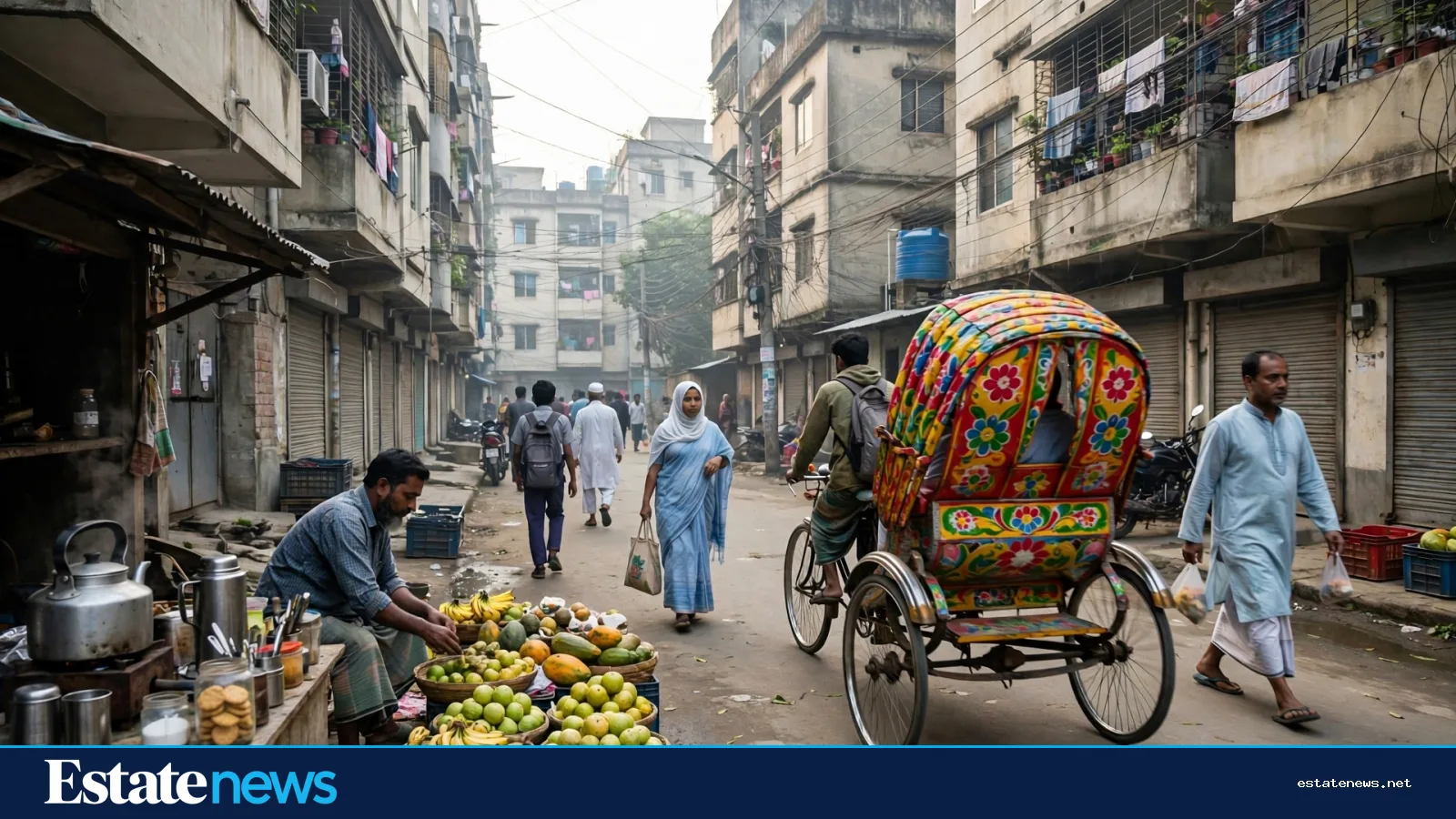
The road outside the gate does as much of the selling as the township itself. Khilkhet sits where Dhaka meets its northern edge, between the airport road and the Purbachal expressway, and the area around the township has filled in with shops, schools and housing of its own. A buyer here is buying into two places at once, the quiet inside the gate and the busy life outside it, and the balance between the two is what the project has to get right every day.
Concord marked its 50th anniversary in 2025, and the company now describes itself as a conglomerate with interests well beyond housing. What comes next for its oldest idea is an open question. Lake City's neighbours are changing fast, Purbachal is rising beside it, and the ready flats at Godhuli show the company still sees value in the township it built twenty years ago. The test for a builder of whole neighbourhoods is not how fast it grows. It is whether the quiet inside the gate is still there when the families who bought in come home in the evening, and whether the next project feels as considered as this one. Estate News told the township's own story in "A City Inside the City: How Lake City Concord Changed What Dhaka Expects From Home"; this profile is about the company that built it, and the long road from a broken bridge to a town of its own.