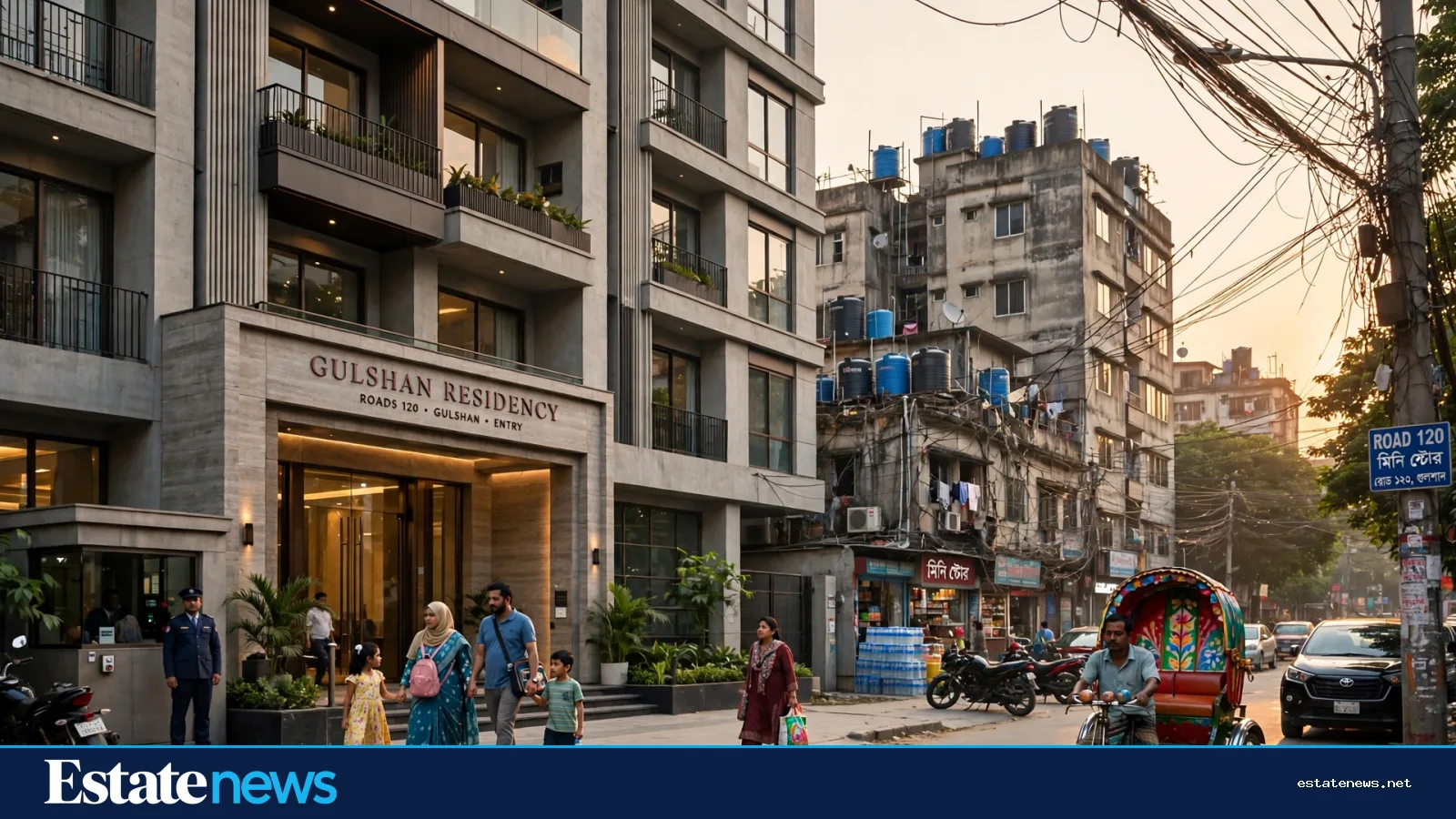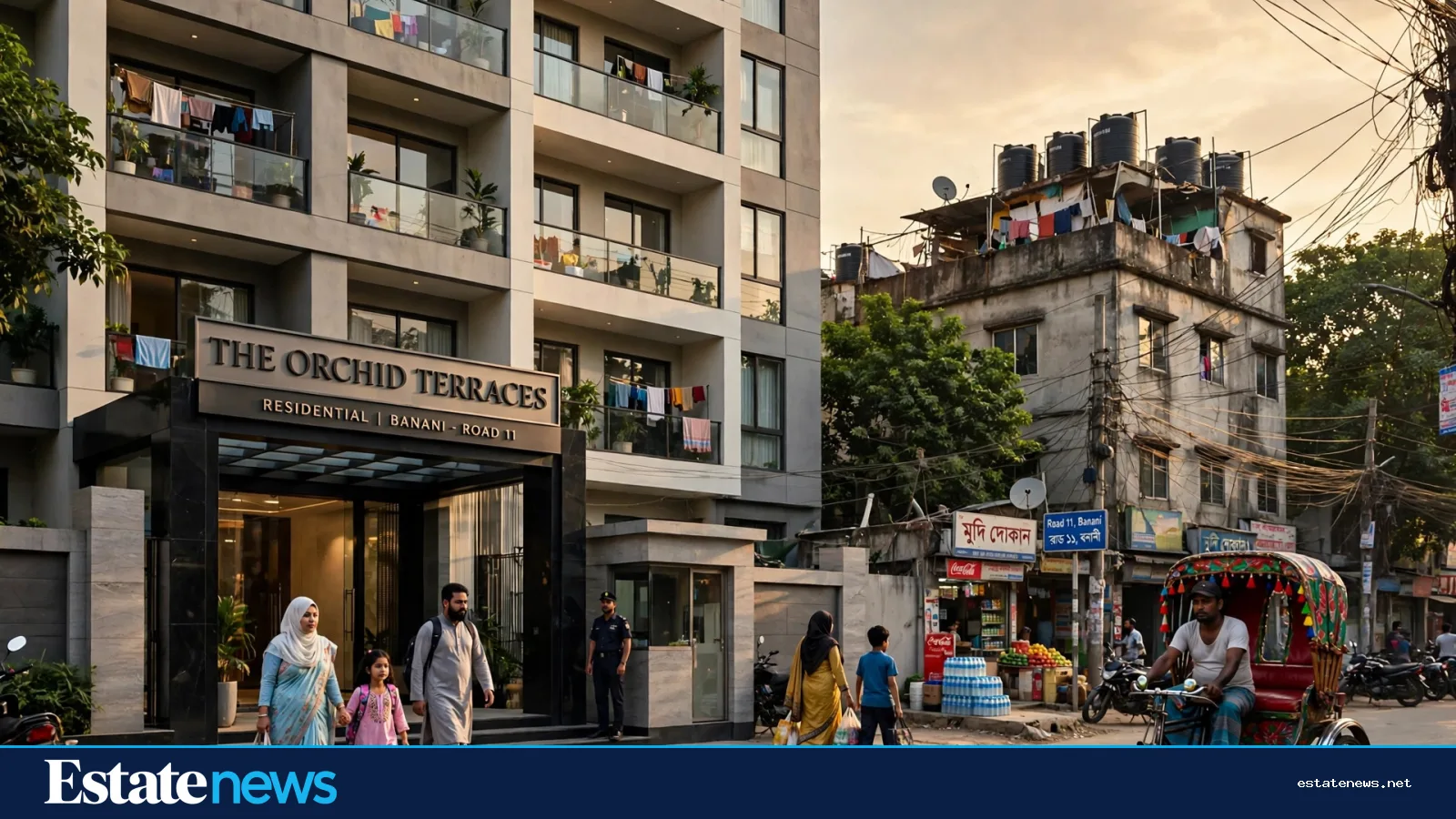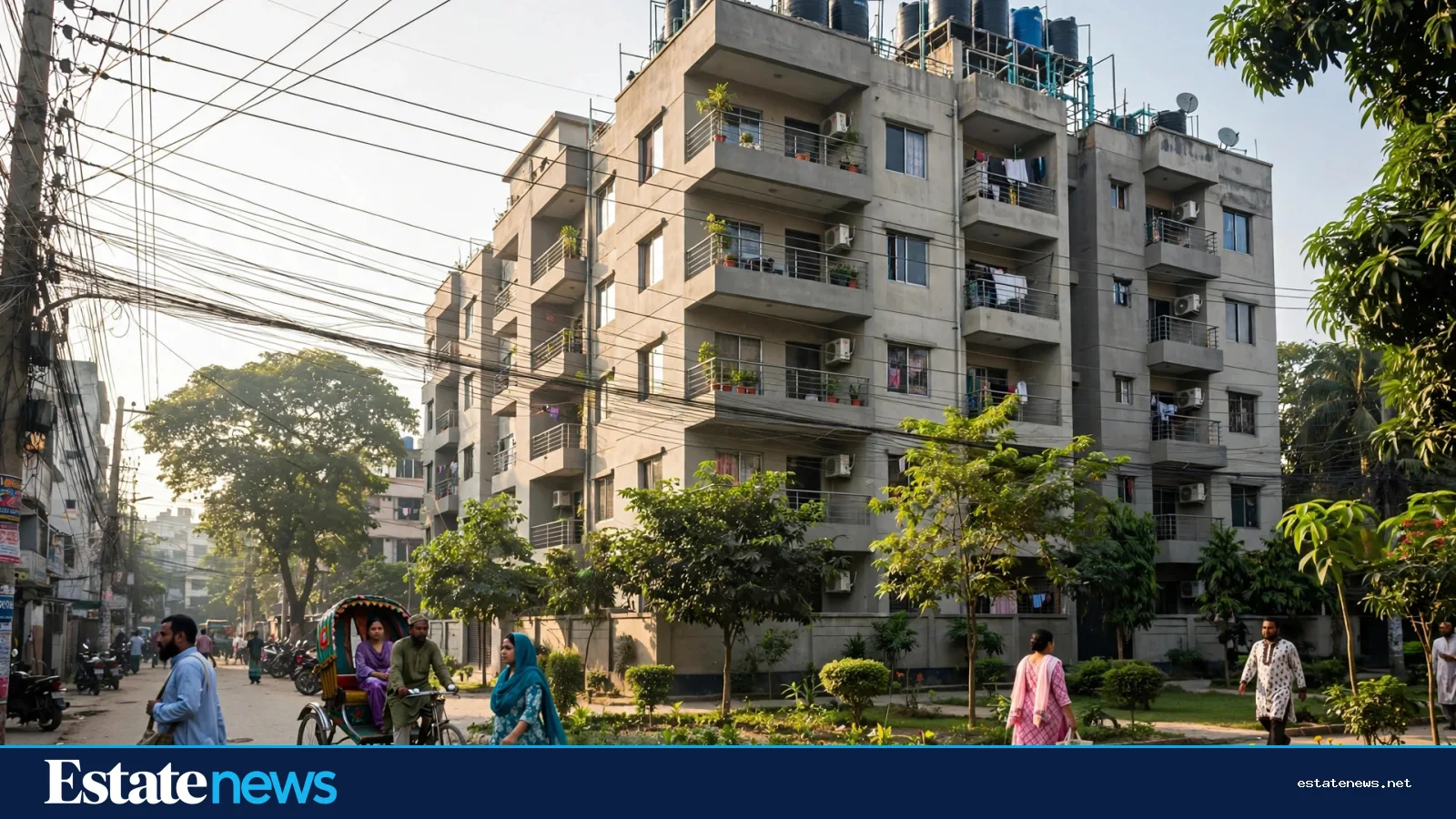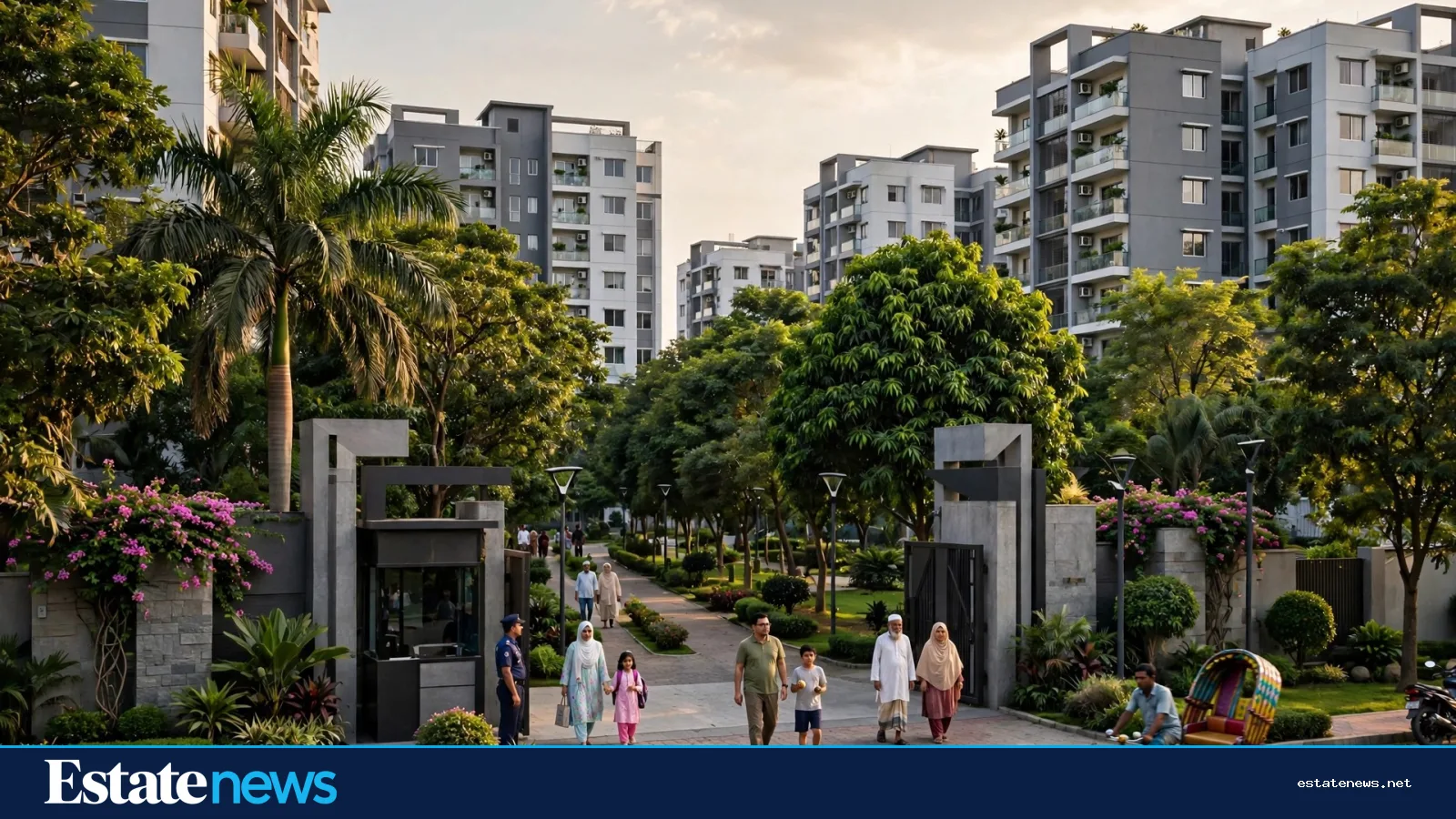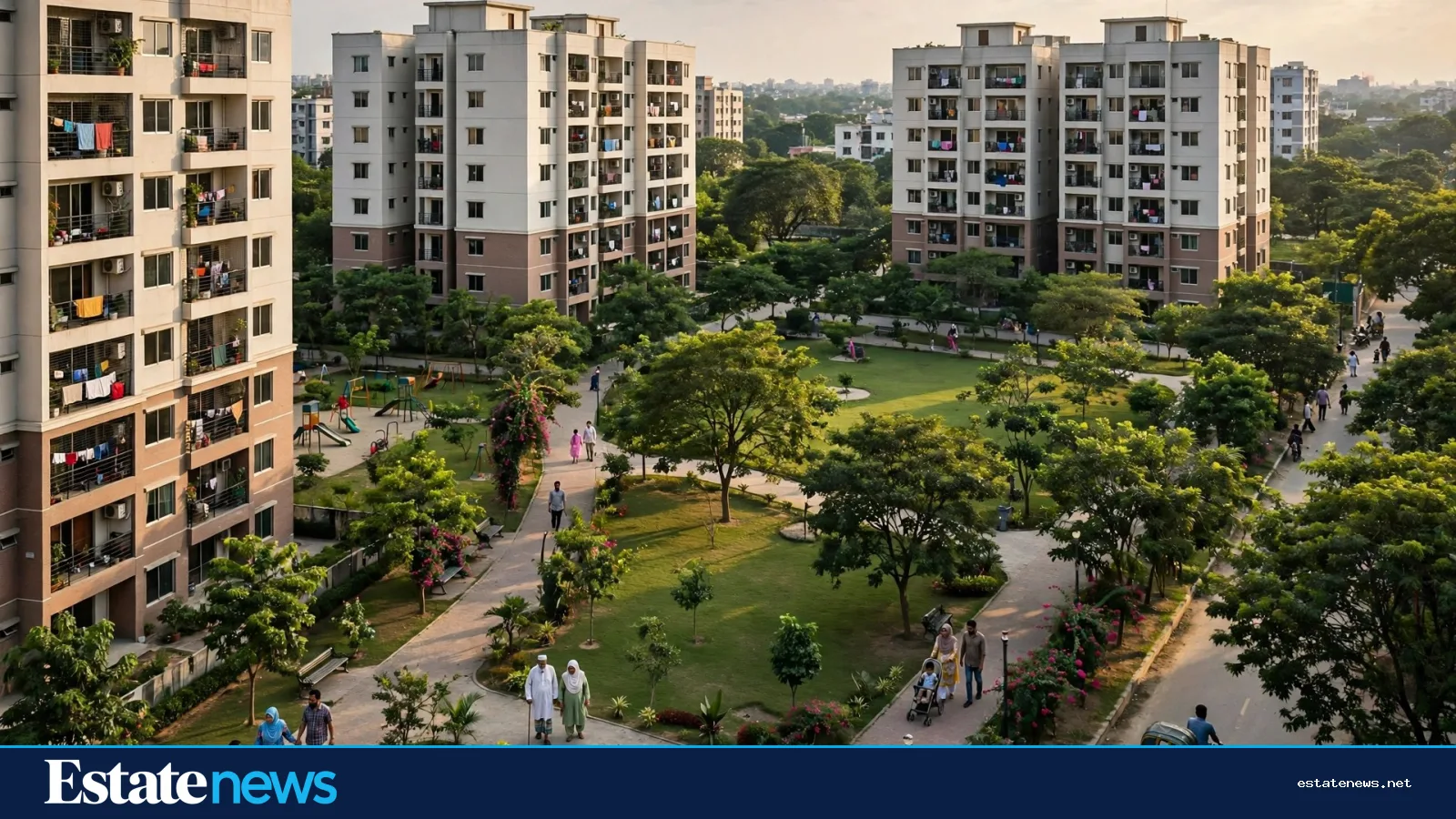
The evening walk starts at the gate. A guard nods, a rickshaw turns in from Ring Road, and the noise of Mohammadpur drops a notch behind the wall. Inside, the paths run between trees, children ride bicycles along the lanes, and the towers stand in rows with laundry drying on the balconies and lights coming on one by one. It looks like a small town that happens to sit inside a neighbourhood of Dhaka.
Japan Garden City is one of the capital's oldest experiments in planned living. The company behind it, Japan Garden City Ltd, calls the project the first satellite city in Bangladesh, a Japan-Bangladesh joint venture built on about 30 bighas in Mohammadpur. The pitch, set out in the company's own description, was simple: only 43 percent of the land would carry buildings, and the rest would stay green, with gardens, a lake, a park, walkways and a playground. Three sides of each flat would stay open to light and air. A family buying here was buying the ground between the buildings as much as the rooms inside them.
That idea arrived in Dhaka before gated townships became common. Uttara had Rupayan City and Bashundhara had its own sprawling blocks, but Mohammadpur had something different: a single enclosed enclave in the middle of one of the city's busiest older neighbourhoods. The towers went up in rows, RAJUK approved 26 sixteen-storey blocks, and by 2021 about 1,600 families were living in 21 buildings, according to The Business Standard. The complex grew its own small economy too, with a shopping centre, Tokyo Square, on the site.

A town inside a neighbourhood
The enclave works because it is self-contained in the ways that matter on an ordinary day. The company runs its own 33kV substation and deep tubewells, and it collects utility bills from residents. There is a mosque, shops and a market inside the boundary, and the internal roads belong to the people who live there. A resident can walk a child to the playground, buy vegetables and come home without crossing Ring Road at all.
That self-containment is also what residents watch most closely. In 2010, The Daily Star reported that residents felt some of the promised amenities, greenery, a playground, a school, had not arrived as promised, and that a substation and a pump had been placed on the playground site. The company's director at the time said the layout plan had been revised in 2005 and the mosque moved to a bigger plot. The argument has never really ended. It is the same argument every enclosed housing project in Dhaka eventually faces: the plan on paper and the place people actually live in are two different things, and the gap between them is where trust is won or lost.
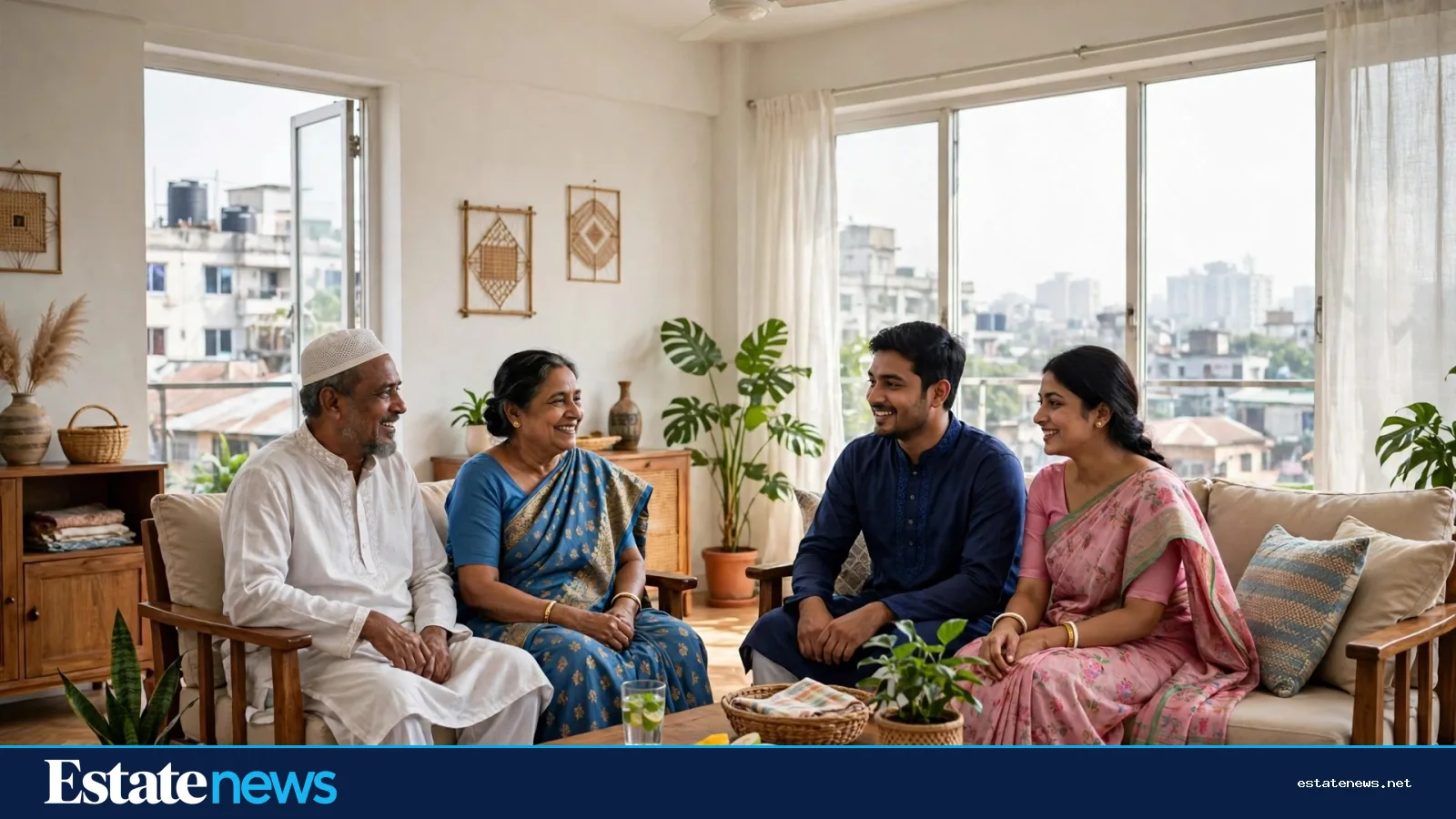
Inside the flats, the selling point is quieter than the gate suggests. A living room with a ceiling fan turning, daylight through a wide window, and a family sitting together after the day's work is the picture the enclave wants buyers to carry home. The rooms are finished for families who will live in them for years, not for a viewing. Wooden furniture, plants on the sill, a dining table that stays set: the interior does the slow work of making a large development feel like a home, and it is the part of the enclave that no gate can provide.
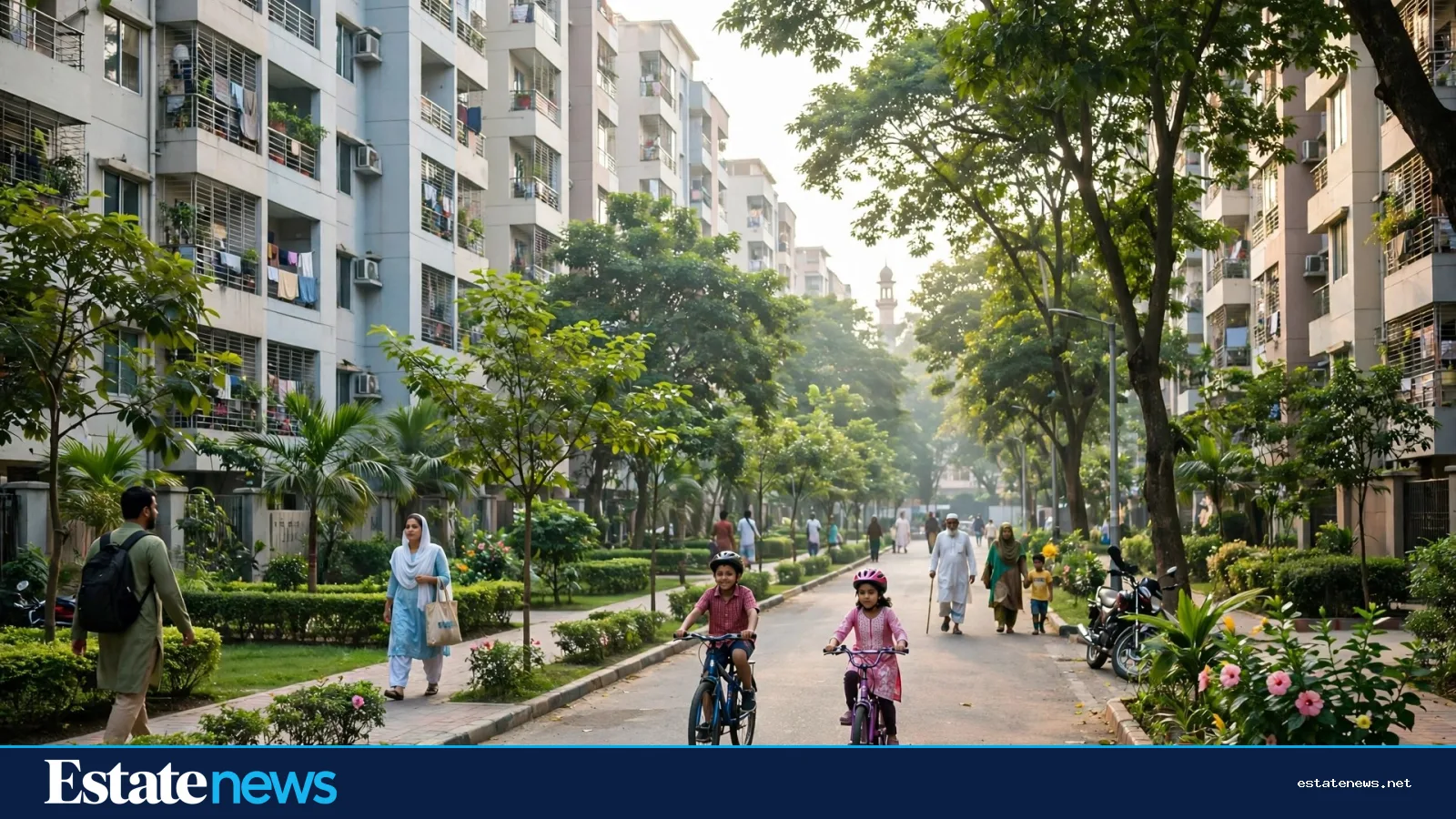
Walk the internal streets in the morning and the enclave stops looking like a project. Children ride bicycles along the lanes, older residents walk in pairs, and the trees planted along the roads give shade before the heat builds. The towers are close, but the ground between them is open, and that open ground is what the company's original promise was pointing at. A buyer in Mohammadpur can find a larger flat elsewhere. What is harder to find is a street where children can cycle without traffic, and that is the thing Japan Garden City is actually selling.


The maintenance test
An enclave that runs its own services also carries its own risks. In July 2026, more than 3,000 residents of Japan Garden City went without power for a prolonged period after a transformer failed at the complex's own substation, The Business Standard reported. Dhaka Power Distribution Company said its supply to the complex was normal and the fault sat inside the enclave's own system. Water ran short while the power stayed off. The episode was a reminder that a private substation is an asset when it works and a single point of failure when it does not.
The same lesson runs through the enclave's history. A dengue drive in 2023 fined the complex after Aedes larvae were found in the basements of some buildings. A gas bill dispute in 2021 left 90 households without cooking gas for a time after Titas cut connections over dues the company said were a misunderstanding. None of these is the whole story of the place. Each of them is a test of the same promise: that a managed neighbourhood can keep its shared parts working, year after year, after the selling is done.
The man at the centre of the company, managing director Md Wahiduzzaman, has also led the industry body REHAB as its president, and Japan Garden City appeared on the stall list for the REHAB Fair 2025. The fair connection matters because it is where the enclave meets the wider market: buyers walk the stalls at the Bangladesh-China Friendship Conference Centre comparing one developer's promise against another's, and a project with decades of residents behind it is judged on what those residents say, not on the brochure.
What Mohammadpur learned from it
Japan Garden City changed Mohammadpur by showing that a developer could sell a neighbourhood rather than a flat, and that buyers would pay for the streets and the security as much as for the rooms. Estate News covered a similar kind of builder in "Rupayan City: The Gated Township That Changed Uttara", a profile of another developer that built a town behind a wall, and in "Mohammadpur: Where Dhaka Shops, Studies, Prays and Commutes All Before Breakfast", which mapped the neighbourhood around the enclave. The difference here is age and setting: Rupayan City grew in planned Uttara, while Japan Garden City grew in the middle of an old, crowded part of the city, where the wall around it is the whole point.
"Who Builds in Uttara: The Developers Behind Dhaka's Planned North" mapped the builders working the capital's planned suburbs. Japan Garden City sits outside that story, and that is its lesson. Planned living does not need a new suburb. It needs a boundary, shared ground, and someone willing to maintain both after the last flat is sold.
For a buyer weighing a flat here, the checks are the same as anywhere else in Dhaka, and the enclave's age does not remove any of them. The deed and the chain of title, the RAJUK approval for the building, the handover terms written into the agreement, and the registration cost after purchase all matter as much as the gate. An older project adds one more question to the list: who maintains the shared parts now, and how well. The answer is visible on a walk through the complex, in the state of the gardens, the lifts and the lights on the internal streets.
The towers will keep standing in Mohammadpur, and other developers will keep borrowing the idea of selling a neighbourhood. The test for this enclave is simpler than any of that: whether the morning walk, the bicycle lanes and the quiet streets still feel like the place the first residents chose, decades from now, when the paint has faded and the novelty is gone.