At 2:09 on Thursday afternoon, 19 November, South Korea's exports for the year crossed $1 trillion. The trade ministry announced the figure as it happened, and with it South Korea became the fourth country in the world to reach the milestone, after the United States, Germany and China. China crossed it in 2007. No country had joined the club since.
The number is a leap, not a step. Last year's exports totalled $709.3 billion, itself a record, and South Korea passed that figure by 5 September this year. The government now projects annual exports of about $1.17 trillion for the full year. The trade surplus reached $294.9 billion in the first ten months of 2026, more than three times the previous full-year record of $95.2 billion, set in 2017.
Chips did the lifting

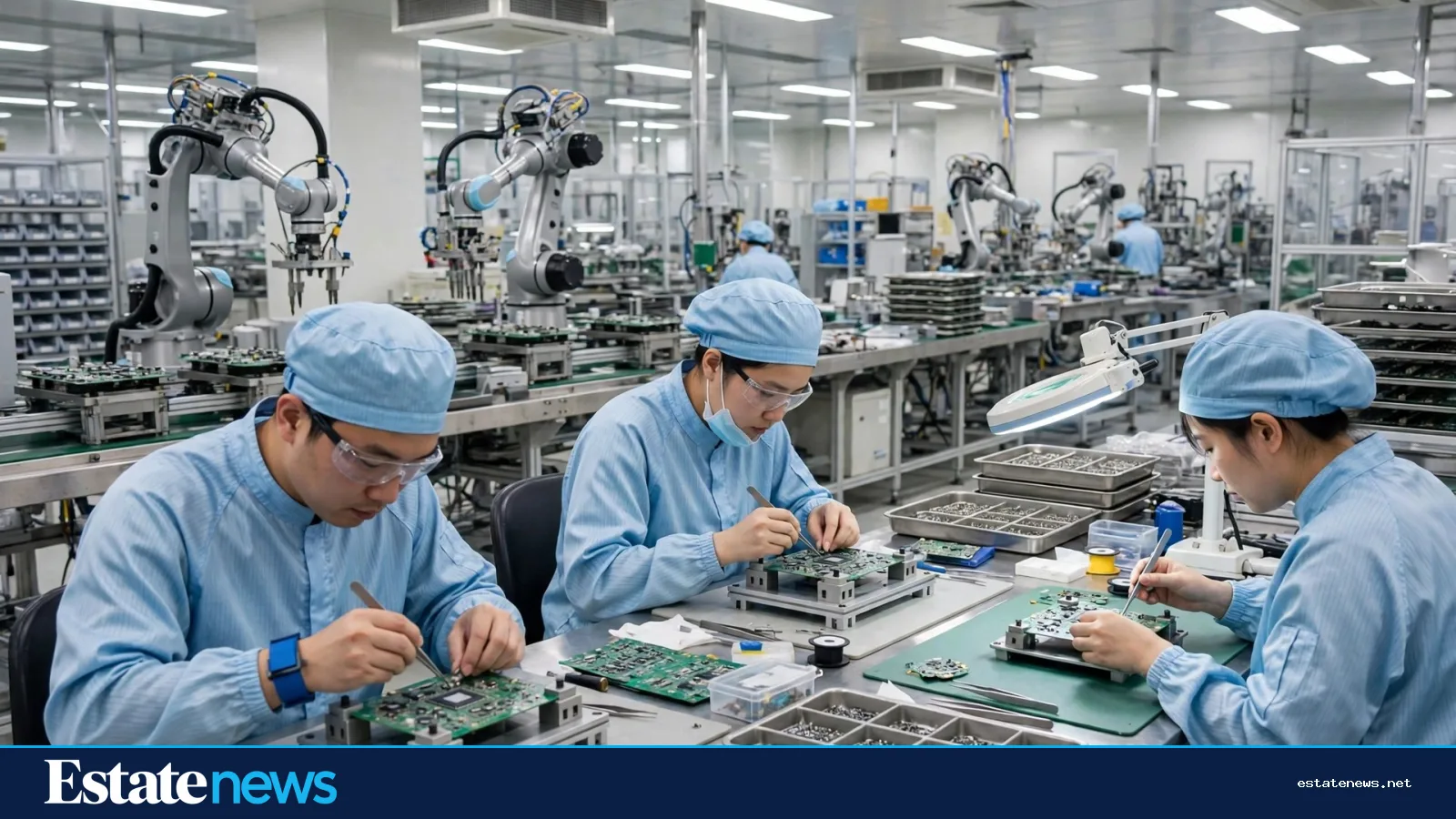
The driver is not a mystery. Semiconductors and computers have been the main drivers of this year's export growth, the ministry said, as global technology companies ramped up investment in artificial intelligence infrastructure. Semiconductor exports nearly tripled to $397 billion in the January to October period, from $135 billion a year earlier, accounting for about 43 percent of total exports. Rising memory chip prices boosted export values further, and demand for AI data centre infrastructure lifted exports of computers, electrical equipment and nonferrous metals, including storage devices, transformers, power cables, copper and aluminium.
Samsung Electronics and SK Hynix, the country's two chipmakers, sit at the centre of the boom. They supply the high-bandwidth memory that runs alongside AI processors, and the server DRAM and NAND flash storage that data centres need in bulk. Computer exports jumped nearly sixfold to $5.85 billion in October alone, led by solid-state drives for servers. The Korea Development Institute raised its forecast for the country's economic growth in 2027 to 3.9 percent from 2.2 percent, and expects exports to expand 8.1 percent in 2027 after growing 10.3 percent in 2026.
President Lee Jae-myung posted on X that the achievement must be turned into sustainable growth, and that the competitiveness of major industries must be strengthened while future growth engines such as AI and biotech are cultivated. His administration plans a 162.3 trillion won Future Response Fund, about $122 billion, to channel excess tax revenue from the chip boom towards growth industries, young people, regional development and education.


The boom has not reached every home
The ministry itself flagged the other side. Domestic demand remains weak, and the benefits of the export boom have yet to reach many households, weighed down by high interest rates, rising prices and a volatile domestic stock market. A trillion dollars of exports does not automatically mean a trillion dollars of prosperity at home. The ministry also cited risks ahead: a potential slowdown in AI investment, semiconductor price volatility, lower oil prices, Chinese oversupply and growing trade barriers in major markets. A deputy minister for trade and investment, Kang Kam-chan, said he expects semiconductor demand to support exports through at least the third quarter of 2027. That is a forecast, not a guarantee.
What it means for Bangladesh's factories
Bangladesh does not make memory chips. That is not the point. The point is what the world's biggest buyers are now spending money on, and where the factories that serve them are being built. AI demand is moving whole export economies towards electronics, electrical equipment, power cables and the components that go into data centres. Those are exactly the industries Bangladesh's own diversification plans name: light engineering, electronics and the non-garment manufacturing that the commerce ministry has put at the centre of its export strategy, alongside leather, footwear and shipbuilding.
The domestic counterpoint is already visible. "Joyful to Build a $6m Outerwear Factory in Chattogram EPZ" covered the latest export-zone investment, and "Bangladesh Sold More Basics: The Export Mix That Worries" looked at why the country's export basket needs to move up the value chain. The approvals reform covered in "Approvals in 14 Days: The Reform That Could Speed Up Building" is meant to make that move faster, cutting the time for key business services from 50 to 55 days to 14. South Korea's year shows what the prize looks like when a country gets the high-value part of the chain right, and how fast the numbers move when it does. This article is general information, not financial advice, and export figures in any country can turn with the next quarter's demand.