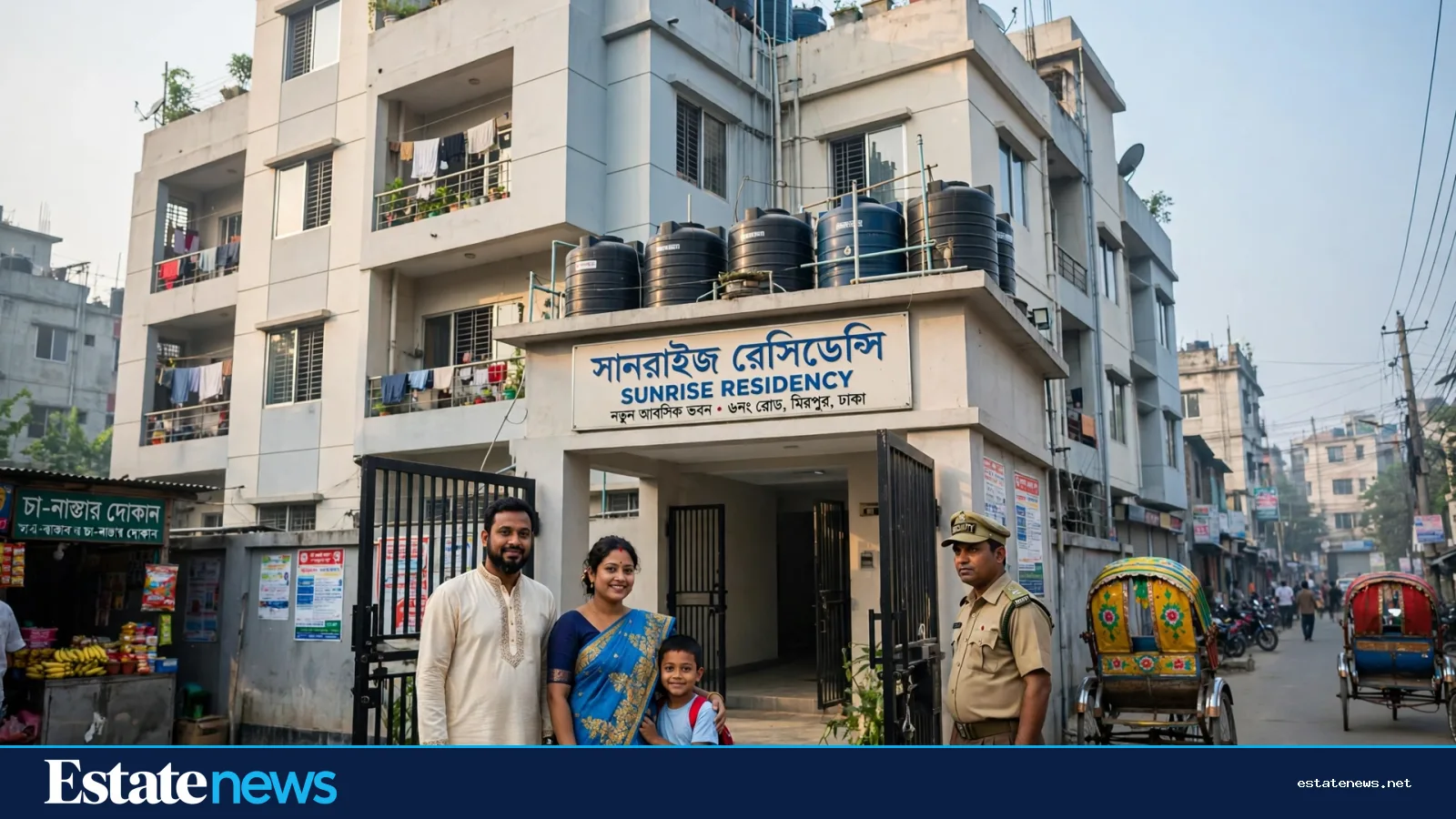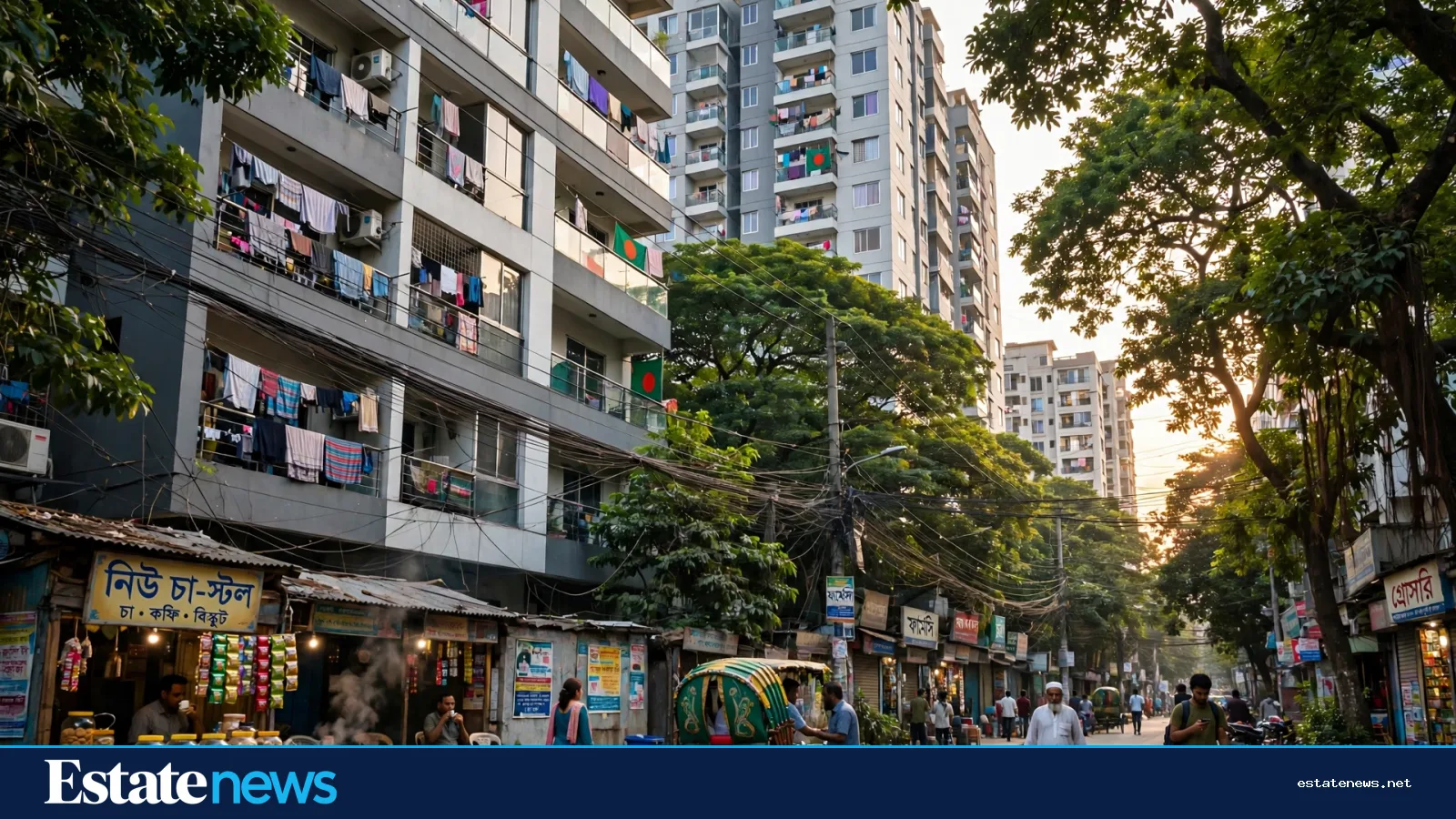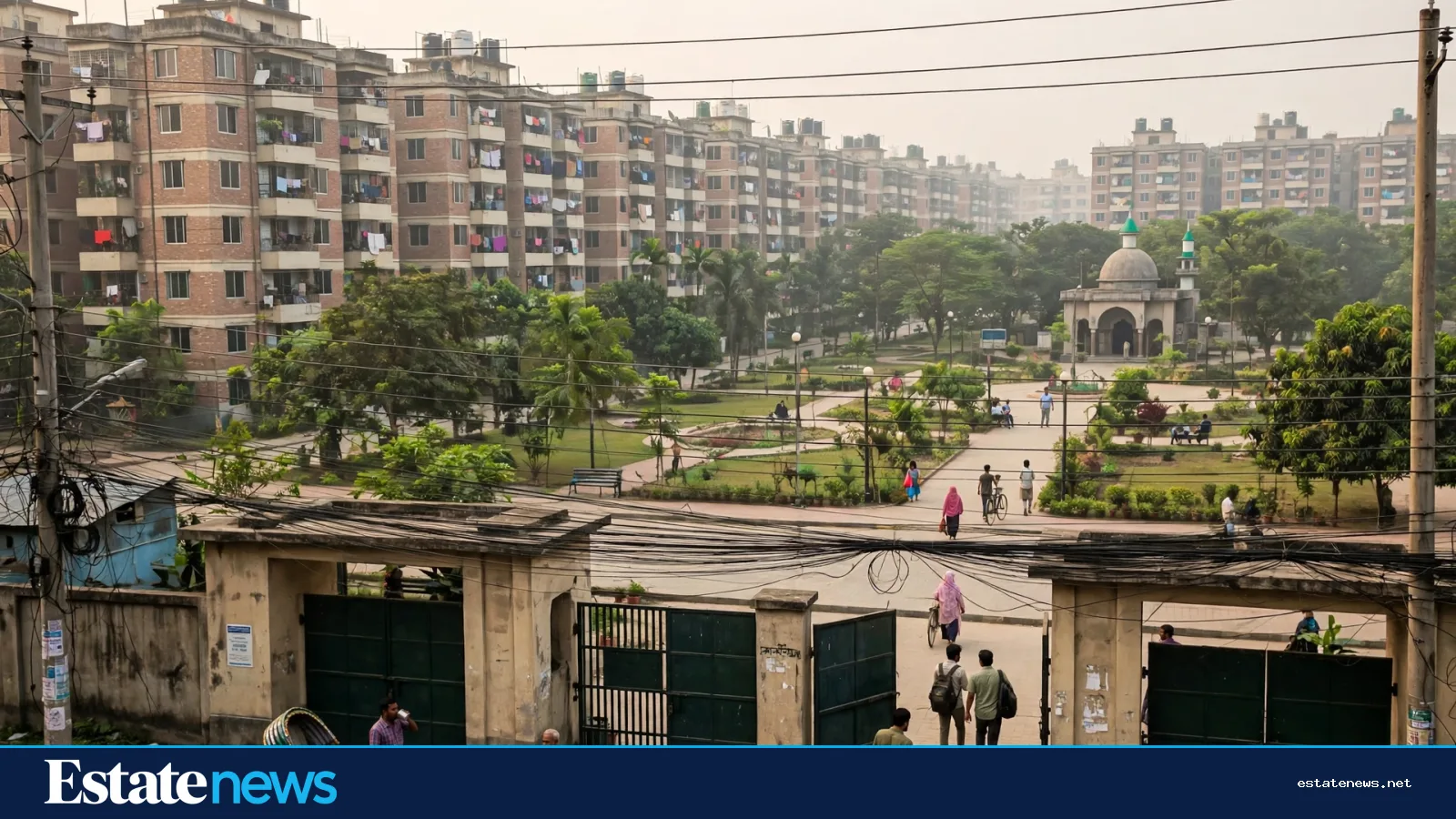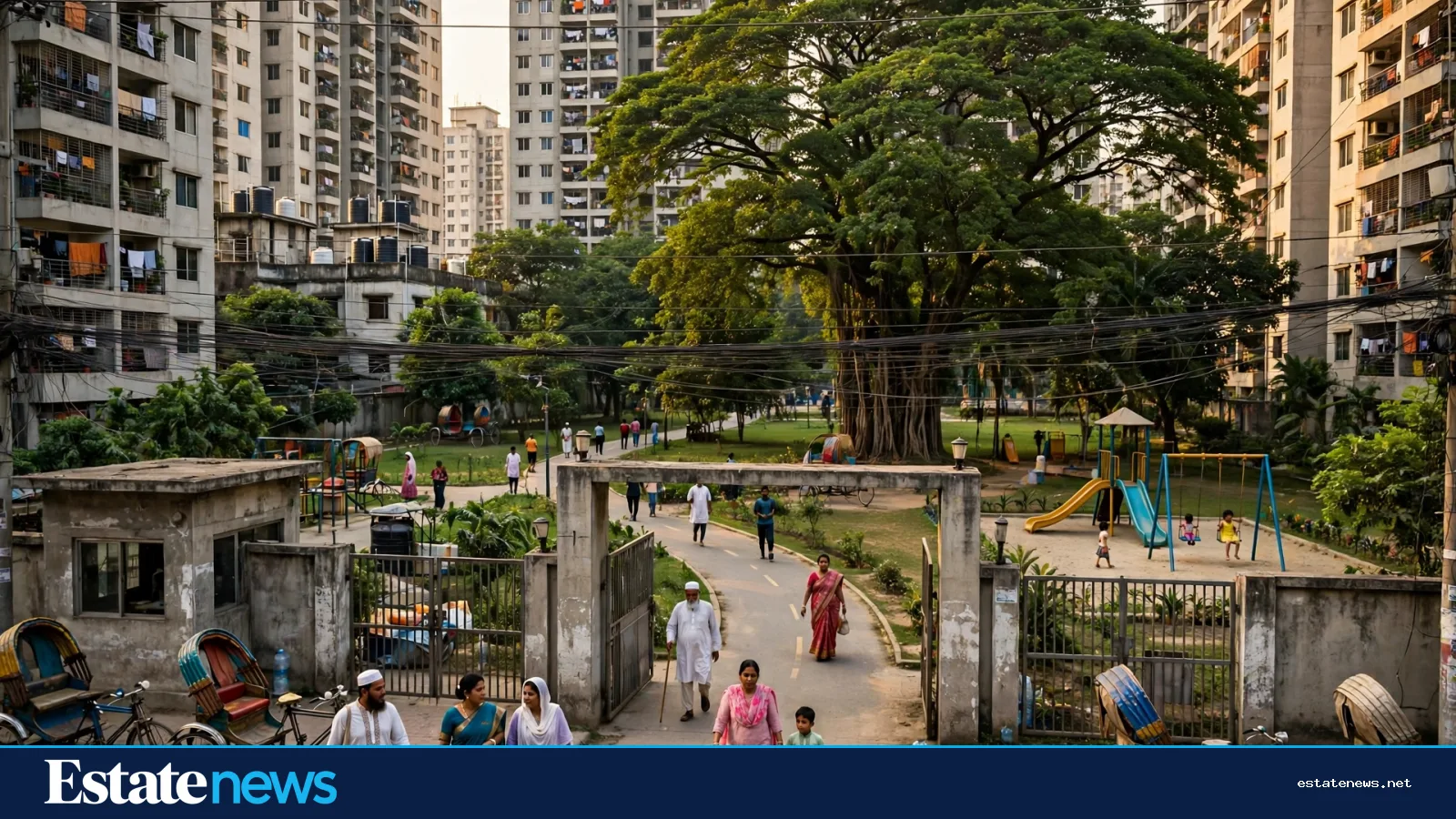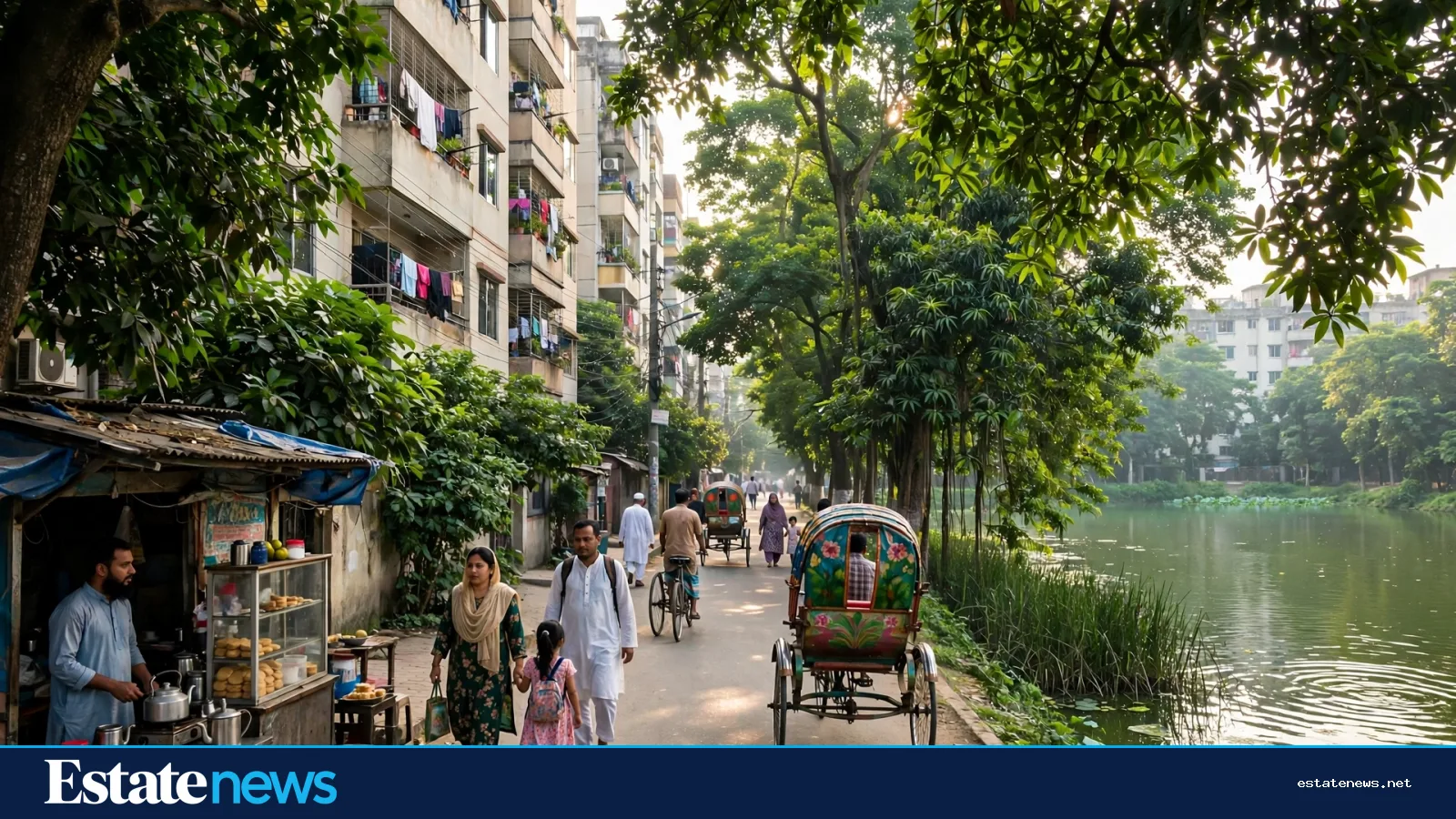
Ask a Dhaka family where to live and two names come up more than any others. Dhanmondi, the old neighbourhood around the lake, where generations have stayed put. And Bashundhara Residential Area, the planned township in the east, where the roads are wide and the buildings are new. Both suit families. Both have schools and hospitals close by. The choice between them is not about which is better. It is about which kind of day you want to live.
The price gap is the first thing a buyer notices. Estate News's area tracker, collected on 22 November from current public sale listings, puts the median asking price in Dhanmondi at Tk 20,000 per square foot and in Bashundhara R/A at Tk 9,865 per square foot. Those are asking medians, the starting point of a negotiation rather than the price of a completed sale, and a ready flat in a sought-after block of either area will command its own terms. Still, the gap is wide enough to change the question. In Dhanmondi, a buyer pays for the centre of the city. In Bashundhara, the same money buys roughly twice the floor space.
Dhanmondi: the neighbourhood that is already complete

Dhanmondi is a finished place. Its streets were laid out decades ago, its trees are old, and its institutions are the ones Dhaka families have used for generations. Government Laboratory High School, Birshreshtha Munshi Abdur Rouf Public College, Dhaka College, Ideal College and Dhaka City College sit in or beside the area, and the University of Development Alternative has a campus there. For healthcare, IBN Sina Specialized Hospital, LABAID Specialized Hospital and the Bangladesh Eye Hospital and Institute are all within reach, with Panthapath's hospitals a short drive away.
The lake is the centre of daily life. In the morning, walkers circle it before the traffic builds. In the evening, families sit on the benches and children play on the paths. Rabindra Sarobar, the open space by the lake, draws crowds for concerts and gatherings. A resident of Dhanmondi rarely needs to leave the neighbourhood for the ordinary business of a day: the school, the doctor, the market, the mosque, the tailor, all sit within walking distance or a short rickshaw ride.
That completeness has a cost beyond the price per square foot. The streets are narrow, parking is tight, and the traffic on Mirpur Road and Satmasjid Road can turn a short trip into a long one at peak hours. The housing stock is older, so a buyer needs to look carefully at the lift, the generator, the water supply and the state of the building's common areas. Dhanmondi is not on Metro Rail Line 6, though Farmgate and Karwan Bazar stations sit a short ride away. The flats are often larger and better built than the new towers further out, but the buildings themselves show their age.
Bashundhara: the planned township, still filling in
Bashundhara is the opposite kind of place. It was planned rather than grown. The roads are wide, the blocks are laid out in a grid from A to N, and the newer blocks, J to N, still have buildings going up. North South University and Independent University Bangladesh give the area its academic character, and Evercare Hospital sits inside it. Jamuna Future Park, one of the largest shopping malls in South Asia, is at its edge. The Daily Star's April 2026 guide to the city's neighbourhoods described Bashundhara as a gated sanctuary of planned urbanism, and residents quoted in it spoke of security, a familial environment, and the quiet of a residential area away from the crowd.
The blocks tell the story of who lives there. Blocks A to D are the established core, close to Gulshan and Baridhara. Blocks E to I are mid-range family territory. Blocks J to N are newer and cheaper, with students and young families sharing flats and bachelor accommodation. That mix is part of the appeal for a buyer with a smaller budget: the same township holds a family flat, a student mess and a luxury duplex, and the price follows the block.


The trade-off is distance and dependence on roads. Bashundhara is not on Metro Rail Line 6, and the planned MRT Line 1, which would link the airport area with Kamalapur and Purbachal, is still under construction. A resident who works in Motijheel or Farmgate travels by road, and the road out of Bashundhara can jam badly in the morning. The area is quieter at night and greener in the daytime, but it is further from the centre, and a family that needs the old city every day will feel that distance.
The school run, the hospital visit, the commute
For a family with children, the decision often turns on the school. In Dhanmondi, the school is likely to be a short walk or a short rickshaw ride, and the same is true of the doctor. In Bashundhara, the universities are inside the area, and the schools that serve younger children cluster around the blocks, but a family that wants one of the old central schools will drive further. Healthcare follows the same pattern: Dhanmondi has several large hospitals within minutes, while Bashundhara has Evercare and the Gulshan hospitals a short drive away.
The commute is where the two areas part company most clearly. Dhanmondi sits in the middle of the map, close to Farmgate, Karwan Bazar, Panthapath and the university area, and a worker there can reach most offices without crossing the city. Bashundhara suits the person who works in Gulshan, Banani or Baridhara, or who studies at NSU or IUB, and it suits the family that drives rather than takes the metro. The best advice, from every guide to the city, is the same: map the office, the school and the hospital, then test the route at the hours you will actually travel it. A distance that looks short on a map can take an hour at 9 in the morning.
Street life is the last difference, and it is the one that decides the choice for many families. Dhanmondi is busy, noisy and full: tea stalls, street food, bookshops, tailors, and neighbours who have known each other for decades. Bashundhara is calmer, more spread out, and more private. One resident quoted by The Daily Star said Dhanmondi felt like her own, because her family had spent the longest time there and her father had a community at the mosque. A Bashundhara resident said the area was far from the crowd and well planned, with a good society and a familial environment. Both were describing the same thing, a place where they belonged, in different words.
Who should choose which
A buyer with a budget that stretches to Tk 20,000 a square foot, who wants the centre of the city and the lake at the end of the street, will find Dhanmondi hard to leave. A buyer who wants more space for the same money, wide roads, new buildings and a campus atmosphere, will find Bashundhara hard to beat. A renter faces the same choice at a smaller scale: a smaller flat in the centre, or a larger one further out, with the commute as the price of the extra room.
Estate News's area-by-area guide, "Flat Price in Dhaka: What a Flat Costs Area by Area in 2026", carries the full tracker, with the asking medians for the city's neighbourhoods and the warning that asking prices are the start of a negotiation, not the end of one. The rent-versus-buy maths for either area is worked through in "Rent or Buy in Dhaka: The Maths That Decides It in 2026". Read both before deciding, then walk the two areas on a weekday morning. Stand on the lake road in Dhanmondi at 8, then stand on a Bashundhara boulevard at the same hour. The choice is not in the numbers. It is in which morning feels like yours.