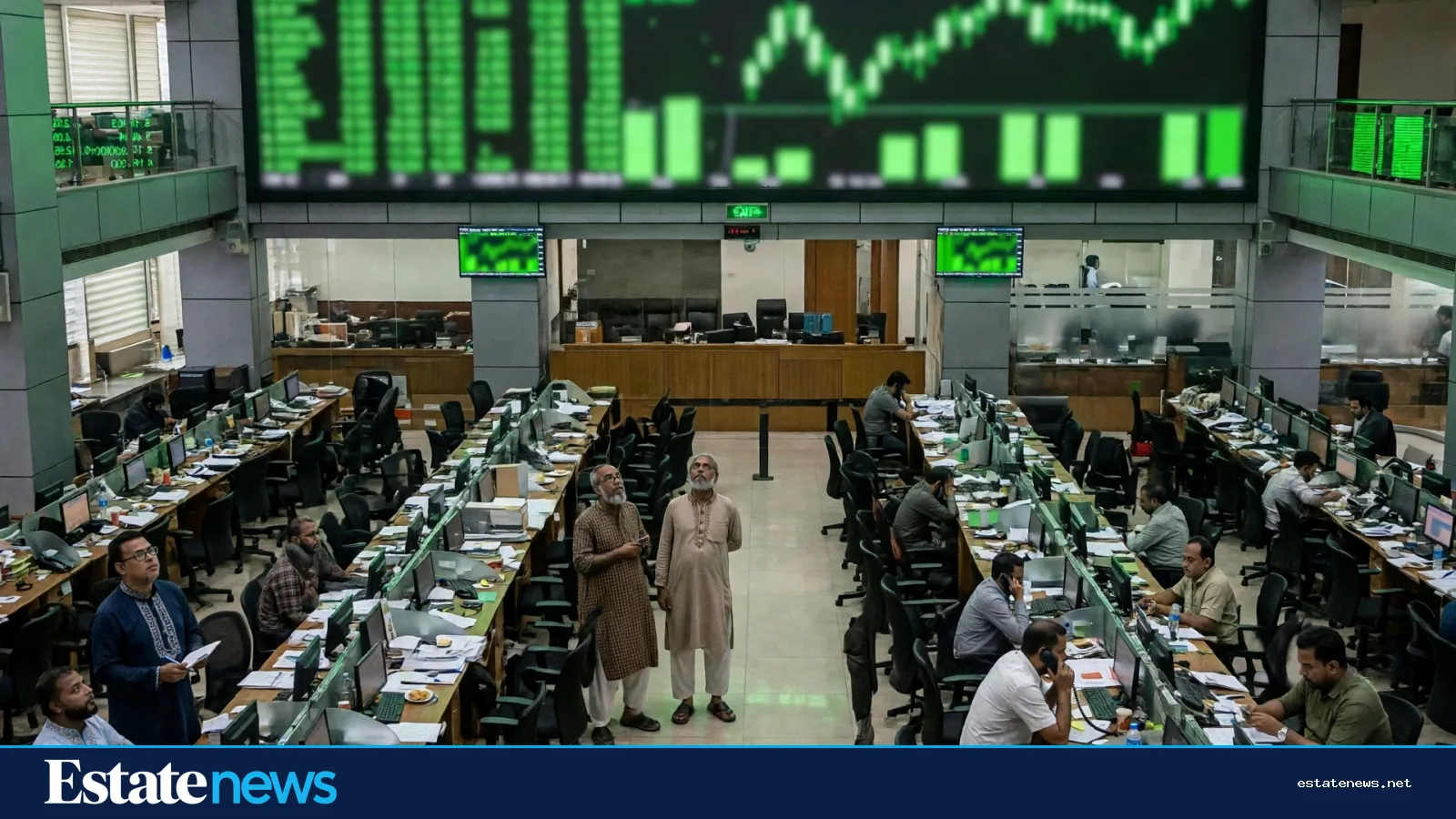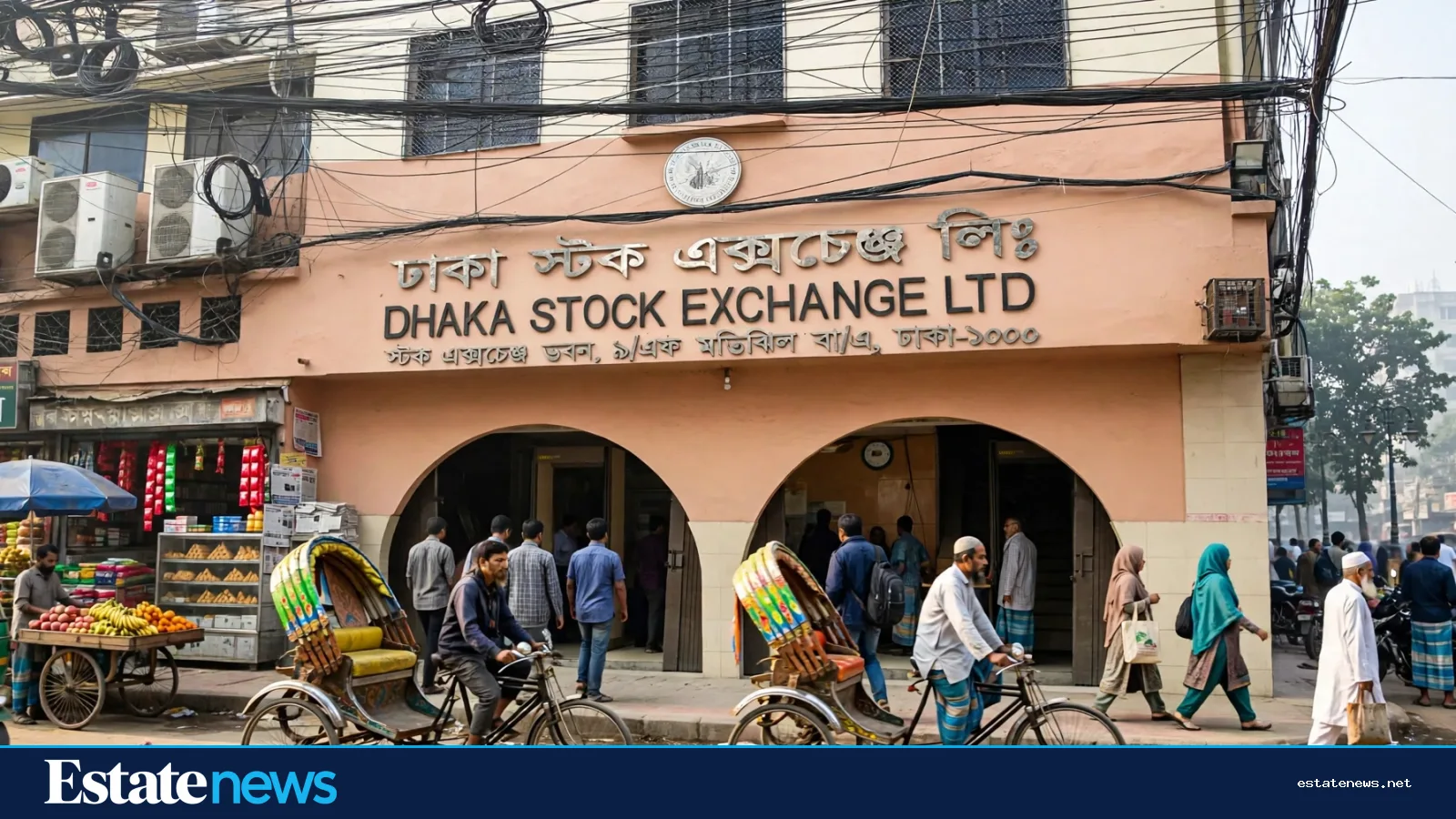
Sunday gave the Dhaka market its best day in weeks, and Monday arrived with two decisions hanging over it. The Dhaka Stock Exchange closed its Sunday session, the latest full session at the time of writing, with the DSEX at 5,565.59, up 59.95 points, or 1.09 percent. Monday's session was still trading when this wrap was written, so Sunday's close is the last complete picture, not today's. The rise was the sixth winning session in a row, and the turnover told the bigger story. Tk 1,220.14 crore changed hands on Sunday, up 63.4 percent on Thursday's Tk 746.63 crore, and the first time turnover crossed Tk 1,200 crore in nearly four months.
The breadth was healthy. Of 373 companies traded, 212 advanced, 105 declined and 56 stayed unchanged. The DS30 rose 14.51 points to 2,100.24 and the DSES added 1.43 to 1,075.51. The index is now at its highest in nearly two months, last seen at 5,578 on 24 September. The week to Thursday had already been strong: the DSEX gained 60.73 points, or 1.12 percent, to 5,505.64, with average daily turnover of Tk 808.72 crore, up 21.5 percent. Textiles took 22.01 percent of the week's turnover, followed by fuel and power at 13.66 percent, pharmaceuticals at 11.35 percent and banking at 11 percent.
The wage decision lands today

The Minimum Wage Board met at 11:30 this morning at the Department of Labour in Segunbagicha, for its third meeting, and the outcome had not been announced by the time this wrap was written. Factory owners were expected to table their proposal for a new garment minimum wage, against the workers' proposal of Tk 32,000 for entry-level recruits. The current minimum is Tk 12,500, in place since 1 December 2023. The Centre for Policy Dialogue has put forward an evidence-based range of Tk 18,578 to Tk 24,204. The board has agreed that the new wage takes effect on 1 December, with the higher pay reaching workers with their January 2027 salaries.
Two things make today different from a routine negotiation. The owners are also expected to propose scrapping future wage boards in favour of a fixed, inflation-linked annual increment, an idea the BGMEA president, Mahmud Hasan Khan, has framed as a way to end the cycle of unrest over wage revisions. And nine global labour groups have urged the board to set the wage at a living level, putting the living wage at about Tk 33,000. A BGMEA survey of 317 factories put the production loss from 1 to 18 November at 428 million dollars, with confirmed orders worth 254 million dollars shifted to other countries, a combined 682 million dollars. The survey covers only part of the industry, and the association says more than 600 factories were affected, so the full cost is higher. A settled wage is what lets the orders come back, and that is why the property market watches a garment negotiation as closely as any factory owner.
The port decision is due too
Chattogram has its own deadline today. The Chattogram Port Authority said it would appoint the new operator of the Chattogram Container Terminal by Monday, after a limited tender for a six-month contract running 24 November 2026 to 23 May 2027. Four companies bid, and Everest Port Services submitted the lowest, at Tk 30.15 crore. The lowest price does not automatically win, and the seven-member evaluation committee's assessment is the step that decides it. No announcement had been made by the time this wrap was written. Saif Powertec, which ran the terminal for six years, saw its contract expire on 2 November, was extended for three weeks to today, and did not bid. Estate News followed the port's longer story in "Chattogram Port: DP World to Take Over New Mooring Terminal in March 2027", and the new operator takes over a terminal whose future is still being settled, with the Shipping Ministry processing Saudi Arabia's RSGT International as a longer-term operator.


Money from abroad keeps coming
Remittance stayed strong into November. Bangladesh Bank data put inflows at 1.964 billion dollars for 1 to 16 November, up 15.8 percent on the same period last year, and 13.52 billion dollars for 1 July to 17 November, up 13 percent. Reserves stood at 29.56 billion dollars on the BPM6 measure on 19 November, after the central bank sold 220 million dollars that day at Tk 123.90. The taka was trading at Tk 124.75 to the dollar in the interbank market on 18 November. The central bank has sold nearly 800 million dollars in the recent round, including 220 million on 18 November and 100 million on 16 November, to steady the currency.
Gold held its new level. The Bangladesh Jewellers' Association price for 22-carat gold stayed at Tk 194,964 per bhori, unchanged since the cut on 22 November, the ninth straight cut in a fortnight that brought the price down from Tk 229,664 on 5 November.
The week's other lines
Two other announcements frame the week. The government has formally written to the United Nations Committee for Development Policy seeking a three-year deferral of graduation from least developed country status, to 24 November 2029. And the draft National SME Policy, announced by the prime minister at the SME fair on Sunday, aims for 25,000 new entrepreneurs in four years and 25 lakh jobs in the small and medium enterprise sector by 2031.
For readers weighing a home against the market, the wrap's message is the same as last week's. A rising index helps the households that hold shares, and a settled wage helps the factories that pay for flats. Estate News explained how light changes a small flat in "Light in a Dhaka Flat: The Design Tricks Architects Use", and what factory growth means for housing demand in "Factories Grew 8.79% in August: What It Means for Housing". The numbers in this wrap are the market's, reported as they stand. This article is market information, not financial advice, and no market call in it should be read as a recommendation to buy or sell.