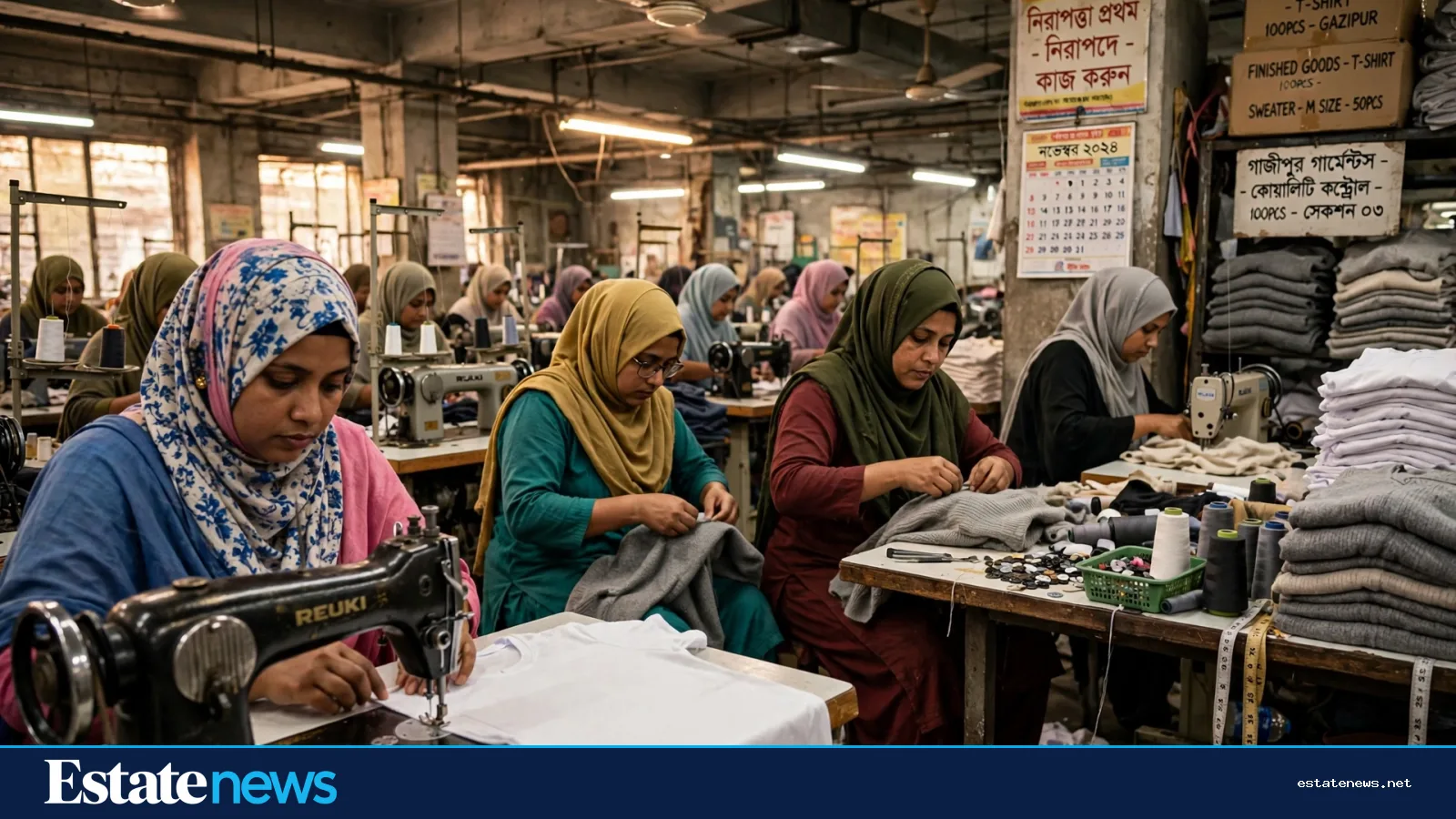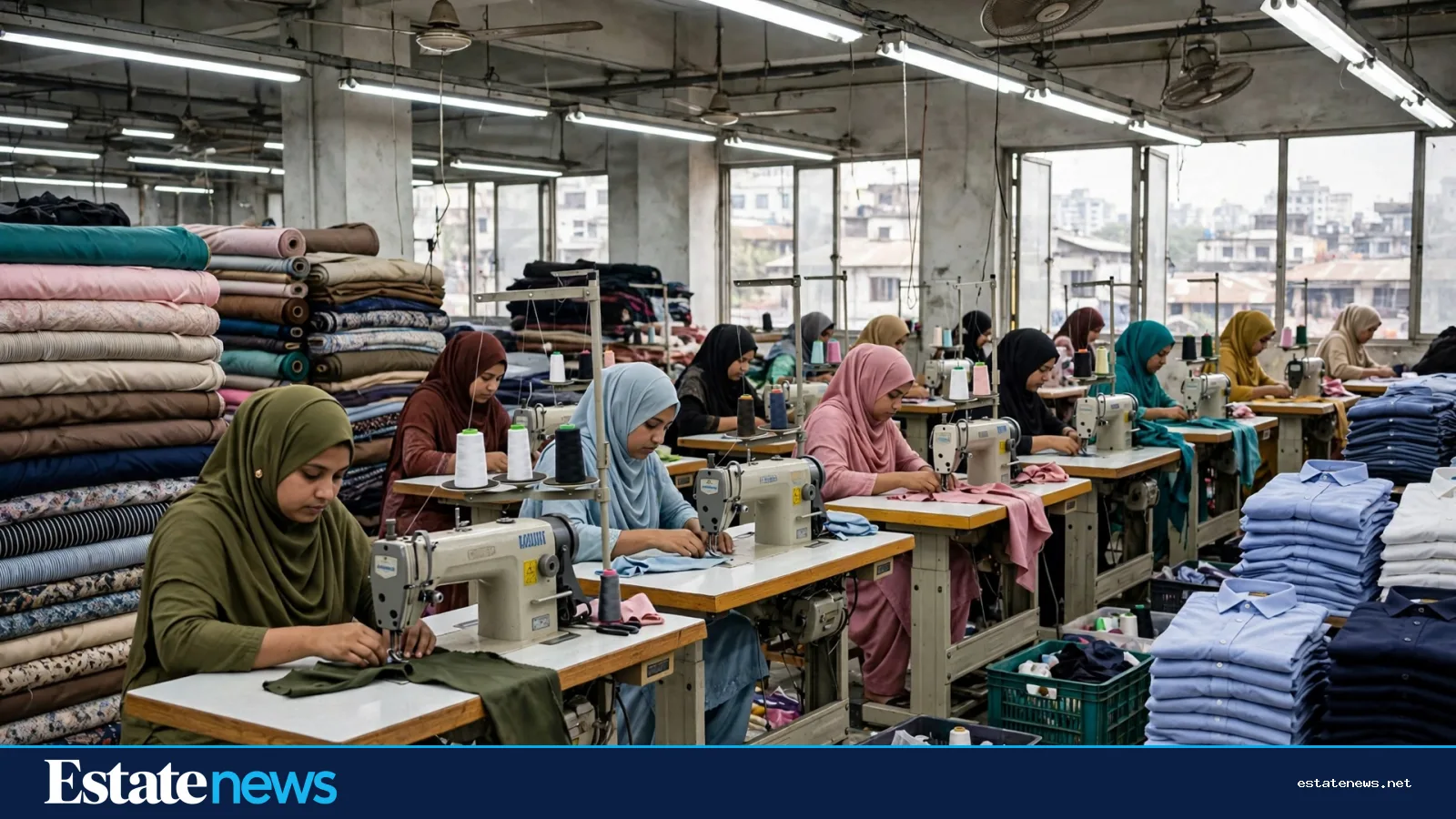
Monday morning will decide what four million garment workers earn. The Minimum Wage Board holds its third meeting at 11:30am on 23 November at its Segunbagicha office in Dhaka, and the owners' side is expected to table its wage proposal there. If it does not, the board will not wait. Its chairman has said so in plain words.
"I cannot force anyone to submit a proposal," Minimum Wage Board Chairman Syed Azad Subhani said on Saturday, after visiting Pearl Garments in Ashulia's Palashbari to gather facts for the wage-setting process. "If no proposal is submitted, we will proceed in accordance with the law. I will work using the mechanisms, indicators and indexes I have by law."
The board was formed on 1 November. Its first meeting was held on 4 November, three days later. At its second meeting on 9 November, the workers' representatives proposed a minimum monthly wage of Tk 32,000. The owners did not submit a proposal at that meeting. They sought seven working days, and the board gave them four. The third meeting was first set for 16 November, then postponed after the board's permanent workers' representative, Anwar Hossain, fell ill and was hospitalised. It now meets on Monday.

Three numbers on the table
Three figures frame the decision. The workers' proposal is Tk 32,000 a month. The current minimum is Tk 12,500, in force since 1 December 2023. Between them sits the evidence-based range from the Centre for Policy Dialogue, Tk 18,578 to Tk 24,204, published on 19 November.
The CPD range is built in layers. Tk 16,351 is an inflation-adjusted rise from the current minimum, but the think tank said it offers no real financial gain. Tk 18,578 is the minimum needed to keep a family just above the upper poverty line. Tk 24,204 is the estimated living wage, covering food, housing and utilities with a modest amount for savings. The CPD urged the talks to stay within the Tk 18,578 to Tk 24,204 range.
The chairman has been careful to say the board is not distant from the workers, since worker representatives sit on it. He has also said it is too early to say whether a gap has opened with the owners, and that he hopes they will submit their proposal on Monday. The Bangladesh Garment Manufacturers and Exporters Association and the Bangladesh Knitwear Manufacturers and Exporters Association said in a joint statement that factory owners were fully prepared to present their proposals, and urged a quick rescheduling of the postponed meeting. The date is now fixed.
What the law allows


The board does not need the owners' number to do its job. Under the labour law it has six months from formation to complete its work, with a deadline of 30 April, but the owners' and workers' representatives have agreed to finish as soon as possible. The target is a new wage in effect from 1 December, with workers receiving the revised pay with their January 2027 salaries.
That timetable is why Monday matters. December is eight days away. A wage announced in time for 1 December gives factory owners, payroll departments and workers the same certainty: the new rate, the date it starts, and the month the money arrives. A delay pushes the whole chain into the new year.
The chairman visited factories and workers' residences in Narayanganj, Chattogram and Savar before the meeting, and the findings from those visits will go into the board's report. The board's job is to weigh the cost of living against what the industry can pay, and to do it by the indicators the law sets out. That is a technical task, and it is also a human one: the number it settles on will shape what factory-town families can spend on rent, food and schooling.
What it means for factory-town housing
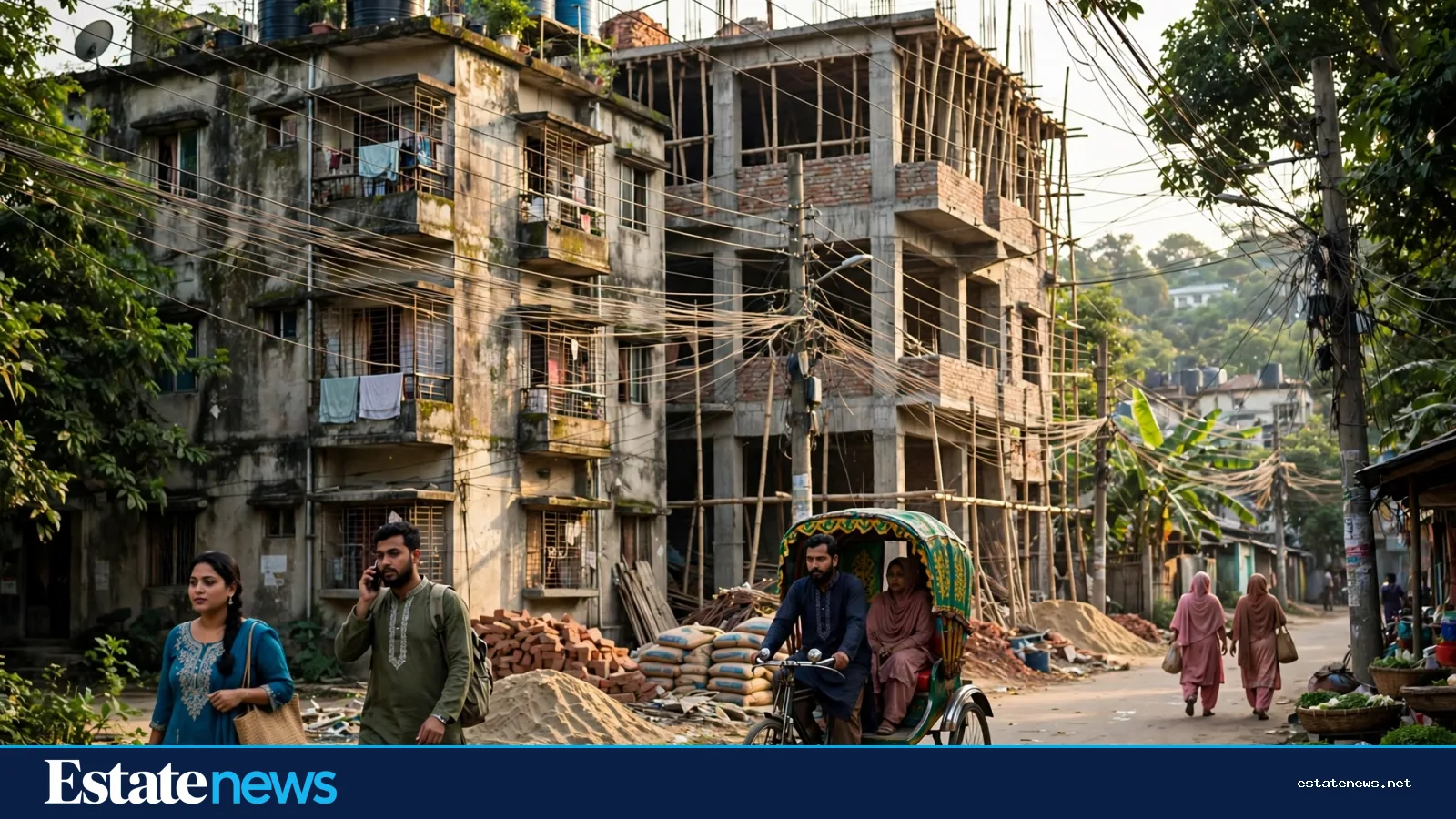
Estate News has followed this process from the start. In "The Wage Board Meets Today: What the Garment Pay Decision Means for Factory-Town Housing", the point was made that a wage decision is also a housing decision. A worker who earns more can pay rent on time, move closer to the factory, or start saving for a plot. A worker whose pay stands still while prices rise is pushed further from the factory gates, into cheaper rooms and longer commutes.
The Bangla edition of that coverage, "পোশাকশ্রমিকের মজুরি: ৩২ হাজার টাকার প্রস্তাবের অর্থ কী", set out what the workers' Tk 32,000 proposal would mean for a household budget. Monday's meeting will show how far the owners' figure sits from that proposal, and how far the board is willing to go on its own authority.
Nobody outside the boardroom knows what the owners will propose. The chairman's message is that the meeting will not end in a stalemate. The law gives the board its own route to a wage, and it intends to use it. For the workers waiting on the decision, and for the factories waiting to plan their payrolls, that is the most useful thing said all week.