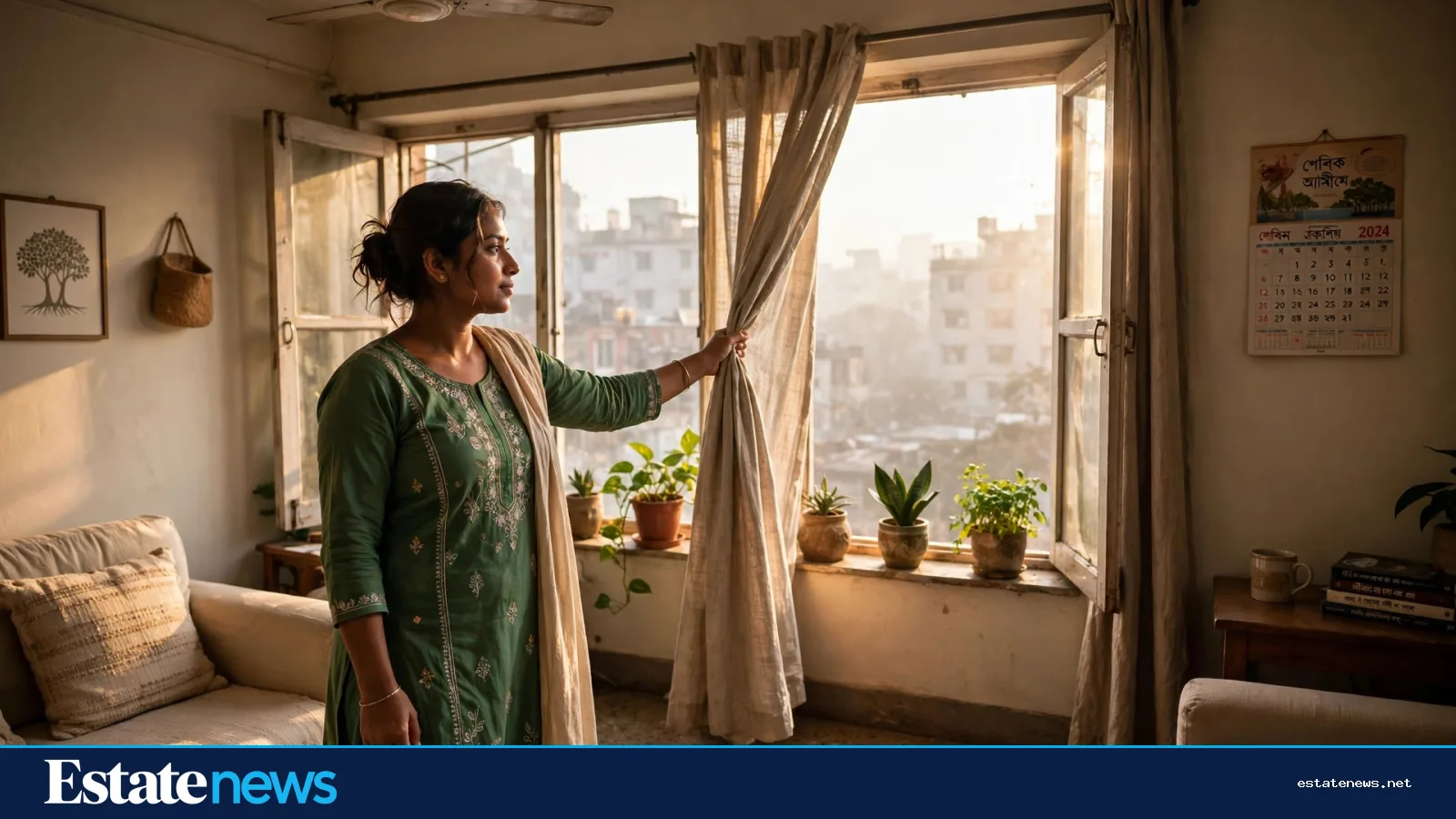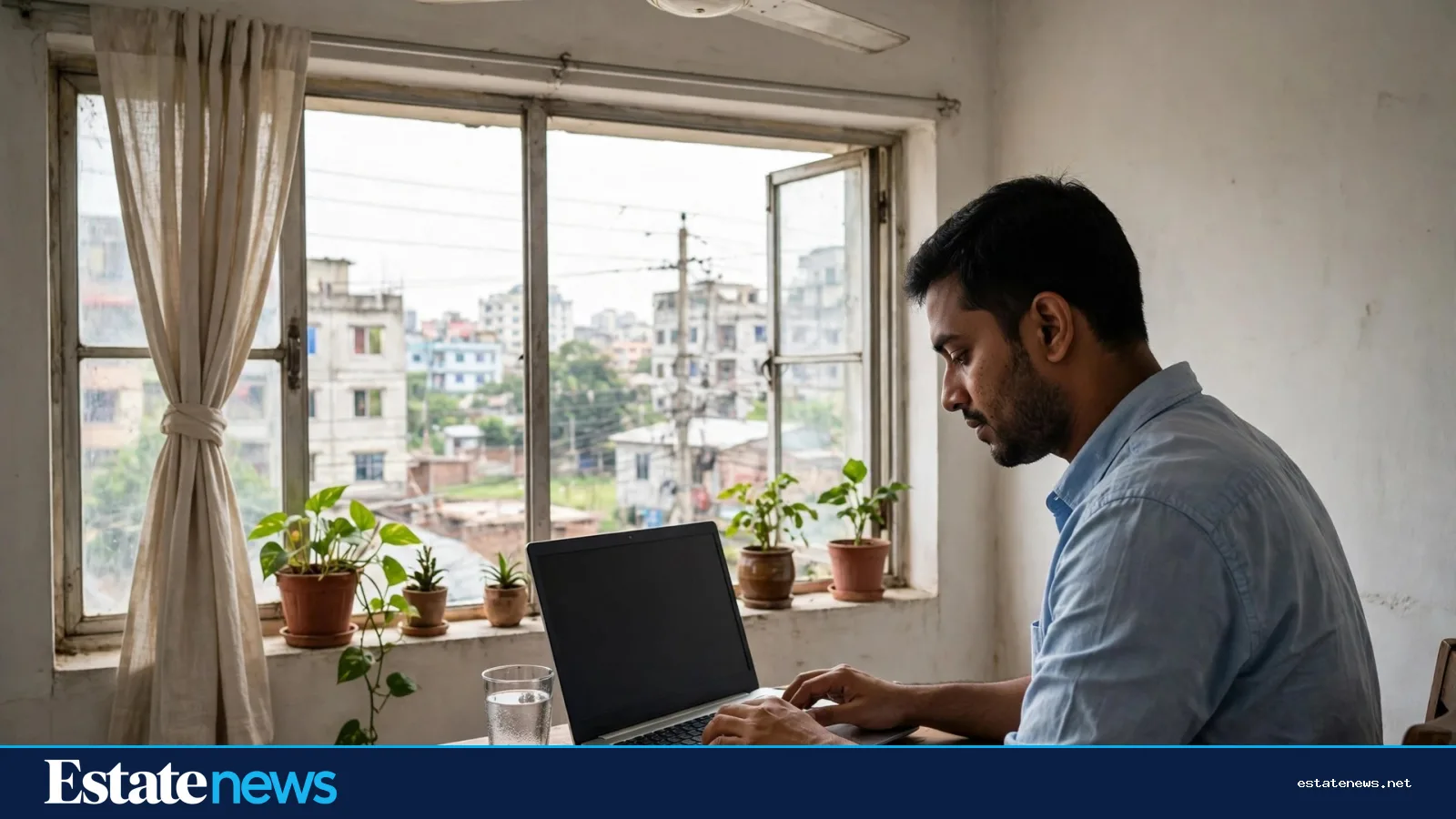
The dining table was never meant to be a desk. In a Dhaka flat it becomes one anyway, usually around 9 in the morning, when the laptop opens next to the breakfast plates and stays there until the light goes.
More Dhaka professionals now work from home at least part of the week. The flats have not grown to match. A two-bedroom flat in Mirpur or Uttara still has to hold a family, a kitchen, a television and now a workplace, and the answer is rarely a spare room. It is a corner, claimed and defended.
The first thing that corner needs is daylight. A desk pushed against a wall in the middle of the flat gets the worst of both worlds: dim at noon, glaring at dusk. The window wall is better, even if it means the desk faces sideways into the room. Put the screen at right angles to the window and the glare stays off the glass. In a Dhaka summer the same window brings heat, so a light curtain earns its place. It softens the afternoon sun without turning the corner into a cave.

A chair before a desk
People buy the desk first and the chair last. That order is backwards. A folding table from Elephant Road will do for a laptop. A plastic chair will not do for eight hours. Back pain arrives quietly, usually in the third week, and by then the cheap chair has already cost more than a proper one would have.
A real office chair, second-hand if the budget is tight, changes the corner more than any desk. The seat should let both feet rest flat on the floor. The back should reach the shoulder blades. If the chair has no armrests, a cushion at the small of the back does some of the work. None of this is luxury. It is the difference between finishing the day upright and finishing it folded over a hot water bottle.


The desk itself can be small. A wall-mounted folding desk, the kind that drops down from the wall and folds flat when the day ends, suits flats where the dining table still has to be a dining table at night. A narrow writing desk against the bedroom wall works too, if the bedroom is where the quiet is. What matters is that the desk has one job only. The moment it becomes a shelf for school books, bills and the iron, it stops being a workplace.
Light, wires and a door that closes
Evening work needs a lamp, and the lamp needs to sit on the left for a right-handed person, so the hand does not throw a shadow across the page or the keyboard. A warm bulb suits a flat better than a white tube light glaring from above. The ceiling fan stays on, of course. It is Dhaka. The trick is to keep papers weighed down and cables out of the fan's reach, which sounds obvious until the first time a payslip takes flight.
Cables are the quiet mess of every home office. A power strip screwed under the desk, a few cable ties and one extension cord that reaches the wall socket will tidy what a whole afternoon of rearranging will not. Keep the charger, the phone and the laptop on the same strip, and the corner can be switched off at night with one click.
Then there is the door. Not every flat has a spare one. A curtain across a doorway, a bookshelf pulled halfway across an open plan, even a change of slippers at the threshold of the corner: these are small signals, and they work because the family learns them. The corner is where work happens. Outside it, the flat is home again. Keeping the two apart is the hardest part of working from a Dhaka flat, and it has nothing to do with furniture.
Estate News has been looking at small flats all month. "The Art of Styling Open Shelves Without Looking Cluttered" took on the shelf that every Dhaka living room seems to have, and "The Dining Corner: How Dhaka Flats Make Room for Meals" looked at the table this desk is probably borrowing. For readers thinking about the balcony as a second workspace, the Bangla piece on winter balcony gardens in Dhaka flats has ideas that cost almost nothing. The home office corner is the same project in miniature: a small space, used well, that lets a flat do one more job than it was built for.